
Navigating Crypto News

CoinFeather
Navigating Crypto News
Quick market read from this story
Rivian's stock rally is underpinned by a stronger 2026 delivery outlook and the upcoming R2 SUV launch, signaling a potential inflection point for the EV maker.
The strategic partnership with Volkswagen, including up to $5.8 billion in funding, provides crucial capital and manufacturing support, aiming to significantly reduce costs and accelerate platform development.
Analysts view 2026 as a critical 'inflection year' for Rivian, with R2 deliveries and VW cash infusion targeting substantial improvements in automotive gross margins by 2027.
The stock has transitioned from speculative to a high-beta execution play, with its valuation now dependent on Rivian's ability to meet delivery targets, execute the R2 ramp-up, and successfully integrate the VW joint venture.
Deep Dive
Rivian shares have experienced a significant rebound in 2026, driven by investor confidence in the EV maker's path to scaling production, improving margins, and securing capital from strategic partners. The stock is currently trading around $16.11, marking a 3.2% increase on the day and a substantial recovery from its 52-week low of approximately $10, although it remains below its yearly high of $22.69.
Several factors have contributed to Rivian's recent upward momentum. The company's fourth-quarter earnings report was a primary catalyst, showing revenue that exceeded expectations and narrower-than-forecast losses, leading to a 26.5% intraday stock surge. Rivian achieved a consolidated gross profit of approximately $144 million for 2025, a significant improvement of about $1.3 billion from 2024, attributed to enhanced production efficiency and stringent cost controls.
Management also provided an optimistic outlook for 2026, projecting vehicle deliveries between 62,000 and 67,000, indicating an approximate 50% growth. This projection is bolstered by the anticipated ramp-up of the smaller, more affordable R2 SUV. Following these results, analysts from TD Cowen and other firms upgraded the stock, highlighting the R2 launch in Q2 2026 as a pivotal moment that expands Rivian's market reach beyond its premium R1 lineup.
A crucial element underpinning Rivian's strategy is its partnership with Volkswagen. This joint venture is set to provide Rivian with $5 billion to $5.8 billion in funding for EV architecture and software development. The funding includes an immediate $1 billion note convertible to equity, another $1 billion upon JV formation, additional stock purchases, and a $1 billion loan in 2026, contingent on meeting specific milestones.
This collaboration offers Rivian essential capital for the R2/R3 rollout and a valuable manufacturing and purchasing alliance to reduce material costs. Analysts widely regard 2026 as a pivotal year for Rivian, marked by the start of R2 deliveries, the influx of VW capital, and a targeted transition in automotive gross margins. The company aims to achieve around 20% auto gross margin by 2027, a dramatic increase from the single-digit or negative margins seen recently.
The optimistic outlook for Rivian rests on three key pillars: achieving the 62,000-67,000 vehicle delivery target for 2026, successfully scaling the R2 launch, and demonstrating cost reductions and platform reuse through the VW joint venture. If these objectives are met, many analysts believe the stock could retest and surpass its recent $22-$25 range within 12-18 months, reflecting sustained long-term volume growth.
Conversely, the risks include potential volatility in EV demand, reduced incentives in North America, and ongoing cash burn, with negative free cash flow expected through at least 2026. Any setbacks in the R2 ramp-up, margin improvements, or VW integration could negatively impact the stock's valuation. Currently trading around $16 per share, Rivian is in a critical phase, transitioning from a speculative asset to an execution-focused story where 2026 is viewed as a potential turning point.
Source, catalyst, and sector overlap from the latest feed.
PEPE price is consolidating near $0.00000338, indicating a period of reduced volatility and building tension that could precede a significant price move. Technical indicators like RSI and MACD suggest fading bearish momentum, pointing towards potential stabilization and a possible shift in trend if buying pressure increases. The market is in a cautious state, awaiting a decisive break above the descending resistance trendline, which could trigger renewed bullish momentum for PEPE.
Geopolitical tensions in the Middle East are driving a significant risk premium in Brent crude, pushing prices to $111/barrel and sparking speculation of $150-$200 levels. Despite the current spike, the futures market suggests traders anticipate a normalization of prices towards the low $100s by Q1 end and mid-$110s over 12 months, indicating a belief that extreme levels are low probability. The tight inventory, limited spare capacity, and prior strategic reserve draws create an upside risk for oil prices if diplomatic efforts fail and shipping lanes remain disrupted. The volatility in oil prices is directly impacting consumer costs and inflation expectations, potentially influencing central bank policy and driving short-term trading activity across related financial instruments.
Historical FOMC patterns suggest potential Bitcoin price declines of 6% to 30% in 2026, targeting levels around $67,000 or even $50,000. A dense liquidity cluster in the lower price range acts as a magnet, indicating that downside pressure may persist until these leveraged positions are cleared. The confluence of recurring FOMC selloffs and liquidation heatmap analysis points to significant downside risk for Bitcoin in the near to medium term.
The massive 20 million XRP on-chain transfer at an ultra-low fee highlights XRP Ledger's efficiency for institutional-grade settlements, reinforcing its value proposition for liquidity providers. Recent whale accumulation of XRP, coupled with Ripple's expansion into Brazil and potential VASP license, suggests growing confidence and strategic positioning ahead of potential catalysts. The convergence of institutional interest, such as Evernorth's Nasdaq listing plans, with on-chain activity and global expansion signals a maturing XRP ecosystem and potential for deeper integration with traditional finance. While the large XRP transfer itself is not a definitive signal, its timing and efficiency, alongside broader ecosystem developments, indicate XRP is entering a period of heightened activity and market attention.
AI chips need DRAM and HBM, and Micron is a key supplier. Check 2026 price targets, earnings forecasts, and risks before betting on more upside in MU.
Prediction market Myriad has secured seed funding, signaling investor confidence in its growth and product development roadmap. The capital infusion is earmarked for aggressive investment in product development, liquidity, and market expansion, aiming to enhance Myriad's competitive position. Recent platform upgrades including a move to BNB Chain and adoption of USD1 as a settlement asset, coupled with this funding, suggest a strategic push for user acquisition and improved trading experience. The successful seed round, with participation from notable venture firms and individuals, provides Myriad with the necessary resources to scale its operations and pursue its vision for information markets.
The launch of an S&P 500 perpetual derivative on Hyperliquid allows for 24/7 trading, potentially capturing initial market reactions to global events during traditional market closures. This development positions crypto infrastructure to serve as a leading indicator for US equity market movements, especially during the 49-hour weekend gap where traditional markets are closed. The success of this S&P 500 perpetual hinges on its ability to build sufficient open interest and maintain liquidity, transitioning from a sentiment tool to a credible price discovery mechanism. While currently nascent, the S&P 500 perpetual on Hyperliquid could challenge incumbent futures markets if it consistently provides trusted price discovery during off-hours, especially during periods of geopolitical or policy shocks.
SBI Holdings' significant investment of $10 per share into Evernorth (XRPN) highlights substantial institutional interest and capital allocation into the XRP ecosystem, contrasting sharply with earlier, lower valuations. The strategic capital injection by Ripple and Chris Larsen, alongside SBI's investment, positions Evernorth as a potential institutional gateway to XRP Ledger DeFi, with plans for yield strategies and accumulating XRP from profits. The internal valuation of XRP reserves above $2 by Evernorth, despite current market prices, suggests a bullish outlook from key stakeholders and could influence future market sentiment if realized.
Significant capital inflows into ETH ETFs and a large whale purchase of ETH signal strong institutional and high-net-worth conviction, potentially driving ETH price appreciation towards $2,400 and $2,800 targets. The article highlights Pepeto as an early-stage investment opportunity with a presale, audit, and upcoming Binance listing, positioning it as a high-potential, albeit higher-risk, alternative to established large-cap assets like ETH. While ETH and DOGE show positive market signals (ETF inflows, active address growth), the core thesis emphasizes that the largest returns in crypto cycles are historically found in early-stage projects before their major exchange listings. The narrative suggests that despite short-term market noise from events like FOMC meetings, underlying strength is building, driven by substantial investor commitment and product development in promising new projects.
The crypto market experienced a downturn on March 18 due to a confluence of macroeconomic events including the FOMC decision, hot PPI data, and geopolitical tensions, leading to a risk-off sentiment. Despite the broader market dip, significant stablecoin inflows into Binance suggest that large holders are accumulating, potentially anticipating a swift recovery similar to past FOMC-related sell-offs. The new project Pepeto is actively raising capital during this market dip, highlighting a potential opportunity for early investors who can identify projects with strong fundamentals and development progress amidst broader market fear. While PEPE and FARTCOIN showed short-term rallies, their broader technical structures suggest these are relief bounces within corrective phases, indicating caution for meme coin traders focused on sustained uptrends.
Live Feed
Loading the broader stream in the same flow as the homepage feed.

Derivatives markets are identified as the primary driver of short-term Bitcoin price action, suggesting that large individual buyers like Michael Saylor have limited influence on daily fluctuations. While derivatives dictate short-term moves, the long-term Bitcoin trend is still shaped by spot market investors who hold assets, indicating a dual-market dynamic at play. Bitcoin's ability to rise against traditional market weakness and without direct Saylor purchases may signal underlying strength, though this is not yet a confirmed trend. Traders are closely watching Bitcoin's ability to hold above $70,500, with a confirmed move above $72,000 potentially signaling further upside towards $73,200.

Nasdaq's increasing integration of AI agents in surveillance, compliance, and trading signals a broader industry trend towards automation in financial operations. The crypto trading environment is anticipated to lead AI adoption in retail trading tools, suggesting potential for enhanced user experience and efficiency. The article highlights a significant shift in labor dynamics, with AI agents expected to displace certain job roles in software, customer service, and analysis within the crypto sector. The development of AI agents capable of handling complex workflows, as seen at Nasdaq and with startups like Leadpoet, indicates a move towards more sophisticated AI applications beyond simple task automation.

Opera's proposal to receive 160 million CELO tokens instead of USD payments signals a strong conviction in the Celo ecosystem's long-term value and could position them as a significant institutional holder. This shift directly aligns Opera's incentives with Celo's network performance, potentially driving further development and adoption of its MiniPay wallet, which already boasts 14 million users. The move by a Nasdaq-listed company to accept native tokens highlights a growing trend of deeper integration between traditional tech firms and blockchain protocols, potentially influencing other projects.
Crypto market sentiment is fading as Bitcoin dipped below $69,000. But predictors on Myriad don't expect a return to all-time low fears.

Cardano intra-era hard fork to protocol 11 version, van Rossem, is now approaching, with a key node release expected in a matter of days.

Jim Cramer's "very oversold" comment, despite not explicitly mentioning Bitcoin, has triggered the "inverse Cramer" effect within the crypto community, leading to speculation of further downside. Technically, Bitcoin's RSI at 47.13 indicates it is not oversold, suggesting the current price action below $70,000 is a correction rather than a market bottom. Market sentiment is influenced by external factors like rising energy costs and the Federal Reserve's hawkish stance, which are pressuring risk assets like Bitcoin.
A CryptoQuant analyst disputes reports of a $2.2 billion stablecoin inflow to Binance, suggesting the figures are inaccurate and likely represent internal reserve rebalancing rather than new capital entering the exchange. The analyst's clarification indicates that increased USDT activity on Ethereum, with a corresponding outflow from Tron, is a technical rebalancing move by Binance to meet demand on a specific chain, not a bullish signal for broader market accumulation. While stablecoin inflows are typically seen as a bullish indicator, this specific event is reframed as an operational adjustment, reducing its immediate significance as a catalyst for asset purchases.

Phishing attacks impersonating OpenClaw on GitHub are targeting developers with fake airdrops, aiming to drain crypto wallets and highlighting a growing social engineering threat in the developer community. The recurring exploitation of OpenClaw's name for scams, including a fake token reaching a $16 million market cap, indicates a pattern of malicious actors leveraging project visibility for fraudulent activities. This incident underscores the need for enhanced security vigilance among developers interacting with open-source projects and potential token distributions, especially when wallet connections are involved.
Shiba Inu price drop caught bulls unawares, with 15.99 billion SHIB long positions liquidated.
Bitcoin developers are accelerating work on a suite of "quantum-proof" upgrades as new data from Galaxy reveals that approximately 7 million BTC remains vulnerable to future high-powered computing attacks.

XRP's technical setup suggests a potential 20% rally to $1.70-$1.72 if it holds the mid-$1.40s support, aligning with a bull flag breakout retest. Record XRP withdrawals from South Korea's Upbit exchange, coupled with a shift to positive whale flows, indicate a potential accumulation phase similar to historical rallies. The confluence of a bullish technical pattern and on-chain accumulation signals from Korean retail and large holders suggests a near-term upside potential for XRP.
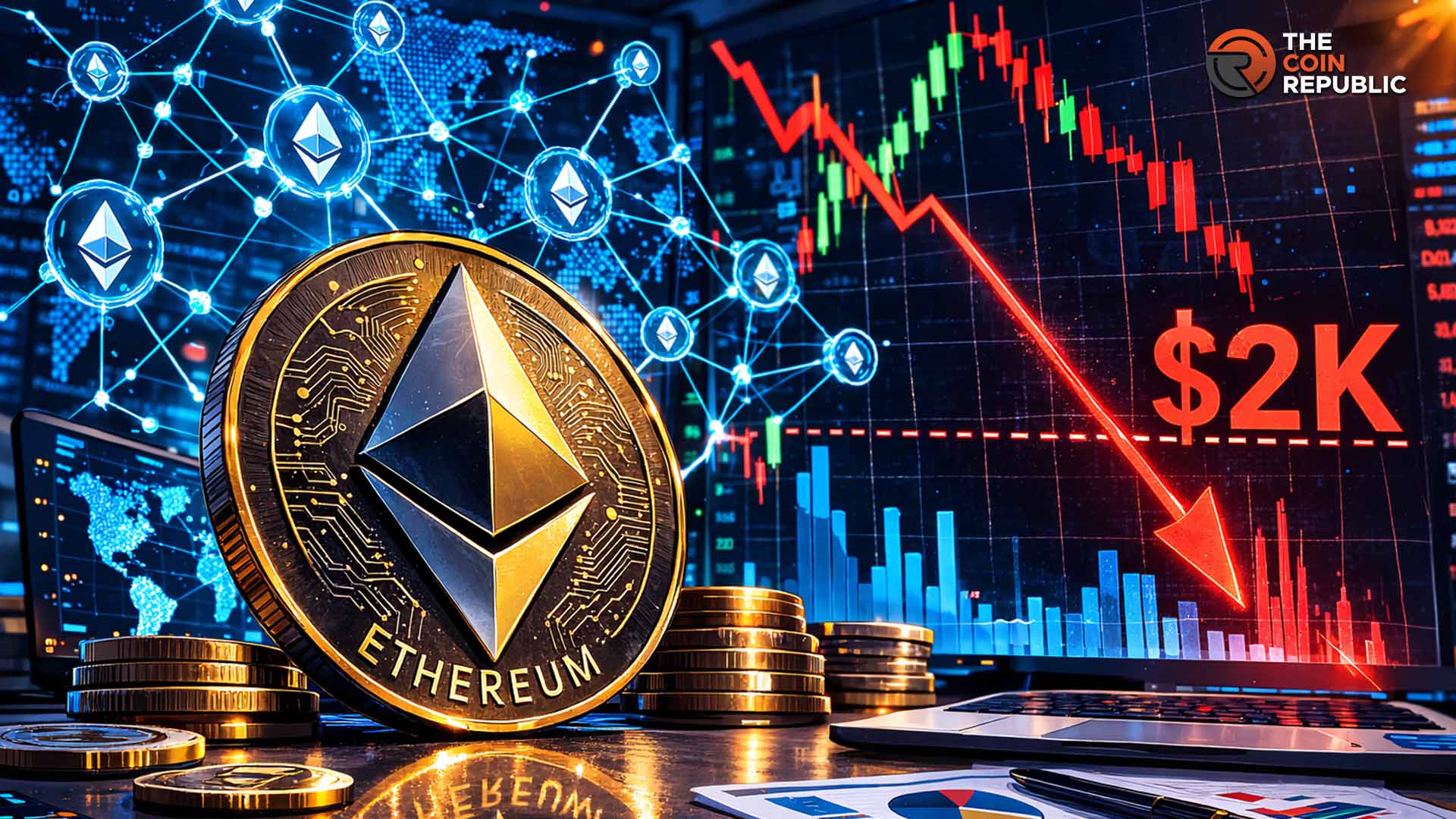
Despite a recent price drop below $2,000, Ethereum's network activity has surged, with daily active addresses reaching 1.1 million in February, indicating accumulation by long-term holders and potential for future price appreciation. The significant increase in staked Ether (37.85 million) and decreasing exchange reserves suggest a tightening liquid supply, which could amplify price movements when demand returns. Ethereum is approaching a key resistance level, and its ability to break through or hold the current support zone will determine its short-term trajectory, with the 21-week EMA near $2,700 as a potential target if momentum builds.
Prediction markets indicate a significant probability, with odds ranging from 65% to 71%, that Bitcoin will fall below $55,000 by the end of 2026, reflecting current market sentiment and macroeconomic concerns. Despite the bearish outlook on price, traders on prediction platforms show low conviction, under 15%, for MicroStrategy to sell its substantial Bitcoin holdings in 2026, suggesting continued accumulation by major corporate holders. Recent net negative flows into US spot Bitcoin ETFs, particularly from Fidelity, coupled with broader macroeconomic uncertainties, are contributing to downward pressure on BTC price, signaling a cautious investor sentiment.

Bitcoin's price discovery has structurally shifted from spot demand to a derivatives-driven market, influenced by futures, options, and ETF hedging mechanics. The increasing correlation with traditional risk assets like the Nasdaq highlights Bitcoin's integration into global macro portfolios, amplifying volatility during liquidity cycles. While scarcity remains a core attribute, Bitcoin's marginal price is now largely set by liquidity dynamics and the cost of capital within the derivatives ecosystem. The evolution of financial products, including ETFs and derivatives, is transforming Bitcoin into a portfolio building block, enabling more sophisticated investor strategies and risk management.
Signal context only. Validate with price action, liquidity, and risk limits before taking a position.
