
Navigating Crypto News

CoinFeather
Navigating Crypto News

Quick market read from this story
Despite a 7% rally in Dogecoin's spot market price, Dogecoin ETFs recorded zero net inflows over the past 24 hours, indicating a disconnect between retail price action and institutional investment sentiment.
The sustained lack of inflows into Dogecoin ETFs since early March suggests that institutional capital is not yet participating in the current price appreciation, potentially limiting upside momentum.
While Dogecoin's price shows resilience defending the $0.09 support level, the absence of ETF inflows points to a market consolidation phase rather than a strong bullish breakout, requiring further capital to sustain a rally.
Deep Dive
Despite a notable 7% rally in its spot market price, Dogecoin spot ETFs have recorded zero net inflows since the beginning of March. This trend highlights a disconnect between the cryptocurrency's price action and institutional investment in its ETF products.
On Friday, major cryptocurrencies extended their gains, with Dogecoin experiencing a significant rise from $0.094 to $0.1004. This surge built upon a prior-day rebound and contributed to the broader recovery from a March 8 low of $0.086. At the time of reporting, DOGE was up 5.33% in the last 24 hours to $0.998 and 7.22% weekly. The overall crypto market has been consolidating, with its total value hovering near $2.45 trillion for three consecutive sessions.
However, this positive price movement has not translated into inflows for Dogecoin spot ETFs. Data from Sosovalue indicates that the Grayscale, 21shares, and Bitwise Dogecoin ETFs have seen $0 in daily net inflows since March 3. Despite the lack of net inflows, these ETFs have still recorded trading volumes ranging between $212,460 and $1.02 million daily.
Analysts suggest the current market phase is characterized by stabilization rather than an imminent breakout. A sustained bull run is anticipated to require a fresh influx of capital and clear macro catalysts. Until then, the market may continue to consolidate near its current range.
The cumulative total net inflow for Dogecoin ETFs remains at $7.45 million, with total net assets equaling $9.27 million, according to SoSoValue data.
From a technical perspective, Dogecoin is recovering from a March 8 low of $0.086, with bulls actively defending the $0.09 support level. A breakout above the 50-day moving average at $0.101 could pave the way for a move towards $0.12, a potential resistance point. Conversely, if bears manage to push the price below the $0.09 mark, Dogecoin could face further declines towards $0.08 and potentially $0.06.
Source, catalyst, and sector overlap from the latest feed.
Fidelity's Jurrien Timmer maintains that Bitcoin's $60,000 level represents a significant cyclical floor, supported by his power law model and the Bitcoin-to-gold ratio. The analysis suggests that despite potential short-term dips below $60,000, the current market conditions, influenced by institutional adoption via ETFs, indicate a shallower crypto winter than in previous cycles. Traders should monitor the $60,000 price level as a key support zone, with deviations from the power law trendline and Z-score of the Bitcoin-gold ratio serving as potential indicators of cycle bottoms.
Historical forum evidence suggests Satoshi Nakamoto and Hal Finney supported the creation of altcoins, challenging modern Bitcoin maximalist narratives and implying a broader ecosystem vision than currently practiced. The early Bitcoin community's openness to forks and alternative blockchains, as highlighted by the Zcash founder, suggests a potential shift in understanding the 'original vision' for crypto, which may influence how new projects are perceived. This historical context could reframe the debate around altcoins and ecosystem expansion, potentially impacting sentiment towards projects that build on or fork from Bitcoin's foundational principles.
The upcoming Litecoin halving, approximately 500 days away, will reduce miner rewards from 6.25 LTC to 3.125 LTC per block, a programmed supply shock designed to curb inflation. Historically, Litecoin price has seen pre-halving rallies followed by post-halving dips, suggesting that while the event is a known supply-side catalyst, its immediate price impact may be muted or even negative. The market sentiment surrounding the Litecoin halving remains a key variable, as past performance may not dictate future outcomes given evolving market conditions and investor psychology.
The release of XRP Ledger Software version 3.1.2 addresses a critical node outage glitch, enhancing network stability and reliability for participants. This update follows an emergency patch for a bug in the Batch amendment, indicating ongoing efforts to secure and stabilize the XRPL protocol. While the immediate node outage is resolved, the ongoing voting process for the XRP Ledger Lending protocol amendment highlights the gradual nature of protocol upgrades and adoption.
Shiba Inu (SHIB) has experienced a significant weekly price increase of 17%, its strongest performance since December 2025, indicating a potential shift in market sentiment. Technical analysis using Bollinger Bands suggests a realistic upside potential of approximately 22% for SHIB, targeting a price of $0.00000760, driven by current market momentum. The current week's strong performance, the most 'green' since December 2025, combined with technical indicators, supports a bullish outlook for SHIB in the short term.
Bitcoin's exchange reserves hitting 2019 lows and a 5-month high in scarcity index suggest tightening supply, which historically precedes price appreciation. The surge in the futures/spot ratio to an 18-month high indicates increased leverage in the derivatives market, potentially amplifying short-term price movements but also signaling strong conviction from active traders. Combined inflows into ETFs and treasuries, alongside reduced exchange balances, create a bullish backdrop for Bitcoin by decreasing readily available supply and indicating long-term accumulation. Despite increased derivatives activity, the underlying trend of reduced exchange liquidity and rising scarcity points to a strengthening bullish outlook for Bitcoin, even amidst broader market uncertainty.
Bitcoin's reclaim of $73,000, driven by a significant short squeeze, indicates strong underlying demand and potential for further upside if the level holds. The surge in liquidations, particularly of short positions, highlights the impact of leveraged trading on price volatility and suggests a potential shift in market sentiment towards bullishness. While Bitcoin leads the current rally, sustained outperformance from Ethereum and major altcoins will be crucial to confirm a broader market recovery and the start of an altseason. Traders should monitor Bitcoin's ability to hold above $71,000-$72,000 support and observe for declining liquidation totals and balanced funding rates as indicators of a healthy upward trend.
BlackRock's launch of the Staked Ethereum Trust ETF (ETHB) reframes Ethereum from a complex tech bet to a yield-bearing asset, potentially attracting traditional investors seeking income and broadening its appeal beyond pure crypto speculation. The ETHB product simplifies Ethereum's narrative for mainstream investors by emphasizing monthly income potential and brokerage account accessibility, directly addressing previous investor complaints about unstaked Ether lacking yield. While Grayscale previously offered staking rewards in its ETPs, BlackRock's involvement signifies mainstream ratification and leverages its vast distribution network, potentially shifting capital allocation towards ETH as a hybrid growth and yield asset. The success of ETHB hinges on whether the yield proposition outweighs ETH's inherent volatility and staking risks, with a potential 'black swan' scenario involving operational, liquidity, or regulatory issues impacting high-visibility products.
BlackRock's launch of the iShares Staked Ethereum ETF (ETHB) introduces a novel product that combines direct ETH exposure with staking rewards, potentially attracting investors seeking yield and simplifying direct ETH staking for a broader audience. The introduction of ETHB by a major asset manager like BlackRock signifies continued institutional adoption and product innovation within the Ethereum ecosystem, potentially increasing demand and liquidity for ETH. While the ETF itself is a new product, its launch coincides with broader market volatility, suggesting that while it may attract capital, its immediate price impact on ETH will be influenced by macroeconomic factors and overall market sentiment.
Bitcoin has demonstrated resilience by outperforming gold, silver, and major US equity indexes since the escalation of geopolitical tensions in Iran, indicating its growing role as a macro hedge despite traditional headwinds. The recent price surge and recovery, supported by significant spot Bitcoin ETF inflows and a reset of leveraged positions after an initial sell-off, suggest underlying demand is absorbing volatility in a more institutionalized market. Despite the rebound, market sentiment remains cautiously bearish with analysts pointing to a broader bear market context, negative funding rates, and whales reducing long positions, suggesting potential for short squeezes but also continued overhead resistance. Near-term price action for Bitcoin is likely to be dictated by its ability to break through significant sell walls and liquidity zones around $72,000-$74,000, with support levels identified between $70,500-$71,000 and deeper liquidity around $69,000.
A dormant whale's $7 million investment in TRUMP tokens, triggered by a Mar-a-Lago gala announcement, demonstrates speculative interest in politically-linked memecoins. The TRUMP token experienced a 60% rally following the gala news, highlighting the sensitivity of memecoins to event-driven narratives and influencer activity. Despite the recent surge, TRUMP remains significantly down from its all-time high, indicating high volatility and speculative risk associated with the asset.
Dogecoin is showing signs of a technical recovery, trading above the Bollinger Bands basis and defending a decade-long support trendline, indicating potential for a short-term bullish reversal. Analysts highlight a critical 10-year support trendline retest for DOGE, suggesting historical patterns could precede a significant rally if the support holds, with ambitious price targets projected. Despite positive price action and long-term support, momentum indicators remain cautious, signaling that a confirmed bullish breakout above $0.10 and the upper Bollinger Band is necessary to validate a sustained upward trend.
The rally in TRUMP, Pi Network, and Render tokens highlights a rotation into specific narratives driven by project-specific catalysts, rather than a broad market altcoin season. The Official Trump token's surge is directly linked to an upcoming event with Donald Trump, indicating a speculative play on political association. Kraken's listing of Pi Network token provides a significant liquidity and accessibility boost, potentially attracting new users and capital to the ecosystem. Render's continued ascent, driven by AI developments and token burns, signals sustained interest in the AI sector and its associated infrastructure.
Shiba Inu's recent token burn of 6.8M SHIB, while a 44% increase in burn activity, is unlikely to significantly impact its massive circulating supply of over 585 trillion tokens, suggesting limited near-term price appreciation from this event alone. Despite the ongoing debate about the effectiveness of SHIB's deflationary mechanism, the token experienced a 4% price gain coinciding with the burn, indicating potential short-term speculative interest or broader market sentiment influencing its movement. The article highlights that historical burn events have not consistently triggered price rallies, and SHIB has seen a significant year-to-date decline, suggesting that current price action may be more sensitive to overall market trends than token burns.
Live Feed
Loading the broader stream in the same flow as the homepage feed.

KuCoin's launch of perpetual futures for Tesla and MicroStrategy stocks signifies a growing trend of crypto exchanges bridging traditional finance assets, potentially attracting new capital and user bases. The introduction of USDt-settled, 24/7 tradable equity derivatives on KuCoin offers continuous exposure to stock price movements, bypassing traditional market hours and potentially increasing trading volume for these synthetic products. This development aligns with the broader market trend of RWA tokenization, with tokenized equity market cap surging, indicating increased institutional and retail interest in integrating traditional assets with blockchain technology. While KuCoin's move expands derivative offerings, potential regulatory restrictions in certain jurisdictions could limit the global adoption and impact of these new contracts.

U.S. Treasury sanctions highlight the ongoing use of fraudulent IT operations by North Korea to fund weapons programs, with nearly $800 million generated in 2024 alone through these schemes. The sanctions target individuals and entities involved in converting funds, including approximately $2.5 million into cryptocurrency, underscoring the role of digital assets in illicit finance. This action reinforces the regulatory scrutiny on crypto's use in circumventing sanctions, potentially increasing compliance burdens for entities handling cross-border transactions.
Bitcoin's price surge to near $74K is driven by technical breakouts and commentary on oil prices, overshadowing persistent PCE inflation data that suggests the Fed may delay rate cuts. Despite Bitcoin's upward momentum, analysts note the broader market structure lacks confirmation of a long-term bottom, indicating potential for continued volatility. Persistent core PCE inflation at 3.1% and unchanged core capital goods orders suggest a stagflationary environment, complicating the Federal Reserve's monetary policy decisions and reducing the likelihood of near-term rate cuts.

A massive $50 million USDT to AAVE trade resulted in extreme slippage, leaving the trader with only $36,000, highlighting significant risks in large DeFi swaps. Speculation points to Bitcoin OG Garrett Jin as the potential trader behind the $50M slippage event, based on wallet analysis and recent transaction patterns. The substantial losses were distributed among liquidity providers, arbitrage bots, and protocol fees, with a significant portion going to the block builder, underscoring MEV dynamics. Aave's founder indicated plans to refund fees, but the incident serves as a stark reminder of the operational risks and lack of traditional financial safeguards in DeFi for large-scale transactions.

Geopolitical tensions in the Middle East have triggered a sharp, albeit potentially short-lived, pullback in Bitcoin and other risk assets, demonstrating crypto's sensitivity to global macro events. Despite the intraday dip, Bitcoin remains in a net gain for the 24-hour period, suggesting underlying bullish momentum may persist if geopolitical concerns do not escalate further. The market's reaction highlights the correlation between crypto and traditional risk assets, with gold's pullback and oil's rise indicating a flight to safety that temporarily sidelined crypto investors.
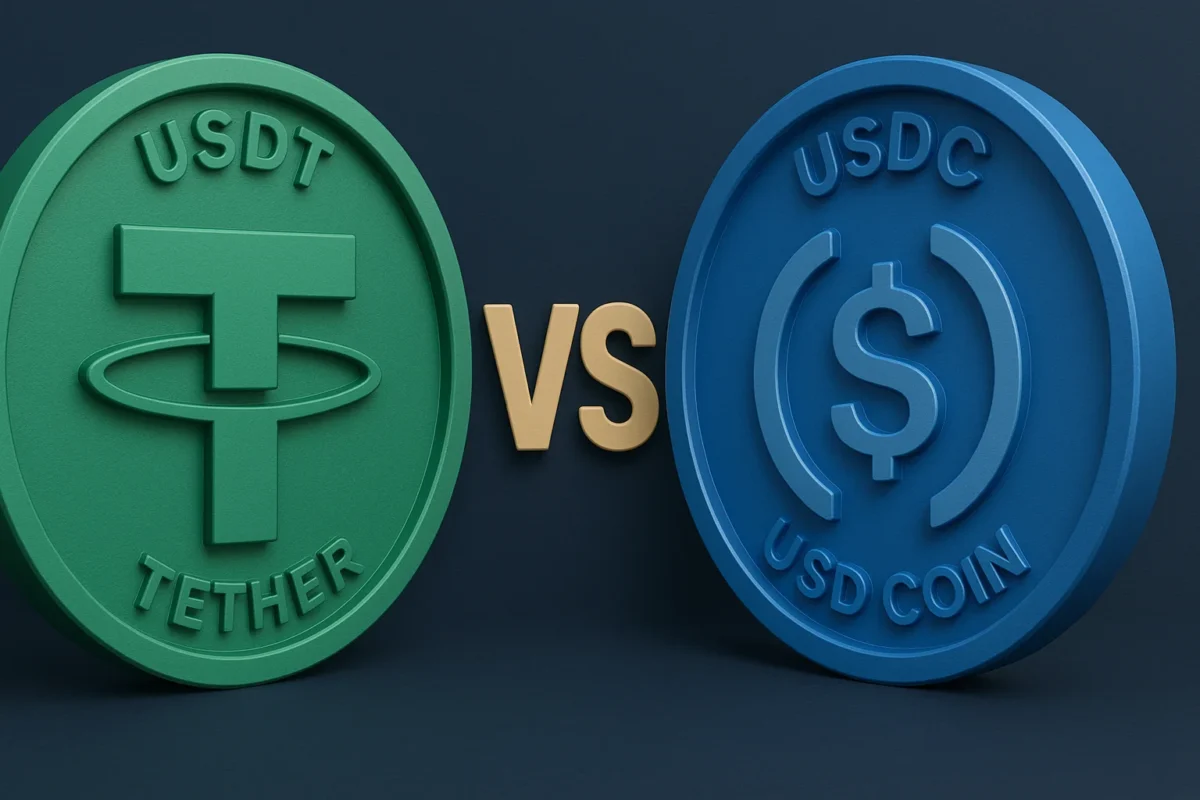
USDC's surpassing of USDT in transaction volume signals a potential shift in stablecoin dominance, driven by emerging use cases beyond traditional crypto trading. The ongoing regulatory debate, particularly in the UK, introduces uncertainty for stablecoin issuers and could influence future adoption and market structure. While USDC leads in transaction volume, USDT's larger market cap indicates continued market segmentation, with long-term leadership likely dependent on real economic utility. Mizuho's revised forecasts for Circle suggest increased confidence in USDC's long-term growth, projecting significant increases in wallet usage and market capitalization.

The Federal Reserve's upcoming vote on a revised Basel capital proposal is a critical determinant for how banks will integrate Bitcoin into their balance sheets, potentially shifting the focus from legal permission to economic feasibility. A more favorable capital treatment for Bitcoin exposures could unlock significant bank-led custody, financing, and market-making services, thereby increasing Bitcoin's bankability and potentially its price stability. Conversely, a punitive capital framework would reinforce Bitcoin's status as a balance sheet hazard for large banks, limiting institutional adoption and keeping it on the periphery of the regulated financial system. The outcome of this regulatory review is poised to significantly influence the near-term trajectory of institutional Bitcoin adoption and its integration into traditional finance.

MoonPay's integration of Ledger hardware signing for its AI agents addresses a critical security gap in autonomous trading, potentially enabling wider adoption of AI-driven financial management in crypto. By ensuring private keys remain on the hardware signer, this development mitigates the risk of key compromise associated with AI agents, a significant hurdle for institutional and retail users managing substantial assets. This move signals a growing trend towards enhanced security for AI-powered crypto tools, suggesting that future developments in this space will likely prioritize user control and non-custodial solutions.

Story Protocol developer PIP Labs is undergoing workforce adjustments, reducing staff by approximately 10% to pivot towards AI opportunities, signaling a strategic shift in focus. The company's pivot to AI infrastructure for AI trading data and agents, particularly through its incubated entity Poseidon, suggests a potential future growth area for the protocol. Despite the layoffs, Story Protocol's core focus on IP licensing and automation remains, but the emphasis is shifting towards machine-based users, indicating a potential evolution in its product development and market strategy. The native IP token has seen a significant price decline of 86% over the past year, which, combined with workforce changes, may indicate underlying challenges or a strategic repositioning to reignite investor interest.

The Ethereum Foundation has published a new mandate clarifying its long-term role, emphasizing self-sovereignty and core principles like censorship resistance, open source, privacy, and security (CROPS). The foundation aims to become less influential over time as the ecosystem matures, focusing on work other participants are unlikely to undertake, such as long-term research and public goods security. This strategic clarification by the EF signals a commitment to decentralization and individual freedom, reinforcing Ethereum's foundational ethos amidst evolving technical roadmaps and organizational transitions. The EF's stated goal of reducing its relative influence suggests a focus on enabling the ecosystem to self-sustain and govern, potentially leading to more decentralized decision-making processes.

The increasing demand for AI-driven data centers is fueling a revival in nuclear power, with Bitcoin miners being early adopters of this energy source for high-performance computing operations. Bitcoin miners' strategic pivot towards nuclear energy, evidenced by growing adoption and partnerships like TeraWulf's with Talen Energy, signals a trend towards securing stable, carbon-free baseload power. The trend of Bitcoin miners utilizing nuclear power, which has grown from 4% in 2021 to nearly 10% in 2022 and continues to rise, highlights a significant shift in the energy mix for mining operations, potentially impacting operational costs and sustainability narratives. The development of small modular reactors (SMRs) presents a future opportunity for colocation with energy-intensive infrastructure like data centers and large-scale Bitcoin mining, indicating potential for further integration and efficiency gains.

Senate Majority Leader John Thune indicates the CLARITY Act is unlikely to advance before April, citing other legislative priorities and potentially delaying regulatory clarity for the digital asset market. Despite potential delays, projections from Kristin Smith and JPMorgan suggest the CLARITY Act could still pass by July 2026, highlighting ongoing efforts to establish a clearer regulatory framework. Former President Donald Trump's call to fast-track the CLARITY Act and his warning about China gaining an advantage underscore the geopolitical implications of US regulatory inaction. The differing timelines and political pressures surrounding the CLARITY Act suggest a complex and uncertain path forward for crypto regulation in the US, impacting market sentiment and investment decisions.

Billionaire investor Stanley Druckenmiller predicts stablecoins could dominate global payment systems within 10-15 years, highlighting their efficiency and cost-effectiveness over traditional infrastructure. Despite skepticism towards most cryptocurrencies, Druckenmiller acknowledges Bitcoin's established role as a store of value, driven by its brand recognition and user adoption. Druckenmiller's long-term outlook suggests potential for crypto assets to challenge the U.S. dollar's reserve currency status, though he expresses personal dislike for many crypto projects.

Circle's USDC transaction volumes surpassing Tether's USDT for the first time since 2019 indicates a significant shift in stablecoin market dynamics, potentially driven by real economic usage rather than just market capitalization. Mizuho's price target hike for Circle to $120, despite a neutral rating, suggests growing institutional confidence in the stablecoin issuer's growth trajectory and market position. The increasing adoption of USDC for use cases like Polymarket and agentic commerce, coupled with Mizuho's revised long-term forecasts for wallet numbers and market capitalization, points to sustained growth potential for Circle's ecosystem.
Signal context only. Validate with price action, liquidity, and risk limits before taking a position.
