
Navigating Crypto News

CoinFeather
Navigating Crypto News
Quick market read from this story
Shiba Inu's recent token burn of 6.8M SHIB, while a 44% increase in burn activity, is unlikely to significantly impact its massive circulating supply of over 585 trillion tokens, suggesting limited near-term price appreciation from this event alone.
Despite the ongoing debate about the effectiveness of SHIB's deflationary mechanism, the token experienced a 4% price gain coinciding with the burn, indicating potential short-term speculative interest or broader market sentiment influencing its movement.
The article highlights that historical burn events have not consistently triggered price rallies, and SHIB has seen a significant year-to-date decline, suggesting that current price action may be more sensitive to overall market trends than token burns.
Deep Dive
Shiba Inu has recently seen a significant increase in its token burn activity, with 6.8 million SHIB tokens removed from circulation in the past 24 hours. This surge represents a 44.45% increase in burn activity, coinciding with a modest 4% price rebound for the token amidst ongoing discussions about its substantial supply.
The Shiba Inu ecosystem employs a deflationary mechanism where developers and community members send SHIB tokens to inaccessible wallet addresses, effectively reducing the circulating supply. The stated aim of this strategy is to lower the total supply and potentially boost the value of the remaining tokens through supply-demand dynamics. However, despite this recent burn event, the total circulating supply remains immense, with 585,474,878,489,555 SHIB still in circulation, highlighting the significant challenge in making a substantial impact on the overall supply through individual burn events.
Critics argue that the current burn rate produces limited measurable results, with millions of burned tokens rarely altering the broader supply picture significantly. The burn activity is often described as more symbolic than transformative, with the reductions being too small to counteract the vast circulating supply. Furthermore, the burn process is inconsistent and relies on discretionary community actions, leading to a slow reduction in supply. Despite these criticisms, the recent burn activity coincided with a short-term price increase. Shiba Inu traded at $0.00000621, marking a 4.01% gain in the last 24 hours. Previously, the token had dropped to $0.000005655 before the burn event. Historical data indicates that burn events do not always guarantee price rallies, as Shiba Inu has experienced previous burn exercises without notable market responses. Over the past year, SHIB has lost over 51% of its value and continues to face liquidity constraints, with traders closely monitoring its current price level for signs of a broader recovery or continued decline.
Source, catalyst, and sector overlap from the latest feed.
Bitcoin's reclaim of $73,000, driven by a significant short squeeze, indicates strong underlying demand and potential for further upside if the level holds. The surge in liquidations, particularly of short positions, highlights the impact of leveraged trading on price volatility and suggests a potential shift in market sentiment towards bullishness. While Bitcoin leads the current rally, sustained outperformance from Ethereum and major altcoins will be crucial to confirm a broader market recovery and the start of an altseason. Traders should monitor Bitcoin's ability to hold above $71,000-$72,000 support and observe for declining liquidation totals and balanced funding rates as indicators of a healthy upward trend.
Adobe's stock experienced a significant 8.85% drop driven by the unexpected retirement announcement of its long-time CEO, overshadowing strong Q1 earnings and raising concerns about leadership transition amidst intense AI competition. Despite solid Q1 results and positive outlook for Creative Cloud, Document Cloud, and AI features, the market's focus on CEO Shantanu Narayen's departure amplifies fears of leadership uncertainty and competitive threats from AI startups. Technical indicators show a breakdown below key moving averages, and analyst price targets have been slashed, suggesting potential further downside risk if the company fails to navigate the leadership change effectively and address AI disruption. While some analysts maintain a bullish long-term view based on Adobe's historical performance and AI monetization potential, the immediate market reaction indicates a 'value trap' scenario unless a strong successor is appointed and competitive challenges are effectively managed.
Shibarium's ongoing indexing issues, with only 41% of blocks processed, are causing temporary display discrepancies for tokens and NFTs, impacting user confidence in asset visibility. Despite recent infrastructure upgrades and RPC changes aimed at improving stability, the continued indexing delays on Shibariumscan highlight ongoing recovery efforts and potential user friction. The Shiba Inu team's focus on rebuilding the network and addressing user concerns, alongside the launch of the SOU token for impacted users, signals a commitment to ecosystem resilience.
Ethereum is testing a critical $2,150 resistance zone, and a sustained break above this level could signal a move towards the CME futures gap, indicating potential upside momentum for ETH. The current price action shows Ethereum recovering from lower Bollinger Band support, suggesting renewed buying pressure, but a confirmed breakout above $2,150 is needed to validate a stronger recovery trend. The CME futures gap above the current trading range presents a key upside target for ETH if resistance at $2,150 is overcome, a common market tendency to fill such gaps could drive price action.
Investors seeking exposure to Burger King must track Restaurant Brands International (QSR) stock, as Burger King does not trade as a standalone entity. Burger King has a history of public trading, including an IPO in 2006 and subsequent mergers, but currently operates as a subsidiary of QSR. While speculation exists about a future Burger King IPO, the current corporate structure under QSR leverages shared resources and operational efficiencies.
Ripple's CTO Emeritus David Schwartz suggests that a hypothetical large XRP burn, similar to XLM's 50% supply reduction, may not significantly impact XRP's price due to historical price correlation and the limited observable effect on XLM post-burn. The discussion highlights that despite XLM's substantial token burn, its price continued to mirror XRP's, implying that fundamental market dynamics and broader sentiment may outweigh supply-side changes for these correlated assets. While a burn of XRP's 33.6 billion escrowed tokens would be a significant supply reduction, the analysis indicates that traders should temper expectations for direct price appreciation based on this event alone, given past precedents.
Vitalik Buterin clarified his handling of a 500 trillion SHIB donation, revealing he sold most for ETH to fund significant donations and burned a portion, impacting SHIB's circulating supply narrative. The disclosure provides transparency on a large historical SHIB transaction, potentially influencing community sentiment and reinforcing the token burn narrative for SHIB. Buterin's strategic sale and donation of SHIB, which unexpectedly yielded $500 million instead of the projected $10-25 million, highlights the unpredictable nature of meme coin valuations and their potential for philanthropic use.
Ripple has significantly increased RLUSD token burning activity across Ethereum and XRP Ledger, removing 51 million tokens in 24 hours, which signals a potential strategy to manage supply and potentially enhance token value or stability. The simultaneous minting and burning of RLUSD indicates active management of the stablecoin's supply, suggesting a dynamic approach to liquidity and circulation control by Ripple. While RLUSD burns are occurring, the concurrent minting of RLUSD suggests that the net supply change may not be drastically negative, requiring closer monitoring of the overall supply dynamics rather than just burn events.
Ripple's substantial 41 million RLUSD token burn signals a strategic effort to manage supply and enhance token scarcity, potentially supporting its value amidst rising stablecoin demand. The significant RLUSD burn, coupled with Ripple's partnership with Mastercard for on-chain fiat settlements, indicates a push for broader corporate adoption and utility of stablecoins in payment ecosystems. By actively rebalancing RLUSD supply and maintaining stable reserves, Ripple aims to solidify its position in the stablecoin market, which could influence investor confidence and demand for its offerings.
Ripple Labs executed a significant burn of 25 million RLUSD stablecoins, a move intended to reduce circulating supply and potentially curb inflationary pressures, which could be interpreted as a bullish signal for XRP's price. The substantial RLUSD burn, coupled with Ripple's ongoing global licensing strategy and expansion into markets like Australia, suggests a concerted effort to strengthen its ecosystem and drive demand for its products and services. Market analysts are linking the RLUSD burn and positive technical indicators to a potential XRP price rally, with some predicting a significant upward trend if current corrective phases conclude and a bullish wave begins.
The rally in TRUMP, Pi Network, and Render tokens highlights a rotation into specific narratives driven by project-specific catalysts, rather than a broad market altcoin season. The Official Trump token's surge is directly linked to an upcoming event with Donald Trump, indicating a speculative play on political association. Kraken's listing of Pi Network token provides a significant liquidity and accessibility boost, potentially attracting new users and capital to the ecosystem. Render's continued ascent, driven by AI developments and token burns, signals sustained interest in the AI sector and its associated infrastructure.
The Official Trump memecoin ($TRUMP) has experienced a dramatic 96% decline from its all-time high, indicating significant loss of investor confidence and market value. A new promotion offering a gala at Mar-a-Lago for top $TRUMP holders aims to re-engage whales and incentivize holding despite the token's severe depreciation. The promotion's structure, focusing on average balance and strict eligibility, suggests a strategy to retain large holders in a declining asset rather than broad market recovery. The modest price bounce following the announcement appears to be driven by speculative demand from holders aiming for the gala invitation, not a fundamental shift in the token's outlook.
Bitcoin is demonstrating resilience by outperforming traditional markets and strengthening against a rising dollar, indicating potential underlying demand despite broader macroeconomic headwinds. Increased open interest and positive funding rates across major cryptocurrencies suggest a growing bullish sentiment among derivatives traders, potentially signaling further upside. The outperformance of AI tokens and the surge in a specific memecoin highlight sector-specific strength and speculative interest within the broader crypto market rally. While Bitcoin faces resistance around $74,000, a sustained break above this level could trigger a significant upward move towards $80,000, making it a key level to watch.
Whale accumulation of TRUMP tokens, increasing by over 13% to 4.54 million, suggests significant long-term positioning despite recent price dips, indicating potential for sustained upside momentum. Positive on-chain capital flows, including substantial exchange outflows and new wallet inflows, coupled with a technical breakout from a downtrend, signal a shift in market structure and growing confidence in TRUMP's recovery. The TRUMP token's breakout above its descending channel, supported by rising volume and an improving RSI, indicates a potential shift to a higher-low pattern, suggesting a developing broader recovery trend that traders should monitor.
Harvard's significant $86.8M investment into the iShares Ethereum Trust, coupled with a reduction in Bitcoin ETF holdings, signals growing institutional conviction in Ethereum beyond Bitcoin, potentially driving further adoption and price appreciation. The upcoming Binance listing for Pepeto, a new exchange product with cross-chain capabilities and AI-driven risk scanning, represents a potential high-growth opportunity, especially given its $8M presale raise and the involvement of experienced figures from Pepe coin and Binance. Standard Chartered's $7,500 ETH price prediction for 2026, alongside other institutional interest and upcoming protocol upgrades like Glamsterdam, suggests a bullish outlook for Ethereum's long-term value proposition and market position.
Live Feed
Loading the broader stream in the same flow as the homepage feed.
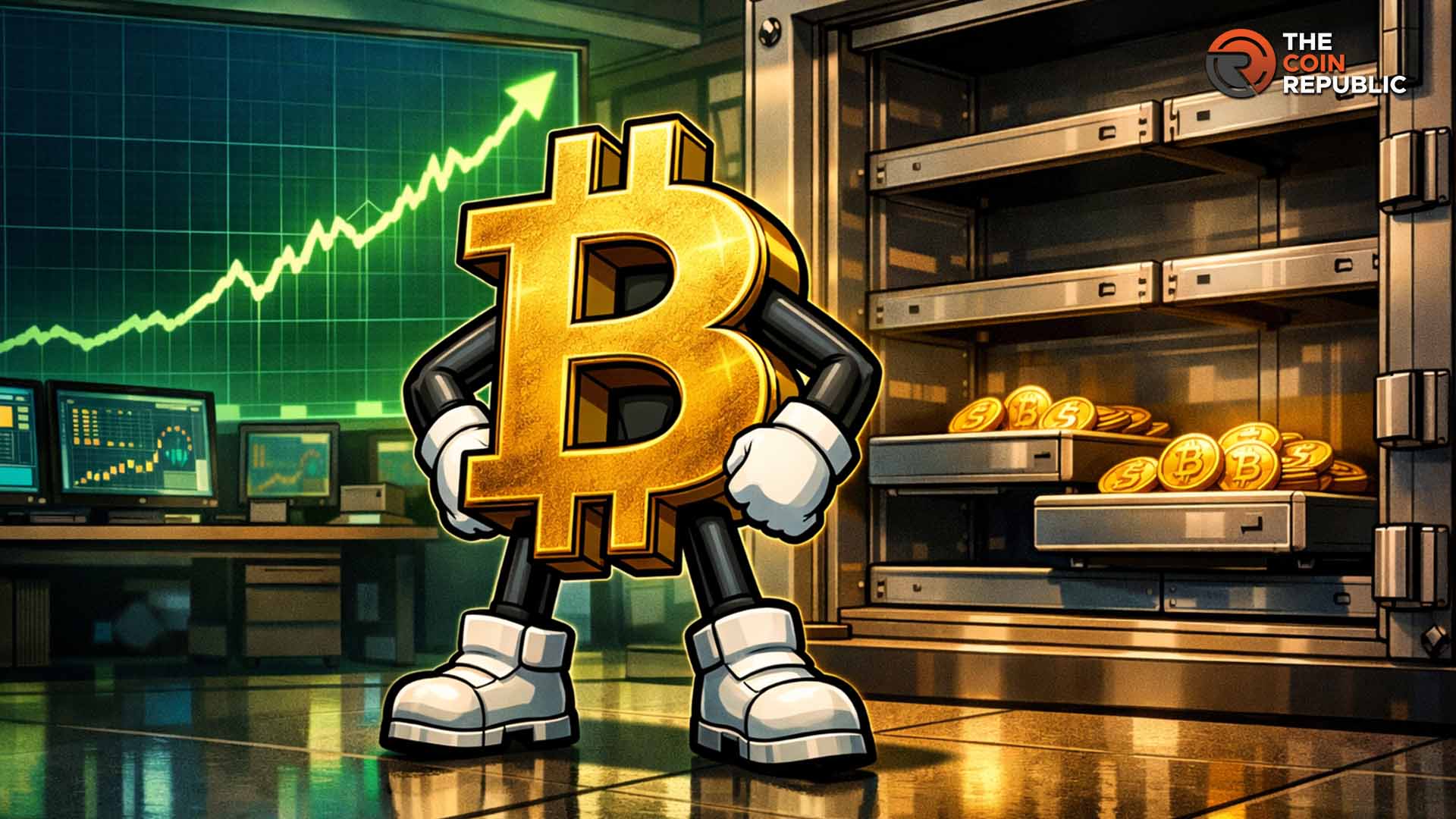
Bitcoin's exchange reserves hitting 2019 lows and a 5-month high in scarcity index suggest tightening supply, which historically precedes price appreciation. The surge in the futures/spot ratio to an 18-month high indicates increased leverage in the derivatives market, potentially amplifying short-term price movements but also signaling strong conviction from active traders. Combined inflows into ETFs and treasuries, alongside reduced exchange balances, create a bullish backdrop for Bitcoin by decreasing readily available supply and indicating long-term accumulation. Despite increased derivatives activity, the underlying trend of reduced exchange liquidity and rising scarcity points to a strengthening bullish outlook for Bitcoin, even amidst broader market uncertainty.

Geopolitical tensions impacting Iran's mining capacity are a minor concern for the global Bitcoin network, as only 8-10% of hashrate is on oil-sensitive grids, with the majority insulated from crude price shocks. The primary risk to Bitcoin miners stems from potential price compression of BTC due to geopolitical stress pushing capital away from risk assets, rather than direct increases in energy costs. Public Bitcoin miners are strategically pivoting towards AI and HPC workloads, leveraging their infrastructure for higher revenue streams, with over $65 billion in contracts already secured, indicating a structural shift in the industry. While the Iran conflict presents a double exposure for Gulf-based miners (rising power costs and potential BTC price drops), the broader industry trend towards AI infrastructure offers a hedge against volatile crypto market conditions.

Bitcoin has reached a one-month high of $73,800, outperforming traditional assets like stocks and gold since the start of the Iran conflict. Negative funding rates for perpetual futures traders, sustained for the longest period since late 2022, suggest a potential short squeeze scenario is developing. A potential break above $74,000 could signal a move towards $80,000, while a rejection might keep Bitcoin within its recent trading range. The recent price action indicates a potential shift in market sentiment, with Bitcoin showing resilience and breaking a five-month losing streak in March.
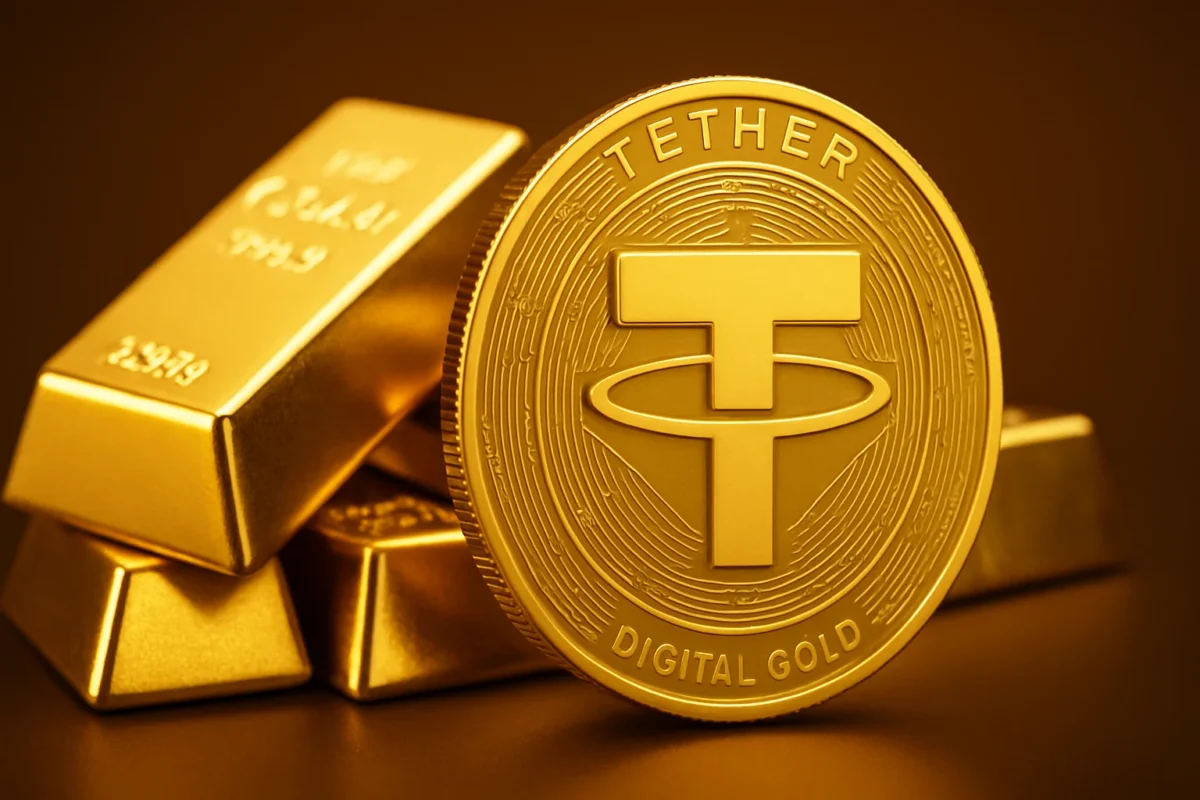
The increasing use of USDT in illicit Amazonian gold trading highlights stablecoins' utility for bypassing sanctions and traditional financial controls in high-risk markets. Venezuela's role as a hub for illicit gold flows, now facilitated by USDT, underscores the growing intersection of organized crime, commodity markets, and digital assets. While Tether cooperates with law enforcement, the broader adoption of stablecoins in illicit activities necessitates enhanced regulatory scrutiny over digital asset flows. The convergence of tokenized gold products and illicit USDT usage in commodity trading signals a significant reshaping of traditional markets by blockchain technology.

The offer of $100 monthly payments to Nevis residents by Olivier Janssens' Destiny project, an increase from $11, is being criticized as an attempt to influence government approval for a tech-friendly libertarian community. This development highlights a growing trend of crypto entrepreneurs seeking to establish self-governing communities, potentially as an 'exit' strategy from existing regulatory environments. The controversy surrounding the project's funding and local opposition suggests potential regulatory scrutiny and community backlash, impacting the feasibility and timeline of such 'network state' initiatives.

BlackRock's launch of the Staked Ethereum Trust ETF (ETHB) reframes Ethereum from a complex tech bet to a yield-bearing asset, potentially attracting traditional investors seeking income and broadening its appeal beyond pure crypto speculation. The ETHB product simplifies Ethereum's narrative for mainstream investors by emphasizing monthly income potential and brokerage account accessibility, directly addressing previous investor complaints about unstaked Ether lacking yield. While Grayscale previously offered staking rewards in its ETPs, BlackRock's involvement signifies mainstream ratification and leverages its vast distribution network, potentially shifting capital allocation towards ETH as a hybrid growth and yield asset. The success of ETHB hinges on whether the yield proposition outweighs ETH's inherent volatility and staking risks, with a potential 'black swan' scenario involving operational, liquidity, or regulatory issues impacting high-visibility products.

U.S. sanctions targeting individuals and companies involved in laundering $800 million in crypto for North Korea highlight the ongoing challenges of illicit finance in the digital asset space. The involvement of various crypto infrastructure, including centralized exchanges, DeFi services, and cross-chain bridges, underscores the need for enhanced regulatory oversight across the entire digital asset ecosystem. The Treasury's action, which identified specific wallet addresses across multiple blockchains, signals increased scrutiny on crypto transactions linked to state-sponsored illicit activities and potential future enforcement actions. While the direct impact on major cryptocurrencies may be limited, the news reinforces a bearish sentiment for assets and platforms perceived as facilitating illicit flows, potentially leading to increased compliance costs and operational risks.

Law enforcement's disruption of the SocksEscort proxy service, which facilitated crypto fraud and account takeovers, signals increased regulatory and operational pressure on illicit activities within the digital asset space. The seizure of $3.5 million in cryptocurrency and 34 domains highlights the growing capability of international agencies to track and freeze illicit funds, potentially deterring future criminal enterprises reliant on crypto anonymity. While this action targets criminal infrastructure, it underscores the ongoing risks associated with cryptocurrency usage for illicit purposes, reinforcing the need for enhanced security measures by both platforms and individual users.
Yield-bearing stablecoins are experiencing rapid growth, outperforming the broader stablecoin market significantly, indicating a strong demand for stable, yield-generating crypto products amidst regulatory uncertainty. The divergence in regulatory approaches between the House and Senate regarding yield on stablecoins presents a key catalyst for potential market shifts and regulatory clarity, impacting issuer strategies and investor confidence. Despite regulatory headwinds in Washington, the increasing market cap and adoption of yield-bearing stablecoins suggest a maturing market segment that offers an alternative to traditional financial products, attracting capital seeking yield without direct crypto volatility exposure. The focus of leading yield-bearing stablecoins on single-asset offerings rather than payment use cases, as noted by Messari, highlights a strategic shift towards functioning more like money market funds or bank deposits, attracting a different investor profile.

The Bank of England is signaling a more open stance towards stablecoins, indicating potential for future regulatory clarity and market development in the UK. While the BOE is open to feedback on its proposed stablecoin framework, the lack of specific industry proposals for alternative risk mitigation suggests a continued regulatory hurdle. The evolving BOE stance towards a 'multi-moneyverse' with competing forms of money could foster innovation and competition within the UK's financial landscape if regulation is balanced.

BlackRock's launch of the iShares Staked Ethereum ETF (ETHB) introduces a novel product that combines direct ETH exposure with staking rewards, potentially attracting investors seeking yield and simplifying direct ETH staking for a broader audience. The introduction of ETHB by a major asset manager like BlackRock signifies continued institutional adoption and product innovation within the Ethereum ecosystem, potentially increasing demand and liquidity for ETH. While the ETF itself is a new product, its launch coincides with broader market volatility, suggesting that while it may attract capital, its immediate price impact on ETH will be influenced by macroeconomic factors and overall market sentiment.

The CoinDesk 20 Index experienced a broad-based rally, with all 20 constituents trading higher, indicating positive market sentiment across a significant portion of the crypto market. Sui (SUI) and Cardano (ADA) led the gains within the CoinDesk 20, suggesting potential outperformance from these Layer 1 assets in the short term. The overall upward movement of the CoinDesk 20 Index, despite specific laggards like ICP and NEAR, points to a general risk-on environment for major cryptocurrencies.
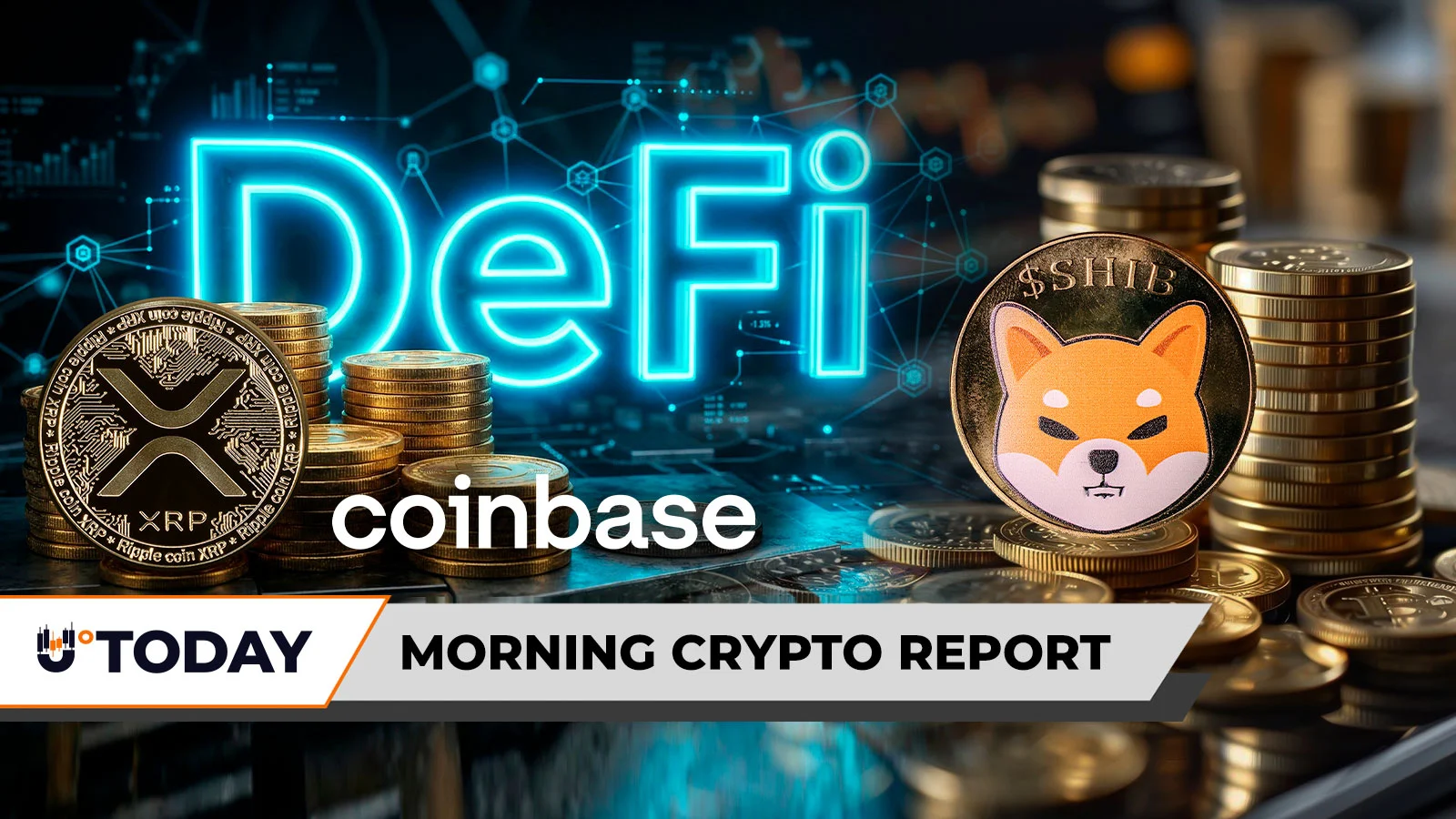
XRP's integration into the Base network via FXRP unlocks access to a $4.2 billion DeFi ecosystem, enabling lending and yield farming opportunities previously unavailable on the XRPL. Shiba Inu's 18% price surge presents a short squeeze scenario, with significant liquidation risk for short sellers if the price breaches the $0.00000728 level. Bitcoin's stabilization above $69,000 ahead of the March 19 FOMC meeting suggests market anticipation of a dovish tone, potentially supporting further upside if rate cut expectations are confirmed. The convergence of XRP's DeFi expansion, SHIB's short squeeze dynamics, and BTC's pre-FOMC positioning creates a mixed short-term trading environment with distinct opportunities and risks across these assets.
Signal context only. Validate with price action, liquidity, and risk limits before taking a position.
