
Navigating Crypto News

CoinFeather
Navigating Crypto News

Quick market read from this story
While Tether's USDT maintains a larger supply, Circle's USDC is demonstrating superior growth in transaction volume and institutional adoption, signaling a potential shift in stablecoin market leadership.
The divergence in stablecoin utility suggests a bifurcated market where USDT may continue to dominate exchange liquidity, while USDC gains traction in regulated payments and institutional settlement.
For Bitcoin investors, this stablecoin dynamic implies that future liquidity inflows could be segmented, with offshore venues favoring USDT and institutional channels potentially leaning towards USDC.
The increasing focus on regulatory compliance and transparency in stablecoin issuance favors Circle's model, positioning USDC to capture a larger share of future market growth, potentially reaching $2 trillion by 2028.
Deep Dive
A significant shift is occurring in the stablecoin market, with Tether's USDT maintaining its dominance in circulation but Circle's USDC steadily expanding its presence, particularly in regulated payments, institutional settlement, and high-velocity on-chain transfers. While USDT still holds the largest share of digital dollars, the competition is evolving from a market capitalization race to a battle for control over the infrastructure facilitating new capital movement within crypto.
The overall stablecoin market is valued at approximately $315 billion. USDT commands a 58% market share by supply, representing the largest crypto cash reserve. However, USDC is demonstrating stronger growth in transaction volume and adoption in key areas. Circle reported USDC circulation reached $75 billion by the end of 2025, marking a 72% year-over-year increase, with Q4 on-chain transaction volume surging to $12 trillion, a 247% rise from the previous year. In contrast, USDC's market cap has risen around 8% in the past month, reaching approximately $79 billion, while USDT remains about $3 billion below its December 2025 peak.
The distinction between supply and transaction velocity is crucial. USDT leads in outstanding supply, but transaction data indicates USDC is becoming more influential in how money moves. Reports show that stablecoin transaction volume rose 72% to $33 trillion in 2025, with USDC handling $18.3 trillion and USDT processing $13.3 trillion. This suggests that while Tether remains a primary store of crypto cash, Circle is positioning USDC as the preferred token for moving assets within the crypto ecosystem.
Tether's strength lies in its extensive distribution across global exchanges and its user base in emerging markets, catering to demand for dollar-linked assets amid local currency weakness or capital controls. Circle's advantage is its transparency and compliance-friendly model, with reserves primarily held in the BlackRock-managed Circle Reserve Fund and cash at regulated institutions. Its financial statements are audited by Deloitte, aligning well with banks and institutions requiring clear oversight. This focus on regulatory compliance positions USDC favorably as regulatory frameworks, such as the GENIUS Act, begin to shape the stablecoin landscape, imposing stricter rules on issuers exceeding certain thresholds.
The stablecoin competition has direct implications for Bitcoin and the broader crypto market, influencing liquidity, collateralization, and capital inflows. As the stablecoin market is projected to reach $2 trillion by 2028, the issuer that captures this growth will significantly shape market dynamics. If USDT continues to dominate offshore trading liquidity and USDC gains ground in regulated settlement, Bitcoin liquidity could become segmented. Institutionally mediated Bitcoin activity might increasingly favor USDC due to its compliance features, while crypto-native trading capital may remain tethered to USDT. This evolving landscape suggests that while Tether remains dominant in current crypto cash inventory, Circle is making a strong case for capturing the future flow of capital into digital assets.
| Metric | USDT | USDC | Relevance |
|---|---|---|---|
| Circulation / Supply | $183 billion | $79 billion | Indicates the largest stock of crypto dollars. |
| 2025 Issuance / Growth | Nearly $50 billion new issuance | 72% year-over-year growth | Shows the expansion rate of each issuer. |
| Transaction Volume (2025) | $13.3 trillion | $18.3 trillion | Highlights which token facilitates more money movement. |
| Core Strategic Edge | Exchange distribution, global trading liquidity | Regulated settlement, institutional usability | Suggests a bifurcated market rather than a single dominant player. |
Source, catalyst, and sector overlap from the latest feed.
US regulators are proposing a significant rollback of capital and liquidity requirements for large banks, potentially freeing up over $175 billion in capital. This policy shift, moving away from stricter post-2008 rules, prioritizes bank efficiency and credit provision over maximum safety, increasing systemic flexibility but also potential vulnerability. The relaxed rules contrast with harsher treatment for crypto assets like Bitcoin, highlighting a regulatory preference for traditional financial risks over digital asset integration. The move signals a pragmatic approach to financial stability, assuming easier access to the Fed's discount window will be crucial during future stress events.
US Q4 GDP revision to 0.7% and sticky core PCE inflation (3.1%) indicate a deteriorating macro environment that challenges Bitcoin's recent stabilization. The Federal Reserve faces a difficult trade-off between slowing growth and persistent inflation, with potential 'higher for longer' rates posing a headwind for risk assets like Bitcoin. Despite positive ETF inflows and easing funding rates, Bitcoin's fragile internal recovery is now being tested by worsening macroeconomic conditions, suggesting a potential range-bound or downward price action if oil prices remain elevated. The confluence of slower economic growth, stubborn inflation, and geopolitical oil price shocks creates a complex scenario for Bitcoin, where a hawkish Fed stance could pressure prices towards the $60,000-$69,000 demand zone.
Binance's lawsuit against the Wall Street Journal, while a familiar tactic, is now being interpreted by the market as a sign of increased confidence due to a perceived friendlier US regulatory and political climate. The shift in market perception suggests that negative press for Binance may carry less weight and trigger a smaller 'fear premium' compared to previous cycles, potentially impacting competitor positioning. While a friendlier political backdrop is noted, ongoing legal challenges and scrutiny, particularly regarding Iran sanctions, indicate that Binance still faces significant legal vulnerabilities, creating a divergence in potential market interpretations. The market is evaluating whether Binance's aggressive legal stance reflects genuine confidence stemming from a reduced regulatory overhang or an overestimation of its insulation from enforcement risks.
A significant $50 million loss occurred on Aave due to a user overriding a slippage warning, highlighting critical UX flaws in DeFi interfaces for large transactions. The incident resulted in substantial profits for MEV bots and block builders on Ethereum, demonstrating the ongoing extraction of value from user errors within the ecosystem. While Aave and CoW Protocol refunded fees, the event underscores the need for improved safeguards and clearer warnings to prevent catastrophic user errors in high-value DeFi trades. The potential identification of the trader as a known figure like Garrett Jin adds a layer of scrutiny to large-scale DeFi operations and risk management practices.
The escalating physical coercion incidents in France targeting crypto holders, including kidnappings and home invasions, highlight a critical shift from cybersecurity threats to personal security risks for digital asset owners. This trend forces a re-evaluation of self-custody's security model, as hardware wallets and private key protection are insufficient against real-world violence and extortion. The French government's response, offering emergency police services and security briefings, underscores the severity and systemic nature of this evolving criminal phenomenon, impacting the perception of France as a crypto-friendly jurisdiction. The increasing targeting of private individuals, not just industry insiders, suggests a broader operational security challenge for all crypto holders, necessitating adaptations like multisig, key separation, and lower public profiles.
Geopolitical instability is driving a shift of USDT from exchanges to private custody, indicating a move away from trading liquidity towards self-sovereign storage. Decreasing USDT reserves on exchanges are thinning market liquidity, which could lead to increased price volatility and slippage for major assets like BTC and ETH. The ongoing Hormuz Crisis is exacerbating the USDT liquidity drain, suggesting that this trend could persist as long as traditional financial channels remain disrupted. Traders should monitor exchange reserve levels as a key indicator of market depth and potential volatility, as reduced stablecoin liquidity directly impacts price stability.
Despite a recent price reversal for XRP, the XRP Ledger (XRPL) has demonstrated a significant 15.7% surge in payment volume, indicating sustained network utility and potential underlying demand that may precede a price recovery. The divergence between XRP's price action and its increasing payment volume suggests that current market sentiment may be overlooking fundamental network activity, potentially signaling an opportunity for observant traders if utility continues to outpace price depreciation. The robust increase in XRPL payment activity, even during a price pullback, highlights its ongoing use for cross-border settlements and institutional payments, reinforcing its role as a critical infrastructure for financial transactions.
USDC has surpassed USDT in adjusted transaction volume for the first time since 2019, indicating a potential shift in stablecoin utility towards settlement and payments rather than just value storage. While transaction volume is a key indicator of real-world usage, USDT still maintains a significant lead in market capitalization, suggesting that the long-term dominance battle between the two stablecoins is far from over. The ongoing regulatory uncertainty in the US for stablecoins could influence future market dynamics, potentially favoring US-regulated entities like Circle (USDC) if favorable legislation is enacted.
Brazilian industry groups representing over 850 companies are challenging a proposed financial transaction tax on stablecoins, arguing it is illegal and would stifle innovation. The core of the dispute lies in whether stablecoins, which are not considered fiat currency, can be subjected to the IOF tax, potentially impacting Brazil's significant stablecoin market. This regulatory pushback highlights a critical juncture for Brazil's rapidly growing crypto ecosystem, which sees 90% of its $6-8 billion monthly volume driven by stablecoins. The industry's stance suggests that any attempt to tax stablecoins via decree or administrative rule would face legal challenges, emphasizing the need for legislative action.
Live Feed
Loading the broader stream in the same flow as the homepage feed.

Former UK Prime Minister Boris Johnson's characterization of Bitcoin as a 'Ponzi scheme' is an opinion piece that lacks factual basis and has been met with strong criticism from the crypto community. While Johnson's commentary may generate short-term noise, it does not represent a regulatory action or a fundamental shift in Bitcoin's underlying technology or market dynamics. The strong pushback from prominent figures like Michael Saylor highlights the community's defense of Bitcoin's decentralized nature against mischaracterizations.

Bitcoin is consolidating near $70,700, with technical indicators suggesting a neutral market sentiment and potential stabilization after recent volatility. On-chain data, specifically the MVRV ratio around 1.2, indicates that the market is entering an accumulation phase rather than a capitulation, suggesting long-term investors are gradually building positions. Despite consolidation, Bitcoin's resilience above key psychological levels, supported by institutional ETF inflows and its store-of-value narrative, points to a cautiously optimistic outlook for potential future upside. Traders should monitor the $70,000 support and $71,000-$72,000 resistance levels, as a breakout or breakdown could signal the next significant trend, influenced by ETF flows, monetary policy, and regulatory developments.

The postponement of major crypto events like TOKEN2049 Dubai and the cancellation of TON Gateway Dubai due to regional security risks signal a near-term disruption to networking and business development within the Middle East crypto hub. The cancellation of F1 races in Bahrain and Saudi Arabia, where crypto sponsorships are significant, directly impacts the visibility and marketing reach of major crypto exchanges and blockchain companies targeting the region. The broader impact on business events in the UAE, including postponements and delays, suggests a potential slowdown in deal-making and partnership formation for crypto entities operating or seeking to operate in Dubai and surrounding areas. While Dubai remains a crypto hub, the current geopolitical climate introduces significant logistical and safety concerns that could deter future large-scale events and impact investor sentiment towards the region.

The Ethereum Foundation's sale of 5,000 ETH to BitMine for $10.2 million indicates a strategic treasury management approach to balance ETH holdings with operational fiat needs. This transaction, involving one of the largest ETH treasury firms, highlights ongoing institutional engagement with Ethereum's ecosystem and treasury diversification strategies. The sale supports the EF's core operations, including R&D and grants, reinforcing its commitment to Ethereum's development despite treasury rebalancing.

Bitcoin is outperforming traditional markets like the S&P 500, driven by significant inflows into US spot ETFs and potential large-scale BTC purchases by Strategy, indicating strong institutional demand despite geopolitical tensions. Historical data suggests Bitcoin has shown resilience and even significant gains following geopolitical crises, potentially positioning it for further upside if past patterns repeat. Despite positive demand signals, the formation of a bear flag pattern on the BTC chart introduces a risk of a bull trap, with a technical downside target around $51,000, suggesting caution for short-term traders. The interplay between institutional buying pressure from ETFs and Strategy, and the technical bearish pattern, creates a divergence that traders should monitor closely for potential price action.
An analyst's projection suggests Bitcoin could reach $95,894 if it breaks the $73,726 resistance level, indicating a potential bullish continuation driven by on-chain metrics. Despite recent volatility pulling Bitcoin below the $73,726 threshold, a decisive breakout above this level could signal renewed institutional and retail buying interest. The MVRV pricing model highlights $73,726 as a critical resistance; failure to reclaim this level may lead to further consolidation, suggesting a cautious outlook until demand strengthens.
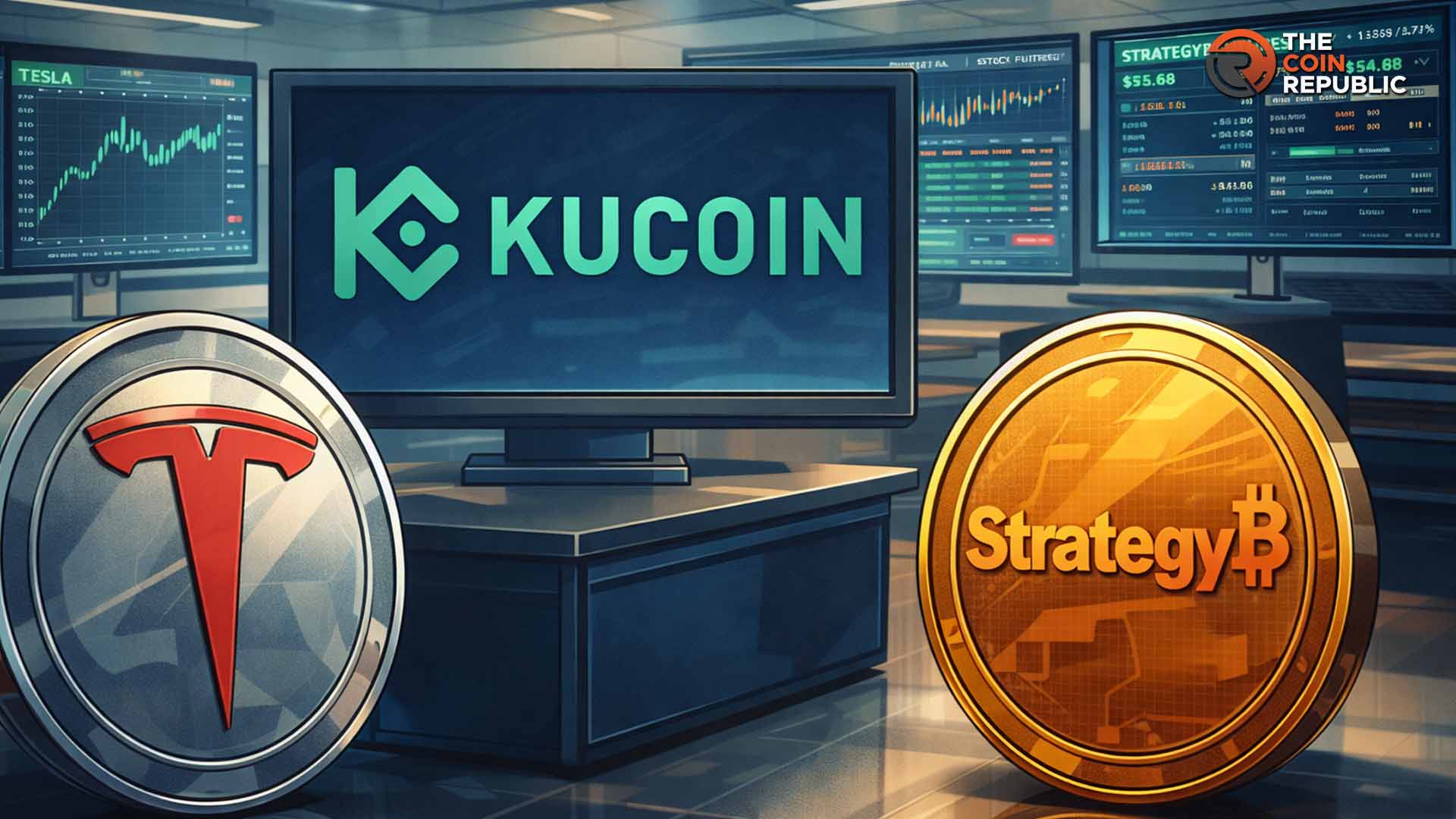
KuCoin's launch of Tesla and MicroStrategy equity-linked perpetual futures offers traders synthetic exposure to traditional assets via crypto derivatives, potentially increasing trading volume on the platform. The introduction of these synthetic equity products aligns with a broader market trend of tokenized assets and RWA growth, indicating a strategic move by KuCoin to capture this expanding segment. While the products offer 24/7 trading and stablecoin settlement, regulatory scrutiny remains a key factor that could impact their availability across different jurisdictions. The direct linkage of MSTR and TSLA prices to crypto derivatives highlights the increasing interconnectedness between traditional equity markets and the digital asset space.

Former UK Prime Minister Boris Johnson's characterization of Bitcoin as a "giant Ponzi scheme" has been met with strong pushback from prominent figures like Michael Saylor. The core of the rebuttal centers on Bitcoin's decentralized nature, lack of a central issuer, and market-driven value, contrasting it with the defining characteristics of a Ponzi scheme. While Johnson's comments highlight a persistent narrative challenge for Bitcoin, the community's unified and technical response reinforces the established understanding of Bitcoin's fundamental design among proponents. This public debate, though unlikely to directly impact Bitcoin's price in the short term, underscores the ongoing ideological and educational battle surrounding digital assets.
Pi Network token experienced a significant 28% price drop within 24 hours, reversing recent gains despite a Kraken listing. The sharp decline suggests a potential long squeeze event, where leveraged long positions were liquidated, accelerating the price fall. Despite being inspired by Stellar's Consensus Protocol, Pi Network operates as an independent blockchain, and its price action is distinct from Stellar (XLM). The price drop occurred around Pi Day, failing to provide a bullish catalyst for the token.

A federal judge dismissed RICO claims in a class-action lawsuit against a pastor involved in a crypto Ponzi scheme, limiting investors' immediate recourse for damages. The dismissal, based on the Private Securities Litigation Reform Act, highlights legal complexities in pursuing fraud claims stemming from alleged securities violations within crypto schemes. While the core RICO claims were rejected, investors have a 30-day window to file an amended complaint, indicating potential for further legal developments. This case underscores the risks associated with fraudulent crypto schemes, particularly those leveraging religious or community trust, and the subsequent legal battles faced by victims.

XRP futures Cumulative Volume Delta (CVD) reaching a four-month high suggests a significant increase in buyer conviction and aggressive bidding, potentially signaling a bullish shift in short-term sentiment for XRP. Despite recent outflows from XRP ETFs, the improvement in futures buying pressure and the formation of a descending wedge pattern on the XRP price chart indicate potential for a bullish reversal, with technicals suggesting an 11% move if resistance is broken. The concurrent surge in TRUMP crypto, driven by a Mar-a-Lago event announcement, highlights a broader trend of traders rotating into high-beta, speculative assets, which can foreshadow increased volatility in the altcoin market.

Major exchanges like NYSE and Nasdaq are partnering with crypto platforms to launch tokenized stocks, signaling a significant push towards integrating traditional finance with blockchain infrastructure. Institutional investors express concerns over instant settlement, liquidity, and funding risks associated with tokenized equities, suggesting a potential bottleneck for widespread adoption despite exchange initiatives. While institutions remain hesitant, retail traders may be early adopters of tokenized stocks due to benefits like 24/7 trading and direct digital wallet ownership, potentially shifting liquidity dynamics over time. The development of tokenized stocks could lead to market fragmentation if multiple versions of the same asset emerge on different blockchains, posing challenges to transparency and price discovery.

US spot Bitcoin ETFs experienced their first five-day inflow streak of 2026, attracting approximately $767 million, indicating renewed institutional interest despite broader retail fear. BlackRock's IBIT dominated inflows, capturing 78% of the weekly total, highlighting market consolidation around key ETF products and signaling potential for further dominance. While Bitcoin ETFs saw significant inflows, Ethereum and Solana ETFs lagged, with staking-focused products showing early traction, suggesting yield generation is becoming crucial for altcoin ETF appeal. The inflow surge during geopolitical tension suggests a potential shift in Bitcoin's narrative from a risk-on asset to a geopolitical hedge, challenging traditional market correlations.

A prominent crypto researcher predicts Solana (SOL) could surpass Bitcoin (BTC) and Ethereum (ETH) in market capitalization, citing its speed, low costs, and suitability for global finance use cases, which aligns with the original vision of decentralized cash. Solana's price action shows a critical resistance zone between $88.57-$91; a decisive break above this level is required to confirm bullish momentum and signal an upside breakout, while a drop below $84.40 could indicate a deeper correction. The integration of Avalanche (AVAX) for direct trading on the Solana blockchain, facilitated by Sunrise DeFi, enhances Solana's ecosystem by allowing cross-chain asset movement and liquidity provision, potentially increasing network activity.
Ethereum is facing immediate resistance near $2,098, suggesting potential short-term weakness and a possible pullback towards the $1,883 support level. Despite near-term resistance, a larger bullish structure is forming, indicating that a successful defense of the $1,883 support could lead to a breakout towards $2,240 or even higher targets like $8,014 in the long term. The price action between the $1,883 support and the $2,098 resistance will be critical in determining Ethereum's next directional move, with a decisive break above the latter signaling a significant structural shift.
Bitcoin is testing critical resistance at the $74,000 liquidity cluster, with a failure to break through suggesting potential profit-taking or a short-term pullback. The retest of a broken downtrend line presents a classic technical analysis pattern, where confirmation of this former resistance acting as support could signal a continuation of the upward trend. Traders should monitor the $74,000 level for overhead resistance and lower $60,000s liquidity pockets for potential support, as these zones will dictate the immediate price action.
Signal context only. Validate with price action, liquidity, and risk limits before taking a position.
