
Navigating Crypto News

CoinFeather
Navigating Crypto News

Quick market read from this story
A temporary configuration issue in Aave's CAPO risk oracle, not a flaw in wstETH itself, caused a $27 million liquidation event by miscalculating collateral value.
The incident highlights the critical reliance of DeFi lending platforms on accurate and timely oracle data, as even minor discrepancies can trigger significant automated liquidations.
While no bad debt was incurred by the protocol, liquidators profited from the temporary price misalignment, underscoring the risk-reward dynamics in DeFi liquidation events.
The event serves as a reminder of the potential for technical glitches in DeFi infrastructure to cause short-term market volatility and impact user positions.
Deep Dive
Decentralized lending platform Aave saw approximately $27 million in liquidations over the past 24 hours. Market participants suspect the event was triggered by a temporary pricing issue related to the wstETH token within Aave's oracle system.
Blockchain data from risk-management firm Chaos Labs highlighted a significant spike in liquidations. Observers pointed to a potential misconfiguration in Aave's oracle, which provides crucial price data for collateral valuation. Oracles are essential services that feed external price information into blockchain applications, enabling protocols like Aave to determine when a borrower's collateral is insufficient to cover their loan, thus triggering liquidation.
A similar incident occurred recently with DeFi lender Moonwell, where an oracle misconfiguration briefly valued Coinbase Wrapped ETH (cbETH) at $1 instead of $2,200, resulting in nearly $1.8 million in bad debt.
In the Aave incident, the issue is believed to involve wstETH, a staked ether derivative from Lido that accrues staking rewards. At the time of the liquidations, Aave's oracle reportedly valued wstETH at approximately 1.19 ETH, while the broader market valued it closer to 1.23 ETH. Trading volume for wstETH pairs was low, suggesting few traders could exploit the mismatch before it was corrected.
Chaos Labs later clarified that while the underlying oracle reported correct market values, the liquidations were caused by a configuration issue in the protocol's CAPO risk oracle. This system is designed to limit the rate at which yield-bearing tokens like wstETH can increase in value. The CAPO system experienced a mismatch between stale parameters, including a reference exchange rate and its timestamp, in a smart contract. This led to the CAPO system calculating a maximum allowed exchange rate lower than wstETH's actual market value.
Consequently, the protocol perceived wstETH as approximately 2.85% less valuable than it was, pushing some borrowing positions below their safety thresholds and triggering liquidations.
Chaos Labs confirmed that the protocol incurred no bad debt from the incident. However, liquidators profited from the temporary price discrepancy, capturing roughly 499 ETH in liquidation bonuses and profits. A Lido contributor stated that the issue was unrelated to wstETH itself or the Lido protocol, which continued to operate normally.
Aave's spokesperson did not immediately respond to requests for comment.
Source, catalyst, and sector overlap from the latest feed.
Stablecoins are projected to gradually pull 3-5% of core deposits from traditional banks over the next five years, potentially impacting bank profitability by approximately 3%. While not an immediate threat, the expanding use of stablecoins in payments and DeFi could lead to higher funding costs for banks as they compete for capital. Banks with high concentrations of retail and interest-bearing deposits are identified as most exposed to potential stablecoin-driven deposit runoff. Despite regulatory hurdles like the GENIUS Act limiting direct yield, the long-term risk of stablecoins attracting deposits through activity-based rewards and DeFi integration remains a concern for the banking sector.
Multicoin Capital's 'Internet Labor Markets' thesis suggests a shift from speculative token acquisition to earning crypto through work, potentially driving future user adoption. The ILM model leverages blockchain for verifiable and instant settlement of labor, enabling a global marketplace for tasks ranging from data labeling to bandwidth contribution, with AI integration as a key growth area. This evolution from passive resource contribution (like DePIN) to active work and judgment-based tasks could redefine user engagement and value creation within crypto ecosystems, particularly on platforms like Solana.
Lawmakers are negotiating a compromise on the Digital Asset Market Clarity Act, specifically addressing stablecoin rewards to prevent deposit flight from traditional banks. The proposed compromise aims to balance innovation in the crypto space with the need for financial stability, suggesting a potential path forward for stalled legislation. While a final agreement is not yet reached, the ongoing discussions indicate a willingness to find common ground, which could lead to clearer regulatory frameworks for stablecoins and related activities. The outcome of these negotiations will be crucial for the stablecoin sector, potentially impacting how issuers offer rewards and interact with traditional financial systems.
The new monitoring platform aims to detect suspicious trading as prediction markets face scrutiny over insider information.
Bernstein analysts project a 60% upside for Circle (CRCL) stock, driven by stablecoin adoption decoupling from crypto market cycles and increasing use in digital payments. The increasing integration of stablecoins with traditional payment networks like Visa, alongside Circle's own payment network expansion, signals a growing utility beyond crypto trading. Emerging use cases in AI-driven agentic finance and Circle's development of the Arc blockchain suggest future growth potential for stablecoin infrastructure and adoption.
The advancement of quantum computing poses a near-term threat to encrypted messaging platforms like Signal and Threema, potentially enabling 'harvest now, decrypt later' attacks that could compromise past communications. While Bitcoin is also vulnerable to quantum attacks, messaging apps face a more immediate risk due to the 'store-and-forward' nature of communications, where intercepted data can be decrypted retrospectively. IBM's collaboration with Signal and Threema highlights the proactive development of post-quantum cryptography (PQC) in messaging protocols, aiming to integrate NIST-standardized algorithms like ML-KEM to ensure future communication security. The research indicates significant protocol redesigns are necessary to implement PQC efficiently, with potential trade-offs in bandwidth and speed, underscoring the complexity of future-proofing digital security against quantum threats.
A federal judge has granted Amazon a preliminary injunction blocking Perplexity AI's shopping agent, establishing a potential precedent for platform control over AI-driven e-commerce. The ruling hinges on whether AI agents inherit user permissions or require explicit platform authorization, a key legal question for the future of agentic commerce. This development highlights the ongoing tension between AI innovation and platform control, impacting how AI agents interact with online services and potentially affecting advertising revenue models.
X's upcoming 'X Money' remittance system, set for early public access in April, signals a significant move into financial services by the platform, potentially integrating crypto later in the year. The announcement of X Money has directly correlated with a price increase in DOGE, suggesting speculative market reaction to Elon Musk's involvement and potential future integrations, despite no explicit confirmation of DOGE's inclusion. While X Money will initially operate with fiat and partner with Visa, its stated goal of becoming an 'everything app' for monetary transactions, including potential crypto and stablecoin (USDC) integration, positions it as a notable player in the payments and DeFi space. The short squeeze dynamics, with $3.94 million in liquidations, indicate increased speculative trading activity around DOGE following the X Money news, reinforcing the meme coin's volatility and sensitivity to Musk's pronouncements.
Despite record-breaking network activity on Ethereum, on-chain data indicates this surge is driven by mass capitulation and selling pressure, not organic demand. The high volume of transactions, including DeFi unwinding and exchange transfers, coupled with negative realized capitalization, signals evaporating liquidity and potential further downside for ETH. The ETH/BTC ratio's decline during periods of high exchange inflows confirms that a significant portion of the network activity is investors exiting their positions, contrary to superficial interpretations of network health.
Live Feed
Loading the broader stream in the same flow as the homepage feed.
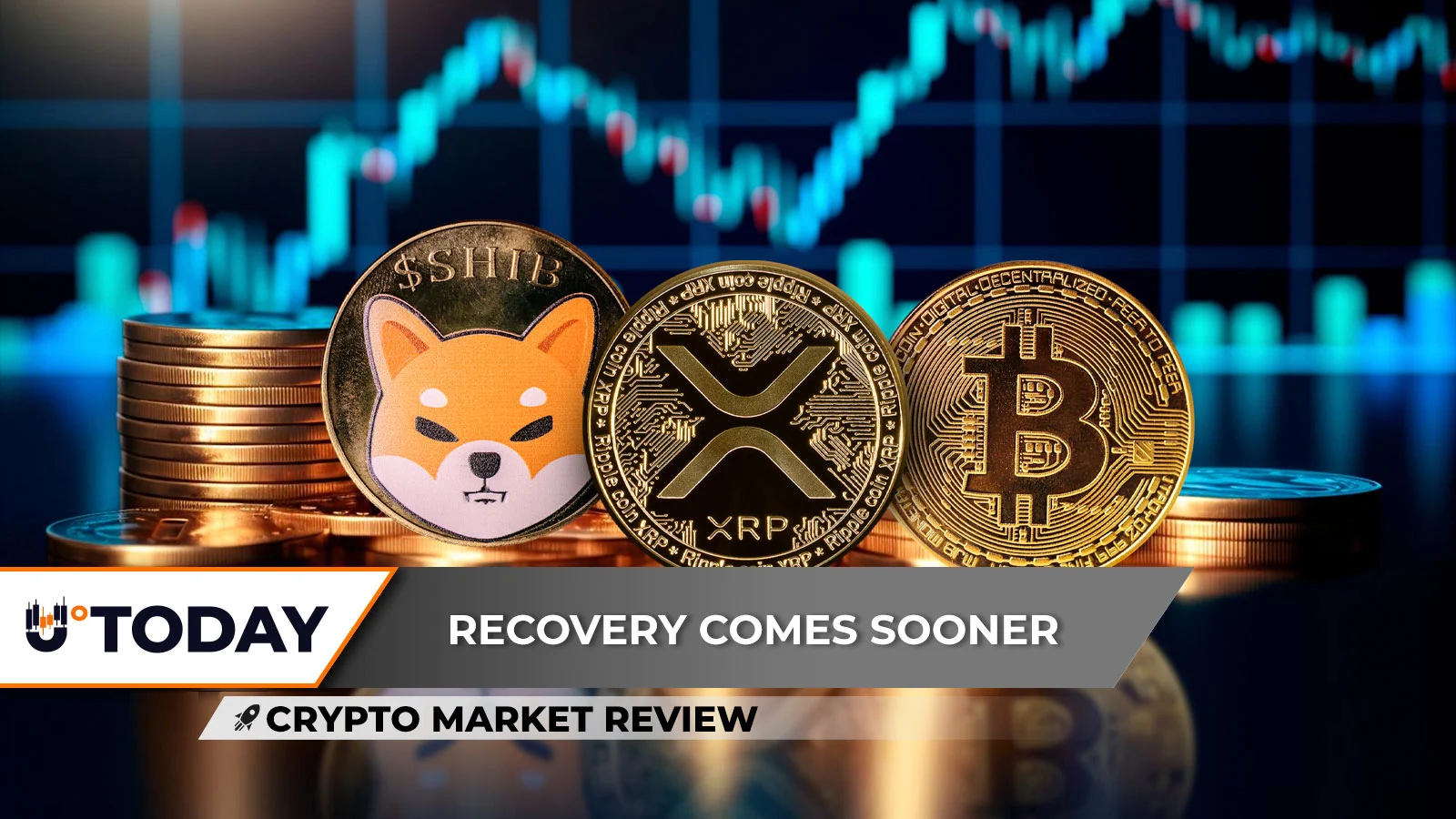
Bitcoin reclaiming the $70,000 level signals renewed buyer conviction and a potential shift towards a broader trend reversal, though elevated volatility and short-term pullbacks remain likely. Shiba Inu's 8% spike represents a short-term relief bounce driven by oversold conditions rather than a confirmed structural reversal, with momentum indicators showing early signs of stabilization. XRP is approaching a critical technical test at the 26-day EMA, where a breakout could signal a shift to bullish momentum, while failure would reinforce its existing bearish structure.

MicroStrategy's continued aggressive Bitcoin accumulation, adding 17,994 BTC worth $1.28 billion, signals strong institutional conviction and potentially increases demand pressure on BTC. Dogecoin's trading volume surge of 87% and a golden cross technical pattern suggest a potential short-term rebound, driven by derivatives activity and whale interest. XRP's price structure indicates weakening selling pressure and potential for a near-term bounce as key indicators converge, suggesting a possible end to its recent downtrend.
Bitwise CIO Matt Hougan presents a scenario where Bitcoin could reach $1,000,000 if the global store-of-value market expands to $121 trillion and Bitcoin captures 17% of it. The analysis hinges on historical gold market growth as a precedent for alternative asset demand, suggesting Bitcoin's potential to capture significant market share amid increasing institutional adoption and concerns over monetary expansion. While acknowledging risks such as a potential slowdown in market expansion or Bitcoin failing to gain sufficient share, the projection is supported by other industry figures, highlighting a consensus on long-term bullish potential.

A federal court in Ohio has denied Kalshi's request for an injunction, ruling that federal commodities laws do not necessarily preempt state sports gambling laws for its prediction contracts. This court decision contradicts a previous ruling in Tennessee and weakens Kalshi's argument for exclusive CFTC jurisdiction, potentially increasing regulatory pressure on prediction markets. The outcome suggests that prediction market platforms may face ongoing legal challenges and regulatory uncertainty across different US states, impacting their operational scope and market access.

NBA star Tristan Thompson's departure from Basketball.fun, coupled with refund offerings and accusations of a 'rug pull', signals potential user trust issues and a need for project transparency. The project's planned launch on Base and marketplace debut in April, despite recent controversies, indicates continued development efforts and a focus on user experience improvements. The refund process and "10% boost" offer suggest a proactive approach to managing user expectations and mitigating negative sentiment following Thompson's withdrawal and market scrutiny. Basketball.fun's reliance on athlete endorsements, contrasted with recent research on investor trust, highlights the challenges faced by crypto projects leveraging celebrity involvement.

Bitwise CIO Matt Hougan projects Bitcoin could reach $1 million per coin by capturing a significant share of the growing global store of value market, assuming continued growth and adoption. The analysis suggests that Bitcoin's potential price target is contingent on the expansion of the overall store of value market, with a projected market cap of $121 trillion in 10 years, requiring Bitcoin to secure 17% of this market. Factors such as ETF inflows, institutional acceptance, and declining volatility are cited as key drivers that could support Bitcoin's ascent to a $1 million valuation, despite current market conditions.

Ether's funding rates have turned negative, indicating a shift towards bearish sentiment in the derivatives market despite recent price attempts above $2,100. Weak demand for ETH spot ETFs, evidenced by significant outflows, coupled with staking yields underperforming stablecoin yields, suggests institutional caution and a lack of conviction in near-term price appreciation. While Ethereum developers are advancing upgrades like account abstraction and the Hegota fork, these technical improvements have not yet translated into increased on-chain activity or demand for ETH, highlighting a disconnect between development and market sentiment. The current market conditions for ETH show low conviction for a bullish breakout, but also a lack of worsening bearish signals, suggesting a neutral to cautious outlook for the immediate trading horizon.

Bernstein's 'Outperform' rating and $190 price target for Circle (CRCL) stock signal strong conviction in its growth potential, driven by accelerating stablecoin adoption and regulatory clarity from the 2025 GENIUS Act. Circle's stock performance, up 49% year-to-date and having doubled since February, demonstrates a decoupling from the broader crypto market, suggesting investor confidence in its business model beyond speculative crypto assets. The increasing adoption of stablecoins, supported by the regulatory framework established by the GENIUS Act, positions Circle's USDC as a key beneficiary, potentially driving further market share gains and stock appreciation. Circle's established relationships with traditional finance giants like BlackRock and BNY Mellon, coupled with its significant market share in stablecoins, provide a solid foundation for continued growth and institutional trust.
The Official Trump (TRUMP) Solana meme coin has experienced a significant price decline, falling over 96% from its all-time high, correlating with a dip in President Trump's approval ratings. Despite a broader market rebound in Bitcoin and Ethereum, the TRUMP token's underperformance suggests that its price is heavily influenced by political sentiment and news rather than general crypto market trends. The performance of the TRUMP token, alongside the related World Liberty Financial (WLFI) token, highlights the speculative nature of politically-themed crypto assets and their sensitivity to public perception and geopolitical events.
Bitcoin is approaching a critical resistance zone between $68,795 and $72,205, which technical analysts are closely watching as a potential turning point. On-chain data suggests a possible accumulation phase is underway, with short-term holders' realized price above long-term holders', indicating potential for a market bottom formation if current resistance is overcome. The interplay between the approaching resistance band and the underlying accumulation signals suggests a period of consolidation or potential volatility, requiring traders to monitor price action closely for directional cues. While a historical bottoming signal based on holder cost basis has not fully triggered, the current price action below the short-term holder cost basis implies recent buyers are under pressure, a common late-stage bearish condition.
Ethereum is approaching a critical $2,100 resistance level, with a significant cluster of short liquidations concentrated just above at $2,130. A breakout above $2,100 could trigger a cascade of short liquidations, potentially accelerating price discovery towards the next resistance at $2,350. Conversely, failure to break $2,100 could lead to a retest of support levels between $1,930 and $1,970, indicating continued range-bound trading.

BitGo's partnership with StableX to custody a $100M stablecoin-focused treasury signals growing institutional demand for infrastructure beyond Bitcoin, specifically within the stablecoin ecosystem. The development highlights a trend of publicly traded companies establishing digital asset treasuries, indicating a maturing market for institutional-grade custody and trading services for a wider range of crypto assets. StableX's investment in tokens like FLUID and LINK, alongside BitGo's expanding role, suggests a potential near-term catalyst for related stablecoin infrastructure and oracle projects.
The upcoming launch of X Money, Elon Musk's integrated wallet and payments system, signals a significant potential on-ramp for digital assets, particularly Dogecoin, given Musk's historical support. While initial X Money rollout focuses on fiat, the stated long-term plan for crypto integration, including BTC, ETH, and DOGE, could reshape competition with existing fintech platforms and exchanges if executed at scale. Speculation around Dogecoin integration with X Money, coupled with recent price action and increased trading volume, suggests a bullish sentiment among traders anticipating potential demand shifts.
The acquisition of SolanaFloor by the Jito Foundation signals a strategic move to restore independent coverage of the Solana ecosystem, addressing a critical information gap following past security incidents. With the Solana ecosystem experiencing growth and institutional interest, the revival of SolanaFloor under Jito Foundation ownership provides a vital, independent source for market participants to track on-chain developments. The return of SolanaFloor, despite its previous operational halt due to a hack, highlights the ongoing challenges in crypto security while underscoring the importance of reliable news and analysis for ecosystem health.
Signal context only. Validate with price action, liquidity, and risk limits before taking a position.
