
Navigating Crypto News

CoinFeather
Navigating Crypto News

Quick market read from this story
Lawmakers are negotiating a compromise on the Digital Asset Market Clarity Act, specifically addressing stablecoin rewards to prevent deposit flight from traditional banks.
The proposed compromise aims to balance innovation in the crypto space with the need for financial stability, suggesting a potential path forward for stalled legislation.
While a final agreement is not yet reached, the ongoing discussions indicate a willingness to find common ground, which could lead to clearer regulatory frameworks for stablecoins and related activities.
The outcome of these negotiations will be crucial for the stablecoin sector, potentially impacting how issuers offer rewards and interact with traditional financial systems.
Deep Dive
U.S. lawmakers are actively negotiating a compromise for a crypto market structure bill, the Digital Asset Market Clarity Act, aiming to pass it this year while assuring the banking industry that the final legislation will not jeopardize traditional deposits. The bill has faced significant lobbying from the banking sector, particularly concerning the role of stablecoin rewards.
Senator Angela Alsobrooks, a key figure in the negotiations, stated at an American Bankers Association summit that the proposed compromise will likely leave both bankers and the crypto industry
Source, catalyst, and sector overlap from the latest feed.
Multicoin Capital's 'Internet Labor Markets' thesis suggests a shift from speculative token acquisition to earning crypto through work, potentially driving future user adoption. The ILM model leverages blockchain for verifiable and instant settlement of labor, enabling a global marketplace for tasks ranging from data labeling to bandwidth contribution, with AI integration as a key growth area. This evolution from passive resource contribution (like DePIN) to active work and judgment-based tasks could redefine user engagement and value creation within crypto ecosystems, particularly on platforms like Solana.
Live Feed
Loading the broader stream in the same flow as the homepage feed.
The upcoming launch of X Money, Elon Musk's integrated wallet and payments system, signals a significant potential on-ramp for digital assets, particularly Dogecoin, given Musk's historical support. While initial X Money rollout focuses on fiat, the stated long-term plan for crypto integration, including BTC, ETH, and DOGE, could reshape competition with existing fintech platforms and exchanges if executed at scale. Speculation around Dogecoin integration with X Money, coupled with recent price action and increased trading volume, suggests a bullish sentiment among traders anticipating potential demand shifts.
The acquisition of SolanaFloor by the Jito Foundation signals a strategic move to restore independent coverage of the Solana ecosystem, addressing a critical information gap following past security incidents. With the Solana ecosystem experiencing growth and institutional interest, the revival of SolanaFloor under Jito Foundation ownership provides a vital, independent source for market participants to track on-chain developments. The return of SolanaFloor, despite its previous operational halt due to a hack, highlights the ongoing challenges in crypto security while underscoring the importance of reliable news and analysis for ecosystem health.

Meta's acquisition of Moltbook signals a strategic move into the burgeoning field of AI agent interaction and social networking. The acquisition highlights the growing interest in understanding emergent AI behaviors and their potential applications beyond human-centric platforms. While the deal terms are undisclosed, the integration of Moltbook's founders into Meta's Superintelligence Labs suggests a focus on advancing AI research and development within the company.

Bitcoin's recovery above $71,000 suggests a potential bottom, but altcoin market cap (TOTAL2) is testing critical 200-week moving average support around $900 billion, indicating continued divergence. With 36.8% of altcoins trading near all-time lows and average altcoin performance 44.4% below its 200-day SMA, the market is showing extreme stress, historically seen near bear-phase bottoms. The ETH/BTC pair remains in a descending channel, suggesting that a true altcoin season is contingent on Ether reclaiming key resistance levels, which would signal a significant shift in capital rotation. While some analysts debate the nature of future altcoin cycles, current data points to a Bitcoin-dominated market, with potential for altcoin outperformance only if ETH/BTC breaks its downtrend.

The development of the BullshitBench highlights a critical flaw in current AI models: their inability to discern nonsensical prompts, which poses significant risks for real-world applications where misinformation can have severe consequences. Anthropic's Claude models demonstrate superior performance in identifying and rejecting nonsensical queries, suggesting a potential lead in AI reliability and trustworthiness compared to competitors like Google and OpenAI. The benchmark's findings indicate that advancements in AI reasoning capabilities do not automatically translate to improved bullshit detection, emphasizing the need for specialized training and evaluation methods to address this specific failure mode. For market participants, the performance disparity in AI models on this benchmark could influence investment decisions, favoring companies demonstrating greater reliability and robustness in their AI development.
XRP is consolidating above a critical $1.30-$1.35 support zone, indicating potential accumulation and setting the stage for a possible upward trend reversal. Increased long positions and buying pressure suggest growing investor confidence, which could fuel a breakout towards the $1.50 resistance level if current support holds. The stabilization above the $1.40 psychological level, coupled with higher highs and lows, signals a transition from a corrective phase to potential price recovery, making the upcoming sessions pivotal.

February saw a significant decrease in crypto hack losses to $49 million, down from $385 million in January, indicating a potential shift in attacker strategies. Attackers are increasingly focusing on social engineering and phishing scams, exploiting wallet permissions rather than direct smart contract vulnerabilities, suggesting a move towards targeting user behavior. While overall losses decreased, a single breach at Step Finance accounted for a substantial portion, highlighting the continued risk of large-scale exploits impacting specific platforms. The decline in reported losses, corroborated by multiple security firms, suggests improving industry-wide security practices and risk controls, though the threat of sophisticated attacks remains.

Arthur Hayes has set a bold price target of $150 for HYPE by August 2026, implying a significant ~5x increase from current levels, driven by Hyperliquid's unique revenue-to-buyback mechanism. Hyperliquid's strategic expansion into traditional asset derivatives and prediction markets via HIP-3 and HIP-4 is diversifying revenue streams and positioning it as a competitor to established centralized exchanges. Despite optimistic price targets, potential investors should consider the noted centralization risks associated with Hyperliquid's validator count and the ongoing token unlock schedule through 2027 which could create supply pressure. The core thesis for HYPE's potential upside hinges on sustained revenue growth and market re-rating from its current P/E multiple, making execution and broader market sentiment critical factors.

The Winklevoss twins' transfer of $130M in Bitcoin to Gemini hot wallets, after holding since 2013, could signal a portfolio rebalancing or preparation for sale, impacting market sentiment around long-term holder behavior. Gemini's significant post-IPO stock decline, workforce reductions, and international market exits highlight operational challenges that may influence investor confidence and trading volume on the exchange. Despite Gemini's current struggles, the exchange still holds substantial assets in BTC and ETH, indicating continued relevance in the market, though its daily trading volume lags behind top competitors. The timing of the BTC transfer, coinciding with the 180-day insider lock-up expiration, adds a layer of scrutiny to the move, potentially influencing short-term price action for Bitcoin.

Societe Generale-FORGE's expansion of its MiCA-compliant EURCV stablecoin to the Stellar network signifies a strategic move to increase its utility within regulated digital asset infrastructure. The deployment on Stellar, chosen for its throughput and low fees, aims to broaden EURCV's accessibility for blockchain-based financial applications and tokenized asset services. This multichain expansion, following deployments on Ethereum and XRP Ledger, positions EURCV as a key player in the growing European stablecoin market, potentially challenging the dominance of USD-backed assets.
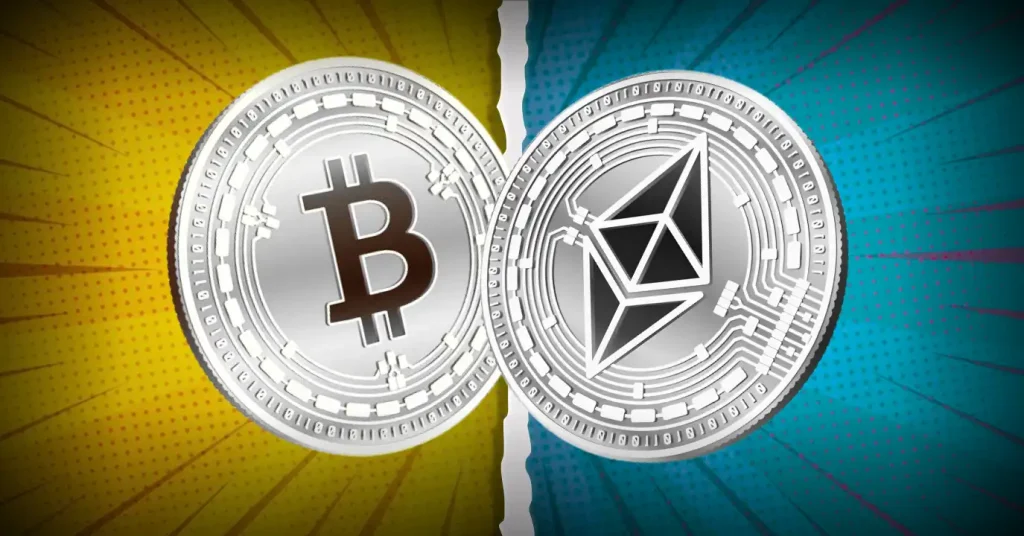
A significant whale has placed large leveraged long positions on BTC and ETH, signaling strong conviction for a near-term price increase, but also highlighting increased risk due to potential liquidations. Bitcoin and Ethereum are showing resilience above key psychological levels ($70k and $2k respectively), suggesting a potential continuation of their rallies if current support holds. The next 48 hours are critical for BTC and ETH, as the market balances bullish momentum from leveraged bets against macro uncertainty and the risk of cascading liquidations if support breaks. Despite recent pullbacks, BTC and ETH are regaining bullish traction, with price action suggesting a potential move towards higher resistance levels if buying volume increases.

Trust Wallet's deployment of an AI Security Scanner is a direct response to a significant $8.5 million breach, indicating a proactive shift towards AI-driven threat mitigation in user-facing applications. The new scanner's ability to flag risky transactions in real-time, categorizing them by risk level, aims to prevent future exploits like the supply chain attack that compromised over 2,500 wallets. Despite the AI upgrade, the persistent lack of native two-factor authentication remains a notable vulnerability, suggesting that users must still employ supplementary security practices for high-value assets. The company's plans to further enhance the scanner with MEV protection and advanced transaction analysis signal a commitment to evolving security measures in response to emerging threats.
Signal context only. Validate with price action, liquidity, and risk limits before taking a position.
The new monitoring platform aims to detect suspicious trading as prediction markets face scrutiny over insider information.
