
Navigating Crypto News

CoinFeather
Navigating Crypto News
Quick market read from this story
Cardano's ranking as the second most quantum-ready blockchain by Google highlights its inherent design advantages in cryptographic security, potentially appealing to security-conscious investors.
While Algorand leads in immediate quantum-resistant transaction capabilities, Cardano's eUTXO model offers a structural defense against future quantum threats, positioning it favorably within the Layer 1 sector.
The news provides a long-term strategic outlook on blockchain security, suggesting that projects prioritizing post-quantum cryptography may gain a competitive edge as quantum computing advances.
Deep Dive
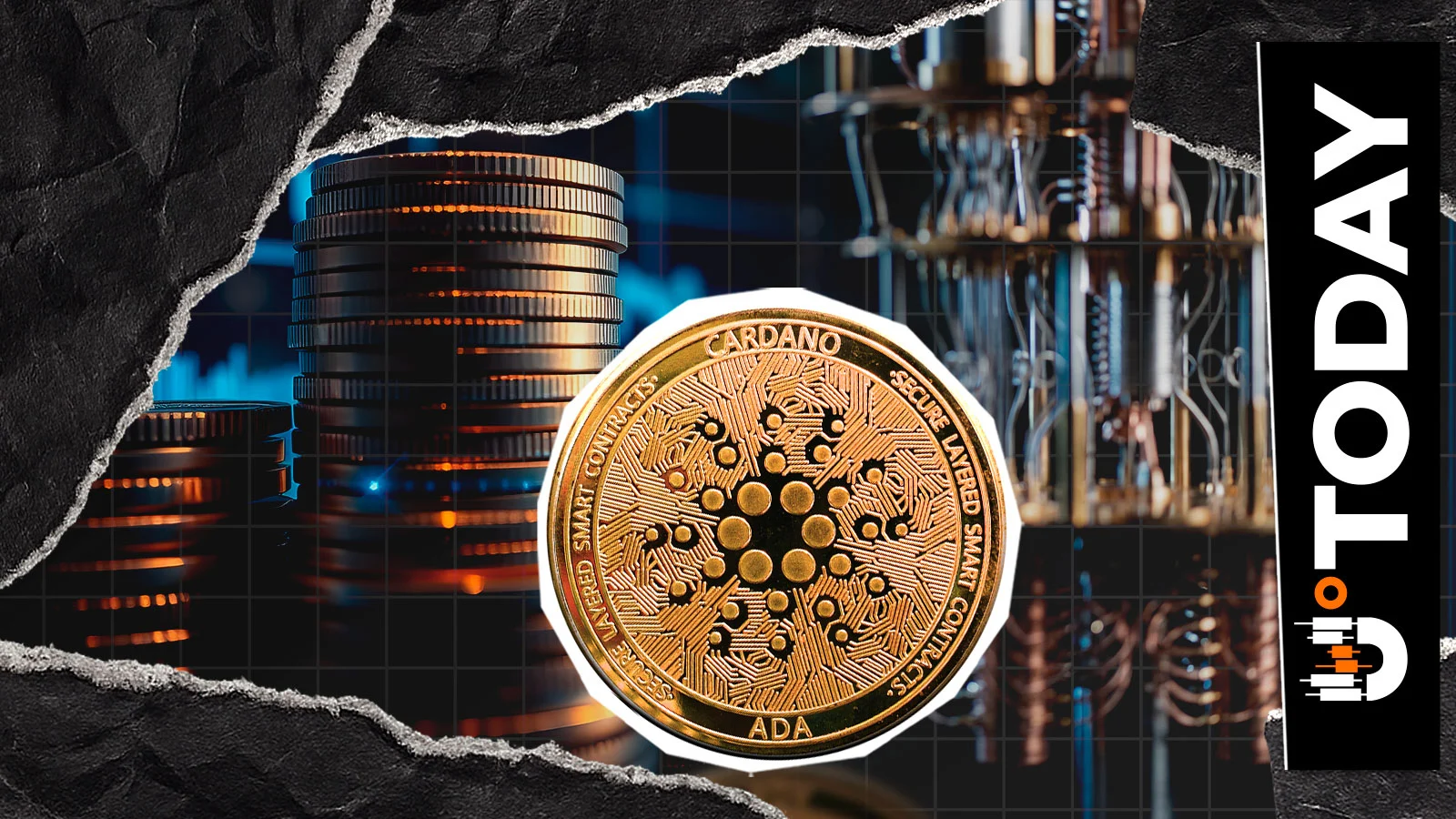
Cardano (ADA) has been recognized as the second-most prepared blockchain to withstand potential future attacks from quantum computers, according to a study by Google Quantum AI. The ranking assesses blockchains based on their readiness to adopt post-quantum cryptography, considering factors such as public key exposure, support for key rotation, and transaction confirmation vulnerability timelines.
Algorand claimed the top position, having already conducted quantum-resistant transactions in a live environment and supporting key rotation, indicating it has the necessary infrastructure for an immediate migration if quantum threats emerge. Cardano secured second place due to its design, which hides public keys longer than most other blockchains. Its use of the eUTXO model, where spending keys remain hashed until funds are spent, provides a degree of protection by preventing attackers from viewing keys until a transaction occurs.
The Google Quantum AI paper categorized other blockchains into different tiers. Projects like Dogecoin, Zcash, and Bitcoin Cash are also considered "tier 2", sharing structural advantages with Cardano. In the "vulnerable but preparing" category are XRP Ledger, Litecoin, and Bitcoin, whose networks generally expose public keys more frequently. Ethereum and Solana are placed in the "broadest attack surface" category, as their public keys are consistently visible, presenting greater opportunities for quantum attackers.
It is important to note that the study interprets blockchain preparedness based on future projections, as quantum computers capable of breaking current network cryptography do not yet exist and are considered by some analysts to be more than 10 years away. Many blockchains are already planning upgrades. For example, the Ethereum Foundation aims for a quantum-safe migration around 2029. Cardano's Chief Technology Officer, Sebastian Guillemot, previously stated in October 2025 that the platform is safe from quantum computer threats, highlighting Cardano's proactive approach to future security challenges.
Source, catalyst, and sector overlap from the latest feed.
Vitalik Buterin's continued offloading of gifted meme coins and reallocation to privacy protocols like Railgun signals a preference for utility and privacy over speculative assets. The transactions, involving selling meme coins for ETH and moving USDC/ETH to Railgun, highlight a strategic financial management approach by Buterin, potentially influencing sentiment around privacy solutions. While not a direct market signal for ETH, Buterin's actions indirectly support the narrative of privacy infrastructure development within the broader crypto ecosystem.
Bitcoin has broken a five-month losing streak with a marginal 1.84% gain in March, marking its first green monthly candle since September 2025. Despite the positive monthly close, Bitcoin experienced significant volatility within March, trading near $76,000 before dropping below $65,000, indicating underlying weakness and uncertainty. The current market sentiment remains cautious as the small green candle resembles a doji or spinning top, suggesting indecision and the need for further confirmation before a sustained bullish trend can be established.
The scheduled monthly release of 1 billion XRP from Ripple's escrow is a predictable event, designed to manage supply and prevent market shocks. While the unlock increases circulating supply, Ripple's strategic use of a fraction for ODL and institutional sales limits immediate sell pressure on the open market. Speculation regarding escrow burning is unlikely to be a significant catalyst, as demonstrated by historical examples like Stellar (XLM) where token burns did not guarantee sustained price appreciation.
Midnight (NIGHT) faces its first major technical resistance test between $0.053-$0.055, a crucial level that will determine if it can break out of its post-launch consolidation or continue a downtrend. Shiba Inu (SHIB) is coiling in a tightening structure with rising support, potentially setting up for a 16% short-term squeeze if it breaks above immediate resistance, though a downside resolution remains possible without increased volume. Ethereum (ETH) is nearing a 'mini-death cross' with short-term moving averages converging downwards, signaling negative short-term momentum within a larger downtrend, with a break below its support trendline potentially leading to a retest of the $1,800-$1,900 range.
Shiba Inu's hourly golden cross, coupled with a 4% price increase and a 43.8% jump in trading volume, signals potential short-term upside momentum driven by renewed investor interest. The 410% surge in XRP Ledger payment transactions to over 624 million indicates significant on-chain activity growth, potentially preceding a price rebound despite current price stagnation around $1.30. A Bitcoin whale depositing 1,102 BTC ($74 million) to Binance suggests capitulation, potentially indicating selling pressure as the whale exits a position acquired at a higher price point.
Rising whale outflows from Binance suggest potential accumulation by large holders, tightening exchange supply and creating a bullish backdrop for Chainlink (LINK). Chainlink's price action is consolidating within an ascending channel, indicating a potential breakout setup with key resistance at $10 and a critical level at $12 for trend confirmation. While on-chain data and price structure show improving momentum, a confirmed breakout above $12 is required to validate a bullish trend reversal, making current levels a setup phase.
Jack Dorsey's proposal to replace middle management with AI at Block signals a potential shift in corporate structures, impacting future operational models and workforce dynamics. The integration of AI for coordination and decision-making, as outlined by Dorsey, could redefine efficiency in tech companies, though practical implementation challenges remain. While the article focuses on corporate restructuring, the underlying theme of AI's growing capabilities in complex tasks may have broader implications for the tech and crypto industries.
Australia's new law mandates crypto exchanges obtain an AFSL, aligning them with traditional financial institutions and increasing operational costs and complexity. The legislation aims to prevent outcomes like FTX by enforcing bank-grade standards for asset segregation and capital requirements, enhancing investor protection. This regulatory clarity is expected to unlock significant institutional capital, estimated at A$24 billion annually, by providing a stable and predictable operating environment. The move aligns Australia with global regulatory trends in the UK, US, and EU, signaling a coordinated international effort to integrate digital assets into traditional financial systems.
The options market indicates a greater hedging of Bitcoin (BTC) against Ether (ETH), with put options for BTC being more expensive, suggesting increased trader concern over BTC's downside risk compared to ETH. The elevated cost of BTC put options relative to ETH options implies a market expectation of ETH's relative resilience, potentially signaling a bullish trend reversal in the ETH/BTC ratio despite its recent downtrend. While overall market sentiment appears cautiously optimistic due to macro factors like falling Treasury yields and rising stock futures, the specific options data points to a divergence in short-term risk perception between BTC and ETH.
Ripple's pursuit of a federal banking charter from the OCC, alongside its RLUSD stablecoin launch under a NY DFS trust license, signals a strategic move towards institutional legitimacy and broader financial system integration. The company's focus on regulatory compliance and scaling existing payment infrastructure with RLUSD, rather than rapid feature expansion, suggests a long-term strategy aimed at building trust with traditional financial entities. By seeking federal oversight, Ripple aims to position RLUSD as a compliant and trustworthy stablecoin, potentially unlocking significant growth in cross-border payments and challenging existing market dynamics.
Live Feed
Loading the broader stream in the same flow as the homepage feed.
GRSE reported a record ₹6,400 crore revenue for FY 2025-26, a significant 26% increase year-over-year, indicating strong operational execution and demand for its shipbuilding services. The company's strong performance, highlighted by the delivery of eight vessels and expansion into new ship types, suggests robust growth potential and could attract further institutional interest. GRSE's declaration of a 129% interim dividend alongside record revenue underscores its financial health and commitment to shareholder returns, potentially supporting its stock valuation.

Brazil's B3 exchange is launching regulated 'event contracts' tied to Bitcoin, signaling increased institutional interest in crypto derivatives within a major emerging market. The introduction of these cash-settled contracts for professional investors with significant assets suggests a growing demand for regulated crypto-linked financial products beyond traditional spot trading. This development, alongside B3's exploration of tokenization and stablecoins, indicates a strategic move by traditional finance infrastructure to integrate digital assets, potentially paving the way for broader adoption in Brazil.

Hong Kong's delay in issuing stablecoin licenses signals a heightened regulatory focus on compliance and risk management, potentially slowing down institutional adoption in the short term. The extended timeline for stablecoin approvals by the HKMA suggests a cautious approach to prevent money laundering and cross-border fund risks, prioritizing robust safeguards over rapid market entry. Despite the delay, major financial institutions like HSBC and Standard Chartered continue to invest in stablecoin infrastructure, indicating sustained long-term interest in Hong Kong's regulated digital asset ecosystem. The postponement of stablecoin licenses creates near-term uncertainty for Hong Kong's crypto market, impacting expected liquidity improvements and institutional participation.
Hyperliquid's HIP-4 proposal is positioned as a potential catalyst for the HYPE token to retest its all-time highs, driven by expansion into prediction markets and traditional finance assets. The project's diversification beyond crypto perps, including offerings like S&P 500 tokenization, signals an ambition to capture broader market share and could significantly impact HYPE's valuation if successful. Despite recent market uncertainty, Hyperliquid's resilience and the potential impact of upcoming proposals like HIP-5, which includes a buyback mechanism, suggest a positive outlook for the HYPE token. The article highlights Hyperliquid's rapid growth from a niche perp DEX to a multi-billion dollar project, underscoring its significant short-term impact and potential for continued expansion into global financial systems.

Federal Reserve Governor Barr's emphasis on implementing the GENIUS Act highlights ongoing regulatory scrutiny for stablecoins, suggesting potential hurdles for market growth and innovation despite the new legislative clarity. The historical parallels drawn by Barr to past financial panics underscore the Fed's cautious approach to stablecoin risks, including bank runs and reserve integrity, which could lead to stringent implementation rules impacting issuer operations. While the GENIUS Act aims to provide clarity, the focus on AML checks, capital requirements, and consumer protection during its implementation phase indicates that significant regulatory frameworks are still being defined, creating a period of watchfulness for market participants.
XRP is showing early signs of recovery at $1.35, with technical indicators like RSI and MACD suggesting a potential market bottom and renewed bullish momentum. The defense of the $1.30 support level, combined with increased whale activity and a tightening chart structure, indicates a possible breakout from months of consolidation, potentially targeting $1.60. XRP's sustained presence above the 200-week EMA could boost investor confidence, signaling stability and setting the stage for a significant upward move if buyer defense continues.
The $4.1 million Shibarium bridge exploit highlights significant security risks in cross-chain infrastructure, potentially impacting investor confidence in Layer 2 solutions. Despite the exploit, substantial SHIB token withdrawals from exchanges suggest underlying accumulation by whales, signaling potential easing of sell pressure and a possible recovery. The promotion of Pepeto's presale, emphasizing its "verified contract safety" and upcoming Binance listing, positions it as a potential alternative for investors seeking perceived security and early-stage growth opportunities, drawing parallels to early SHIB investment narratives. The article frames the Pepeto presale as a "second chance" for investors who missed early SHIB gains, leveraging the narrative of past meme coin success to drive interest in a new token launch.

US prosecutors have expanded a wash-trading case, charging 10 foreign nationals tied to four crypto market-maker companies, signaling an intensified regulatory crackdown on market manipulation. The extraditions and charges, stemming from an undercover operation, highlight the ongoing efforts by US authorities to combat deceptive practices that inflate token prices and volumes. This development reinforces the view that regulatory scrutiny on market makers and their alleged "market-manipulation-as-a-service" offerings will continue, potentially impacting liquidity and trading strategies.

Dogecoin is consolidating in a tightening range, with increased network activity and net outflows from exchanges suggesting building demand ahead of a potential breakout. The price action indicates a balance between buyers at support ($0.089-$0.091) and sellers near resistance, creating a compression structure that implies an imminent directional move. A sustained break above $0.10 could trigger upward momentum by tapping liquidity, while failure to do so may lead to continued range-bound trading or a retest of lower support levels.

Chainlink's exchange reserves have reached multi-year lows, indicating a significant reduction in available sell-side supply which could precede a price re-rating. Accelerating whale outflows suggest accumulation by large holders during a period of suppressed price and negative altcoin sentiment, signaling a potential shift in positioning. High development activity for Chainlink, ranking above Ethereum itself, combined with thinning float and whale accumulation, presents a strong fundamental case that the market may soon price in. The recent price action shows a volume-backed upside move through resistance, aligning with on-chain data and suggesting a potential short-term bullish catalyst.

Bitcoin's price retracing to previous cycle highs, rather than surpassing them, suggests a maturing market and the potential end of parabolic rallies driven by diminishing returns on capital deployment. The shift from speculative, wild-west dynamics to more 'TradFi-like' market behavior, influenced by institutionalization and derivatives trading, indicates a tempering of extreme price swings. The $70,000 level, representing a prior cycle peak, is now acting as a key support zone, with a strong bounce potentially signaling the end of the bear market, though future uptrends may be more measured.
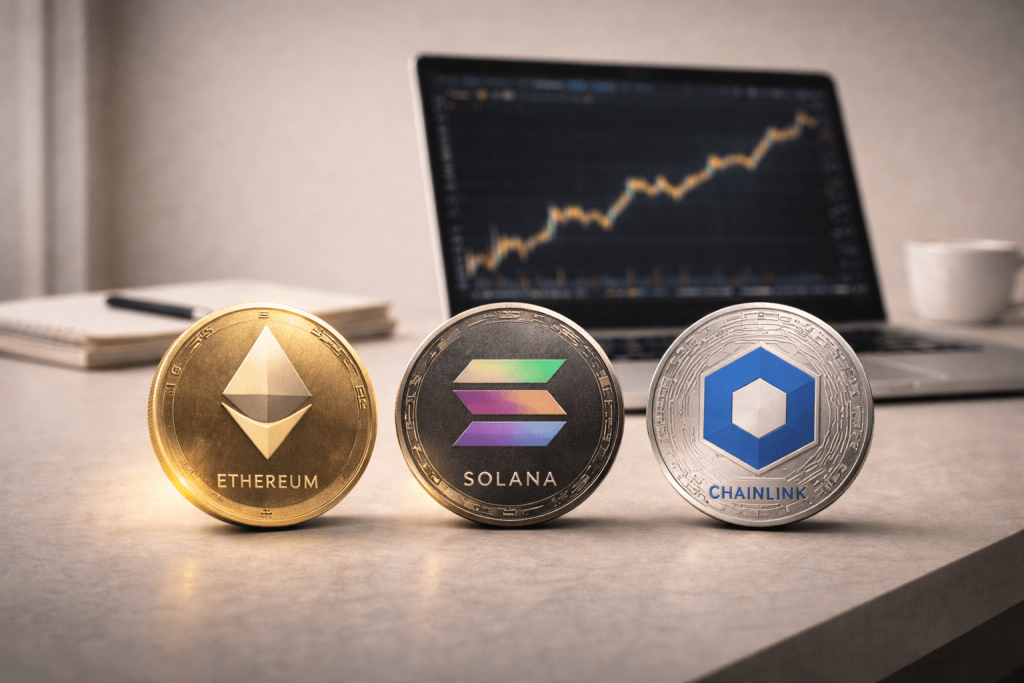
Geopolitical de-escalation between the US and Iran has coincided with a positive shift in crypto market sentiment, driving Bitcoin above $69,000 and boosting major altcoins like ETH, SOL, and LINK. Spot ETF inflows have turned positive, with significant net inflows for both Bitcoin and Ethereum ETFs, indicating renewed institutional interest that could sustain upward price momentum. While BTC and ETH show bullish signs with ETF inflows and price surges, Solana's technical indicators and declining on-chain metrics suggest a more cautious outlook despite short-term gains. Chainlink's price action is supported by positive fundamentals including a new ETF listing and whale activity, with potential for further upside towards $20 if key resistance levels are decisively broken.

CoinShares' Nasdaq listing via a $1.2 billion SPAC deal provides a new U.S. avenue for investors to gain exposure to the crypto asset management sector. The move signifies a growing trend of crypto firms pursuing traditional public market listings, potentially increasing institutional access and regulatory scrutiny. CoinShares' diversification into active alternative strategies and DeFi, alongside its existing ETP business, suggests a strategy to capture broader market trends and revenue streams.
Signal context only. Validate with price action, liquidity, and risk limits before taking a position.
