
Navigating Crypto News

CoinFeather
Navigating Crypto News
Quick market read from this story
The $4.1 million Shibarium bridge exploit highlights significant security risks in cross-chain infrastructure, potentially impacting investor confidence in Layer 2 solutions.
Despite the exploit, substantial SHIB token withdrawals from exchanges suggest underlying accumulation by whales, signaling potential easing of sell pressure and a possible recovery.
The promotion of Pepeto's presale, emphasizing its "verified contract safety" and upcoming Binance listing, positions it as a potential alternative for investors seeking perceived security and early-stage growth opportunities, drawing parallels to early SHIB investment narratives.
The article frames the Pepeto presale as a "second chance" for investors who missed early SHIB gains, leveraging the narrative of past meme coin success to drive interest in a new token launch.
Deep Dive
The cryptocurrency landscape saw a shift in attack vectors in February, with phishing and wallet authorization abuse becoming more damaging than smart contract exploits, primarily targeting individual traders. Amidst these evolving threats, the Shiba Inu (SHIB) price prediction is being influenced by a significant $4.1 million bridge exploit on Shibarium and a substantial withdrawal of 23.5 billion SHIB tokens from exchanges within 24 hours, indicating a potential easing of sell pressure.
Shibarium experienced one of its most significant security incidents when a hacker exploited bridge checkpoints, leveraging 4.6 million BONE tokens to drain approximately $4.1 million worth of ETH, SHIB, and other tokens. This event underscores the inherent risks associated with cross-chain bridges in the crypto space.
Concurrently, over 23.5 billion SHIB tokens were withdrawn from exchanges in a single day. This large-scale withdrawal is interpreted as a signal of easing selling pressure and potential accumulation by large holders, often referred to as whales.
The article highlights a growing demand for secure trading platforms, exemplified by Pepeto, an exchange founded by the co-founder of Pepe. Pepeto emphasizes verified contract safety and offers features such as zero-cost trades on PepetoSwap, a risk scorer for identifying concentrated ownership and hidden functions, and a bridge for transferring portfolios across networks. These features are presented as a direct response to the security vulnerabilities exposed by incidents like the Shibarium exploit.
Pepeto's presale has reportedly garnered over $8 million, with a claimed upcoming Binance listing and a SolidProof audit. The platform offers a 190% APY for staking. The narrative suggests that Pepeto represents a similar early-stage opportunity to Shiba Inu, potentially offering significant returns for early investors.
Currently trading at $0.0000059, SHIB is testing support levels following the Shibarium exploit. Analysts suggest that for the SHIB price to see substantial growth, Shibarium requires consistent real-world adoption beyond temporary burn rate increases. The effectiveness of the auto-burn mechanism is noted as having a minimal impact on the overall circulating supply.
The SEC's classification of SHIB as a digital commodity is mentioned as a factor that has removed a significant regulatory concern. Price predictions from sources like CoinDCX suggest a near-term target of $0.0000092 and a 2026 maximum of $0.000027, contingent on Shibarium's adoption and scaling.
The significant whale withdrawals are seen as a positive indicator for a potential upcoming price movement. The article suggests that enhanced bridge security and the adoption of solutions like the Shib Alpha Layer could facilitate sustained on-chain activity necessary for SHIB to eliminate a zero from its price.
Source, catalyst, and sector overlap from the latest feed.
Hong Kong's delay in issuing stablecoin licenses signals a heightened regulatory focus on compliance and risk management, potentially slowing down institutional adoption in the short term. The extended timeline for stablecoin approvals by the HKMA suggests a cautious approach to prevent money laundering and cross-border fund risks, prioritizing robust safeguards over rapid market entry. Despite the delay, major financial institutions like HSBC and Standard Chartered continue to invest in stablecoin infrastructure, indicating sustained long-term interest in Hong Kong's regulated digital asset ecosystem. The postponement of stablecoin licenses creates near-term uncertainty for Hong Kong's crypto market, impacting expected liquidity improvements and institutional participation.
Rising whale outflows from Binance suggest potential accumulation by large holders, tightening exchange supply and creating a bullish backdrop for Chainlink (LINK). Chainlink's price action is consolidating within an ascending channel, indicating a potential breakout setup with key resistance at $10 and a critical level at $12 for trend confirmation. While on-chain data and price structure show improving momentum, a confirmed breakout above $12 is required to validate a bullish trend reversal, making current levels a setup phase.
Ripple's pursuit of a federal banking charter from the OCC, alongside its RLUSD stablecoin launch under a NY DFS trust license, signals a strategic move towards institutional legitimacy and broader financial system integration. The company's focus on regulatory compliance and scaling existing payment infrastructure with RLUSD, rather than rapid feature expansion, suggests a long-term strategy aimed at building trust with traditional financial entities. By seeking federal oversight, Ripple aims to position RLUSD as a compliant and trustworthy stablecoin, potentially unlocking significant growth in cross-border payments and challenging existing market dynamics.
Dogecoin is consolidating in a tightening range, with increased network activity and net outflows from exchanges suggesting building demand ahead of a potential breakout. The price action indicates a balance between buyers at support ($0.089-$0.091) and sellers near resistance, creating a compression structure that implies an imminent directional move. A sustained break above $0.10 could trigger upward momentum by tapping liquidity, while failure to do so may lead to continued range-bound trading or a retest of lower support levels.
Geopolitical de-escalation between the US and Iran has coincided with a positive shift in crypto market sentiment, driving Bitcoin above $69,000 and boosting major altcoins like ETH, SOL, and LINK. Spot ETF inflows have turned positive, with significant net inflows for both Bitcoin and Ethereum ETFs, indicating renewed institutional interest that could sustain upward price momentum. While BTC and ETH show bullish signs with ETF inflows and price surges, Solana's technical indicators and declining on-chain metrics suggest a more cautious outlook despite short-term gains. Chainlink's price action is supported by positive fundamentals including a new ETF listing and whale activity, with potential for further upside towards $20 if key resistance levels are decisively broken.
CoinShares' Nasdaq listing via a $1.2 billion SPAC deal provides a new U.S. avenue for investors to gain exposure to the crypto asset management sector. The move signifies a growing trend of crypto firms pursuing traditional public market listings, potentially increasing institutional access and regulatory scrutiny. CoinShares' diversification into active alternative strategies and DeFi, alongside its existing ETP business, suggests a strategy to capture broader market trends and revenue streams.
March 2026 saw a significant increase in crypto hacks, with losses doubling to $52 million, indicating a heightened risk environment for digital assets and associated platforms. The ResolvLabs $USR hack, resulting from an AWS KMS breach and an 'infinite mint' exploit, highlights critical vulnerabilities in infrastructure and token generation mechanisms, impacting interconnected DeFi protocols like MorphoBlue, Euler, and Fluid. The diversification of attack vectors, including social engineering leading to significant losses for a Kraken whale, underscores the need for enhanced security measures across all facets of the crypto ecosystem, from smart contracts to user protection.
Strategy's continued weekly Bitcoin accumulation signals sustained institutional conviction, potentially providing a foundational support for the broader market. The shift in investor preference towards direct revenue-generating tokens like HYPE, which has surpassed ADA in market cap, indicates a rotation away from research-focused chains towards more immediate utility. Pepeto's presale success, driven by its focus on verified tools and a Pepe co-founder's involvement, suggests a market appetite for utility-focused meme-adjacent projects with clear upcoming catalysts like a Binance listing. The article highlights a growing concern around AI-powered scams and crypto ATM fraud, emphasizing the increasing importance of security and verification tools for capital protection.
Mastercard's Global Crypto Partner Program, including Solana and Circle, signals growing institutional infrastructure adoption, potentially benefiting established Layer 1s like SOL and ETH. While SOL and ETH gain validation from institutional partnerships, their large market caps suggest limited upside compared to early-stage presale projects like Pepeto, which is positioned for potentially higher returns. Pepeto's presale success, highlighted by $8 million raised during a 'fear' phase and upcoming Binance listing, suggests strong early-stage investor confidence and potential for significant price appreciation upon public trading. The article frames Pepeto's unique features like zero-cost swaps and risk scoring as differentiators in a crowded market, aiming to capture value from the broader institutional adoption wave driven by initiatives like Mastercard's program.
Cardano's upcoming Midnight privacy sidechain launch, coupled with the Van Rossem hard fork, aims to introduce confidential smart contracts, potentially attracting new capital by addressing privacy concerns and compliance needs. The article highlights Pepeto's presale, projecting 100x returns driven by an upcoming exchange listing and a 191% APY staking reward, positioning it as a potential beneficiary of capital inflow from the Cardano ecosystem upgrades. While Cardano's ADA shows a historically strong buying signal with its MVRV ratio, the primary focus for speculative trading appears to be on the Pepeto presale, which is heavily promoted with aggressive return projections tied to its listing. SUI and PEPE are mentioned as holding support levels, but the narrative strongly favors Pepeto's presale as the primary near-term opportunity, leveraging the anticipation of the Cardano Midnight fork and a Binance listing.
Brazil's B3 exchange is launching regulated 'event contracts' tied to Bitcoin, signaling increased institutional interest in crypto derivatives within a major emerging market. The introduction of these cash-settled contracts for professional investors with significant assets suggests a growing demand for regulated crypto-linked financial products beyond traditional spot trading. This development, alongside B3's exploration of tokenization and stablecoins, indicates a strategic move by traditional finance infrastructure to integrate digital assets, potentially paving the way for broader adoption in Brazil.
Australia's new law mandates crypto exchanges obtain an AFSL, aligning them with traditional financial institutions and increasing operational costs and complexity. The legislation aims to prevent outcomes like FTX by enforcing bank-grade standards for asset segregation and capital requirements, enhancing investor protection. This regulatory clarity is expected to unlock significant institutional capital, estimated at A$24 billion annually, by providing a stable and predictable operating environment. The move aligns Australia with global regulatory trends in the UK, US, and EU, signaling a coordinated international effort to integrate digital assets into traditional financial systems.
US prosecutors have expanded a wash-trading case, charging 10 foreign nationals tied to four crypto market-maker companies, signaling an intensified regulatory crackdown on market manipulation. The extraditions and charges, stemming from an undercover operation, highlight the ongoing efforts by US authorities to combat deceptive practices that inflate token prices and volumes. This development reinforces the view that regulatory scrutiny on market makers and their alleged "market-manipulation-as-a-service" offerings will continue, potentially impacting liquidity and trading strategies.
Live Feed
Loading the broader stream in the same flow as the homepage feed.
GRSE reported a record ₹6,400 crore revenue for FY 2025-26, a significant 26% increase year-over-year, indicating strong operational execution and demand for its shipbuilding services. The company's strong performance, highlighted by the delivery of eight vessels and expansion into new ship types, suggests robust growth potential and could attract further institutional interest. GRSE's declaration of a 129% interim dividend alongside record revenue underscores its financial health and commitment to shareholder returns, potentially supporting its stock valuation.

Jack Dorsey's proposal to replace middle management with AI at Block signals a potential shift in corporate structures, impacting future operational models and workforce dynamics. The integration of AI for coordination and decision-making, as outlined by Dorsey, could redefine efficiency in tech companies, though practical implementation challenges remain. While the article focuses on corporate restructuring, the underlying theme of AI's growing capabilities in complex tasks may have broader implications for the tech and crypto industries.

The options market indicates a greater hedging of Bitcoin (BTC) against Ether (ETH), with put options for BTC being more expensive, suggesting increased trader concern over BTC's downside risk compared to ETH. The elevated cost of BTC put options relative to ETH options implies a market expectation of ETH's relative resilience, potentially signaling a bullish trend reversal in the ETH/BTC ratio despite its recent downtrend. While overall market sentiment appears cautiously optimistic due to macro factors like falling Treasury yields and rising stock futures, the specific options data points to a divergence in short-term risk perception between BTC and ETH.

Vitalik Buterin's continued offloading of gifted meme coins and reallocation to privacy protocols like Railgun signals a preference for utility and privacy over speculative assets. The transactions, involving selling meme coins for ETH and moving USDC/ETH to Railgun, highlight a strategic financial management approach by Buterin, potentially influencing sentiment around privacy solutions. While not a direct market signal for ETH, Buterin's actions indirectly support the narrative of privacy infrastructure development within the broader crypto ecosystem.

Hyperliquid's HIP-4 proposal is positioned as a potential catalyst for the HYPE token to retest its all-time highs, driven by expansion into prediction markets and traditional finance assets. The project's diversification beyond crypto perps, including offerings like S&P 500 tokenization, signals an ambition to capture broader market share and could significantly impact HYPE's valuation if successful. Despite recent market uncertainty, Hyperliquid's resilience and the potential impact of upcoming proposals like HIP-5, which includes a buyback mechanism, suggest a positive outlook for the HYPE token. The article highlights Hyperliquid's rapid growth from a niche perp DEX to a multi-billion dollar project, underscoring its significant short-term impact and potential for continued expansion into global financial systems.
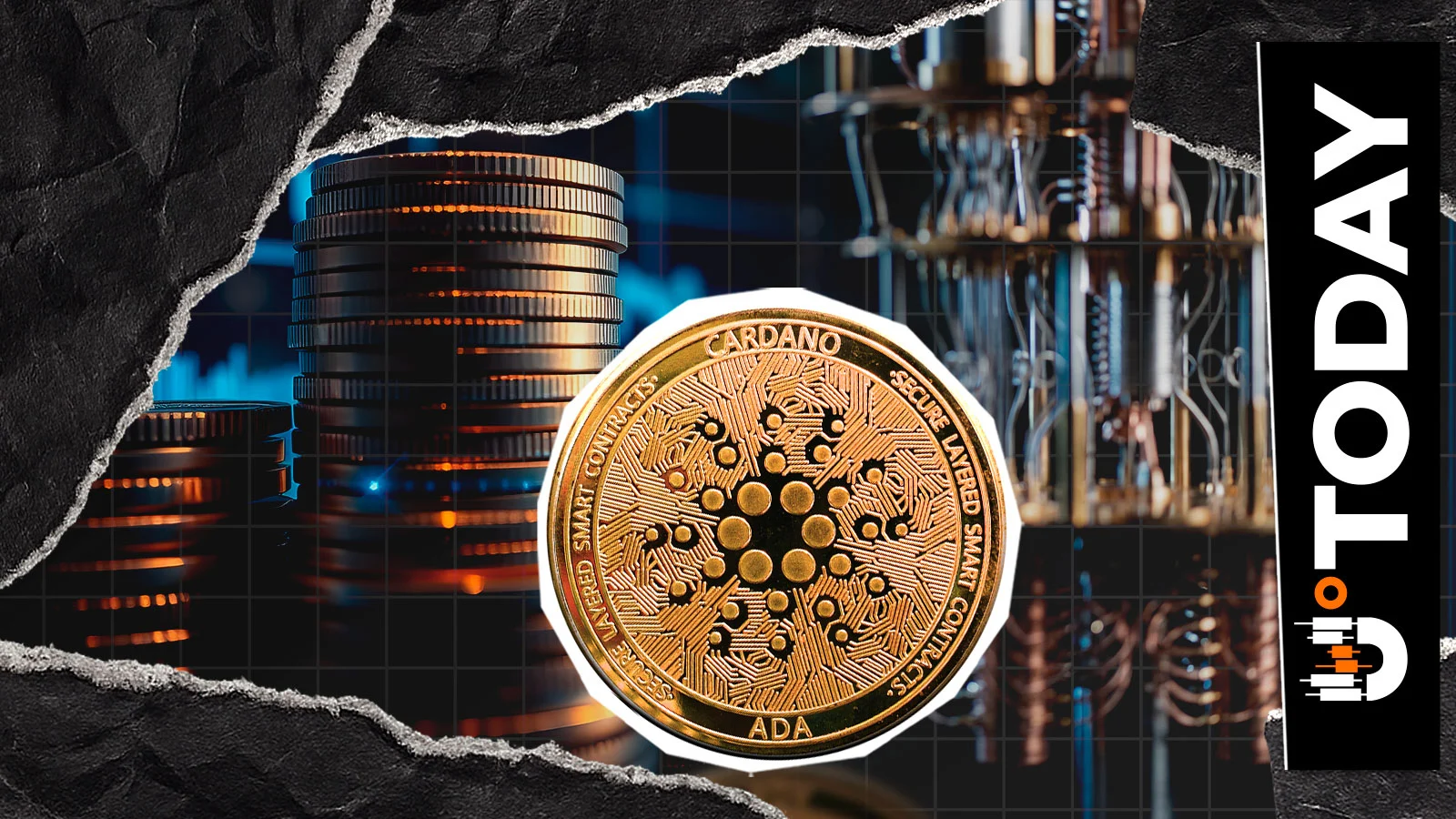
Cardano's ranking as the second most quantum-ready blockchain by Google highlights its inherent design advantages in cryptographic security, potentially appealing to security-conscious investors. While Algorand leads in immediate quantum-resistant transaction capabilities, Cardano's eUTXO model offers a structural defense against future quantum threats, positioning it favorably within the Layer 1 sector. The news provides a long-term strategic outlook on blockchain security, suggesting that projects prioritizing post-quantum cryptography may gain a competitive edge as quantum computing advances.

Federal Reserve Governor Barr's emphasis on implementing the GENIUS Act highlights ongoing regulatory scrutiny for stablecoins, suggesting potential hurdles for market growth and innovation despite the new legislative clarity. The historical parallels drawn by Barr to past financial panics underscore the Fed's cautious approach to stablecoin risks, including bank runs and reserve integrity, which could lead to stringent implementation rules impacting issuer operations. While the GENIUS Act aims to provide clarity, the focus on AML checks, capital requirements, and consumer protection during its implementation phase indicates that significant regulatory frameworks are still being defined, creating a period of watchfulness for market participants.
XRP is showing early signs of recovery at $1.35, with technical indicators like RSI and MACD suggesting a potential market bottom and renewed bullish momentum. The defense of the $1.30 support level, combined with increased whale activity and a tightening chart structure, indicates a possible breakout from months of consolidation, potentially targeting $1.60. XRP's sustained presence above the 200-week EMA could boost investor confidence, signaling stability and setting the stage for a significant upward move if buyer defense continues.

Chainlink's exchange reserves have reached multi-year lows, indicating a significant reduction in available sell-side supply which could precede a price re-rating. Accelerating whale outflows suggest accumulation by large holders during a period of suppressed price and negative altcoin sentiment, signaling a potential shift in positioning. High development activity for Chainlink, ranking above Ethereum itself, combined with thinning float and whale accumulation, presents a strong fundamental case that the market may soon price in. The recent price action shows a volume-backed upside move through resistance, aligning with on-chain data and suggesting a potential short-term bullish catalyst.

Bitcoin's price retracing to previous cycle highs, rather than surpassing them, suggests a maturing market and the potential end of parabolic rallies driven by diminishing returns on capital deployment. The shift from speculative, wild-west dynamics to more 'TradFi-like' market behavior, influenced by institutionalization and derivatives trading, indicates a tempering of extreme price swings. The $70,000 level, representing a prior cycle peak, is now acting as a key support zone, with a strong bounce potentially signaling the end of the bear market, though future uptrends may be more measured.
Signal context only. Validate with price action, liquidity, and risk limits before taking a position.
