
Navigating Crypto News

CoinFeather
Navigating Crypto News
Source, catalyst, and sector overlap from the latest feed.
The potential XRP Ledger upgrade, highlighted by Evernorth, introduces a native lending protocol with features like single-asset vaults and confidential transfers, aiming to unlock significant dormant XRP utility. This development, referred to as the 'final piece of the XRPL stack,' could fundamentally increase XRP's utility and on-chain activity by putting over $100 billion in XRP to work. While the upgrade focuses on enhancing XRPL's institutional infrastructure and utility, the current market downturn and XRP's price action suggest a neutral immediate trading outlook despite the positive fundamental development.
Live Feed
Loading the broader stream in the same flow as the homepage feed.
Geopolitical tensions and rising oil prices are driving traditional markets to six-month lows, creating a risk-off environment that could spill over into crypto if sustained. The S&P 500 and Nasdaq's prolonged decline, now on track for its fifth consecutive weekly loss, signals a shift from growth focus to risk aversion, impacting investor sentiment across asset classes. Uncertainty surrounding potential escalation in the Middle East and its impact on global energy supply chains is the primary driver of current market volatility, making it difficult to predict a near-term stock market bottom.

Walrus's significant data storage milestone of 450TB, surpassing Arweave, highlights strong adoption and potential for its programmable storage solutions. The platform's strategic focus on AI and on-chain finance, coupled with new product launches like MemWal, positions it to capitalize on emerging market demands for verifiable data and agentic memory. Walrus's growth within the DePIN sector, projected to reach $3.5 trillion by 2028, suggests a substantial market opportunity for decentralized storage infrastructure.
Cardano's Foundation approval of the budget framework and Orion Fund signals progress in governance and institutional integration, potentially boosting investor confidence despite ADA's current price weakness. The listing of Midnight's NIGHT token on CoinSpot and its partnership with Monument Bank for tokenizing deposits expands Cardano's ecosystem reach and highlights the growing interest in privacy solutions and RWA integration. ADA is testing a critical support zone between $0.249-$0.259; a failure to hold this level could signal further downside, while a bounce could lead to a test of the $0.547 resistance, indicating a key inflection point for near-term price action.
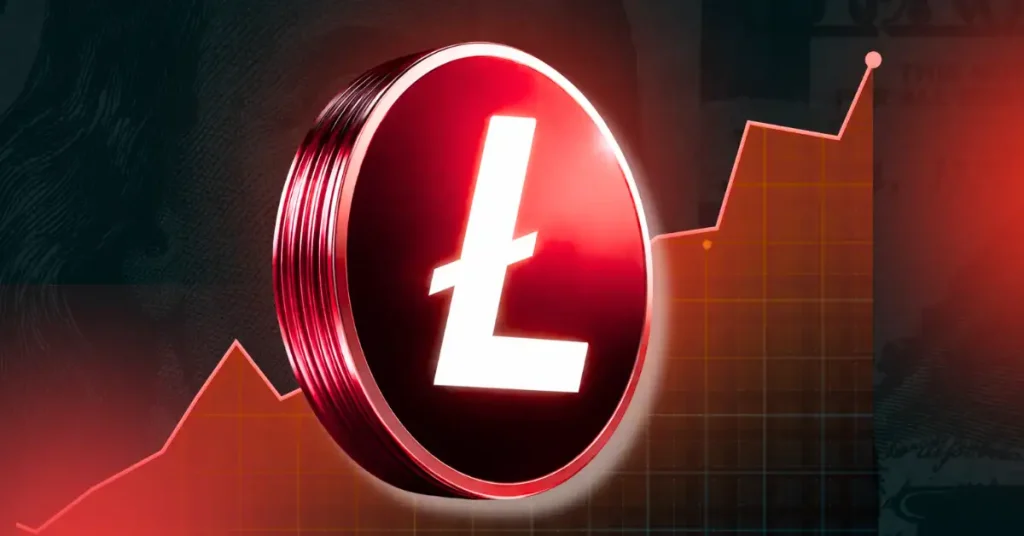
Litecoin is currently testing a critical support zone between $50 and $60, a level that has historically shown strong buyer interest and led to significant bounces. The current price action suggests a potential for a rally towards $100 if the $50-$60 support holds, with further upside targets at $150 and $200+ if bullish momentum builds. Failure to maintain support above the $50-$60 range would invalidate the bullish setup and could lead to a deeper correction phase for LTC.
Metaspins, a crypto casino launched in 2022, offers a broad range of over 5,000 games and a sportsbook, indicating continued growth in the crypto-gambling sector. The platform's focus on a KYC-light experience, fast crypto payouts, and daily rewards like lootboxes suggests a strategy to attract and retain users prioritizing privacy and efficiency in online gaming. While Metaspins supports major cryptocurrencies like BTC and ETH, its lack of direct fiat support and a dedicated mobile app positions it for a niche audience already comfortable with crypto transactions.
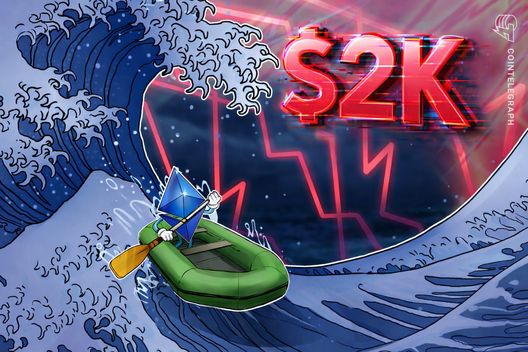
Ether's failure to maintain the $2,000 support level, coupled with declining apparent demand and consistent ETF outflows, signals a bearish short-term outlook with potential downside towards the $1,750-$1,850 range. The significant long liquidations exceeding $111 million indicate a capitulation event, suggesting that further price declines could be exacerbated by forced selling pressure. Persistent negative ETH apparent demand, reaching 16-month lows, combined with ongoing spot ETF outflows, points to a broader institutional risk-off sentiment impacting ETH's immediate price trajectory.
Major banks are exploring issuing their own stablecoins, indicating a significant shift towards institutional adoption of blockchain payment tools beyond crypto-native use cases. Ripple's strategic focus on regulatory compliance and transparency with its RLUSD stablecoin positions it to capture institutional interest in a maturing stablecoin market. XRP is approaching a critical technical juncture, with key price levels at $1.80 and $2.20 poised to determine its near-term directional trend amidst broader institutional stablecoin developments.

The article argues that flawed incentive structures, rather than technology, have historically led to retail investor losses in crypto cycles, suggesting a need for redesigned participation models. A proposed 'savings layer' concept, inspired by traditional prize-linked savings accounts, aims to prioritize capital preservation and reward discipline over speculation to retain retail users. The author posits that crypto's future hinges on a choice between protecting everyday users through better incentive design or continuing to optimize for short-term speculative gains.
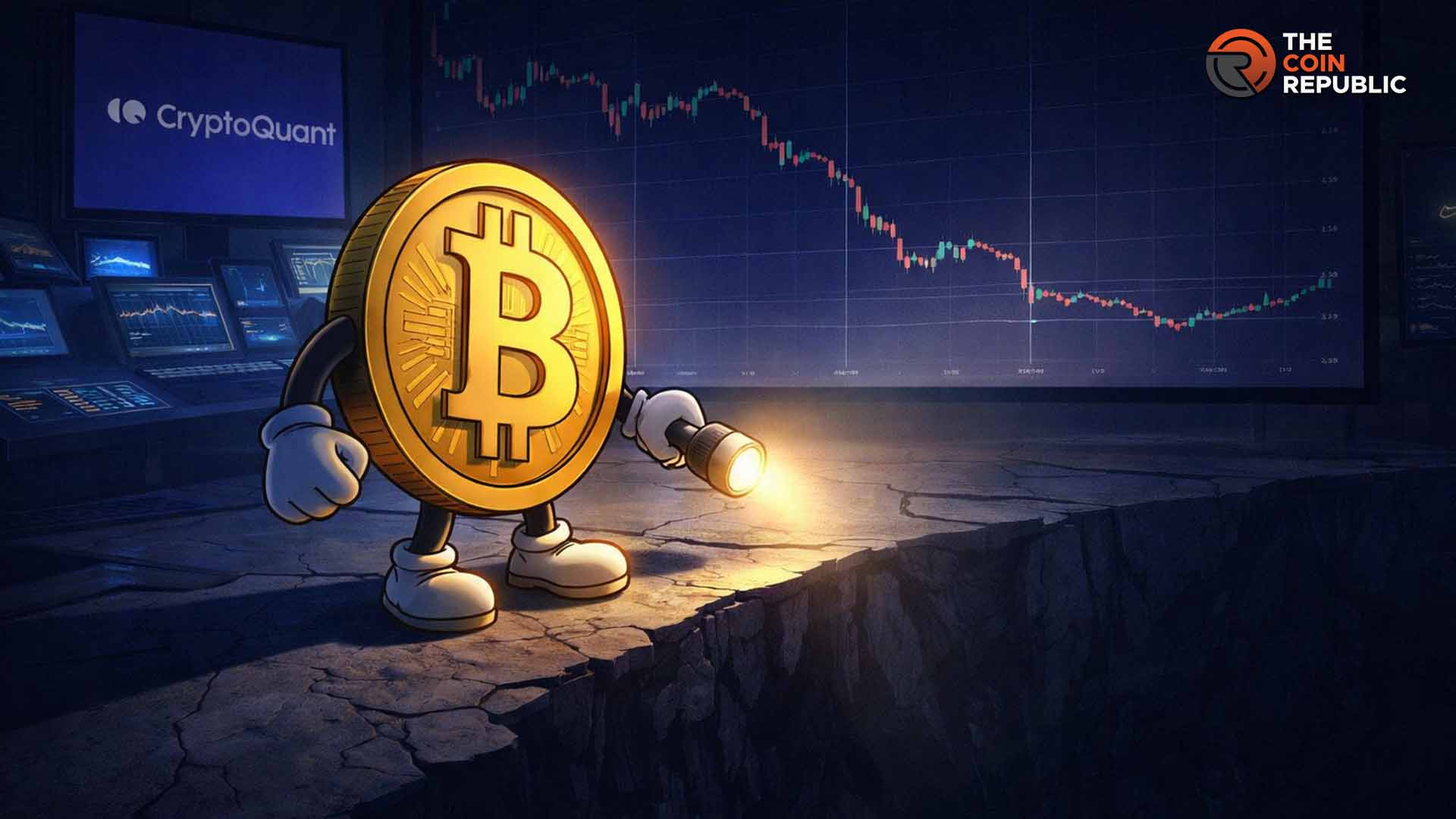
Bitcoin's profitability compression to 60.6% signals a historical 'reset zone', historically preceding accumulation phases and potential upside moves. Reduced selling pressure from ETFs and corporate holders, coupled with lower Binance inflows, indicates a structural shift away from short-term reactive selling. Despite declining network profitability, long-term holders are retaining gains, suggesting a more resilient market structure compared to previous cycles. The current confluence of reduced exchange inflows and historical valuation metrics suggests a moderation in selling pressure, potentially setting the stage for price stabilization or recovery.

Shibarium has experienced a significant, albeit artificial, surge in daily transactions, driven by infrastructure upgrades and re-indexing processes rather than organic user activity. While the reported 1451% increase in transactions highlights technical activity on Shibarium, the underlying economic activity remains low due to automated calls and zero-value transfers. The ongoing infrastructure upgrades and testing of L3 developments on Shibarium suggest potential for future genuine adoption, but current transaction metrics are misleading for assessing user engagement.

Peter Schiff highlights Bitcoin's failure to surpass its 2021 all-time high after 52 months, framing it as an 'anti-record' and questioning its store-of-value narrative. The prolonged price stagnation, especially when contrasted with gold's new highs, suggests a potential loss of momentum for Bitcoin relative to traditional assets, according to Schiff's analysis. Schiff warns of a potential sharp decline to $20,000 if Bitcoin breaks the $60,000 support level, indicating significant downside risk if key technical levels fail. Considering inflation, Schiff argues that Bitcoin's current purchasing power is diminished compared to its 2021 peak, challenging the notion of its value preservation.
Signal context only. Validate with price action, liquidity, and risk limits before taking a position.
Quick market read from this story
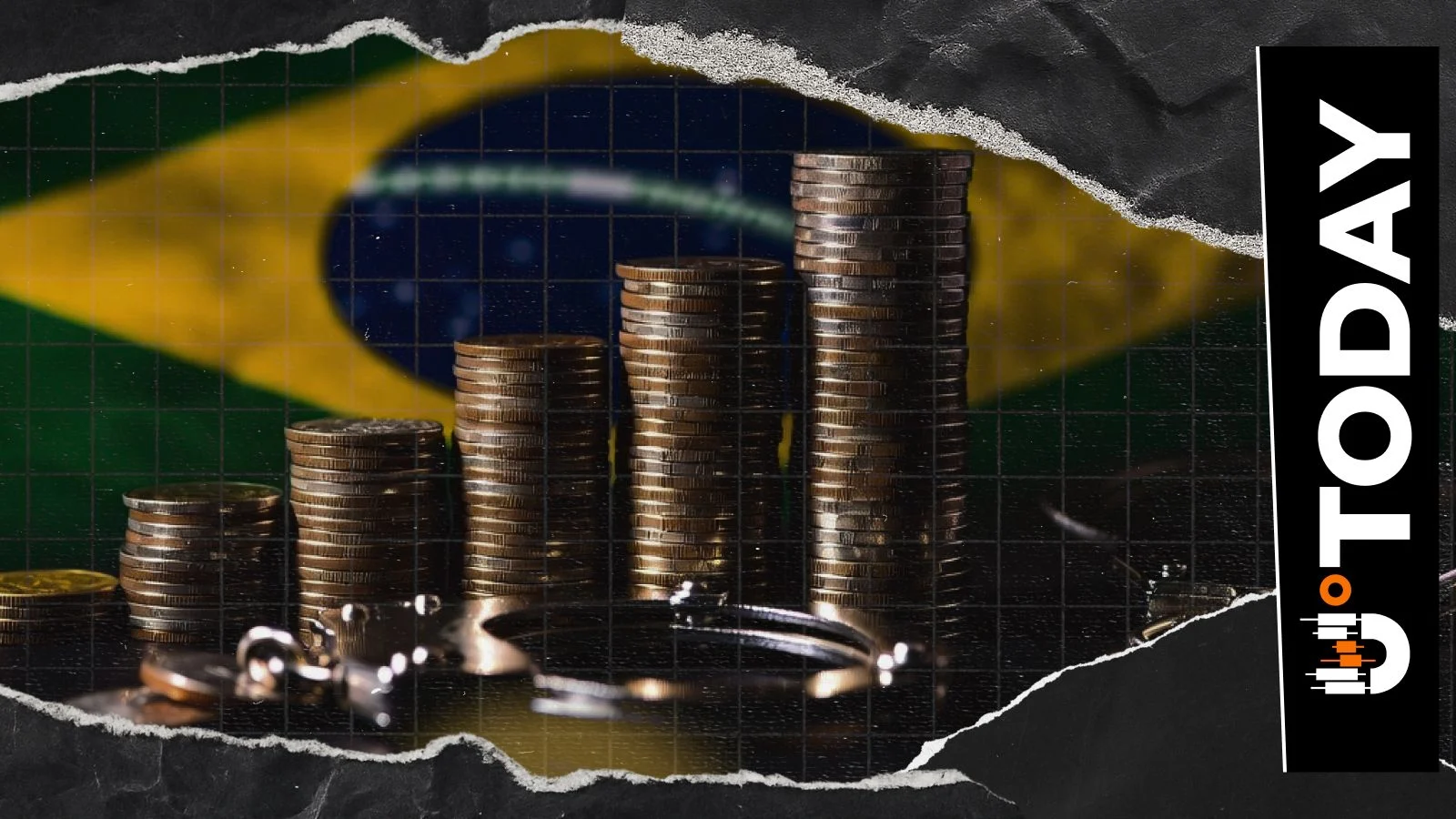
Brazil's new law enabling confiscation of Bitcoin and other cryptocurrencies from criminals represents a significant regulatory development that could impact asset seizure and recovery processes.
The legislation aims to prevent criminals from exploiting decentralized networks for illicit financial activities, potentially increasing scrutiny on crypto transactions within Brazil.
The provision allowing early liquidation of seized crypto assets into fiat currency before a case concludes could create localized selling pressure if substantial amounts are confiscated.
While primarily focused on combating crime, this regulatory action signals an evolving approach to digital asset management by a major economy, which could influence other jurisdictions.
Deep Dive
Brazil has enacted a new law aimed at mitigating criminal activities involving cryptocurrencies, granting legal authorities the power to seize digital assets, particularly Bitcoin, in criminal investigations. The law, signed by President Luiz Inácio Lula da Silva, seeks to curb the use of crypto for financial crimes as adoption grows globally.
The legislation empowers enforcement agencies to request court approval to freeze digital assets when substantial evidence points to serious offenses such as money laundering, organized crime, or other illicit financial activities. A primary objective of the law is to prevent criminals from rapidly moving funds through decentralized networks like Bitcoin.
Furthermore, the new law permits the use of confiscated cryptocurrencies for public benefit. Courts are authorized to allow the early liquidation of seized Bitcoin at their discretion. This means that crypto holdings confiscated by law enforcement could be converted into Brazilian Reals or other fiat currencies before a case concludes, if deemed necessary. Upon confirmation of criminal acts, the proceeds can be allocated to enhance Brazil's public security initiatives.
Ripple's strategic acquisitions totaling $2 billion are positioning XRP as a central pillar for global finance, suggesting a strong focus on utility driving ecosystem growth. The company's CEO highlights a "ChatGPT moment" for crypto driven by regulatory clarity, indicating potential for increased institutional capital inflow into assets like XRP and stablecoins. Ripple's business growth is explicitly linked to XRP's utility, with real-world adoption examples like real estate tokenization on the XRP Ledger reinforcing this connection. The anticipation of the Clarity Act and the recognition of digital assets as commodities by the SEC/CFTC signal a more favorable regulatory environment, potentially boosting adoption of Ripple's payment solutions.
