
Navigating Crypto News

CoinFeather
Navigating Crypto News
Quick market read from this story
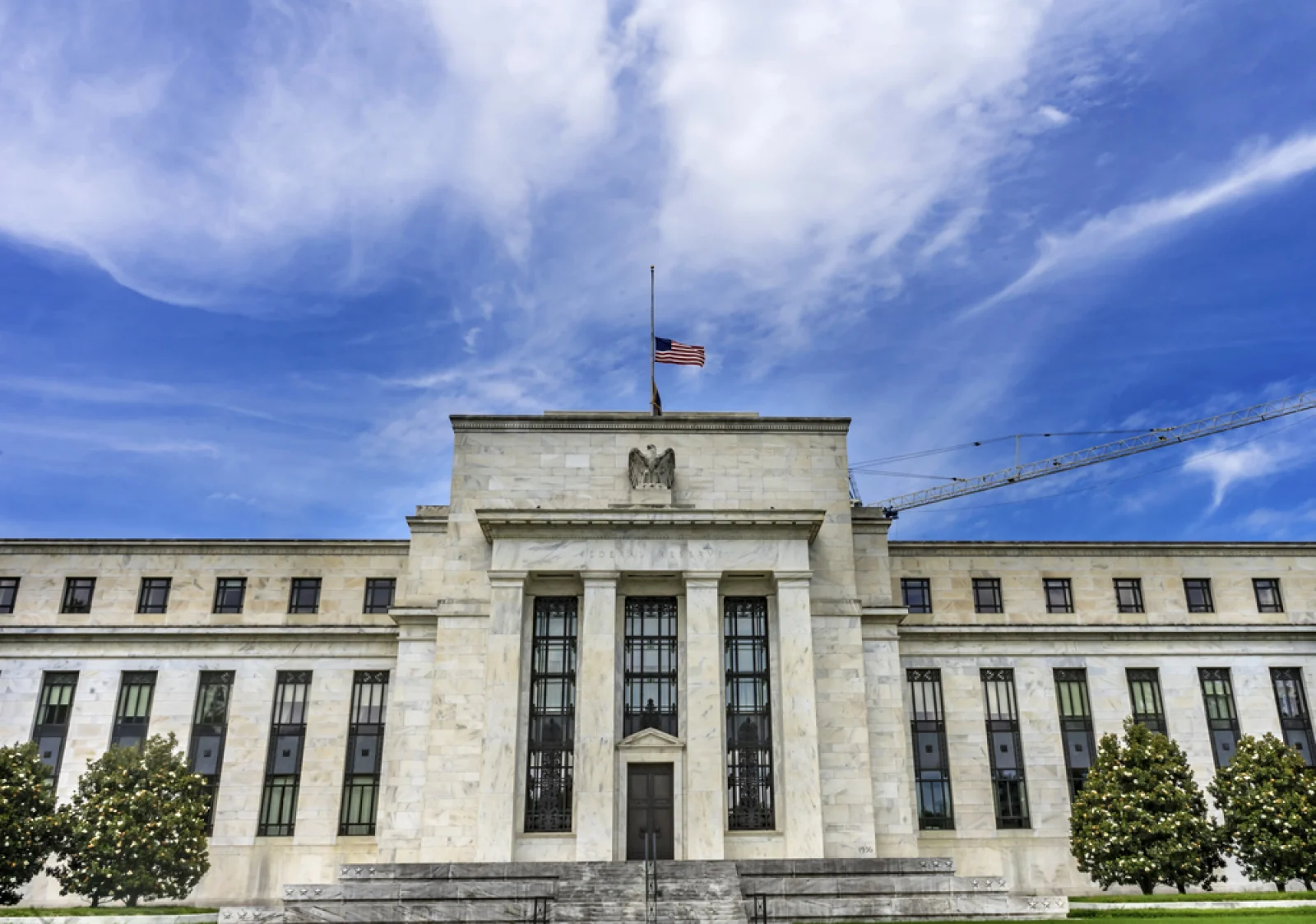
The Federal Reserve's review of Basel III capital rules presents a significant opportunity to reclassify Bitcoin, potentially removing its 'toxic asset' designation and enabling traditional banks to hold it.
A reduction in Bitcoin's risk weight from the current 1,250% to a level comparable with other assets would dramatically lower capital requirements for banks, facilitating institutional adoption.
Advocacy from groups like the Bitcoin Policy Institute is crucial in this review process, aiming to highlight Bitcoin's fundamental properties like transparency and liquidity to justify a more favorable regulatory treatment.
Deep Dive
The Federal Reserve is currently reviewing proposals to revise its capital rules and Basel risk weighting standards for large banking organizations, a move that could significantly impact the cryptocurrency industry's legitimacy.
Under existing guidelines, cryptocurrencies like Bitcoin are treated as "toxic assets" with punitive capital requirements. The Basel III framework assigns unbacked crypto assets a 1,250% risk weight. This is in stark contrast to assets like gold and AAA sovereign debt, which have a 0% risk weight, and speculative unlisted stocks, which have a 400% risk weight. This extremely high risk weight effectively acts as a ban, forcing banks to hold capital reserves equal to the total exposure value of the Bitcoin they hold, making it prohibitively expensive for traditional banks to hold BTC on their balance sheets.
Advocacy groups, such as the Bitcoin Policy Institute (BPI), are actively working to change this narrative. Representatives from BPI are attending meetings with the Federal Reserve to advocate for a fairer regulatory framework. Conner Brown of the BPI has stated that a change in guidance would be a "big win for American Bitcoiners."
Brown suggests that the Federal Reserve should align Bitcoin's risk weighting with that of other comparable assets. He highlighted Bitcoin's fundamental properties, including its transparency, deep liquidity, always-on markets, and zero counterparty risk, as justification for a dramatic reduction in its risk weight. Such a revision could enable traditional financial institutions to hold Bitcoin more readily, potentially increasing its legitimacy within the established financial system.
Source, catalyst, and sector overlap from the latest feed.
Cardano intra-era hard fork to protocol 11 version, van Rossem, is now approaching, with a key node release expected in a matter of days.
Jim Cramer's "very oversold" comment, despite not explicitly mentioning Bitcoin, has triggered the "inverse Cramer" effect within the crypto community, leading to speculation of further downside. Technically, Bitcoin's RSI at 47.13 indicates it is not oversold, suggesting the current price action below $70,000 is a correction rather than a market bottom. Market sentiment is influenced by external factors like rising energy costs and the Federal Reserve's hawkish stance, which are pressuring risk assets like Bitcoin.
A CryptoQuant analyst disputes reports of a $2.2 billion stablecoin inflow to Binance, suggesting the figures are inaccurate and likely represent internal reserve rebalancing rather than new capital entering the exchange. The analyst's clarification indicates that increased USDT activity on Ethereum, with a corresponding outflow from Tron, is a technical rebalancing move by Binance to meet demand on a specific chain, not a bullish signal for broader market accumulation. While stablecoin inflows are typically seen as a bullish indicator, this specific event is reframed as an operational adjustment, reducing its immediate significance as a catalyst for asset purchases.
SBI Holdings' significant investment of $10 per share into Evernorth (XRPN) highlights substantial institutional interest and capital allocation into the XRP ecosystem, contrasting sharply with earlier, lower valuations. The strategic capital injection by Ripple and Chris Larsen, alongside SBI's investment, positions Evernorth as a potential institutional gateway to XRP Ledger DeFi, with plans for yield strategies and accumulating XRP from profits. The internal valuation of XRP reserves above $2 by Evernorth, despite current market prices, suggests a bullish outlook from key stakeholders and could influence future market sentiment if realized.
Shiba Inu price drop caught bulls unawares, with 15.99 billion SHIB long positions liquidated.
The SEC has issued a new interpretation classifying most crypto assets as non-securities, aiming to provide regulatory clarity and foster innovation within existing legal frameworks. This pivot from ad-hoc enforcement to clear guidelines suggests a more predictable regulatory environment, potentially reducing risk for developers and investors in the crypto space. The interpretation establishes four categories of non-securities (digital commodities, collectibles, tools, and payment stablecoins), with only tokenized traditional securities remaining under SEC jurisdiction. By clarifying the application of the Howey test and defining when an investment contract terminates, the SEC seeks to enable crypto innovation while focusing enforcement on fraud and market integrity.
Nevada's regulatory action against prediction market Kalshi is advancing after an appeals court denied its motion to block a temporary restraining order, potentially impacting its operations in the state. The legal battle highlights ongoing jurisdictional disputes between prediction market operators like Kalshi and state regulators, with the CFTC asserting its own authority. This development could signal increased regulatory scrutiny for prediction markets, potentially affecting similar platforms operating across various states.
South Korea's expanded digital won pilot, incorporating AI-driven payments and P2P transfers, signals a significant step towards integrating central bank digital currencies (CBDCs) into daily economic activity and machine-to-machine transactions. The concurrent regulatory push, including potential corporate crypto investment allowances and deferred capital gains tax, alongside a proposed cap on exchange ownership, indicates a complex and evolving landscape for digital assets in South Korea, potentially leading to industry restructuring. While the digital won pilot aims for broader adoption, past user friction and ongoing technical challenges like blockchain scaling and privacy suggest that widespread real-world implementation and user acceptance will require further development and refinement.
US lawmakers are nearing a potential compromise on stablecoin yield provisions, a critical hurdle for broader crypto market structure legislation. A resolution on stablecoin yield could unlock significant institutional capital by providing regulatory clarity and enabling yield-bearing stablecoins to compete with traditional financial products. The ongoing legislative efforts highlight the growing maturity of the stablecoin market, with total market capitalization exceeding $316 billion, indicating its systemic importance. Despite progress, other issues like ethics, DeFi, and regulatory entity identification remain, suggesting the legislative process is still complex and time-sensitive.
Major League Baseball's exclusive partnership with Polymarket and integrity framework agreement with the CFTC signals growing institutional acceptance and regulatory engagement with prediction markets. This development could lead to increased mainstream adoption and liquidity for prediction market platforms, potentially benefiting associated crypto projects like Polymarket. The focus on an "integrity framework" addresses rising concerns about insider trading and market manipulation, suggesting a move towards more regulated and transparent prediction markets.
Evernorth's SEC filing for a public listing as an XRP treasury firm signals a potential new avenue for institutional exposure to XRP, leveraging a significant XRP stash acquired through various agreements. The planned public listing via SPAC (XRPN) could provide investors with a regulated entry point into XRP, though the valuation is subject to market conditions and SEC review. Evernorth's strategy to actively manage its XRP treasury, including earning yield in DeFi and exploring international markets, indicates a focus on generating returns beyond simple asset appreciation.
Animoca Brands' investment in Ava Labs signals a strategic push to expand Avalanche's ecosystem in Asia and the Middle East, focusing on RWA and digital identity use cases. The partnership aims to leverage Animoca's extensive portfolio and regional networks to drive adoption and scale for Avalanche-based projects, potentially boosting AVAX's utility and demand. This collaboration highlights a growing trend of established Web3 entities actively supporting Layer 1 ecosystems to foster specific sector growth, particularly in emerging markets.
XRP price is consolidating within a tightening triangle pattern, suggesting a potential breakout is imminent, with analysts assigning a 65% probability to an upward move. Significant accumulation by Ripple whales, with 200 million XRP added to holdings, indicates large investors are positioning for future price appreciation despite subdued trading volume. While whale accumulation is bullish, sustained exchange outflows and low demand signal caution, suggesting that a breakout above key resistance levels like $2.60 will require stronger market support and potential institutional inflows. The current technical setup and whale activity present a mixed signal, warranting a watchlist approach as traders await confirmation of a sustained upward trend or a potential breakdown.
MicroStrategy's STRC preferred series has achieved an unprecedented 1.5% volatility, setting a new benchmark for risk-adjusted performance with a Sharpe Ratio of 5.37, which may attract new institutional interest. The company significantly increased its Bitcoin holdings by issuing $1.18 billion in STRC preferred stock, signaling a strategic pivot towards this funding instrument over common stock sales for asset accumulation. While MSTR stock experienced a slight pullback, its role as a primary vehicle for Bitcoin accumulation remains strong, with the market now evaluating the sustainability of over $1 billion in annual dividend commitments. The successful implementation of a low-volatility funding model for Bitcoin accumulation could influence how other corporate treasuries approach digital asset exposure.
Bitcoin's recent rally to $76,000 has revived market optimism, but on-chain data from Glassnode indicates that a sustained push above 75% supply in profit is needed to confirm early bull market conditions, suggesting continued volatility is likely. While Bitcoin has entered a less resistant price zone between $72,000 and $82,000, short-term holders realizing profits at an accelerated pace mirror past failed rallies, implying that absorbing this sell pressure is crucial for further upside. Technical indicators and cycle analysis suggest Bitcoin remains in a bear market trend structure, requiring a break above previous lower highs near $97,855 to establish a confirmed bullish shift and long-term rally.
Live Feed
Loading the broader stream in the same flow as the homepage feed.

Gauntlet's TVL decline of $380 million is primarily attributed to the conclusion of OKX's pre-deposit campaign, highlighting the impact of incentive programs on DeFi protocol capital flows. The sharp TVL drop, while significant in absolute terms, is framed by Gauntlet as a recurring event tied to campaign endings and market shifts, suggesting a need for traders to differentiate between temporary outflows and fundamental protocol weakness. Outflows being predominantly stablecoin-based and the comparison to previous large capital swings indicate that Gauntlet's core risk management function remains intact, but capital rotation to higher yields (e.g., SOL-based protocols) is a factor.

Coinbase's tokenization of its bitcoin yield fund on the Base network signifies a growing trend of traditional finance products integrating with blockchain infrastructure. The partnership with Apex Group, a major fund administrator, highlights institutional adoption of tokenization for efficiency and broader market access. This move by Coinbase and Apex could accelerate the tokenization of other financial assets, potentially unlocking significant market value as projected by industry reports. The use of the ERC-3643 standard with built-in compliance checks demonstrates a mature approach to institutional digital asset adoption, reducing friction for qualified investors.

Morgan Stanley's updated Bitcoin ETF filing, including Fidelity as custodian and the MSBT ticker, signals significant progress towards a potential launch, increasing the likelihood of institutional adoption and market liquidity for BTC. The inclusion of a fee waiver on the first $5 billion in investments for six months by Morgan Stanley aims to attract early adoption for its Bitcoin ETF, potentially driving demand and influencing competitor fee structures. The advancement of the Bitcoin ETF filing over the Solana ETF filing suggests a strategic prioritization by Morgan Stanley, indicating a near-term focus on BTC products and potentially a faster path to market for Bitcoin-related investment vehicles.
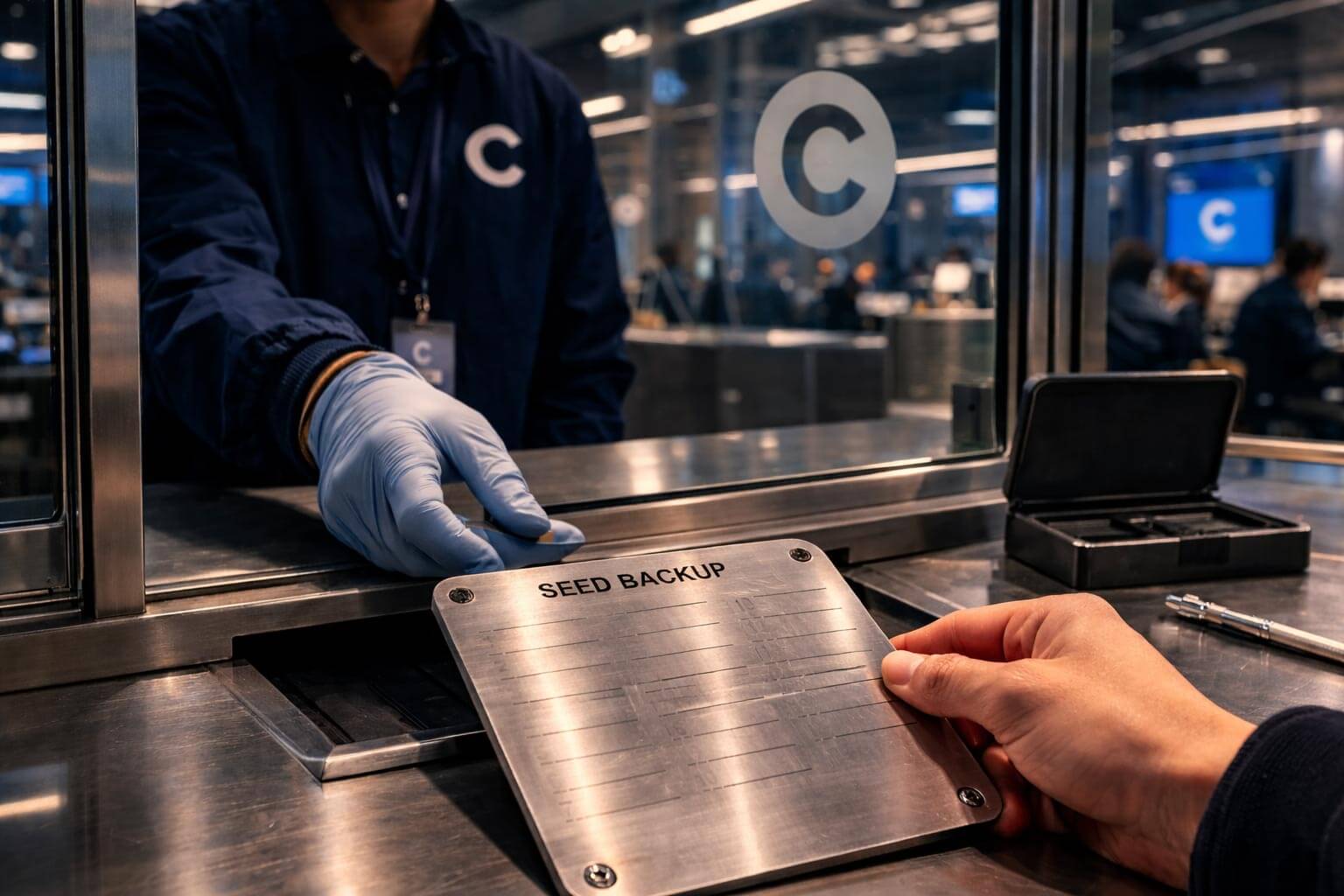
Coinbase's legacy Commerce wallet migration requires users to reveal seed phrases, a process security experts liken to a phishing template, potentially increasing user vulnerability to social engineering attacks. The directive to expose seed phrases on an official Coinbase page contradicts established security best practices, creating a confusing precedent that attackers could exploit by mimicking the interface. Given Coinbase's history of data breaches and customer fund losses due to social engineering, this seed phrase recovery method raises significant security concerns for users and the broader exchange sector. While the migration is a necessary step for users to access their funds before the March 31 deadline, the method employed by Coinbase presents a clear risk, warranting extreme caution from affected users.

Key Insights: Dogecoin price was again in the headlines after climbing above $0.10, removing a zero from its price. This DOGE price surge today has sparked fresh optimism about the token’s potential rally, with analysts targeting an ambitious high of $2 and beyond. But is this a sign of a real breakout? Despite growing enthusiasm, […] The post Dogecoin Price Surges, Drops a Zero: Breakout or Fakeout? appeared first on The Coin Republic.

Bybit's launch of a yield-bearing tokenized gold product signifies a growing trend in tokenizing traditional assets to generate passive income, potentially attracting new capital into the RWA sector. The move by Bybit, a major exchange, to offer yield on Tether Gold (XAUT) highlights the increasing financialization of real-world assets on-chain and could spur further innovation in RWA-based DeFi products. While gold has experienced recent volatility due to macro factors, the development of yield-generating products like Bybit's suggests a strategy to provide returns independent of spot price movements, appealing to a broader investor base.

Australian researchers have developed the first working quantum battery prototype, utilizing quantum physics for charging and storage. This breakthrough demonstrates a counterintuitive scaling property where larger quantum batteries charge faster, defying conventional battery limitations. While immediate consumer applications are distant, the technology holds significant potential for powering future quantum computers due to its coherent energy delivery. The development represents a fundamental physics advancement with potential long-term implications for energy storage, though practical implementation remains a challenge.

Cantor Fitzgerald is pitching FalconX for a potential IPO, leveraging their existing institutional lending relationship to potentially secure the mandate. Despite a challenging market for crypto IPOs, evidenced by Kraken's delay, firms like FalconX and Copper are still exploring public listings, signaling continued institutional interest in crypto infrastructure. FalconX's aggressive acquisition strategy, including Arbelos Markets and 21Shares, indicates a move to consolidate services and build a comprehensive institutional-grade platform ahead of a potential public offering. The involvement of traditional finance players like Cantor Fitzgerald in pitching crypto firms for IPOs highlights the ongoing convergence between TradFi and the digital asset ecosystem.
Dexsport's no-KYC model and support for over 40 cryptocurrencies position it as a user-friendly alternative in the Web3 betting space, potentially attracting users seeking faster, less restricted transactions. The platform's integration of both a crypto casino and sportsbook, coupled with provably fair mechanics and audits from CertiK and Pessimistic, aims to build trust and offer a comprehensive betting experience. While Dexsport offers a crypto-first approach, the inherent learning curve for Web3 transactions and its less established market presence compared to major competitors suggest a cautious adoption strategy for new users.

Casimo will be responsible for growing the Dutch market maker's institutional crypto offering.

The World Gold Council's 'Gold as a Service' framework aims to standardize tokenized gold, potentially lowering barriers for new issuers and increasing fungibility across products. This initiative could significantly expand the market for gold-backed tokens beyond current players like Tether and Paxos by providing shared infrastructure for managing physical reserves. By establishing industry standards and shared infrastructure, the World Gold Council seeks to boost investor confidence in tokenized gold, drawing parallels to Intel's 'Intel Inside' branding for processors.
Signal context only. Validate with price action, liquidity, and risk limits before taking a position.
