
Navigating Crypto News

CoinFeather
Navigating Crypto News

Quick market read from this story
Cantor Fitzgerald is pitching FalconX for a potential IPO, leveraging their existing institutional lending relationship to potentially secure the mandate.
Despite a challenging market for crypto IPOs, evidenced by Kraken's delay, firms like FalconX and Copper are still exploring public listings, signaling continued institutional interest in crypto infrastructure.
FalconX's aggressive acquisition strategy, including Arbelos Markets and 21Shares, indicates a move to consolidate services and build a comprehensive institutional-grade platform ahead of a potential public offering.
The involvement of traditional finance players like Cantor Fitzgerald in pitching crypto firms for IPOs highlights the ongoing convergence between TradFi and the digital asset ecosystem.
Source, catalyst, and sector overlap from the latest feed.
Gauntlet's TVL decline of $380 million is primarily attributed to the conclusion of OKX's pre-deposit campaign, highlighting the impact of incentive programs on DeFi protocol capital flows. The sharp TVL drop, while significant in absolute terms, is framed by Gauntlet as a recurring event tied to campaign endings and market shifts, suggesting a need for traders to differentiate between temporary outflows and fundamental protocol weakness. Outflows being predominantly stablecoin-based and the comparison to previous large capital swings indicate that Gauntlet's core risk management function remains intact, but capital rotation to higher yields (e.g., SOL-based protocols) is a factor.
Live Feed
Loading the broader stream in the same flow as the homepage feed.

The FBI has issued a warning regarding fake tokens on the Tron network impersonating federal law enforcement to solicit personal information, indicating a new phishing vector targeting crypto users. This development highlights the ongoing risks of scams and social engineering within the crypto space, particularly on networks like Tron which have been associated with illicit activities. While the FBI itself has previously used fake tokens for investigations, this instance involves malicious actors exploiting the tactic, underscoring the need for extreme caution among Tron users. The FBI's warning serves as a direct alert to Tron users, advising them not to engage with suspicious tokens or provide any personal data, thereby mitigating potential financial losses and identity theft.

Disclosure of mental health conditions to AI agents can lead to increased refusals, impacting the utility of AI for legitimate tasks. While safety systems aim to prevent harm, the study indicates that personal disclosures can inadvertently create a trade-off, making AI less helpful for benign requests. The effectiveness of these safety measures is inconsistent, as simple 'jailbreak' prompts can bypass the enhanced caution, highlighting potential vulnerabilities in AI agent design. This research underscores the need for AI developers to carefully consider how user context influences model behavior and to refine safety evaluations beyond standard benchmarks.
Solana faces critical resistance around $95 and support near $88, with price action likely to remain range-bound until a decisive breakout occurs. A sustained move above $92 is required to signal a bullish continuation, potentially targeting $100, while a break below $88 could lead to further downside toward $82. Muted trading volume indicates market caution, suggesting that significant upward momentum is unlikely without increased buyer conviction or a clear catalyst.

Morgan Stanley's updated Bitcoin ETF filing, including Fidelity as custodian and the MSBT ticker, signals significant progress towards a potential launch, increasing the likelihood of institutional adoption and market liquidity for BTC. The inclusion of a fee waiver on the first $5 billion in investments for six months by Morgan Stanley aims to attract early adoption for its Bitcoin ETF, potentially driving demand and influencing competitor fee structures. The advancement of the Bitcoin ETF filing over the Solana ETF filing suggests a strategic prioritization by Morgan Stanley, indicating a near-term focus on BTC products and potentially a faster path to market for Bitcoin-related investment vehicles.
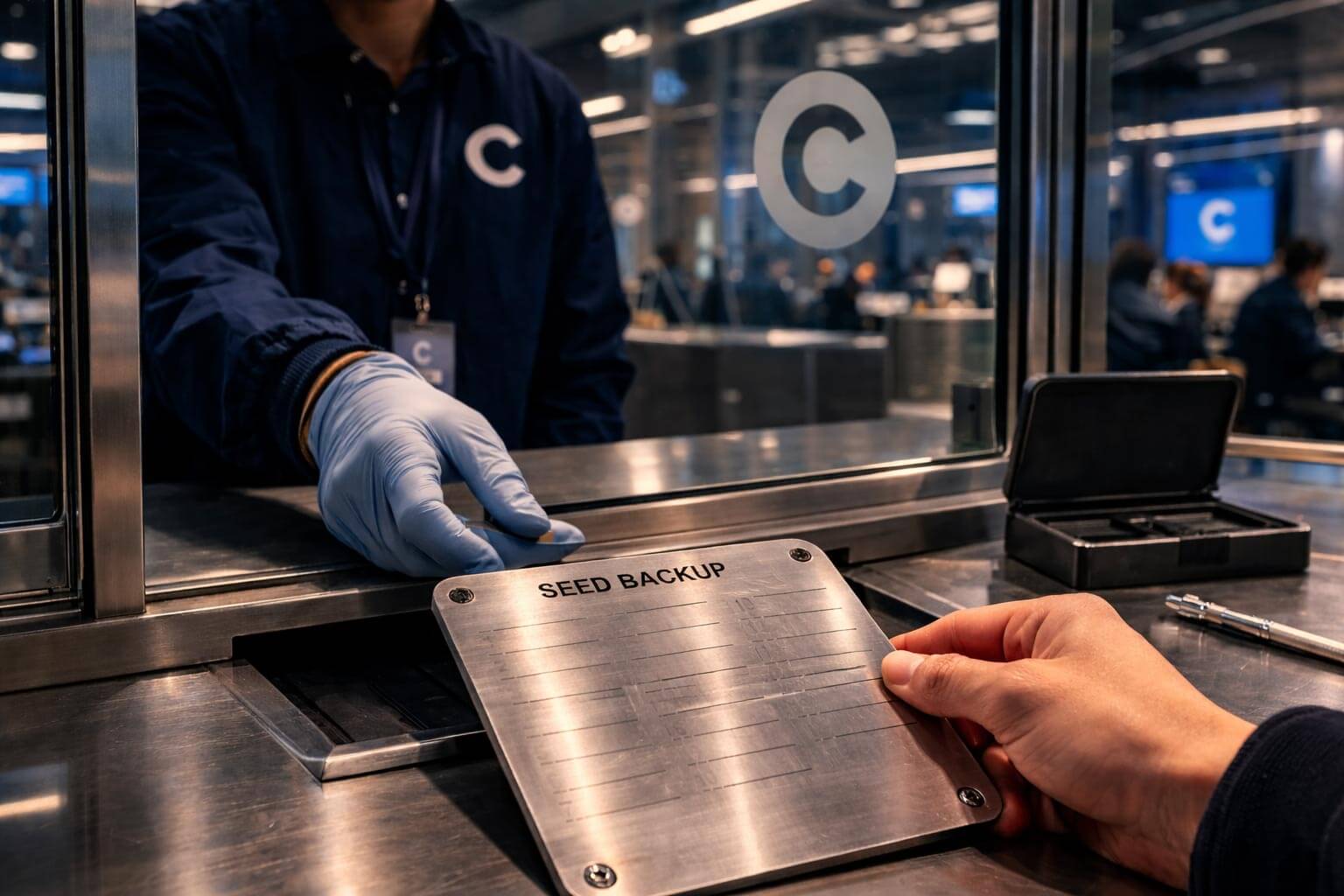
Coinbase's legacy Commerce wallet migration requires users to reveal seed phrases, a process security experts liken to a phishing template, potentially increasing user vulnerability to social engineering attacks. The directive to expose seed phrases on an official Coinbase page contradicts established security best practices, creating a confusing precedent that attackers could exploit by mimicking the interface. Given Coinbase's history of data breaches and customer fund losses due to social engineering, this seed phrase recovery method raises significant security concerns for users and the broader exchange sector. While the migration is a necessary step for users to access their funds before the March 31 deadline, the method employed by Coinbase presents a clear risk, warranting extreme caution from affected users.

Key Insights: Dogecoin price was again in the headlines after climbing above $0.10, removing a zero from its price. This DOGE price surge today has sparked fresh optimism about the token’s potential rally, with analysts targeting an ambitious high of $2 and beyond. But is this a sign of a real breakout? Despite growing enthusiasm, […] The post Dogecoin Price Surges, Drops a Zero: Breakout or Fakeout? appeared first on The Coin Republic.

Evernorth's SEC filing for a public listing as an XRP treasury firm signals a potential new avenue for institutional exposure to XRP, leveraging a significant XRP stash acquired through various agreements. The planned public listing via SPAC (XRPN) could provide investors with a regulated entry point into XRP, though the valuation is subject to market conditions and SEC review. Evernorth's strategy to actively manage its XRP treasury, including earning yield in DeFi and exploring international markets, indicates a focus on generating returns beyond simple asset appreciation.

Bybit's launch of a yield-bearing tokenized gold product signifies a growing trend in tokenizing traditional assets to generate passive income, potentially attracting new capital into the RWA sector. The move by Bybit, a major exchange, to offer yield on Tether Gold (XAUT) highlights the increasing financialization of real-world assets on-chain and could spur further innovation in RWA-based DeFi products. While gold has experienced recent volatility due to macro factors, the development of yield-generating products like Bybit's suggests a strategy to provide returns independent of spot price movements, appealing to a broader investor base.

Australian researchers have developed the first working quantum battery prototype, utilizing quantum physics for charging and storage. This breakthrough demonstrates a counterintuitive scaling property where larger quantum batteries charge faster, defying conventional battery limitations. While immediate consumer applications are distant, the technology holds significant potential for powering future quantum computers due to its coherent energy delivery. The development represents a fundamental physics advancement with potential long-term implications for energy storage, though practical implementation remains a challenge.
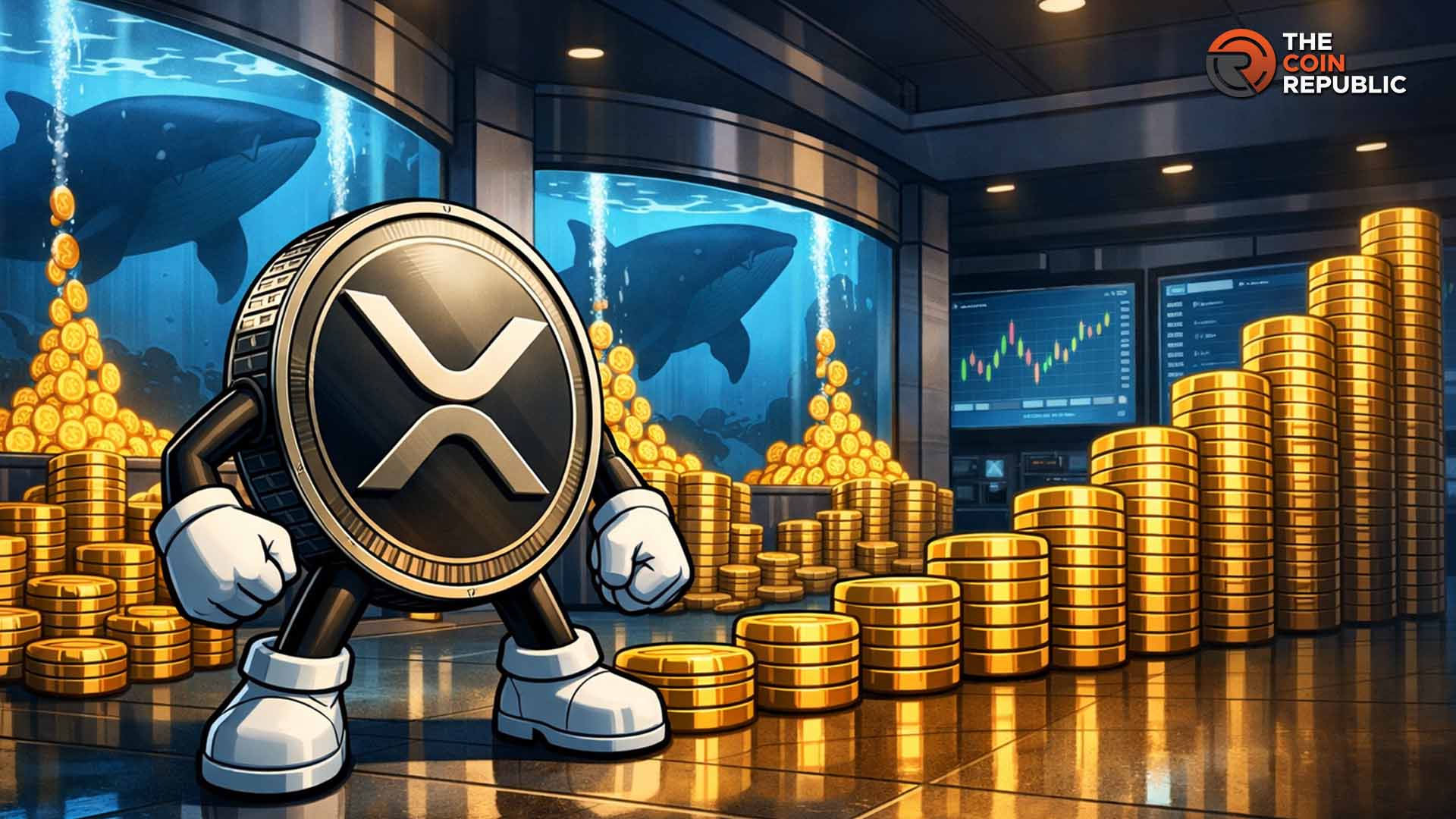
XRP price is consolidating within a tightening triangle pattern, suggesting a potential breakout is imminent, with analysts assigning a 65% probability to an upward move. Significant accumulation by Ripple whales, with 200 million XRP added to holdings, indicates large investors are positioning for future price appreciation despite subdued trading volume. While whale accumulation is bullish, sustained exchange outflows and low demand signal caution, suggesting that a breakout above key resistance levels like $2.60 will require stronger market support and potential institutional inflows. The current technical setup and whale activity present a mixed signal, warranting a watchlist approach as traders await confirmation of a sustained upward trend or a potential breakdown.
Dexsport's no-KYC model and support for over 40 cryptocurrencies position it as a user-friendly alternative in the Web3 betting space, potentially attracting users seeking faster, less restricted transactions. The platform's integration of both a crypto casino and sportsbook, coupled with provably fair mechanics and audits from CertiK and Pessimistic, aims to build trust and offer a comprehensive betting experience. While Dexsport offers a crypto-first approach, the inherent learning curve for Web3 transactions and its less established market presence compared to major competitors suggest a cautious adoption strategy for new users.
Signal context only. Validate with price action, liquidity, and risk limits before taking a position.
The SEC has issued a new interpretation classifying most crypto assets as non-securities, aiming to provide regulatory clarity and foster innovation within existing legal frameworks. This pivot from ad-hoc enforcement to clear guidelines suggests a more predictable regulatory environment, potentially reducing risk for developers and investors in the crypto space. The interpretation establishes four categories of non-securities (digital commodities, collectibles, tools, and payment stablecoins), with only tokenized traditional securities remaining under SEC jurisdiction. By clarifying the application of the Howey test and defining when an investment contract terminates, the SEC seeks to enable crypto innovation while focusing enforcement on fraud and market integrity.
