
Navigating Crypto News

CoinFeather
Navigating Crypto News
Quick market read from this story
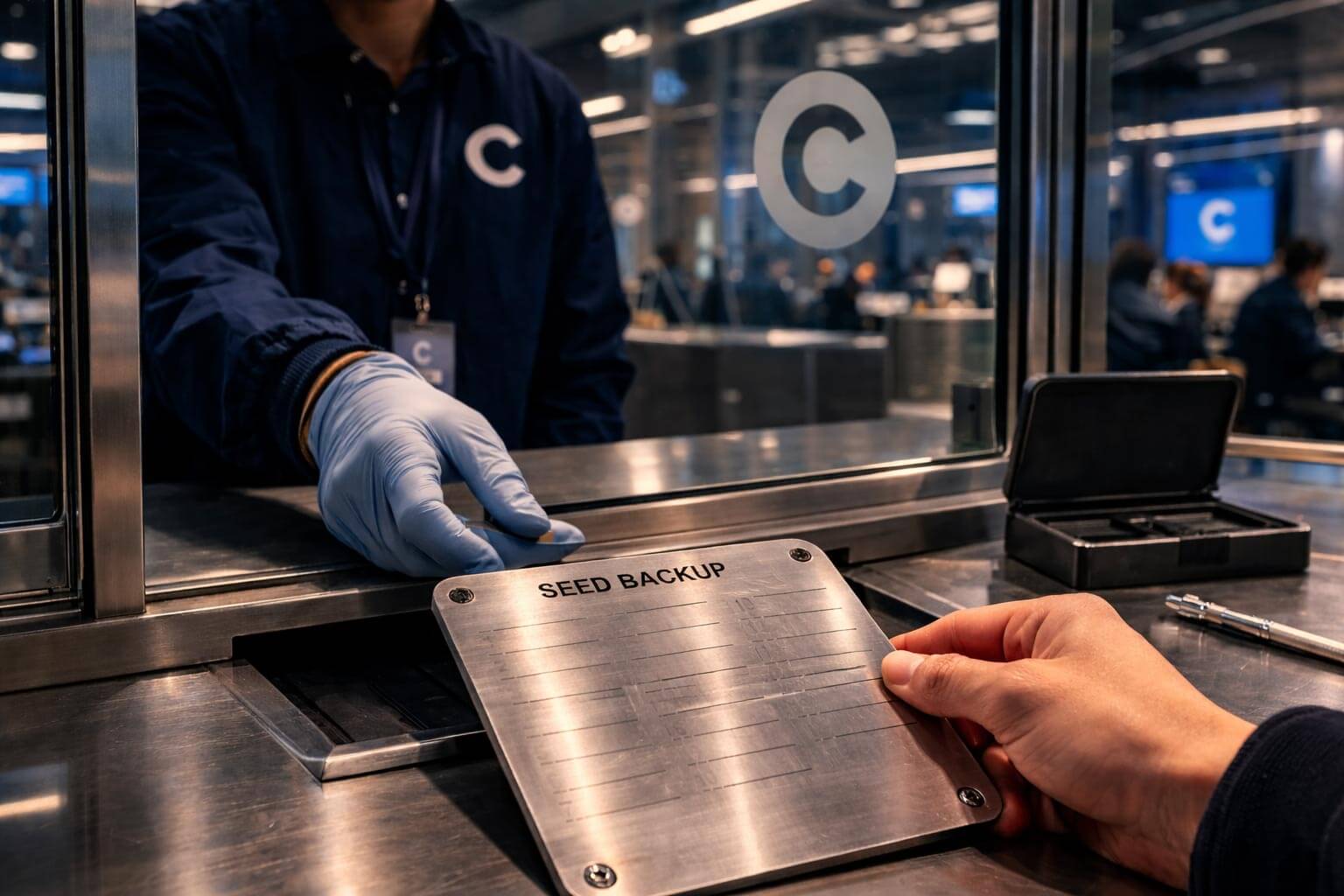
Coinbase's legacy Commerce wallet migration requires users to reveal seed phrases, a process security experts liken to a phishing template, potentially increasing user vulnerability to social engineering attacks.
The directive to expose seed phrases on an official Coinbase page contradicts established security best practices, creating a confusing precedent that attackers could exploit by mimicking the interface.
Given Coinbase's history of data breaches and customer fund losses due to social engineering, this seed phrase recovery method raises significant security concerns for users and the broader exchange sector.
While the migration is a necessary step for users to access their funds before the March 31 deadline, the method employed by Coinbase presents a clear risk, warranting extreme caution from affected users.
Deep Dive
Coinbase is directing some users of its legacy Commerce platform to a seed-phrase recovery flow as part of a migration process, a move that has drawn criticism from security experts concerned about its potential to fuel phishing attacks. Users with funds in these legacy wallets must withdraw them before the March 31, 2026 deadline, after which the Commerce portal and withdrawal tool will become inaccessible.
For users who backed up their wallet to Google Drive, Coinbase instructs them to access their Commerce dashboard, navigate to Settings and Security, reveal their 12-word seed phrase, and then use a specific withdrawal tool. This process is particularly crucial for merchants holding Bitcoin or other UTXO-based assets, as balances might be difficult to recover in standard wallets otherwise.
A seed phrase, described by Coinbase as a 12-word recovery phrase that only the user has access to, is the master recovery key for a self-custody wallet. Control of this phrase equates to control of the wallet and its funds. However, Coinbase's own wallet guidance explicitly warns users never to share their recovery phrase, stating the company will never ask for it and advising against pasting it into any website.
This directive from Coinbase to reveal the seed phrase for recovery on an official platform contradicts its own security advice, leading to significant alarm among security researchers. They argue that an official brand, an urgent deadline, and a seed-phrase workflow create a template that attackers frequently mimic.
Yu Xian, founder of blockchain security firm SlowMist, expressed concern over Coinbase hosting a page that asks users to enter a mnemonic phrase in plain text for asset recovery, deeming the practice highly insecure. He initially suspected a subdomain hack due to the perceived risk.
23pds, chief information security officer at SlowMist, highlighted two issues: first, that directly asking users to transmit their mnemonic phrase for verification is "extremely foolish," even if the link is official. Second, he noted that a flawed sitemap could allow attackers to create a near-clone of the front end on a lookalike domain, creating a potent phishing lure.
Blockchain investigator ZachXBT echoed these concerns, questioning whether Coinbase had created an official page that threat actors could exploit for seed phrase social engineering attacks against Coinbase users. These concerns are amplified by the fact that phishing and social engineering remain potent attack vectors in the crypto industry, with ZachXBT previously reporting that Coinbase users lose over $300 million annually to such scams.
The Commerce flow's approach is seen as particularly problematic because it potentially overrides years of user education that any request involving a seed phrase signals a scam. An official Coinbase page normalizing seed phrase entry could confuse users and alter the behavioral cues they rely on for security.
The debate is further intensified by Coinbase's history of security incidents. In May 2025, the exchange disclosed that cybercriminals bribed support agents to steal customer data for social-engineering attacks, affecting less than 1% of monthly transacting users. While no private keys were exposed, the attackers used the stolen data to impersonate the platform.
Additionally, Coinbase reported in its 2024 annual report that in 2021, third parties obtained login credentials and personal information for at least 6,000 customers. These details were used to exploit a vulnerability in the account recovery process, leading Coinbase to reimburse impacted customers approximately $25.1 million.
This track record raises the stakes for any official workflow that requires users to handle sensitive seed phrases on a live webpage, with researchers warning that such a branded interface could significantly boost phishing and impersonation attacks.
Source, catalyst, and sector overlap from the latest feed.
Metaverse land values have experienced a dramatic collapse, with some prime plots falling by over 99% from their 2021-2022 peak valuations, indicating a fundamental repricing of virtual real estate as an asset class. The broader NFT market also shows significant price depreciation, with average land prices down 72% and blue-chip collections like BAYC down over 96% in ETH terms, signaling a loss of speculative premium and a shift towards more utility-driven assets. The decline in NFT lending volume by 97% further underscores the loss of leverage that previously supported high valuations, suggesting that the market's ability to sustain premium prices has been severely impaired. While some metaverse land and NFT collections have seen recent short-term gains, these are from deeply depressed levels and do not indicate a sustainable recovery without fundamental drivers like consistent user traffic and durable economic value generation.
Playnance's G Coin has officially launched on MEXC, transitioning from an ecosystem-native utility token to a publicly traded asset, which provides immediate price discovery and market access. Significant early staking participation, with over 1 billion G Coin locked shortly after launch, suggests strong initial demand and a potential reduction in circulating supply, offering a positive signal for early investors. The token's utility is tied to gameplay, rewards, and fees within the Playnance ecosystem, differentiating it from many new listings that debut before their use cases are live, potentially supporting sustained interest beyond initial trading hype. The success of G Coin will depend on the sustained interplay between exchange liquidity, staking commitment, and actual on-chain usage and user growth as initial launch attention fades.
The launch of an S&P 500 perpetual derivative on Hyperliquid allows for 24/7 trading, potentially capturing initial market reactions to global events during traditional market closures. This development positions crypto infrastructure to serve as a leading indicator for US equity market movements, especially during the 49-hour weekend gap where traditional markets are closed. The success of this S&P 500 perpetual hinges on its ability to build sufficient open interest and maintain liquidity, transitioning from a sentiment tool to a credible price discovery mechanism. While currently nascent, the S&P 500 perpetual on Hyperliquid could challenge incumbent futures markets if it consistently provides trusted price discovery during off-hours, especially during periods of geopolitical or policy shocks.
US regulators are signaling a bifurcated future for on-chain dollar equivalents, where bank-issued tokenized deposits will retain FDIC insurance while payment stablecoins will not, potentially shifting competitive advantages back to traditional finance infrastructure. This regulatory distinction could lead to market segmentation, with stablecoins potentially dominating open, permissionless networks for payments and transfers, while tokenized deposits become the preferred instrument for institutional settlement and regulated asset markets due to their insured status. The FDIC's proposed stance creates a clear competitive dynamic: banks can offer insured on-chain money, while non-bank stablecoins may lose a key differentiator, forcing them to rely on network effects and programmability to maintain market share.
The upcoming $2.2 billion FTX distribution starting March 31st introduces significant sell pressure potential into a Bitcoin market already trading in a thin on-chain zone, testing its ability to absorb short-term holder profit-taking. While the FTX cash distribution is substantial, its market impact hinges on the recycling rate, with a 10-20% rate potentially influencing short-term price action by matching current profit-taking volumes. The timing of the FTX distribution coincides with the post-options expiry period, potentially creating headwinds as dealer hedges unwind, making the market's ability to digest this liquidity crucial for sustained upward momentum. A successful digestion of the FTX distribution and short-term holder selling, coupled with continued ETF inflows, could support Bitcoin's move towards $78,000-$82,000, validating a spot-led bull recovery.
The launch of a tokenized Bitcoin Yield Fund on Base by Coinbase and Apex Group signifies a major step in bridging traditional finance with blockchain technology, potentially increasing institutional adoption of on-chain assets. The use of the ERC-3643 standard to embed compliance directly into the token demonstrates a viable model for regulatory adherence in tokenized funds, which could accelerate similar product launches across the industry. Coinbase's intention to extend this tokenized fund model to other products, including its US Bitcoin Yield Fund, suggests a strategic expansion into on-chain investment products, positioning them as a key player in the evolving digital asset landscape.
Nevada's regulatory action against prediction market Kalshi is advancing after an appeals court denied its motion to block a temporary restraining order, potentially impacting its operations in the state. The legal battle highlights ongoing jurisdictional disputes between prediction market operators like Kalshi and state regulators, with the CFTC asserting its own authority. This development could signal increased regulatory scrutiny for prediction markets, potentially affecting similar platforms operating across various states.
Coinbase's tokenization of its bitcoin yield fund on the Base network signifies a growing trend of traditional finance products integrating with blockchain infrastructure. The partnership with Apex Group, a major fund administrator, highlights institutional adoption of tokenization for efficiency and broader market access. This move by Coinbase and Apex could accelerate the tokenization of other financial assets, potentially unlocking significant market value as projected by industry reports. The use of the ERC-3643 standard with built-in compliance checks demonstrates a mature approach to institutional digital asset adoption, reducing friction for qualified investors.
Morgan Stanley's updated Bitcoin ETF filing, including Fidelity as custodian and the MSBT ticker, signals significant progress towards a potential launch, increasing the likelihood of institutional adoption and market liquidity for BTC. The inclusion of a fee waiver on the first $5 billion in investments for six months by Morgan Stanley aims to attract early adoption for its Bitcoin ETF, potentially driving demand and influencing competitor fee structures. The advancement of the Bitcoin ETF filing over the Solana ETF filing suggests a strategic prioritization by Morgan Stanley, indicating a near-term focus on BTC products and potentially a faster path to market for Bitcoin-related investment vehicles.
Evernorth's SEC filing for a public listing as an XRP treasury firm signals a potential new avenue for institutional exposure to XRP, leveraging a significant XRP stash acquired through various agreements. The planned public listing via SPAC (XRPN) could provide investors with a regulated entry point into XRP, though the valuation is subject to market conditions and SEC review. Evernorth's strategy to actively manage its XRP treasury, including earning yield in DeFi and exploring international markets, indicates a focus on generating returns beyond simple asset appreciation.
Live Feed
Loading the broader stream in the same flow as the homepage feed.

Kentucky's proposed House Bill 380 mandates hardware wallet providers to implement 'backdoors' for seed phrase recovery, directly challenging the core principle of self-custody in Bitcoin. The Bitcoin Policy Institute argues this mandate is technologically infeasible for non-custodial wallets and could push users towards less secure centralized alternatives, undermining Bitcoin's value proposition. While the bill aims to regulate crypto, its provisions on hardware wallets conflict with established self-custody rights, as previously affirmed by SEC officials like Hester Peirce, creating regulatory uncertainty.
Forward Industries is leveraging its substantial Solana holdings as collateral for a crypto-backed loan, enabling a significant share buyback without liquidating its digital assets. This move highlights a growing trend of traditional finance integrating with crypto treasuries to optimize capital structure and potentially boost shareholder value amidst market volatility. The company's strategy of using crypto-backed debt for buybacks could set a precedent for other firms holding large digital asset treasuries, especially those facing pressure from declining asset values. Forward Industries' share repurchase program, funded by a loan against its SOL reserves, aims to counteract a significant decline in its stock price and reduce outstanding shares.

Microsoft's new MAI-Image-2 model demonstrates strong photorealism and text rendering capabilities, positioning it as a competitive player in the AI image generation space. Despite technical advancements, MAI-Image-2's current limitations in content flexibility, usage caps, and output resolution may hinder its immediate widespread adoption and utility for creative professionals. The development of an in-house AI image model by Microsoft signifies a strategic move to reduce reliance on third-party providers like OpenAI, potentially impacting future licensing agreements and internal AI development strategies. While MAI-Image-2 ranks highly on leaderboards, its practical application is currently constrained by conservative product decisions, suggesting a 'wait-and-see' approach for its full market impact.
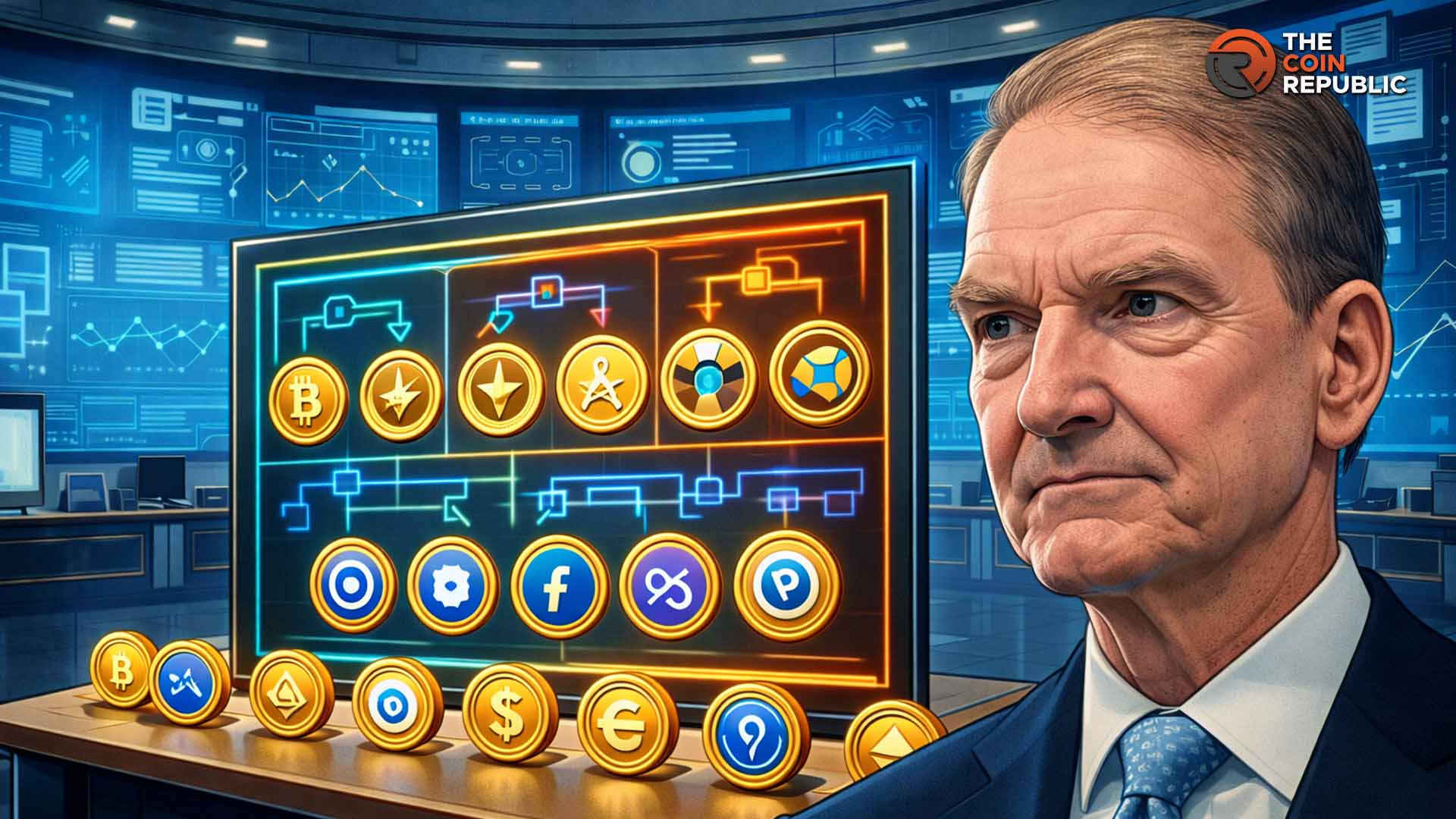
The SEC's new token taxonomy guidance provides much-needed clarity by classifying most cryptocurrencies, including NFTs and stablecoins, as commodities, thereby removing them from securities oversight. This regulatory shift, spearheaded by SEC Chair Paul Atkins, is expected to significantly reduce market uncertainty and encourage greater institutional participation by establishing clear boundaries for crypto assets. The distinction between commodities and securities is crucial, as it implies the SEC will no longer regulate assets classified as commodities, potentially boosting liquidity and market confidence. The guidance also clarifies that activities like crypto mining, airdrops, wrapping, and staking are not considered securities, further simplifying the regulatory landscape for various blockchain operations.
EtherFi's $25M allocation to Plume's RWA protocol signifies a strategic pivot towards diversifying yield generation beyond crypto-native sources, potentially attracting new capital flows into RWA products. The integration of Plume's Nest vaults into EtherFi's platform, which manages over $6 billion in user deposits, could significantly boost adoption and liquidity for tokenized real-world assets. The growing RWA market, now exceeding $27 billion, coupled with Plume's SEC registration, suggests increasing institutional interest and regulatory compliance in tokenized traditional assets, presenting a structural growth opportunity. EtherFi's move into RWA yield, leveraging Superstate's crypto carry fund, offers users exposure to sophisticated investment strategies previously inaccessible, potentially setting a precedent for other DeFi platforms.

The FBI has issued a warning regarding fake tokens on the Tron network impersonating federal law enforcement to solicit personal information, indicating a new phishing vector targeting crypto users. This development highlights the ongoing risks of scams and social engineering within the crypto space, particularly on networks like Tron which have been associated with illicit activities. While the FBI itself has previously used fake tokens for investigations, this instance involves malicious actors exploiting the tactic, underscoring the need for extreme caution among Tron users. The FBI's warning serves as a direct alert to Tron users, advising them not to engage with suspicious tokens or provide any personal data, thereby mitigating potential financial losses and identity theft.
Forward Industries utilized a $40 million crypto-backed loan from Galaxy Digital, secured by staked Solana, to repurchase 7.4% of its outstanding shares, signaling a strategic move to enhance shareholder value amidst a significant price decline. The share buyback, funded by a loan against its SOL holdings, suggests a belief by Forward Industries' management that its stock is undervalued relative to its net asset value, potentially offering a more accretive way to return value than direct SOL purchases. Despite the buyback, FWDI shares remain down over 89% from their peak, and the company holds substantial unrealized losses on its SOL treasury, indicating ongoing market pressure and a challenging recovery outlook.

Disclosure of mental health conditions to AI agents can lead to increased refusals, impacting the utility of AI for legitimate tasks. While safety systems aim to prevent harm, the study indicates that personal disclosures can inadvertently create a trade-off, making AI less helpful for benign requests. The effectiveness of these safety measures is inconsistent, as simple 'jailbreak' prompts can bypass the enhanced caution, highlighting potential vulnerabilities in AI agent design. This research underscores the need for AI developers to carefully consider how user context influences model behavior and to refine safety evaluations beyond standard benchmarks.
Solana faces critical resistance around $95 and support near $88, with price action likely to remain range-bound until a decisive breakout occurs. A sustained move above $92 is required to signal a bullish continuation, potentially targeting $100, while a break below $88 could lead to further downside toward $82. Muted trading volume indicates market caution, suggesting that significant upward momentum is unlikely without increased buyer conviction or a clear catalyst.

Gauntlet's TVL decline of $380 million is primarily attributed to the conclusion of OKX's pre-deposit campaign, highlighting the impact of incentive programs on DeFi protocol capital flows. The sharp TVL drop, while significant in absolute terms, is framed by Gauntlet as a recurring event tied to campaign endings and market shifts, suggesting a need for traders to differentiate between temporary outflows and fundamental protocol weakness. Outflows being predominantly stablecoin-based and the comparison to previous large capital swings indicate that Gauntlet's core risk management function remains intact, but capital rotation to higher yields (e.g., SOL-based protocols) is a factor.

The SEC has issued a new interpretation classifying most crypto assets as non-securities, aiming to provide regulatory clarity and foster innovation within existing legal frameworks. This pivot from ad-hoc enforcement to clear guidelines suggests a more predictable regulatory environment, potentially reducing risk for developers and investors in the crypto space. The interpretation establishes four categories of non-securities (digital commodities, collectibles, tools, and payment stablecoins), with only tokenized traditional securities remaining under SEC jurisdiction. By clarifying the application of the Howey test and defining when an investment contract terminates, the SEC seeks to enable crypto innovation while focusing enforcement on fraud and market integrity.

Key Insights: Dogecoin price was again in the headlines after climbing above $0.10, removing a zero from its price. This DOGE price surge today has sparked fresh optimism about the token’s potential rally, with analysts targeting an ambitious high of $2 and beyond. But is this a sign of a real breakout? Despite growing enthusiasm, […] The post Dogecoin Price Surges, Drops a Zero: Breakout or Fakeout? appeared first on The Coin Republic.

Bybit's launch of a yield-bearing tokenized gold product signifies a growing trend in tokenizing traditional assets to generate passive income, potentially attracting new capital into the RWA sector. The move by Bybit, a major exchange, to offer yield on Tether Gold (XAUT) highlights the increasing financialization of real-world assets on-chain and could spur further innovation in RWA-based DeFi products. While gold has experienced recent volatility due to macro factors, the development of yield-generating products like Bybit's suggests a strategy to provide returns independent of spot price movements, appealing to a broader investor base.

Australian researchers have developed the first working quantum battery prototype, utilizing quantum physics for charging and storage. This breakthrough demonstrates a counterintuitive scaling property where larger quantum batteries charge faster, defying conventional battery limitations. While immediate consumer applications are distant, the technology holds significant potential for powering future quantum computers due to its coherent energy delivery. The development represents a fundamental physics advancement with potential long-term implications for energy storage, though practical implementation remains a challenge.
Signal context only. Validate with price action, liquidity, and risk limits before taking a position.
