
Navigating Crypto News

CoinFeather
Navigating Crypto News

Source, catalyst, and sector overlap from the latest feed.
The integration of VanEck's crypto ETFs into US 401(k) plans via Basic Capital signifies a growing acceptance of digital assets within traditional retirement vehicles, potentially increasing demand from a new investor demographic. This development is underpinned by a recent US Department of Labor policy shift that no longer discourages crypto investments in 401(k)s, creating a more favorable regulatory environment for crypto adoption in retirement savings. The availability of Bitcoin and Ether ETFs, alongside broader digital asset-focused funds like VanEck's 'Onchain Economy' ETF, suggests a maturing crypto investment landscape catering to institutional and retail retirement savers.
Live Feed
Loading the broader stream in the same flow as the homepage feed.

Revolut's acquisition of a full UK banking license signifies a significant regulatory milestone, enhancing its credibility and operational capacity within traditional finance. While the banking license is a positive development for Revolut's overall business, its core crypto and stock trading services will continue to operate under separate entities, limiting direct impact on those specific digital asset operations. The move positions Revolut for broader financial service integration in the UK, potentially attracting more traditional users while maintaining its crypto-friendly stance through distinct business units.
Nvidia's $2 billion investment in Nebius signals a strategic expansion into AI cloud infrastructure, reinforcing its dominance in the AI hardware and services ecosystem. The partnership aims to accelerate the development of specialized cloud platforms for AI workloads, addressing the growing demand for high-performance computing in the AI era. Nvidia's aggressive investment strategy across AI infrastructure companies, including Nebius, OpenAI, and Anthropic, positions it to influence multiple layers of the AI stack. Nvidia's stock is currently testing key technical levels within an ascending triangle pattern, with potential for a breakout driven by ongoing AI sector developments and strategic investments.

Ripple's acquisition of BC Payments Australia strengthens its regulatory standing by securing a financial services license, enhancing its cross-border payment infrastructure in the APAC region. The move positions Ripple to operate more directly within Australia's regulated financial system, signaling a strategic shift towards becoming a licensed infrastructure provider rather than solely a cryptocurrency firm. With over 75 regulatory licenses globally, this acquisition underscores Ripple's commitment to navigating and expanding within regulated markets, a trend increasingly vital for blockchain and payment companies.
Shiba Inu price steadies as Shytoshi Kusama’s X silence and “UI bug fixes” bio update spark speculation amid crypto liquidations and market shifts.

Thailand's implementation of the 'Speed Bump' system introduces a 24-hour delay on transactions over 50,000 THB, aiming to curb crypto-related money laundering by providing more time for suspicious activity detection. The crackdown involves freezing over 10,000 mule accounts and integrating databases with regulatory bodies, increasing compliance costs for digital asset firms but enhancing overall financial crime prevention. This regulatory action signals a proactive stance by Thai authorities against illicit financial flows within the crypto ecosystem, potentially impacting transaction speeds and user verification processes for Thai crypto users.

The FDIC's clarification that stablecoins will not receive deposit insurance under the GENIUS Act, even through pass-through mechanisms, removes a potential layer of perceived safety for stablecoin users. This regulatory stance by the FDIC aims to differentiate stablecoins from traditional bank deposits, potentially impacting investor perception and demand for stablecoins seeking parity with insured assets. The FDIC's consideration of tokenized deposits as eligible for insurance suggests a path for integrating traditional banking with blockchain technology while maintaining regulatory oversight. The explicit exclusion of stablecoins from FDIC insurance, despite mandates for full reserves, highlights a structural difference that could influence their adoption and competitive positioning against bank deposits.
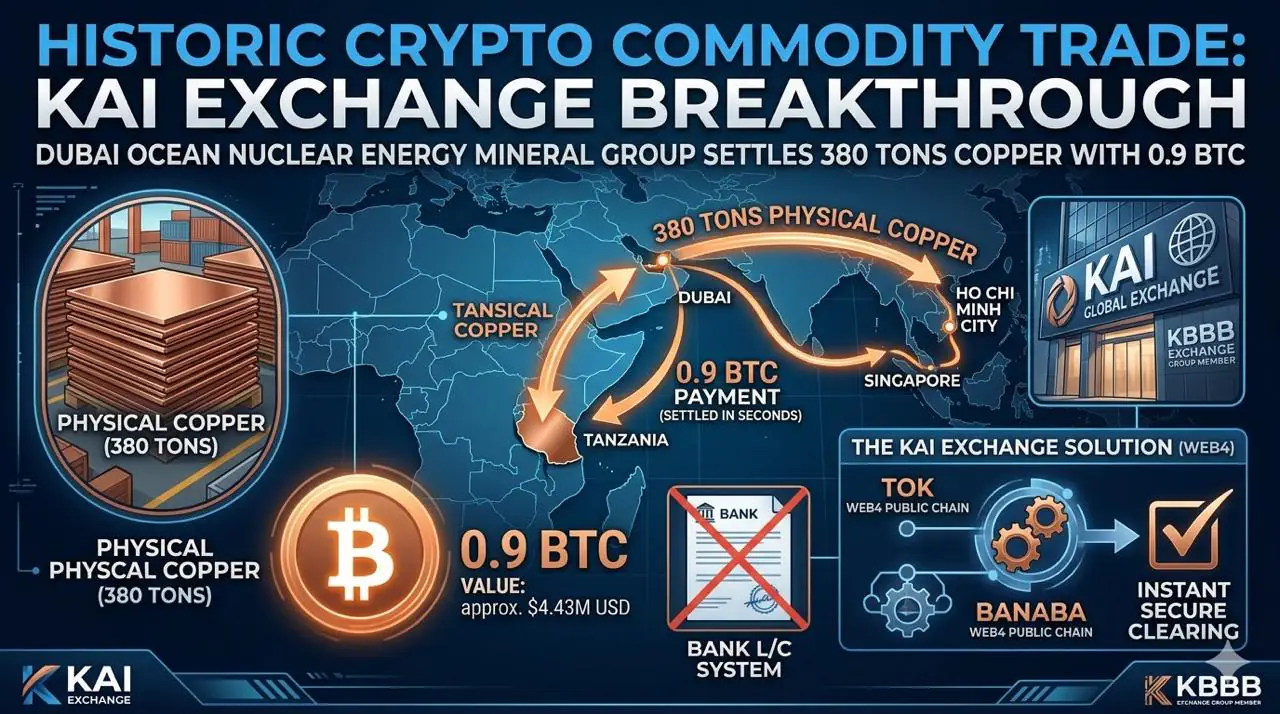
The settlement of 380 tons of copper using 0.9 BTC signifies a potential paradigm shift, demonstrating crypto's capability to replace traditional bank L/Cs in large-scale industrial trade and challenging legacy financial systems. KAI Exchange's integration of Web4 technology and its ambition to clear 3 million tons of copper annually suggest a strategic move to capture a significant portion of the global commodity market, potentially migrating pricing power from fiat to digital assets. This development highlights the increasing utility of Bitcoin beyond speculation, positioning it as a viable settlement asset for physical commodities and signaling a new 'Web4 Digital Credit Era' for global trade clearing.

Revolut's acquisition of a full UK banking license signifies a major regulatory milestone, enabling it to offer FSCS-protected deposits and expand into traditional banking services like lending. This regulatory approval positions Revolut to compete more directly with established banks and other challenger banks, potentially attracting a broader customer base seeking deposit security. The transition to a fully licensed bank enhances Revolut's credibility and operational framework, which could influence its future product development and integration strategies within the broader fintech ecosystem.

Nassim Taleb's endorsement of X Money, contrasting it with Bitcoin, signals a potential shift in perception towards private, fiat-linked digital currencies over decentralized alternatives for everyday transactions. The upcoming launch of X Money, backed by Elon Musk's extensive user base and regulatory approvals, presents a significant challenge to Bitcoin's narrative as a primary medium of exchange, focusing instead on utility and stability. Taleb's critique of Bitcoin's volatility and perceived fragility, juxtaposed with X Money's potential integration with banking infrastructure and fiat, suggests a growing divide in the digital currency space between speculative assets and functional payment systems.

Mastercard's new Crypto Partner Program, involving over 85 firms including major players like Binance, Ripple, and PayPal, signals a strategic push to integrate digital assets into traditional payment rails. The initiative aims to bridge on-chain innovation with Mastercard's existing infrastructure, suggesting a focus on practical use cases beyond speculation and potentially driving adoption for participating projects. This collaboration could lead to new product development and enhanced interoperability between crypto and traditional finance, impacting the payments and infrastructure sectors.

Shibarium's 148% transaction surge indicates increased network activity, potentially signaling growing adoption and a precursor to SHIB price appreciation. Despite a recent price consolidation, the technical indicators for SHIB, including a low RSI and Bollinger Band formation, suggest a potential bottoming out and readiness for a breakout. The correlation with Bitcoin's price action and increased on-chain user activity, coupled with strong open interest, provides a supportive backdrop for a potential SHIB rally.

Wells Fargo's trademark filing for WFUSD signals a strategic move into tokenized deposits or stablecoins, mirroring JPMorgan's prior actions and indicating a broader trend of traditional banks exploring digital asset services. The development suggests a potential increase in institutional adoption of blockchain technology for financial services, which could lead to greater liquidity and integration of digital assets within the traditional financial system. This filing, alongside other major banks exploring stablecoins, points towards a maturing crypto landscape where established financial players are actively seeking to leverage blockchain for payment processing and asset tokenization.

Despite a significant surge in Dogecoin derivatives volume on BitMEX, the spot price remains under pressure, indicating a disconnect between speculative trading and underlying asset demand. The rejection at the $0.10 level suggests a key resistance zone for DOGE, with the daily RSI below 50 hinting at potential consolidation or a bearish continuation. While derivatives traders are active, the broader market sentiment, reflected in the Fear and Greed index moving into 'fear' territory, suggests caution among investors.
Signal context only. Validate with price action, liquidity, and risk limits before taking a position.
Quick market read from this story
Bitcoin rebounded above $70,000 as the US CPI data met market expectations, providing a modest tailwind for risk assets.
The confirmation of a 400 million barrel oil release has helped cool oil prices, potentially mitigating future inflationary pressures on CPI.
Traders remain in a wait-and-see mode, with price action consolidating and focus shifting to potential liquidation levels around the mid-$60,000 zone.
While the CPI data offered relief, the market is now looking towards March's inflation figures, which may reflect recent geopolitical and supply chain events.
Deep Dive
Bitcoin (BTC) reclaimed the $70,000 mark on Wednesday as the latest US Consumer Price Index (CPI) inflation data aligned with market forecasts, providing a modest boost to anxious traders. The February CPI print showed a 2.4% year-on-year increase, a figure that offered relief to risk assets sensitive to inflation concerns stemming from geopolitical instability and oil supply dynamics.
The CPI data, released by the Bureau of Labor Statistics (BLS), was in line with expectations, preventing a significant negative reaction in markets. While the immediate impact was a modest gain for Bitcoin, analysts are now looking towards March's inflation data for further direction. Recent inflation gauges have presented a mixed picture, making the market particularly attentive to factors like oil prices, which remained below $90 as the International Energy Agency confirmed an emergency release of 400 million barrels of oil.
With Bitcoin trading within a range, market participants have adopted a cautious stance. Trader Michaël van de Poppe indicated a strategy of buying lower bounds and selling higher bounds, expressing optimism for an upward breakout in March. Conversely, trader Lennaert Snyder identified potential downside liquidity around $65,000, suggesting a possible short target at approximately $65,957 if Bitcoin loses the ~$69,268 low. Crypto market liquidations over the past 24 hours stood at $240 million, with short positions representing a larger portion of the total.
Bitcoin faces resistance near $70,000, but ETF inflows suggest underlying demand, potentially driving a rally to $74,508 if key resistance is broken. Several major altcoins are showing signs of strength, indicating potential for upward price movement if they can overcome their immediate overhead resistance levels. Analyst sentiment is divided, with some predicting a potential sell-off due to geopolitical risks and others focusing on technical indicators suggesting a bullish continuation if key levels are breached. The article provides technical analysis for multiple top cryptocurrencies, highlighting key support and resistance levels that traders should monitor for potential short-term trading opportunities.
