
Navigating Crypto News

CoinFeather
Navigating Crypto News

Quick market read from this story
Former UK Prime Minister Boris Johnson's public labeling of Bitcoin as a "Ponzi scheme" reignites a long-standing debate on its intrinsic value and market structure.
Prominent figures like Michael Saylor and Eric Trump have countered Johnson's claims, emphasizing Bitcoin's decentralized nature and lack of a central promoter as key differentiators from fraudulent schemes.
The public discourse highlights contrasting interpretations of Bitcoin's value proposition, with critics focusing on speculative inflows and supporters on its technological and monetary properties.
Deep Dive
Former UK Prime Minister Boris Johnson has ignited a debate in the cryptocurrency space by labeling Bitcoin and other digital assets a "giant Ponzi scheme". His remarks, published in a Daily Mail column, suggest that cryptocurrencies rely on belief and a constant influx of new investors rather than intrinsic value.
Prominent figures in the crypto industry have pushed back against Johnson's assertion. Michael Saylor, executive chairman of Strategy, directly refuted the claim, emphasizing that Bitcoin differs from Ponzi schemes because it lacks a central issuer or promoter and offers no guaranteed returns. Saylor described Bitcoin as an open monetary network governed by decentralized code and market demand.
Eric Trump also voiced his disagreement with Johnson's characterization of Bitcoin as a Ponzi scheme in a brief statement.
Boris Johnson elaborated on his reasoning, stating that cryptocurrencies' dependence on continuous investor inflows makes them resemble Ponzi schemes. He shared a personal anecdote about an individual in his village who invested approximately £500 (around $661) in Bitcoin after being promised a doubling of their investment. This individual reportedly lost nearly £20,000 (about $26,446) after attempting to recover funds and incurring fees, highlighting Johnson's concerns about the lack of underlying value and the risks involved.
Johnson questioned Bitcoin's intrinsic value, noting its existence solely as digital code.
The debate extended to online forums, where some users compared Bitcoin to pyramid schemes or "greater fool" games. Discussions explored whether Bitcoin's structure, particularly its reliance on network effects and the idea of selling assets at a higher price to subsequent buyers, aligns more with these models than a traditional Ponzi scheme.
Source, catalyst, and sector overlap from the latest feed.
MicroStrategy's STRC preferred series has achieved an unprecedented 1.5% volatility, setting a new benchmark for risk-adjusted performance with a Sharpe Ratio of 5.37, which may attract new institutional interest. The company significantly increased its Bitcoin holdings by issuing $1.18 billion in STRC preferred stock, signaling a strategic pivot towards this funding instrument over common stock sales for asset accumulation. While MSTR stock experienced a slight pullback, its role as a primary vehicle for Bitcoin accumulation remains strong, with the market now evaluating the sustainability of over $1 billion in annual dividend commitments. The successful implementation of a low-volatility funding model for Bitcoin accumulation could influence how other corporate treasuries approach digital asset exposure.
US lawmakers are nearing a potential compromise on stablecoin yield provisions, a critical hurdle for broader crypto market structure legislation. A resolution on stablecoin yield could unlock significant institutional capital by providing regulatory clarity and enabling yield-bearing stablecoins to compete with traditional financial products. The ongoing legislative efforts highlight the growing maturity of the stablecoin market, with total market capitalization exceeding $316 billion, indicating its systemic importance. Despite progress, other issues like ethics, DeFi, and regulatory entity identification remain, suggesting the legislative process is still complex and time-sensitive.
Significant Bitcoin inflows to centralized exchanges suggest potential short-term selling pressure, creating a mixed outlook ahead of key macroeconomic events. While exchange inflows signal potential sell-offs, substantial stablecoin deposits indicate fresh liquidity entering the market, which could absorb selling pressure and support prices. Bitcoin faces immediate resistance near realized price levels, with macro uncertainty from the Federal Reserve's upcoming decision adding to a cautious trading environment. Miner outflows have decreased, and the Puell Multiple suggests neutral conditions, indicating a lack of extreme selling pressure from miners despite price consolidation.
Derivatives markets are identified as the primary driver of short-term Bitcoin price action, suggesting that large individual buyers like Michael Saylor have limited influence on daily fluctuations. While derivatives dictate short-term moves, the long-term Bitcoin trend is still shaped by spot market investors who hold assets, indicating a dual-market dynamic at play. Bitcoin's ability to rise against traditional market weakness and without direct Saylor purchases may signal underlying strength, though this is not yet a confirmed trend. Traders are closely watching Bitcoin's ability to hold above $70,500, with a confirmed move above $72,000 potentially signaling further upside towards $73,200.
Despite a recent price drop below $2,000, Ethereum's network activity has surged, with daily active addresses reaching 1.1 million in February, indicating accumulation by long-term holders and potential for future price appreciation. The significant increase in staked Ether (37.85 million) and decreasing exchange reserves suggest a tightening liquid supply, which could amplify price movements when demand returns. Ethereum is approaching a key resistance level, and its ability to break through or hold the current support zone will determine its short-term trajectory, with the 21-week EMA near $2,700 as a potential target if momentum builds.
Live Feed
Loading the broader stream in the same flow as the homepage feed.

South Korea's expanded digital won pilot, incorporating AI-driven payments and P2P transfers, signals a significant step towards integrating central bank digital currencies (CBDCs) into daily economic activity and machine-to-machine transactions. The concurrent regulatory push, including potential corporate crypto investment allowances and deferred capital gains tax, alongside a proposed cap on exchange ownership, indicates a complex and evolving landscape for digital assets in South Korea, potentially leading to industry restructuring. While the digital won pilot aims for broader adoption, past user friction and ongoing technical challenges like blockchain scaling and privacy suggest that widespread real-world implementation and user acceptance will require further development and refinement.
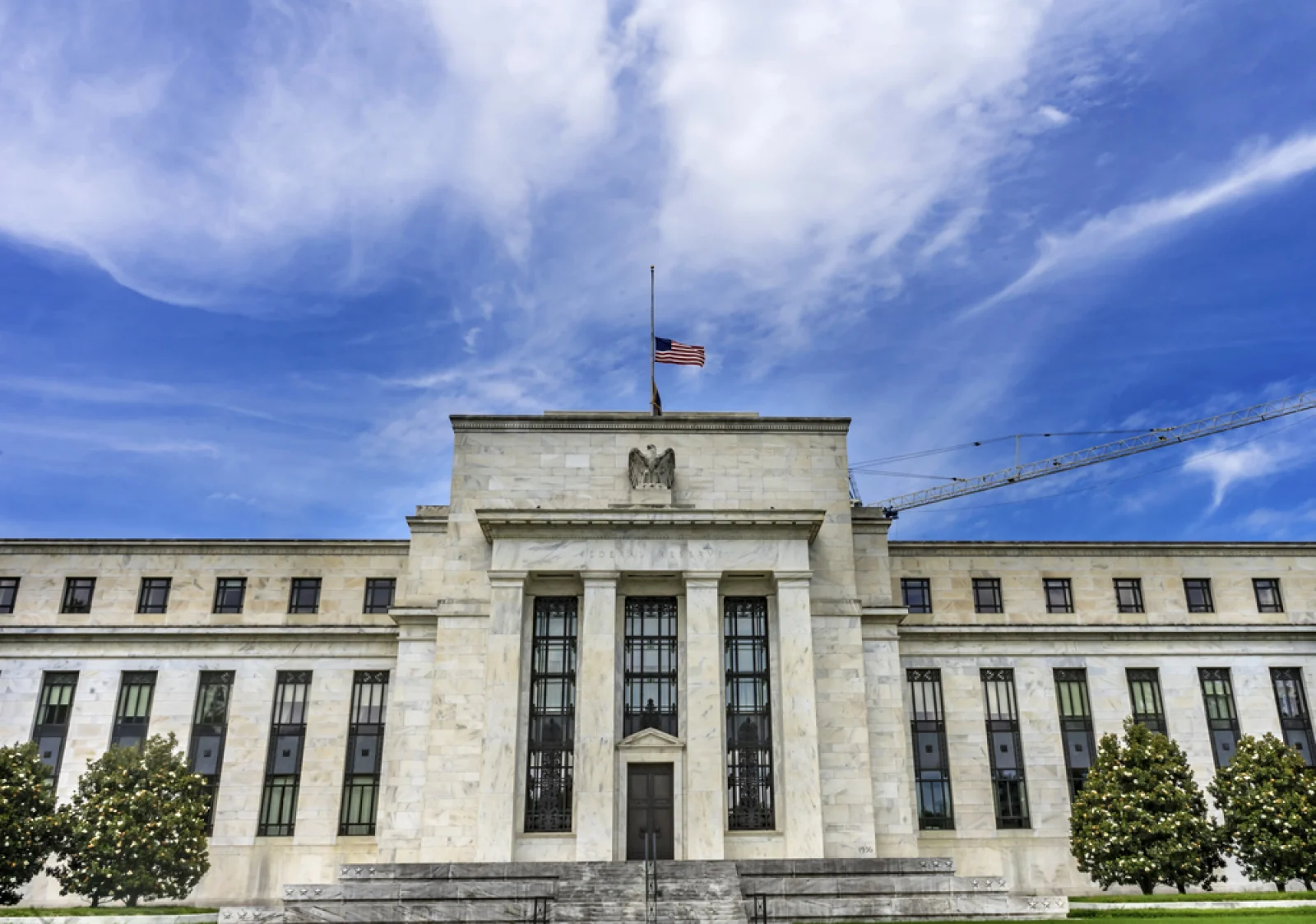
The Federal Reserve's review of Basel III capital rules presents a significant opportunity to reclassify Bitcoin, potentially removing its 'toxic asset' designation and enabling traditional banks to hold it. A reduction in Bitcoin's risk weight from the current 1,250% to a level comparable with other assets would dramatically lower capital requirements for banks, facilitating institutional adoption. Advocacy from groups like the Bitcoin Policy Institute is crucial in this review process, aiming to highlight Bitcoin's fundamental properties like transparency and liquidity to justify a more favorable regulatory treatment.

Casimo will be responsible for growing the Dutch market maker's institutional crypto offering.

Bitcoin's recent rally to $76,000 has revived market optimism, but on-chain data from Glassnode indicates that a sustained push above 75% supply in profit is needed to confirm early bull market conditions, suggesting continued volatility is likely. While Bitcoin has entered a less resistant price zone between $72,000 and $82,000, short-term holders realizing profits at an accelerated pace mirror past failed rallies, implying that absorbing this sell pressure is crucial for further upside. Technical indicators and cycle analysis suggest Bitcoin remains in a bear market trend structure, requiring a break above previous lower highs near $97,855 to establish a confirmed bullish shift and long-term rally.

The World Gold Council's 'Gold as a Service' framework aims to standardize tokenized gold, potentially lowering barriers for new issuers and increasing fungibility across products. This initiative could significantly expand the market for gold-backed tokens beyond current players like Tether and Paxos by providing shared infrastructure for managing physical reserves. By establishing industry standards and shared infrastructure, the World Gold Council seeks to boost investor confidence in tokenized gold, drawing parallels to Intel's 'Intel Inside' branding for processors.

Metaverse land values have experienced a dramatic collapse, with some prime plots falling by over 99% from their 2021-2022 peak valuations, indicating a fundamental repricing of virtual real estate as an asset class. The broader NFT market also shows significant price depreciation, with average land prices down 72% and blue-chip collections like BAYC down over 96% in ETH terms, signaling a loss of speculative premium and a shift towards more utility-driven assets. The decline in NFT lending volume by 97% further underscores the loss of leverage that previously supported high valuations, suggesting that the market's ability to sustain premium prices has been severely impaired. While some metaverse land and NFT collections have seen recent short-term gains, these are from deeply depressed levels and do not indicate a sustainable recovery without fundamental drivers like consistent user traffic and durable economic value generation.

BlackRock's new Staked Ethereum Trust (ETHB) has rapidly accumulated $254 million in AUM within its first week, indicating strong institutional demand for yield-generating ETH products. The ETHB fund's strategy of staking 70-95% of its ETH and passing through 82% of staking rewards to investors positions it as a direct competitor to existing staked Ethereum ETFs. Despite facing competition and a volatile market, the rapid uptake of ETHB suggests a growing acceptance of regulated products offering direct exposure to Ethereum staking yields.

The carpool and ride-sharing platform, which already accepted Bitcoin for customer payment, moves to crypto treasury despite challenges of price declines.

Major League Baseball's exclusive partnership with Polymarket and integrity framework agreement with the CFTC signals growing institutional acceptance and regulatory engagement with prediction markets. This development could lead to increased mainstream adoption and liquidity for prediction market platforms, potentially benefiting associated crypto projects like Polymarket. The focus on an "integrity framework" addresses rising concerns about insider trading and market manipulation, suggesting a move towards more regulated and transparent prediction markets.

The SEC and CFTC's memorandum of understanding signals a move towards regulatory clarity, potentially benefiting audited projects with existing products like Pepeto by rewarding them with early adoption under the new framework. Pepeto's strategy of building its exchange before launching its presale, coupled with a SolidProof audit and zero-fee transactions, positions it as a potentially strong performer, especially with an upcoming Binance listing. While established assets like ADA and XRP have long-term potential, their immediate price action may require months to reflect recent developments, contrasting with Pepeto's shorter-term catalyst of a pending exchange listing.

The SEC and CFTC's clarification that most crypto assets are not securities, coupled with Binance's potential U.S. return, creates a more favorable regulatory environment, potentially increasing institutional and retail interest. Pepeto is being positioned as an early-stage investment opportunity with a Binance listing anticipated, offering presale buyers a chance to enter before potential price appreciation, though the project's utility and team background are key factors to watch. The article highlights Bitcoin and Ethereum as safe entry points for new investors, noting significant institutional inflows into related ETPs, reinforcing their positions as foundational assets in the current market.

Bitcoin brought its latest correction from local highs to near 10% as skepticism over long-term BTC price support grew louder.

The launch of Hashi on Sui, backed by institutions like BitGo and FalconX, signals a renewed institutional interest in native Bitcoin DeFi applications, aiming to address past limitations with on-chain verification and programmatic collateral management. Hashi's focus on native BTC lending without wrapped assets, coupled with its emphasis on transparency and automated collateral management, directly targets the underutilization of Bitcoin in DeFi and seeks to build institutional trust post-FTX collapse. This development represents a potential step towards increasing Bitcoin's utility within DeFi, moving beyond its primary role as a store of value and potentially unlocking new yield opportunities for institutional participants.

The emergence of Bitcoin Everlight as a professional scaling layer for Bitcoin suggests a potential shift in miner and staker interest away from Ethereum's post-Merge staking model towards solutions offering direct Bitcoin rewards. Bitcoin Everlight's simplified 4-step process for earning Bitcoin rewards aims to attract participants disillusioned with the complexity and diminishing returns of Ethereum staking. The project's emphasis on "Bank-Grade" security, including ISO certification and multiple smart contract audits, aims to build trust and attract capital to its Bitcoin scaling infrastructure. The limited 5-day window for Phase 1 pricing at $0.0008 per token presents a time-sensitive opportunity for early investors to acquire utility tokens before a scheduled price increase.

Bitcoin is demonstrating relative strength against gold amidst Middle East conflict and oil price volatility, suggesting a potential shift in safe-haven dynamics. Despite Bitcoin's resilience, analysts advise caution and holding 'dry powder' due to extreme headline-driven volatility and uncertainty in broader market conditions. The current market environment, characterized by rising energy prices and a 'higher-for-longer' interest rate outlook, presents a challenging backdrop for risk assets like Bitcoin. The lack of sustained upward momentum above $75,000 indicates market caution, reinforcing a range-bound trading environment for Bitcoin in the near term.

Strive's significant Bitcoin accumulation, surpassing Tesla, signals a growing trend of institutional adoption of BTC as a treasury asset, potentially providing structural demand during market downturns. The firm's strategy of acquiring Bitcoin during price consolidation suggests long-term conviction, contrasting with firms that maintain static holdings and indicating a divergence in corporate crypto treasury management. Despite recent market weakness and ETF outflows, Strive's continued accumulation highlights sustained institutional interest, acting as a potential counterbalance to short-term bearish pressures. Strive's expansion to 13,628 BTC, valued at $950 million, positions it among the top corporate holders, underscoring the increasing concentration of Bitcoin among a select group of institutional investors.
Signal context only. Validate with price action, liquidity, and risk limits before taking a position.
