
Navigating Crypto News

CoinFeather
Navigating Crypto News
Quick market read from this story
Geopolitical tensions and oil supply concerns are pressuring Bitcoin, driving price action below $66,500 and targeting liquidity pools as traders anticipate further downside.
Technical analysis suggests a bearish flag pattern on Bitcoin's chart, with potential measured targets indicating a drop to $41,000 if the pattern confirms.
Traders are observing significant liquidity below current price levels, with some expressing interest in buying in the lower $60,000s should a sweep of these lows occur.
Deep Dive
Bitcoin (BTC) experienced a significant price drop, falling below $66,500 to its lowest levels since March 9. This decline occurred as reports emerged of Iran potentially closing the Strait of Hormuz oil route, increasing geopolitical tensions and impacting oil prices. US stocks futures also trended downwards, with US WTI crude oil nearing $97 per barrel.
Data from CoinGlass indicated that BTC/USD was consuming bid liquidity down to the $65,000 level. Simultaneously, a significant wall of asks was observed keeping the price capped below the $70,000 mark. Trader Jelle noted that $70-71k was reconfirmed as resistance, and expressed that the liquidity built up below current price levels is not typical of market bottoms, suggesting it would eventually be taken out.
The recent price action continues a trend of liquidity grabs observed throughout the week. Crypto trader Michaël Van de Poppe suggested that further BTC price weakness is possible before the March monthly candle close, especially with a potential sweep of the lows anticipated. He stated his interest in buying in the lower $60,000 regions if this occurs.
On longer time frames, attention is focused on a potential bearish support breakdown from Bitcoin's second bear flag construction of 2026. This pattern, previously seen in January, has generated targets below $50,000. Veteran trader Peter Brandt warned of a rising wedge sell signal, and trader Aaron Dishner highlighted that the measured target from the January 14th high to the February 6th low, applied to the current flag structure, suggests a downside target of $41,000.
Source, catalyst, and sector overlap from the latest feed.
Bitcoin's price is experiencing downward pressure, trading near three-week lows, as geopolitical tensions surrounding oil supply and potential US inflation risks create broader market instability. The current macro environment, characterized by rising oil prices and concerns over unsustainable US inflation, is leading to a risk-off sentiment in financial markets, impacting Bitcoin's correlation with traditional risk assets. Technical analysis suggests a bearish short-term outlook for Bitcoin, with key support levels at $65.6K and resistance at $70K, indicating potential for further downside if these levels are not reclaimed. The Federal Reserve's dilemma of a weakening labor market versus rising inflation expectations is creating uncertainty, potentially leading to a prolonged period of interest rate pauses or even hikes, which could negatively affect risk assets like Bitcoin.
ICE completed a new $600 million investment in Polymarket, advancing its $2 billion funding deal as prediction markets face growing scrutiny.
An ECB working paper found DeFi governance remains highly concentrated, complicating efforts to identify who should fall under MiCA oversight.
The decreasing probability of a presidential pardon for Sam Bankman-Fried, as reflected in prediction markets, suggests a diminishing hope for a swift resolution to his legal situation. The public challenge to the fraud conviction by SBF's parents, while aiming to influence perception, has paradoxically lowered pardon odds, indicating a potential misstep in their strategy. The narrative shift by SBF's parents, attempting to portray him as a victim and align with political figures like Trump, highlights a strategic effort to leverage political connections for clemency.
Increased exchange withdrawals and long-term holder accumulation suggest a tightening Bitcoin supply, potentially signaling reduced immediate selling pressure and stronger conviction from core investors. Despite a price dip below $68K, the data indicates long-term holders are actively buying on dips, a pattern historically associated with accumulation phases that can precede price breakouts. Analysts identify a potential support zone between $65,000-$66,000, with significant whale bid orders noted in this area, suggesting a possible retest before any sustained upward movement. The current market dynamics, characterized by reduced exchange liquidity and sustained LTH accumulation, create a supportive backdrop for price appreciation if the trend continues, despite short-term price weakness.
Bitcoin's profitability compression to 60.6% signals a historical 'reset zone', historically preceding accumulation phases and potential upside moves. Reduced selling pressure from ETFs and corporate holders, coupled with lower Binance inflows, indicates a structural shift away from short-term reactive selling. Despite declining network profitability, long-term holders are retaining gains, suggesting a more resilient market structure compared to previous cycles. The current confluence of reduced exchange inflows and historical valuation metrics suggests a moderation in selling pressure, potentially setting the stage for price stabilization or recovery.
Peter Schiff highlights Bitcoin's failure to surpass its 2021 all-time high after 52 months, framing it as an 'anti-record' and questioning its store-of-value narrative. The prolonged price stagnation, especially when contrasted with gold's new highs, suggests a potential loss of momentum for Bitcoin relative to traditional assets, according to Schiff's analysis. Schiff warns of a potential sharp decline to $20,000 if Bitcoin breaks the $60,000 support level, indicating significant downside risk if key technical levels fail. Considering inflation, Schiff argues that Bitcoin's current purchasing power is diminished compared to its 2021 peak, challenging the notion of its value preservation.
SG-FORGE's dual role in shaping SWIFT's blockchain ledger and operating a stablecoin on XRP Ledger signals a significant convergence between traditional finance infrastructure and emerging DLT networks. The integration of regulated stablecoins like EURCV on XRPL, coupled with SWIFT's blockchain initiatives, suggests a pragmatic approach to modernizing cross-border payments by bridging legacy systems rather than replacing them. This development indicates a potential for increased adoption of DLT in interbank settlements, with institutions like Deutsche Bank already demonstrating the complementary nature of SWIFT and Ripple technologies.
A Bitcoin researcher has debunked community fears of a malicious "selfish-mining" attack following a rare two-block reorganization, attributing the event to standard network latency and Bitcoin Core commands. The analysis indicates that the observed block reorg was not a coordinated attack, as the economic incentives for such an action during a low-fee period were negligible, and Foundry USA's on-chain behavior did not align with theoretical selfish-mining strategies. This clarification removes a potential FUD catalyst, suggesting that the Bitcoin network's integrity remains robust and that such anomalies are explainable by normal operational factors rather than malicious intent.
Live Feed
Loading the broader stream in the same flow as the homepage feed.

Brazil's new law enabling confiscation of Bitcoin and other cryptocurrencies from criminals represents a significant regulatory development that could impact asset seizure and recovery processes. The legislation aims to prevent criminals from exploiting decentralized networks for illicit financial activities, potentially increasing scrutiny on crypto transactions within Brazil. The provision allowing early liquidation of seized crypto assets into fiat currency before a case concludes could create localized selling pressure if substantial amounts are confiscated. While primarily focused on combating crime, this regulatory action signals an evolving approach to digital asset management by a major economy, which could influence other jurisdictions.

Dogecoin has retraced 23% year-to-date, reaching a critical support level between $0.07 and $0.08, which has historically preceded significant rallies. The broader crypto market is under pressure from rising U.S. Treasury yields and a stronger dollar, leading to substantial liquidations, primarily of long positions. Despite recent declines, derivatives data suggests a potential for a short squeeze, as funding rates are at their most negative since June 2023.

The partnership between Better Home & Finance and Coinbase introduces a novel way for homebuyers to leverage Bitcoin and USDC as collateral for down payment loans, potentially increasing demand for these assets by linking them to traditional real estate finance. This development signifies a growing integration of digital assets into mainstream financial services, offering a solution for individuals holding crypto wealth but lacking immediate liquidity for home purchases, thereby expanding the addressable market for both crypto and real estate. While the product aims to avoid liquidation triggers based solely on market volatility, the reliance on Fannie Mae guidelines and the inherent risks of collateralized loans in a fluctuating market present potential challenges and regulatory scrutiny. The initiative could serve as a blueprint for future TradFi integrations, with plans to expand eligible collateral to tokenized equities and fixed income, signaling a broader trend towards bridging on-chain and off-chain asset classes.

XRP ETFs are experiencing a significant decline in demand, with March potentially marking the first negative monthly net flow since their launch, indicating a shift in investor sentiment following initial hype. The underperformance of XRP ETFs coincides with a price drop below $1.40 and a broader crypto market downturn, suggesting that ETF flows are highly sensitive to underlying asset performance and overall market conditions. Despite recent outflows, cumulative inflows since launch remain substantial at $1.21 billion, suggesting that while short-term sentiment is bearish, longer-term holding positions may still be intact, warranting a 'watchlist' approach. The article suggests that a price recovery for XRP could reignite demand for its ETFs, implying that the current negative trend may be temporary and contingent on broader market and XRP-specific price action.
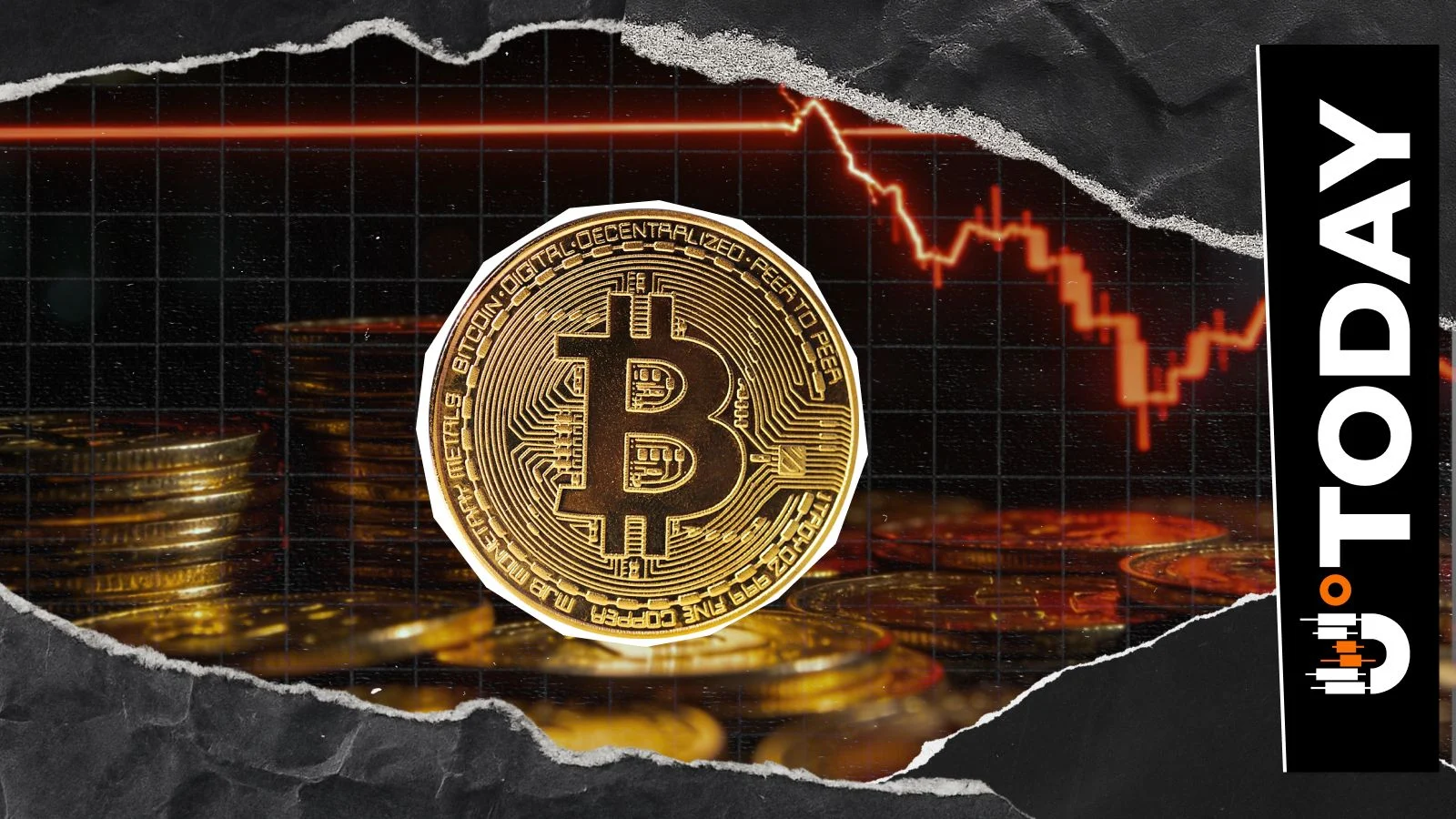
Bitcoin's active addresses have declined over 30% from 2025 highs, indicating a sustained cooling of user participation rather than short-term volatility. The drop in network activity correlates with Bitcoin's price weakness, suggesting lower capital rotation and organic demand, which could hinder a price rebound without renewed user engagement. A resurgence in Bitcoin's network participation is identified as a key factor that could drive a strong price recovery, highlighting the importance of on-chain activity as a leading indicator.

Tron's integration with Anchorage Digital, a federally chartered U.S. crypto bank, provides institutional investors with a regulated pathway to access the network, potentially increasing demand and utility for TRX. The combination of institutional custody support and Tron's existing high transaction volume, particularly with USDT stablecoin flows, positions the network for significant growth in real-world blockchain usage and financial settlement. The announcement of a $1 billion TRON AI Fund signals a strategic push into the agentic economy, aiming to leverage the network's low-cost, predictable execution for automated financial flows, which could drive future adoption and innovation. TRX price is exhibiting a bullish reversal pattern with a potential breakout nearing the $0.3200 resistance level, supported by fundamental developments in institutional adoption and AI integration, suggesting near-term upside potential.
Retail investors are actively accumulating Dogecoin at current price levels around $0.09, as evidenced by significant on-chain purchases on platforms like Kraken. Institutional participation remains absent, with zero net ETF flows for eight consecutive days, indicating a lack of conviction from larger market players. Dogecoin's technical structure shows bearish signals, including a death cross and downward-sloping moving averages, suggesting potential downside risk if key support at $0.087 fails. The next 72 hours are critical for Dogecoin, as the price action will determine whether the current accumulation zone holds or breaks, potentially setting the directional bias for Q2.

Despite significant technical advancements and ambitious upgrade cycles for Ethereum, the asset has broken below the $2,000 mark, indicating that market sentiment is currently driven by broader macroeconomic factors rather than on-chain development progress. Low trading volume on major exchanges like Binance suggests a lack of institutional and large investor participation, leading to thinner liquidity and making ETH price action more susceptible to downward pressure from minor sell orders. The failure of recent upgrades, such as Fusaka and Pectra, to translate into positive price action highlights a disconnect between Ethereum's development roadmap and current market demand, suggesting that future price appreciation may depend on a shift in overall risk appetite. While Ethereum's technical roadmap through 2027, including advancements in ZK-EVMs and consensus layer redesigns, promises a more capable network, the current price action indicates that these fundamental improvements are not yet priced in and may require a more favorable macro environment to be recognized.

A leak detailing Anthropic's advanced 'Claude Mythos' AI model, capable of identifying software vulnerabilities, has triggered a sharp sell-off in tech-software stocks and impacted Bitcoin's price, suggesting a heightened cybersecurity risk perception. The potential for advanced AI to accelerate cyber threats could lead to increased demand for cybersecurity solutions, potentially benefiting related infrastructure and AI development sectors. The market reaction, with the IGV ETF down and BTC falling below $66,000, indicates that even indirect AI developments can have a tangible, near-term impact on broader crypto and tech markets.
Geopolitical tensions surrounding Iran are driving significant market volatility, with rising oil prices directly pressuring stock futures and creating an uncertain trading environment. Despite diplomatic signals, conflicting information from the Middle East and the continued rise in oil prices suggest that market participants should remain cautious due to persistent escalation risks. Major stock indices approaching correction territory indicate a broad shift in investor sentiment, highlighting the potential for further downside if geopolitical risks are not resolved swiftly.

Rising U.S. Treasury yields and a strengthening dollar are pressuring risk assets like Bitcoin, as investors seek safer returns amid geopolitical uncertainty. A significant $15.58 billion in Bitcoin and Ethereum options expiring this week is contributing to increased market volatility and potential price adjustments. Accelerated liquidations totaling $451 million and continued outflows from Bitcoin ETFs indicate weakening institutional demand and a shift towards reduced exposure. The crypto market's sharp decline, marked by Bitcoin falling to a two-week low and a shift to 'extreme fear' sentiment, suggests a near-term bearish outlook driven by macro and technical factors.

The convergence of a massive $14.16 billion Bitcoin options expiry and escalating geopolitical tensions in the Middle East has triggered a significant price drop, with potential for further downside if key support levels are breached. The reversal of the recent rotation from gold into Bitcoin, as evidenced by gold's rise and Bitcoin's fall amid renewed Iran threats, suggests a flight to traditional safe-haven assets, potentially pressuring crypto prices in the short term. Technical analysis indicates a bearish pattern forming on Bitcoin, with a daily close below $66,000 potentially leading to a sharp decline towards $46,000, while a hold of the lower $60K range could see buying interest emerge. Recent ETF outflows for both Bitcoin and Ethereum, coupled with the current market pressures, signal a potential shift in institutional sentiment or a temporary pause in inflows, warranting close observation of market dynamics.

The shift in Bitcoin treasury rankings, with Twenty One Capital surpassing Marathon Digital, highlights the increasing financial pressure on crypto mining firms and the potential unsustainability of debt-driven accumulation strategies. Marathon Digital's significant Bitcoin selloff to service debt underscores the vulnerability of leveraged treasury models to tightening liquidity conditions and declining equity performance. The repositioning of major Bitcoin holders signals a potential shake-up in the corporate treasury landscape, favoring firms with more conservative, long-term collateral-based strategies over speculative allocation.
Signal context only. Validate with price action, liquidity, and risk limits before taking a position.
