
200+ crypto news providers in one place.

CoinFeather
200+ crypto news providers in one place.

Quick market read from this story
Bitcoin price surpassed $71,000, marking a 6% increase in 24 hours
Bitcoin demonstrated resilience to Middle East conflict, outperforming gold
Major cryptocurrencies including ETH, XRP, and SOL followed BTC's upward trend
The CoinDesk 20 Index rose over 5%, indicating broad market strength.
Deep Dive
Bitcoin surged past $71,000 on Wednesday, marking a gain of over 6% in 24 hours and leading a broader increase in major cryptocurrencies. The cryptocurrency's rise highlights its growing resilience to geopolitical turmoil, contrasting with the lagging performance of gold, a traditional safe-haven asset.
Bitcoin reached $71,023 during European trading hours, a more than 6% increase over the previous 24 hours, according to CoinDesk data. Other leading cryptocurrencies, including ether (ETH), XRP (XRP), and solana (SOL), also saw gains ranging from 4% to 6%. The CoinDesk 20 Index, a measure of the broader crypto market, rose by over 5% to 2,025 points.
Tagus Capital noted that Bitcoin may now possess defensive qualities during crises, suggesting that while gold's retreat shows even classic safe havens are subject to market dynamics, Bitcoin offers a more flexible, albeit high-beta, alternative.
Bitcoin's advance to multi-week highs occurred despite an intensifying geopolitical crisis, including Iran blocking oil supplies through the Strait of Hormuz, which raises concerns about global energy price inflation. Since the conflict between Israel, the U.S., and Iran escalated on Saturday, Bitcoin has demonstrated notable resilience, with its price remaining above $65,000.
In contrast, gold, typically considered a safe haven, peaked above $5,400 per ounce on Monday but had declined to $5,160 by Wednesday. Asian equity indices, particularly South Korea's Kospi, experienced significant losses due to rising oil import costs.
Ray Dalio, founder of Bridgewater Associates, expressed skepticism about Bitcoin's safe-haven status, stating that "there is only one gold." He argued on the All-In Podcast that Bitcoin lacks central bank backing, offers no privacy, and could be vulnerable to quantum computing. Dalio's remarks coincided with gold falling approximately 3% while Bitcoin saw a less than 1% decline on the same day, indicating that neither asset acted as a clear safe haven during the U.S.-Iran conflict.
Despite his criticisms, Dalio holds about 1% of his portfolio in Bitcoin and has previously suggested a combined 15% allocation to Bitcoin or gold. He also advised investors to reconsider wealth protection strategies as the U.S.-led global order shifts.
Source, catalyst, and sector overlap from the latest feed.
Ray Dalio stated bitcoin lacks central bank support and faces quantum computing threats. On the day of Dalio's comments, gold dropped 3% while bitcoin fell less than 1%. Bitcoin has shown less volatility than gold during the recent geopolitical crisis. Dalio holds 1% of his portfolio in bitcoin for diversification.
US spot Bitcoin ETFs saw $1.4 billion in inflows over 5 days. Bitfinex analysts suggest ETF inflows may not translate to immediate spot market buying. ETF creation/redemption mechanics can cause a lag between demand and actual BTC purchases. This lag may explain Bitcoin's price stagnation despite significant ETF inflows.
Bitcoin failed to hold $70,000, now trading around $67,600. Ether and Solana experienced declines, with Solana being the worst weekly performer. Asian equities saw significant drops, with South Korean stocks at multi-year lows due to Middle East tensions. Market sentiment is cautious, awaiting clarity on the Iran situation and its impact on traditional markets and oil prices.
Ripple expands payments platform to offer end-to-end stablecoin infrastructure. New capabilities include managed custody, virtual account collections, and fiat-to-stablecoin settlement. Ripple's payments platform has processed over $100 billion in total volume. The expansion positions Ripple as a single provider for enterprise digital asset payments across 60 markets.
Polymarket has removed nuclear detonation prediction markets due to public outcry and scrutiny. Concerns about insider trading on war and military actions have intensified. Previous nuclear detonation markets had significant trading volume, with one contract showing a 19% implied chance in 2023. Regulators are considering rules to bar event contracts tied to war and other sensitive topics.
Bitcoin price has crossed the $70,000 psychological level. Ethereum price has surpassed $2,000, holding above its 7-day SMA and EMA. Positive funding rates and inflows into Bitcoin spot ETFs are noted. Several altcoins including XDC, Morpho, and BNB show positive price action.
Solana price is consolidating within a defined 4-hour range between $76.66 and $90.68. Traders are awaiting a breakout above $90.68 or a breakdown below $76.66 for directional confirmation. Weekly chart analysis suggests Solana is within a long-term rising channel. One analyst projects a cycle top target for Solana around $3,500 based on the weekly channel.
Bitcoin price surged past $71,000, a 5% increase adding $70 billion market cap. Ethereum price crossed $2,050, a 5.6% increase adding $14 billion market cap. Total crypto market cap expanded by $100 billion in five hours. Nearly $110 million in short positions were liquidated due to bullish momentum.
Altcoins vs Bitcoin ratio shows historical patterns preceding major altcoin rallies. Social sentiment for altcoins is at extremely low levels, often indicating accumulation phases. A large percentage of altcoins are trading near historical lows, suggesting potential for recovery. Market conditions suggest a potential altseason is forming, with capital rotation from Bitcoin into altcoins possible.
Bitcoin price surged 5% to approach $72,000, reaching its highest level in nearly a month. BTC broke above key trend lines including the 200-week EMA and the previous 2021 all-time high of $69,000. Analysts suggest Bitcoin may be exiting a prolonged accumulation phase, with potential for further upside or a bearish reversal. Geopolitical tensions and oil market concerns are contributing to market volatility, but Bitcoin's strength could signal a return of risk-on sentiment.
Live Feed
Loading the broader stream in the same flow as the homepage feed.
Paras Defence stock surged 12% following a partnership with South Korea's Green Optics. The MOU aims to explore joint opportunities in optical systems for space and defense. Geopolitical tensions in Iran are increasing demand for defense equipment, benefiting defense stocks. Paras Defence also has a prior MOU with Israel-based Cielo Inertial Solutions for inertial systems.
Article lists 7 top crypto and Bitcoin sports betting sites for 2026. Platforms offer fast payouts, anonymity, and competitive odds. Sites combine sports betting with casino games and bonuses. Bitcoin and other cryptocurrencies are highlighted for betting transactions.
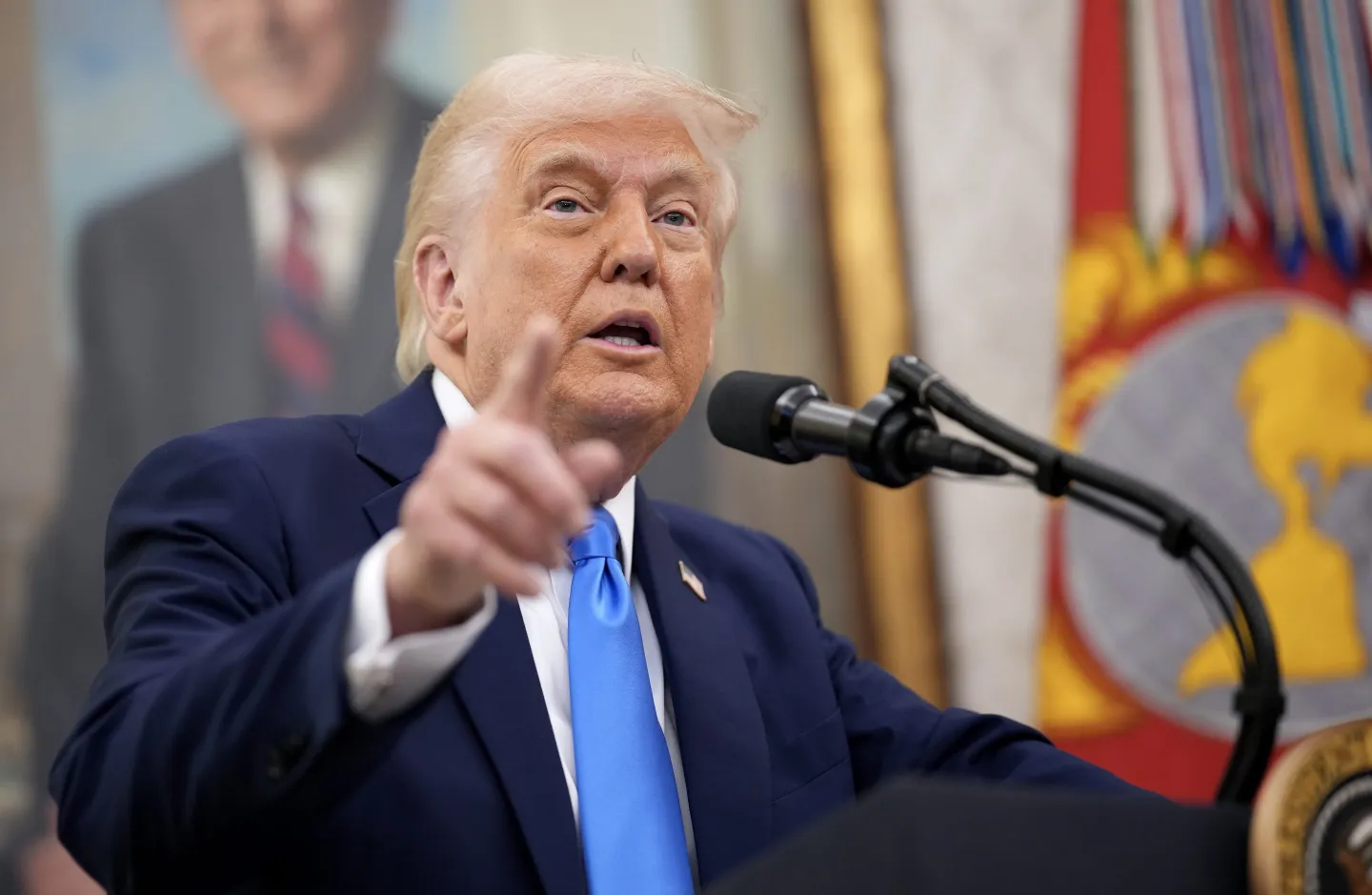
President Trump accuses US banks of sabotaging his crypto agenda via Truth Social. Banks are lobbying to prevent stablecoin yield loopholes that could shift $5.7 trillion in deposits. The GENIUS Act, signed July 2025, establishes a federal framework for USD-backed stablecoins, effective January 2027. OCC issued new rulemaking in February 2026, signaling enforcement of the interest ban.

Former OpenAI researcher's hedge fund Situational Awareness LP grew to $5.52 billion in US equity positions. Fund's portfolio is concentrated in AI infrastructure, power, data centers, and Bitcoin miners. Bitcoin miners are pivoting from hashrate to AI hosting, treating data center space as a scarce asset. Situational Awareness disclosed a 9.4% stake in Core Scientific, a Bitcoin miner turned AI infrastructure play.
Kospi index experienced a 12% intraday crash, its worst day in years. Spiking oil prices to $84 Brent and geopolitical fears related to Iran are the primary drivers. The selloff impacted chipmakers like Samsung Electronics and SK Hynix, reversing AI-driven gains. South Korea's import-heavy economy is vulnerable to sustained energy cost increases and shipping disruptions.
XRP's 30-day liquidity index on Binance has dropped to 0.097 from over 3. A sharp drop in liquidity signals thinner order books and increased price volatility. 470 million XRP deposited on Binance in the last 72 hours suggests a potential sell-off. XRP price could drop to $1.15 support if large holders sell.
OKX launches USDT-settled perpetual futures for select US equities on March 4, 2026. Contracts will offer leverage from 0.01x to 5x, allowing speculation without direct share ownership. Initial listings include major tech stocks like NVDA, GOOGL, MSFT, AAPL, META, and index trackers QQQ, SPY.

ProCap Financial added 450 BTC to its treasury, increasing total holdings to 5,457 BTC. The company also repurchased 782,408 shares, citing a shrinking discount to Net Asset Value (NAV). The buyback strategy is employed due to daily repurchase limits on Bitcoin acquisitions. Bitcoin price shows support around $65,000, with a potential for a significant bounce similar to patterns seen in 2018-2019.

Binance plans to secure five new crypto licenses in Asia during 2026. This expansion will bring Binance's total licensed jurisdictions globally to over 20. The move signifies Binance's continued shift towards a regulation-first strategy. Increased licensing is expected to attract institutional capital and enhance market credibility.
BlackRock withdrew 4,376 BTC ($298 million) and deposited 567 BTC ($38 million) to Coinbase Prime in 12 hours. Net inflow of approximately $260 million (3,810 BTC) observed in BlackRock's Bitcoin ETF wallets. Transactions likely represent operational adjustments or ETF share creation, not outright selling. Bitcoin price shows stabilization around $68,000, with potential for a breakout towards $70,000.

Regulated futures listings on CFTC-designated contract markets are now a prerequisite for new altcoin ETF approvals. SEC's generic listing standards, approved in September 2025, expedite ETF approvals to approximately 75 days after a six-month futures history. XRP serves as a blueprint, demonstrating that ETF eligibility can be achieved through infrastructure maturation and regulated futures, even with ongoing regulatory complexities. Altcoin ETF eligibility windows are projected for Q4 2026, with Aptos, Tezos, Cardano, Chainlink, and Stellar potentially seeing approvals based on recent futures launches.
38% of altcoins are trading near all-time lows, a decline deeper than the FTX-era collapse. Cardano (ADA) is down 90.7%, Dogecoin (DOGE) -86.9%, Chainlink (LINK) -82.8%, and Solana (SOL) -70.0% from their ATHs. Bitcoin (BTC) is down 46.4% and Ethereum (ETH) is down 59.2% from their ATHs. Potential regulatory clarity from the CLARITY Act could reshape investor confidence.

River price shows a 31% surge, attempting to break key resistance at $20. Pippin price has crashed 38% and faces potential further 50% decline towards $0.12. Liquidity is rotating from large-cap assets to smaller tokens, with rapid rotation within the low-cap segment. River needs to hold above $20 to target $25, while Pippin's bearish technicals suggest further downside.
Bitcoin spot ETFs saw $1.5 billion in inflows over the past five trading days, reversing a record $8.9 billion drawdown. BlackRock's IBIT led the recovery with $882 million in weekly inflows, followed by Fidelity's FBTC and Grayscale's GBTC. Monthly outflows from Bitcoin ETFs have decreased by 94% over four months, signaling a potential trend reversal. Despite recent inflows, the average realized price for ETF holders is $79,000, with Bitcoin trading below $70,000, indicating many institutional buyers are underwater.
Signal context only. Validate with price action, liquidity, and risk limits before taking a position.
