
200+ crypto news providers in one place.

CoinFeather
200+ crypto news providers in one place.
Quick market read from this story
Kospi index experienced a 12% intraday crash, its worst day in years
Spiking oil prices to $84 Brent and geopolitical fears related to Iran are the primary drivers
The selloff impacted chipmakers like Samsung Electronics and SK Hynix, reversing AI-driven gains
South Korea's import-heavy economy is vulnerable to sustained energy cost increases and shipping disruptions.
Deep Dive
South Korea's Kospi index experienced a significant downturn, plunging as much as 11-12% intraday on Wednesday, a sharp reversal from its recent status as one of the world's top-performing stock markets. This decline was triggered by escalating geopolitical tensions involving Iran and a surge in oil prices, leading to widespread panic selling. The benchmark index closed down 7.24%, marking its worst day in years and erasing substantial gains from 2026.
The sell-off was so severe that the Korea Exchange was compelled to temporarily halt trading after a sell-side circuit breaker was activated. The tech-heavy Kosdaq index also faced trading pauses, dropping over 8% and ultimately finishing down approximately 12%. This volatility contrasts sharply with the market's performance earlier in the year, which had seen a rally of roughly 50% year-to-date through February, fueled by semiconductor and AI-related stocks.
The immediate catalyst for the market's decline is a significant energy shock. Brent crude prices have risen to around $82-83 per barrel, an increase of over 13% since the conflict with Iran intensified. U.S. benchmark WTI is trading near $75-76 per barrel. Investors are concerned about Iran's actions near the Strait of Hormuz, a critical chokepoint for global oil trade, potentially impacting fuel-import-dependent economies like South Korea, Japan, and Taiwan.
Mizuho Bank estimates that elevated insurance and shipping costs could add an additional $5-15 per barrel to effective crude oil expenses. This would further strain corporate margins and contribute to inflationary pressures.
Key sectors driving the Kospi's earlier gains, such as chipmakers and exporters, were hit hardest. Samsung Electronics saw its stock price fall between 9% and nearly 12% during various trading sessions, while SK Hynix experienced a drop of about 6-10% as investors cashed in on profits from a substantial AI-driven rally. Additionally, airline and tourism stocks declined due to concerns over higher jet fuel prices and travel disruptions related to the conflict.
The Kospi, which was recently celebrated as the world's top-performing index in 2026 with significant foreign investment, has now become an epicenter of volatility. This rapid shift highlights how leverage and crowded market positions can amplify downturns during periods of geopolitical risk, forcing a swift de-risking by investors. Despite the recent pullback, the index remains up over 100% compared to a year ago and approximately 37% year-to-date, underscoring the dramatic nature of the recent sell-off.
For South Korea, a prolonged conflict in the region and sustained disruptions around the Strait of Hormuz pose significant risks to its export-driven economy, which is heavily reliant on fuel imports. The potential impact on energy costs, shipping, and global demand raises concerns that the Kospi's AI-fueled growth trajectory could face a much more turbulent future.
Source, catalyst, and sector overlap from the latest feed.
Sanae Token on Solana surged to $27.7M market cap before crashing to $7M. Japanese FSA is reviewing the Sanae Token case for potential regulatory violations. Prime Minister Sanae Takaichi publicly denied any connection to the token.
Bitcoin surged past $71,000 driven by a short squeeze and easing geopolitical tensions. Over $320 million in leveraged short positions were liquidated, accelerating BTC's rally. Ethereum, Solana, and XRP also saw significant gains as risk appetite returned. Analysts target $75,000 for BTC if oil prices remain stable below $85.
Shiba Inu price testing historic $0.0000050 support zone, last seen in June 2023. SHIB trading at $0.00000559, up 5.63% in 24 hours after testing yearly low. Macro uncertainty and geopolitical tensions are weighing on broader crypto market sentiment. Bitcoin shows relative strength, trading around $71,649, potentially supporting altcoin recovery.
Bitcoin liquidity clusters identified at $69K-$70K and $62K levels. Price action shows consolidation within a tight range, awaiting a breakout catalyst. Daily chart indicates a breakout and retest from a triangle pattern, with $70K as a key resistance. Potential for a short squeeze if price moves above the $69K-$70K liquidity zone.
Paras Defence stock surged 12% following a partnership with South Korea's Green Optics. The MOU aims to explore joint opportunities in optical systems for space and defense. Geopolitical tensions in Iran are increasing demand for defense equipment, benefiting defense stocks. Paras Defence also has a prior MOU with Israel-based Cielo Inertial Solutions for inertial systems.
Tether Investments made a $1.5 billion investment in Eight Sleep. The investment aims to advance AI-driven health technology and sleep optimization. Tether's QVAC architecture will be integrated into Eight Sleep products.
MARA Holdings authorized balance-sheet sales of its entire 53,822 BTC treasury, reversing its prior HODL policy. The shift is driven by funding AI data center infrastructure and covering operational costs amid tighter post-halving margins. This move signals a potential structural shift in how public miners manage their Bitcoin treasuries, treating them as working capital. The potential for significant miner BTC sales creates an overhang, especially with thin market liquidity and fragile sentiment.
Former OpenAI researcher's hedge fund Situational Awareness LP grew to $5.52 billion in US equity positions. Fund's portfolio is concentrated in AI infrastructure, power, data centers, and Bitcoin miners. Bitcoin miners are pivoting from hashrate to AI hosting, treating data center space as a scarce asset. Situational Awareness disclosed a 9.4% stake in Core Scientific, a Bitcoin miner turned AI infrastructure play.
X platform bans revenue sharing for undisclosed AI war videos Creators risk 90-day ban from revenue sharing Policy targets undisclosed AI-generated war footage
X suspends creators from revenue sharing for 90 days if AI war videos are not disclosed Policy targets authenticity of content during wartime events Repeated violations may lead to permanent removal from revenue sharing program
Live Feed
Loading the broader stream in the same flow as the homepage feed.

Kraken Financial is the first crypto company to receive a master account from the US Federal Reserve. This grants Kraken direct access to the Fed's payment systems, moving money on the same rails as banks. The approval signifies a potentially softer regulatory tone from the Fed towards the crypto industry. Kraken's banking unit does not receive full banking privileges like interest on reserves.

Bitcoin reached a one-month high of $71,800, approaching previous resistance near $72,000. Rally driven by increased demand for haven assets amid escalating Middle East conflict. Gold and silver also saw significant gains, indicating a broader risk-off sentiment shift. Altcoins, particularly lower-market-cap tokens like KITE, AERO, and TAO, outperformed majors with double-digit gains.
Nobitex, Iran's largest crypto exchange, showed no signs of user-driven capital flight post-strike. TRM Labs attributes spike in Nobitex wallet activity to routine liquidity management, not panic withdrawals. Chainalysis reported $10.3 million in digital assets left Iranian exchanges between Feb. 28 and March 2. Hourly outflows from Iranian exchanges briefly surged over 873% higher than the 2026 average.
Bitcoin price surged above $71,000 driven by five consecutive days of spot Bitcoin ETF inflows. Binance buy-to-sell ratio reached 1.18, the highest this year, indicating strong buying pressure. Trading volumes exceeded $1 billion per hour, supporting Bitcoin's upward price movement. Continued inflows and buying pressure suggest potential for further short-term gains.

Kraken's banking arm, Kraken Financial, has secured direct access to the Federal Reserve's master account. This grants Kraken direct access to Fedwire, a major interbank payment network, bypassing partner banks. The approval allows for potentially faster deposits and withdrawals for large traders and institutional clients. Access is limited; Kraken will not earn interest on reserves or access the Fed's emergency lending.
77,000 ETH worth $152.6 million withdrawn from Binance to an anonymous wallet. Ethereum price has reclaimed the $2,000 level amid a broader market recovery. Bitcoin shows resilience, trading as a potential safe haven while stocks and gold decline. A separate transaction shows a whale buying 4,900 ETH for nearly $10 million on Binance.
Total crypto market capitalization surpassed $2.4 trillion following a rapid rebound. Bitcoin surged past $71,000, gaining 5% in five hours, driven by short liquidations and declining selling pressure. Ethereum rose above $2,050, and XRP traded near $1.40 as the rally extended to major altcoins. Improved macroeconomic sentiment, including Fed comments on interest rates, supported risk asset inflows.
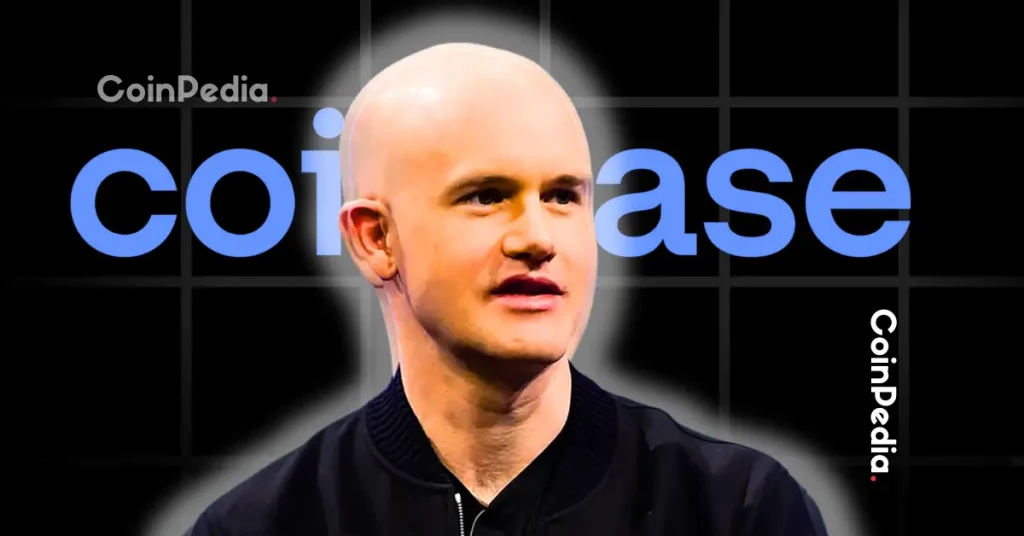
Coinbase CEO Brian Armstrong cites stronger crypto foundations including faster settlements and institutional adoption. Bitcoin price surged over 6% to $71,000 amid geopolitical tensions and strong ETF inflows. Spot Bitcoin ETFs recorded over $1 billion in weekly inflows. Market resilience is noted despite geopolitical fears and volatile price swings.

FATF warns stablecoins are increasingly used for sanctions evasion. P2P stablecoin transfers via self-custody wallets can bypass AML checks. FATF urges countries to assess risks and apply proportionate safeguards for stablecoins.
FATF identifies P2P stablecoin transfers via self-custody wallets as a key vulnerability for AML oversight. Stablecoins accounted for 84% of illicit transaction volume in 2025, according to Chainalysis. FATF urges countries to assess risks and apply proportionate safeguards for stablecoin arrangements. Illicit activity remains a small share of total on-chain volume, less than 1%.
Nasdaq MRX filed with SEC for cash-settled binary options on Nasdaq-100 Index. These 'yes/no' contracts will be priced from $0.01 to $1, focusing on financial outcomes. The move signifies traditional finance exploring prediction market-style products. Nasdaq plans to potentially list these options on NOM and PHLX exchanges as well.

Strategy's STRC stock saw $198.7 million in trading volume, a significant increase from its 30-day average of $123.3 million. Approximately 1,000 BTC were purchased on Tuesday, with an additional estimated 763 BTC acquired on Monday, totaling 1,762 BTC over two days. The STRC issuance program is activated when trading volume exceeds its $100 par value, with 40% of volume above this threshold estimated for BTC purchases. Strategy raised the dividend rate on STRC to 11.5%, the seventh increase since its debut.
Bitcoin price surged above $71,000. A whale opened a 30x long position on 600 BTC valued at $42.7 million. The position achieved approximately $570,000 in unrealized profit. Liquidation risk exists if BTC drops to $66,942.69.
XRP breaks above daily Bollinger Band midpoint, targeting $1.50 and potentially $1.92. Bitcoin recovers above $71,000, driven by over $250 million in short liquidations in the last 24 hours. Cardano whales redistributed 230 million ADA, with the price showing a 4% rebound. The Federal Reserve Beige Book release is a key event to watch for monetary policy sentiment.
Signal context only. Validate with price action, liquidity, and risk limits before taking a position.
