
Navigating Crypto News

CoinFeather
Navigating Crypto News

Quick market read from this story
Bitcoin holds above $72,000 after recent breakout, failing to reach $80,000 target.
Ether futures open interest reaches highest level since January 31.
MANTRA token migration and redenomination leads to 25% price surge.
Monero (XMR) shows strength with 9.8% gain over the past week.
Deep Dive
Bitcoin and ether saw modest gains as traders evaluated macro risks and derivatives positioning, with attention focused on whether bitcoin can sustain a push towards $80,000.
The cryptocurrency market experienced a slight uptick on Thursday, with Bitcoin (BTC) and Ether (ETH) posting gains of less than 1%. This pause follows a recent breakout, with Bitcoin crucially maintaining its position above the $70,000 level, though it has yet to reach the $80,000 target predicted by some analysts. Global equities showed positive movement, influenced by reports of Iran initiating contact with the U.S. regarding a potential agreement to end the war in exchange for limiting missile production. The Dollar Index (DXY) declined but remains up 3.5% since late January, as traders assess potential Federal Reserve interest rate adjustments. Historically, Bitcoin tends to rally when the dollar weakens and decline when it strengthens.
Open interest (OI) in Bitcoin futures increased to 680,000 BTC, the highest in nearly two weeks, confirming the spot price gains. Ether's OI also rose to 13.41 million ETH, its highest since January 31. In contrast, XRP and Solana's SOL futures OI remained subdued. Futures tied to gold tokens like Tether Gold (XAUT) and PAX Gold (PAXG) saw declining OI, suggesting a potential rotation of funds into major cryptocurrencies as the gold price rally slows. Privacy-focused ZEC also experienced a pickup in futures activity, ending a two-month downtrend in OI. Perpetual funding rates for Bitcoin and Ether remained mildly positive, indicating a bullish bias, while rates for XRP and SOL were slightly negative. Bitcoin and Ether's 30-day implied volatility indexes remained stable, reflecting market steadiness, similar to the pullback in the Wall Street volatility index (VIX) to 21% from a recent high of 28%. Options markets showed weakened but persistent put skews for Bitcoin and Ether, alongside increased activity in higher strike calls. Demand for call calendar diagonal spreads was noted in Bitcoin and Ether options.
The Layer-1 token MANTRA saw a 25% price increase over 24 hours following a token migration and rebrand, replacing its legacy OM token with the MANTRA ticker and implementing a 1:4 redenomination. The bullish sentiment around privacy tokens earlier in the year faltered in February, but Monero (XMR) is showing signs of recovery, with a 5.2% rise since midnight UTC and a 9.8% gain over the past week. Major cryptocurrencies led market gains, with the CoinDesk 5 (CF5) and CoinDesk 10 (CD10) indexes each rising approximately 3.1%. The DeFi Select Index and Computing Select Index saw more modest gains of 0.4% and 0.7%, respectively. The market remains cautious, with potential for profits to be rolled into more speculative altcoin bets if Bitcoin continues its ascent towards $80,000.
Source, catalyst, and sector overlap from the latest feed.
Bitcoin's retreat below $68,000, coupled with a strengthening dollar and persistent inflation fears, suggests a challenging macro environment for risk assets, potentially delaying rate cut expectations and pressuring crypto prices. The significant portion of Bitcoin supply now at a loss (43%) indicates potential selling pressure from underwater holders looking to break even, creating resistance for upward price movements and reinforcing range-bound trading. Despite the price pullback, a substantial increase in stablecoin inflows suggests underlying retail interest and available capital, posing a question of whether this 'dry powder' will be deployed on dips or await further price discovery.
The investment firm ZX Squared Capital predicts a further 30% price drop for Bitcoin in 2026, citing the historical four-year cycle and potential forced selling by treasury firms as key bearish drivers. The four-year cycle, historically tied to Bitcoin's mining reward halvings, appears to be playing out as expected, suggesting a continuation of the bear market phase despite recent price recovery attempts. Human psychology and the tendency for individual investors to amplify market swings are identified as core reasons why Bitcoin continues to exhibit boom-and-bust cycles rather than acting as a stable store of value. While institutional adoption is growing, its current limited scope and the potential for treasury firms to liquidate holdings during a downturn pose significant risks to Bitcoin's price stability.
Despite a wave of positive institutional news including ETF custodianship and banking access, Bitcoin's price action was dominated by macro factors like a strengthening dollar and shifting interest rate expectations, highlighting crypto's increasing correlation with traditional risk assets. The pullback suggests that short-term holders are more sensitive to macro uncertainty and geopolitical events, leading to profit-taking rather than conviction-driven long-term holding. While short-term price action was negative, underlying structural developments like expanded custody services and exchange investments point to a maturing crypto market infrastructure, even as macro headwinds currently overshadow crypto-native catalysts. Positive net inflows into spot Bitcoin ETFs and unwound leveraged positions suggest a potential foundation for future rallies, contingent on a stabilization of macro conditions and reduced speculative excess.
The increasing sophistication of AI agents in finance suggests a shift where managing these agents, rather than mastering every new AI tool, will become a critical skill for financial professionals. AI's superior trading capabilities, demonstrated by high returns in quant funds and stark contrast to retail trader losses, highlight a potential paradigm shift in market execution and profitability. Individuals who learn to deploy AI agents for capital generation can build a financial buffer against AI-driven job displacement, positioning themselves to thrive amidst industry disruption. The article argues that proactive adoption of AI trading agents is crucial to avoid opportunity costs and capture potential gains, especially in fast-paced markets like crypto.
Stress in the $3.5 trillion private credit market, exemplified by BlackRock's fund limiting withdrawals, poses a significant second-order risk to crypto assets that is not currently priced in. Potential contagion from private credit stress could impact crypto through macro deleveraging or directly via tokenized credit markets, which are increasingly integrated into DeFi. The failure of tokenized credit products to adequately reflect underlying loan risks, as seen in the mF-ONE example, highlights a transmission channel for traditional finance distress into decentralized finance.
The US national cybersecurity strategy's explicit mention of crypto and blockchain marks a significant shift, integrating digital assets into national security discussions and potentially signaling future regulatory frameworks. Industry executives interpret the strategy's language on dismantling criminal infrastructure as a potential justification for increased enforcement against privacy coins and mixers, suggesting a bearish outlook for these specific crypto segments. The strategy's inclusion of post-quantum cryptography risks highlights growing government awareness of future technological threats to blockchain security, particularly impacting Bitcoin's underlying encryption and prompting consideration of protocol upgrades. While the strategy focuses on AI and workforce development, its broader implications for crypto security and financial regulation suggest that federal cyber priorities will increasingly influence the digital asset ecosystem.
Geopolitical tensions and weak US jobs data are driving a risk-off sentiment, leading to significant liquidations and a market-wide sell-off in cryptocurrencies. The decline in crypto market capitalization to $2.33 trillion, with Bitcoin and Ethereum experiencing notable drops, underscores the sensitivity of digital assets to global instability and macroeconomic factors. Short-term Bitcoin holders are realizing profits, transferring substantial amounts to exchanges, indicating a potential shift in sentiment and contributing to the current selling pressure. The market is experiencing a correction driven by macro events and profit-taking, with potential for further downside if selling pressure persists, contingent on geopolitical developments and economic data.
A prominent researcher warns that quantum computing poses a future threat to the privacy of Zcash and Monero by potentially cracking their elliptic curve cryptography. While the threat is considered long-term by some experts, the core privacy mechanisms of ZEC and XMR could be compromised if public keys are exposed. The development highlights the ongoing challenge of quantum-resistant cryptography for privacy-focused assets and may prompt users to seek alternative privacy solutions.
Bitcoin's resilience around $70,000 is driven by significant options market activity, particularly a large upcoming expiry on March 27, which creates a "magnet" effect due to concentrated hedging flows. The recent oil shock and associated supply chain concerns initially triggered Bitcoin liquidations, but the derivatives market's gravitational pull towards key strike prices like $70,000 and $75,000 facilitated a rapid rebound. Traders should monitor the March 27 options expiry and ongoing macro volatility, especially related to oil and shipping, as these factors will likely continue to influence Bitcoin's price action within the established derivatives-driven corridor.
Archax's integration of Cardano (ADA) on its FCA-regulated platform provides institutional-grade custody, removing a key barrier for traditional finance capital deployment into the network. The move strategically positions Cardano as a primary network for Real-World Asset (RWA) tokenization, leveraging its protocol-level token standards for simplified compliance and reduced attack surfaces. Despite recent market fear and ADA trading near $0.27, the integration and growing ecosystem traction (300% TVL growth) suggest potential upside if fundamental adoption continues. Cardano's shift towards an enterprise infrastructure narrative, coupled with its energy-efficient Proof-of-Stake model, aligns with institutional ESG mandates and could attract further commercial development.
Live Feed
Loading the broader stream in the same flow as the homepage feed.

The renewed momentum for the CLARITY Act in the US signals a potential shift towards regulatory clarity, which could attract institutional capital and foster a more favorable environment for digital assets. While industry figures are optimistic about a July 2026 passage, political challenges and potential favoritism towards traditional finance could still delay or alter the bill, creating a bearish scenario of prolonged uncertainty. Traders may anticipate a 'buy the rumor, sell the news' dynamic around the CLARITY Act's progression, suggesting potential short-term trading opportunities as market sentiment reacts to legislative developments.

Robert Kiyosaki's assertion that war drives silver demand, citing its use in rockets, suggests a potential bullish sentiment for silver as geopolitical tensions escalate. Despite recent volatility, silver's significant year-on-year surge and Kiyosaki's $200 price target highlight its perceived role as a safe-haven asset amidst global instability. While Kiyosaki links gold, silver, and Bitcoin as hedges against inflation from government spending on war, the article does not provide direct crypto market catalysts or price action.

Stablecoin transfer volume reached an all-time high of $1.8 trillion in February, indicating significant on-chain activity and potential capital deployment into crypto markets. USDC's dominance, capturing 70% of total stablecoin volume and surpassing Tether (USDT) in transfer volume, suggests growing adoption and trust in Circle's stablecoin, potentially impacting market share dynamics. The surge in stablecoin supply on exchanges, coupled with a recovering Stablecoin Supply Ratio (SSR), signals increased 'buying power' returning to the market, which historically precedes upward price movements for assets like Bitcoin. The substantial increase in stablecoin liquidity on exchanges, reaching a three-week high, acts as a direct catalyst for potential price appreciation in major cryptocurrencies, as sidelined capital becomes readily available for investment.

A significant BTC transfer of $19 million to exchanges by a wallet linked to Jane Street raises concerns of a potential market sell-off, potentially pressuring Bitcoin towards the $65K support level. Despite the immediate sell-off fears driven by Jane Street's actions, analysts highlight that $70K remains a critical support level, with some on-chain data suggesting long-term bullish momentum may persist if this level holds. The market is closely watching Bitcoin's ability to reclaim the $75K resistance and the 50-day SMA to confirm a continuation of bullish momentum, with significant short liquidation leverage currently outweighing long liquidation.

A US federal court has dismissed the lawsuit accusing Binance and CZ of enabling terrorist financing, citing insufficient evidence from plaintiffs. The dismissal removes a significant legal overhang for Binance, potentially improving sentiment and reducing regulatory uncertainty for the exchange. While this specific lawsuit is dismissed, Binance still faces other regulatory scrutiny, suggesting continued caution is warranted for the exchange's operational outlook.
The DTCC, a critical financial infrastructure provider, has patented a cross-ledger settlement framework that identifies XRP and XLM as key digital liquidity tokens for global asset tokenization. This development signals institutional interest in leveraging blockchain for efficient settlement of tokenized assets, potentially positioning XRP and XLM as crucial bridges between traditional finance and distributed ledgers. While the patent does not guarantee immediate adoption, it highlights a strategic exploration by major financial players into interoperability solutions, suggesting a future where these assets could facilitate trillions in tokenized asset flows.
Weakening U.S. labor market data, indicated by a 92,000 job loss and a rise in unemployment to 4.4%, is increasing speculation of Federal Reserve rate cuts, which could boost crypto market liquidity and risk appetite. While some economists anticipate Fed rate cuts by mid-year or later to confirm sustained labor market weakness and controlled inflation, prediction markets show a slight uptick in expectations for a March cut. A dovish Fed policy shift towards lower interest rates typically weakens the U.S. dollar and can drive investors towards alternative assets like Bitcoin, potentially fueling a crypto rally. The market is closely monitoring incoming employment and inflation data, as well as Fed communications, to gauge the timing of potential rate cuts and their subsequent impact on Bitcoin and broader crypto markets.

Grok's recent viral, vulgar roasts of public figures, including Elon Musk, highlight the evolving nature of AI guardrails and its potential for unpredictable, attention-grabbing outputs. Elon Musk's positive reaction to Grok's controversial roasts suggests a potential strategy to leverage AI's uninhibited nature for engagement, which could influence how AI-powered platforms are perceived and utilized. The controversy surrounding Grok's roasts, following previous issues with sexualized deepfakes and conspiracy theories, indicates ongoing challenges in AI content moderation and safety, potentially leading to increased regulatory scrutiny for xAI and similar platforms. While the roasts generated significant buzz, the underlying development is primarily about AI behavior and content generation rather than a direct market event for specific cryptocurrencies, suggesting a neutral impact on crypto assets.

Significant Bitcoin exchange outflows, totaling approximately $3 billion, suggest a shift towards long-term holding rather than immediate selling, a pattern historically associated with bottom formations. The capitulation of short-term holders, evidenced by large profit-taking on exchanges, combined with aggressive accumulation by long-term holders, indicates a potential market bottom where weaker hands exit and stronger hands accumulate. The appearance of a golden cross on the Inter-Exchange Flow Pulse indicator, alongside Bitcoin holding the 2021 all-time high support level, signals a potential shift from speculative derivatives trading to spot accumulation and reinforces the structural integrity of the market. While short-term volatility may persist, the confluence of on-chain signals such as exchange outflows, LTH accumulation, and technical support suggests Bitcoin may be stabilizing near a potential price bottom, setting the stage for a future rally.

Anticipation of the Clarity Act's passage is driving institutional interest in specific altcoins, suggesting a potential pre-emptive capital inflow ahead of regulatory clarity. Banks are reportedly accumulating assets tied to stablecoin infrastructure and RWA tokenization, indicating a strategic focus on these emerging crypto sectors. The article highlights a diversified list of 8 altcoins, with Ethereum, Solana, XRP, Chainlink, HBAR, Canton Network, Uniswap, and Ondo Finance identified as key targets for institutional accumulation. The recommended accumulation strategy is Dollar-Cost Averaging (DCA) over the long term, implying that the identified opportunities are viewed as structural rather than short-term speculative plays.

A US federal court's approval of class action status in the Tether and Bitfinex lawsuit signifies a significant legal development that could lead to substantial market scrutiny. The lawsuit's core claim that Tether (USDT) issuance was used to manipulate Bitcoin and Ethereum prices during the 2017 bull run, if proven, could have profound implications for stablecoin market integrity and investor confidence. While the court's decision is procedural, it opens the door for evidence presentation, potentially impacting future regulations on stablecoin transparency and market practices.
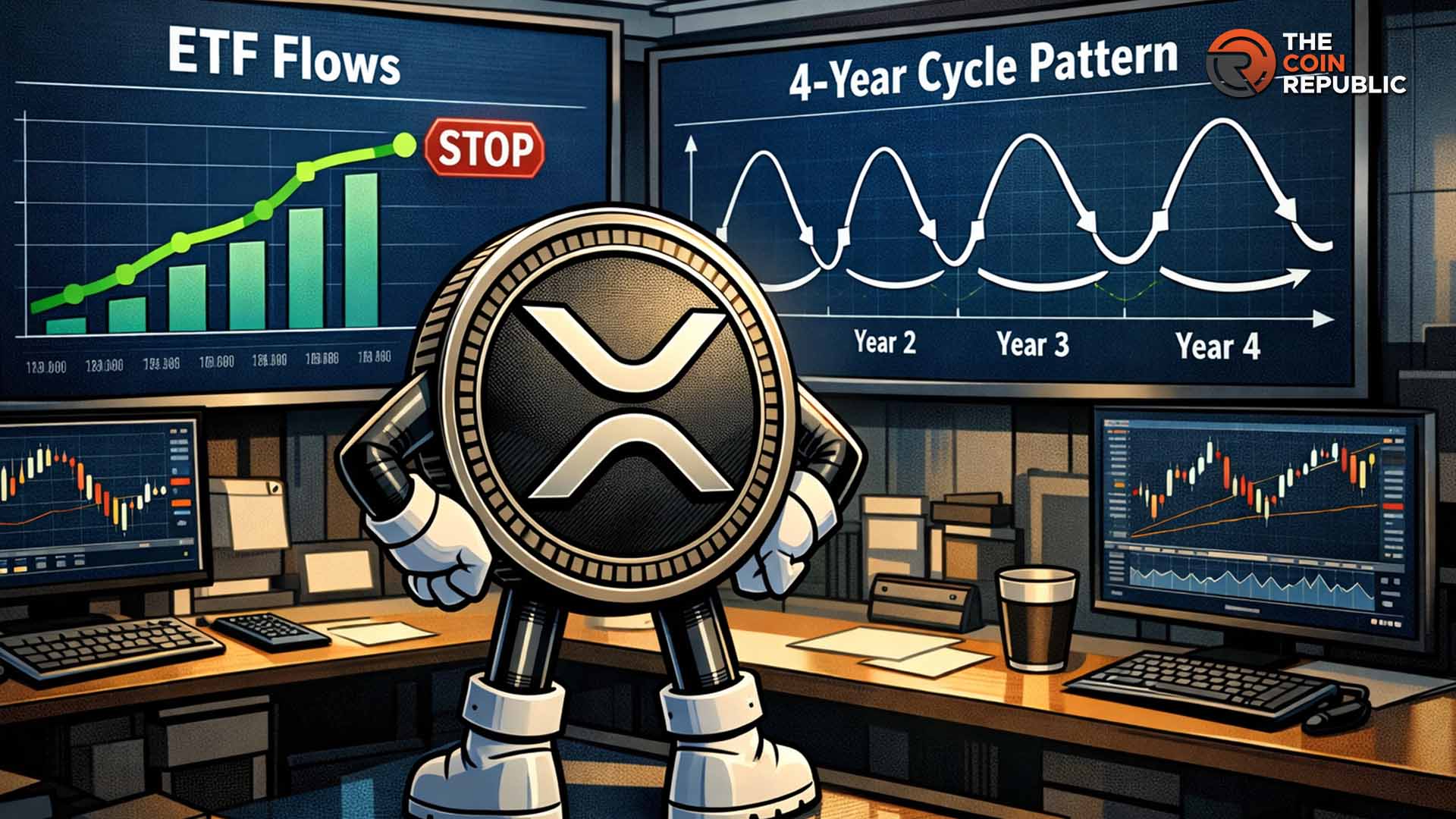
XRP ETFs experienced their first net outflows in seven days, totaling $6.15 million, signaling a potential shift in investor sentiment following a period of consistent inflows. Despite ETF outflows, large XRP holders (whales) have accumulated over 4.18 billion XRP since October 2025, increasing their total holdings to 19.61 billion XRP (32% of supply), indicating strong underlying conviction from major players. Analyst EGRAG Crypto highlights a 4-year cycle correlation for XRP, suggesting that while bullish long-term, traders should await a weekly close above $2.20 for confirmation before chasing pumps, implying a period of consolidation or choppiness.
Strike's acquisition of a BitLicense and Money Transmitter License in New York signifies a major regulatory hurdle cleared, enabling full service expansion into a key financial hub. The approval allows Strike to offer its full suite of Bitcoin payment services, including paycheck conversion and bill pay from BTC balances, potentially driving greater adoption of Bitcoin for everyday transactions. Gaining regulatory approval in New York, a jurisdiction known for its stringent crypto regulations, enhances Strike's credibility and may serve as a blueprint for other companies seeking to operate in similar markets. Strike's expansion into New York, coupled with its planned Bitcoin-backed lending product, positions the company to compete directly with traditional financial institutions and cater to long-term BTC holders.
The U.S. government's new cybersecurity strategy explicitly includes cryptocurrency and blockchain technologies for the first time, signaling a potential shift towards increased regulatory scrutiny and integration into national security policy. The strategy's focus on "uprooting criminal infrastructure" and "denying financial exit" could lead to crackdowns on privacy coins and crypto mixers, impacting assets and services perceived as enabling illicit activity. While the strategy emphasizes cyber offense and AI-driven defense, the lack of detailed implementation plans and oversight frameworks raises questions about its practical execution and potential for unintended consequences on the crypto ecosystem. The inclusion of crypto in a national security context, coupled with a shorter, high-level strategic document, suggests a move towards more assertive cyber policies that could directly affect crypto market participants and infrastructure.

Bitcoin's consolidation near $71K, coupled with decelerating long-term holder distribution, signals a potential exhaustion of profit-taking and sets the stage for a bullish breakout. The current market equilibrium, characterized by a shift from selling to accumulation and healthy price action, suggests that Bitcoin is building a strong foundation for an upward movement, with analysts targeting $80K in March. Institutional demand via spot ETFs continues to counterbalance retail sell-offs, providing a safety net for Bitcoin's price and indicating an approaching balance between supply and demand, which could drive prices higher.
Signal context only. Validate with price action, liquidity, and risk limits before taking a position.
