
Navigating Crypto News

CoinFeather
Navigating Crypto News

Quick market read from this story
Stablecoin transfer volume reached an all-time high of $1.8 trillion in February, indicating significant on-chain activity and potential capital deployment into crypto markets.
USDC's dominance, capturing 70% of total stablecoin volume and surpassing Tether (USDT) in transfer volume, suggests growing adoption and trust in Circle's stablecoin, potentially impacting market share dynamics.
The surge in stablecoin supply on exchanges, coupled with a recovering Stablecoin Supply Ratio (SSR), signals increased 'buying power' returning to the market, which historically precedes upward price movements for assets like Bitcoin.
The substantial increase in stablecoin liquidity on exchanges, reaching a three-week high, acts as a direct catalyst for potential price appreciation in major cryptocurrencies, as sidelined capital becomes readily available for investment.
Deep Dive
Stablecoins have achieved an all-time high in monthly transaction volume, with Circle's USDC surpassing Tether's USDt in this metric. In February, the total monthly transaction volume for stablecoins reached a record $1.8 trillion. Notably, USDC accounted for a significant 70% of this total volume.
The total stablecoin transfer volume recorded $1.8 trillion in February, marking a new monthly record according to data from Allium. The volume of USDC transactions alone reached $1.26 trillion, a significant milestone for the second-largest stablecoin by market capitalization since its launch in September 2018. This figure is more than double that of USDt, which recorded $514 billion in transfer volume during the same month.
Simon Dedic, founder at Moonrock Capital, observed that USDC has been
Source, catalyst, and sector overlap from the latest feed.
Kalshi and Polymarket are reportedly exploring fundraising rounds at a $20 billion valuation, doubling their previous valuations and signaling strong investor confidence in the prediction market sector. Despite potential for significant growth, both platforms face increasing regulatory scrutiny and insider trading allegations, which could impact future operations and valuations. The news suggests a potential surge in capital inflow into prediction market infrastructure, though regulatory headwinds remain a key risk factor for traders.
Live Feed
Loading the broader stream in the same flow as the homepage feed.

Ethereum is testing a critical ascending trendline that has historically supported major lows since 2019, making its current hold pivotal for its long-term bull case. Underperformance relative to Bitcoin suggests ETH lacks momentum at this key support level, increasing the risk of a breakdown if the trendline fails. A successful hold could trigger a rotation into altcoins, signaling the start of an altcoin season, while a break could lead to capital flowing back into Bitcoin and further downside for ETH. The confluence of geopolitical tensions and weak economic data creates a challenging macro environment, amplifying the importance of ETH's weekly close at this make-or-break support level.

Significant weekly capital inflows of $680 million into Hyperliquid, surpassing major blockchains, indicate growing investor confidence and liquidity, supporting potential price appreciation. The HYPE token's breakout from a falling wedge pattern, coupled with strong protocol revenue and increasing derivatives trading activity, suggests a bullish technical setup with a potential target of $55-$58. Hyperliquid's leading fee generation, exceeding $1.7 million in 24 hours, highlights robust network demand and user engagement, positioning it as a key player in decentralized derivatives trading. With strong on-chain metrics and a bullish technical outlook, traders may interpret the current momentum as a signal for a potential rally, provided resistance levels are overcome.
Geopolitical tensions between the U.S. and Iran are driving a broad crypto market sell-off, impacting major assets like Bitcoin and Ethereum as investors de-risk. The potential for escalating conflict and U.S. actions to cut Iran's oil revenues are creating significant uncertainty, pressuring Bitcoin towards a key support level around $55,000. The current market downturn, characterized by a 3-5% drop across major altcoins, suggests a heightened sensitivity to global macroeconomic and geopolitical events rather than project-specific news.

The 2020 MakerDAO 'Black Thursday' incident, where a bot exploited a 40-minute window to acquire $8.32M in ETH for free due to network congestion and failed auctions, highlights critical DeFi risk management failures. This historical event serves as a foundational case study for modern DeFi liquidation systems, emphasizing the importance of designing for extreme network conditions and continuous market participation. The incident resulted in a $4.5M bad debt for MakerDAO, forcing MKR holders to approve a token mint to cover the shortfall, demonstrating the direct financial impact on governance token holders during protocol failures. With current DeFi liquidations in focus, the lessons from this 40-minute exploit remain highly relevant for assessing the resilience of decentralized finance protocols under stress.

The launch of the ShibClaw skill represents an integration of AI agents into the Shiba Inu ecosystem, potentially enhancing automation for developers building on Shibarium. While the ShibClaw skill aims to provide AI-driven functionality for Shibarium, a warning has been issued regarding contract address verification and security best practices, highlighting ongoing risks in ecosystem development. This development signals a broader trend of AI integration within blockchain infrastructure, suggesting that AI agents could become crucial tools for scaling and operational efficiency in crypto ecosystems.

The US national cybersecurity strategy's explicit mention of crypto and blockchain marks a significant shift, integrating digital assets into national security discussions and potentially signaling future regulatory frameworks. Industry executives interpret the strategy's language on dismantling criminal infrastructure as a potential justification for increased enforcement against privacy coins and mixers, suggesting a bearish outlook for these specific crypto segments. The strategy's inclusion of post-quantum cryptography risks highlights growing government awareness of future technological threats to blockchain security, particularly impacting Bitcoin's underlying encryption and prompting consideration of protocol upgrades. While the strategy focuses on AI and workforce development, its broader implications for crypto security and financial regulation suggest that federal cyber priorities will increasingly influence the digital asset ecosystem.
Geopolitical tensions and weak US jobs data are driving a risk-off sentiment, leading to significant liquidations and a market-wide sell-off in cryptocurrencies. The decline in crypto market capitalization to $2.33 trillion, with Bitcoin and Ethereum experiencing notable drops, underscores the sensitivity of digital assets to global instability and macroeconomic factors. Short-term Bitcoin holders are realizing profits, transferring substantial amounts to exchanges, indicating a potential shift in sentiment and contributing to the current selling pressure. The market is experiencing a correction driven by macro events and profit-taking, with potential for further downside if selling pressure persists, contingent on geopolitical developments and economic data.
A prominent researcher warns that quantum computing poses a future threat to the privacy of Zcash and Monero by potentially cracking their elliptic curve cryptography. While the threat is considered long-term by some experts, the core privacy mechanisms of ZEC and XMR could be compromised if public keys are exposed. The development highlights the ongoing challenge of quantum-resistant cryptography for privacy-focused assets and may prompt users to seek alternative privacy solutions.

Robert Kiyosaki's assertion that war drives silver demand, citing its use in rockets, suggests a potential bullish sentiment for silver as geopolitical tensions escalate. Despite recent volatility, silver's significant year-on-year surge and Kiyosaki's $200 price target highlight its perceived role as a safe-haven asset amidst global instability. While Kiyosaki links gold, silver, and Bitcoin as hedges against inflation from government spending on war, the article does not provide direct crypto market catalysts or price action.

Bitcoin's resilience around $70,000 is driven by significant options market activity, particularly a large upcoming expiry on March 27, which creates a "magnet" effect due to concentrated hedging flows. The recent oil shock and associated supply chain concerns initially triggered Bitcoin liquidations, but the derivatives market's gravitational pull towards key strike prices like $70,000 and $75,000 facilitated a rapid rebound. Traders should monitor the March 27 options expiry and ongoing macro volatility, especially related to oil and shipping, as these factors will likely continue to influence Bitcoin's price action within the established derivatives-driven corridor.
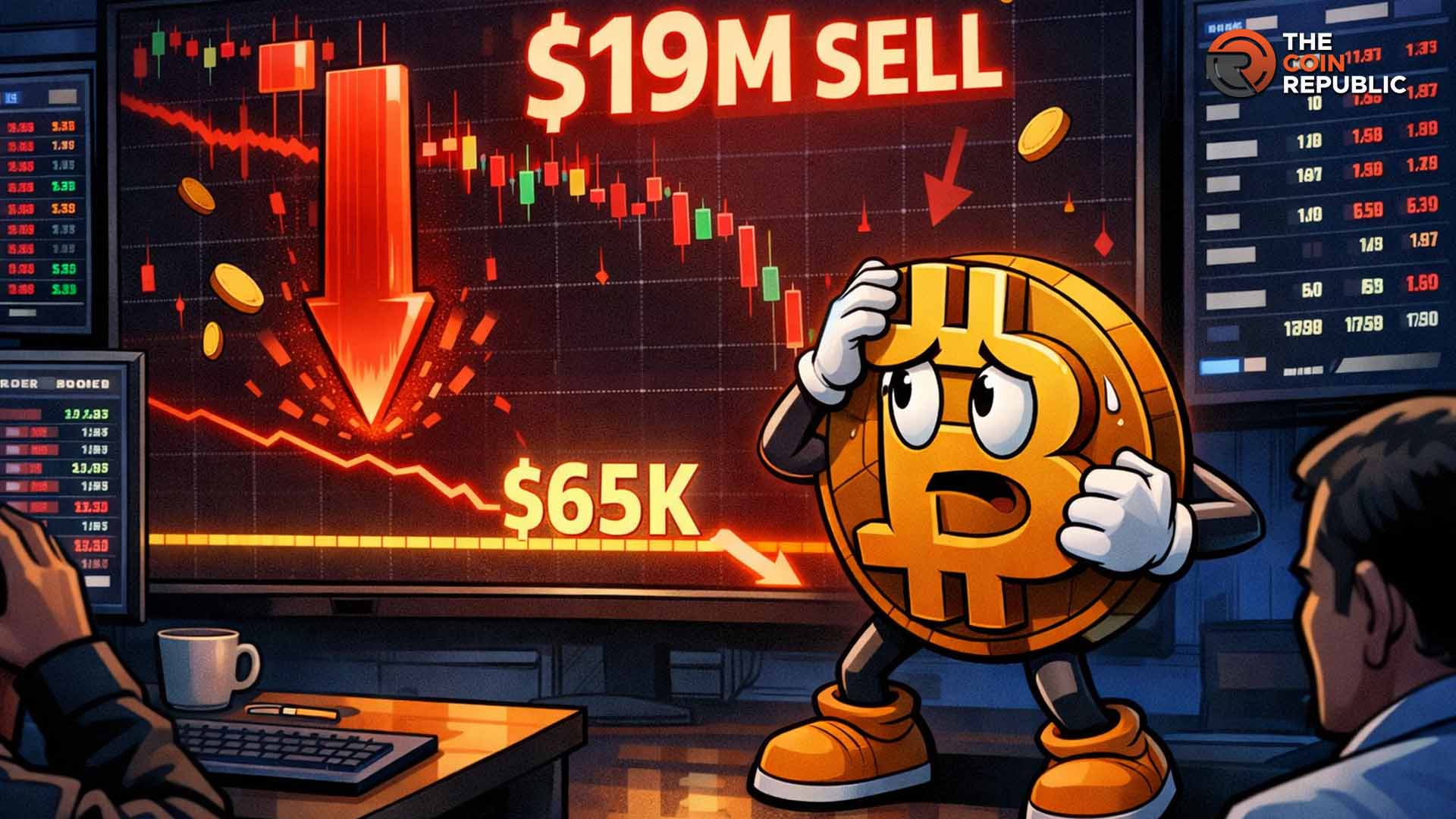
A significant BTC transfer of $19 million to exchanges by a wallet linked to Jane Street raises concerns of a potential market sell-off, potentially pressuring Bitcoin towards the $65K support level. Despite the immediate sell-off fears driven by Jane Street's actions, analysts highlight that $70K remains a critical support level, with some on-chain data suggesting long-term bullish momentum may persist if this level holds. The market is closely watching Bitcoin's ability to reclaim the $75K resistance and the 50-day SMA to confirm a continuation of bullish momentum, with significant short liquidation leverage currently outweighing long liquidation.
The DTCC, a critical financial infrastructure provider, has patented a cross-ledger settlement framework that identifies XRP and XLM as key digital liquidity tokens for global asset tokenization. This development signals institutional interest in leveraging blockchain for efficient settlement of tokenized assets, potentially positioning XRP and XLM as crucial bridges between traditional finance and distributed ledgers. While the patent does not guarantee immediate adoption, it highlights a strategic exploration by major financial players into interoperability solutions, suggesting a future where these assets could facilitate trillions in tokenized asset flows.
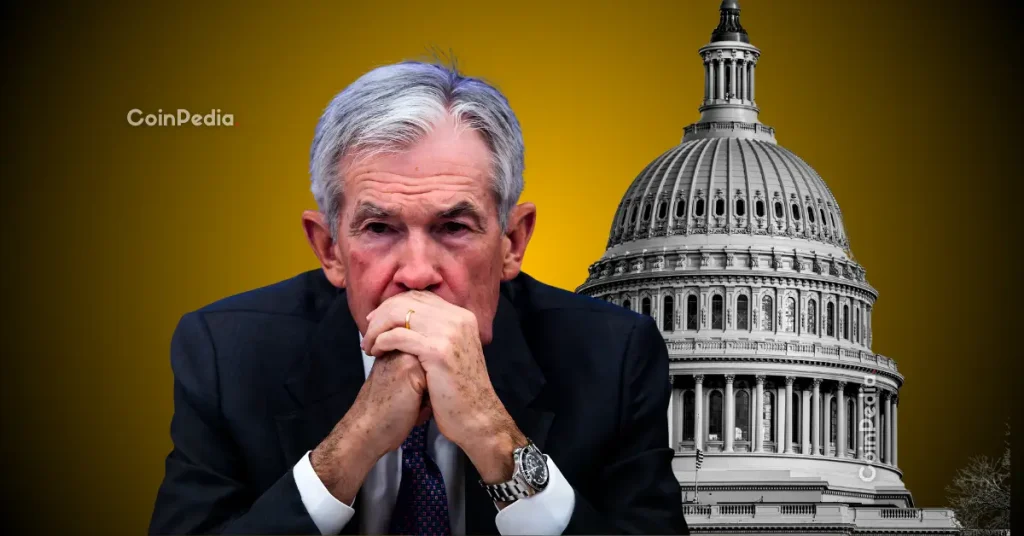
Weakening U.S. labor market data, indicated by a 92,000 job loss and a rise in unemployment to 4.4%, is increasing speculation of Federal Reserve rate cuts, which could boost crypto market liquidity and risk appetite. While some economists anticipate Fed rate cuts by mid-year or later to confirm sustained labor market weakness and controlled inflation, prediction markets show a slight uptick in expectations for a March cut. A dovish Fed policy shift towards lower interest rates typically weakens the U.S. dollar and can drive investors towards alternative assets like Bitcoin, potentially fueling a crypto rally. The market is closely monitoring incoming employment and inflation data, as well as Fed communications, to gauge the timing of potential rate cuts and their subsequent impact on Bitcoin and broader crypto markets.
Signal context only. Validate with price action, liquidity, and risk limits before taking a position.
USDT
USDT
Grok's recent viral, vulgar roasts of public figures, including Elon Musk, highlight the evolving nature of AI guardrails and its potential for unpredictable, attention-grabbing outputs. Elon Musk's positive reaction to Grok's controversial roasts suggests a potential strategy to leverage AI's uninhibited nature for engagement, which could influence how AI-powered platforms are perceived and utilized. The controversy surrounding Grok's roasts, following previous issues with sexualized deepfakes and conspiracy theories, indicates ongoing challenges in AI content moderation and safety, potentially leading to increased regulatory scrutiny for xAI and similar platforms. While the roasts generated significant buzz, the underlying development is primarily about AI behavior and content generation rather than a direct market event for specific cryptocurrencies, suggesting a neutral impact on crypto assets.
