
Navigating Crypto News

CoinFeather
Navigating Crypto News

Source, catalyst, and sector overlap from the latest feed.
Geopolitical tensions and weak US jobs data are driving a risk-off sentiment, leading to significant liquidations and a market-wide sell-off in cryptocurrencies. The decline in crypto market capitalization to $2.33 trillion, with Bitcoin and Ethereum experiencing notable drops, underscores the sensitivity of digital assets to global instability and macroeconomic factors. Short-term Bitcoin holders are realizing profits, transferring substantial amounts to exchanges, indicating a potential shift in sentiment and contributing to the current selling pressure. The market is experiencing a correction driven by macro events and profit-taking, with potential for further downside if selling pressure persists, contingent on geopolitical developments and economic data.
Live Feed
Loading the broader stream in the same flow as the homepage feed.

A prominent researcher warns that quantum computing poses a future threat to the privacy of Zcash and Monero by potentially cracking their elliptic curve cryptography. While the threat is considered long-term by some experts, the core privacy mechanisms of ZEC and XMR could be compromised if public keys are exposed. The development highlights the ongoing challenge of quantum-resistant cryptography for privacy-focused assets and may prompt users to seek alternative privacy solutions.
The DTCC, a critical financial infrastructure provider, has patented a cross-ledger settlement framework that identifies XRP and XLM as key digital liquidity tokens for global asset tokenization. This development signals institutional interest in leveraging blockchain for efficient settlement of tokenized assets, potentially positioning XRP and XLM as crucial bridges between traditional finance and distributed ledgers. While the patent does not guarantee immediate adoption, it highlights a strategic exploration by major financial players into interoperability solutions, suggesting a future where these assets could facilitate trillions in tokenized asset flows.

Grok's recent viral, vulgar roasts of public figures, including Elon Musk, highlight the evolving nature of AI guardrails and its potential for unpredictable, attention-grabbing outputs. Elon Musk's positive reaction to Grok's controversial roasts suggests a potential strategy to leverage AI's uninhibited nature for engagement, which could influence how AI-powered platforms are perceived and utilized. The controversy surrounding Grok's roasts, following previous issues with sexualized deepfakes and conspiracy theories, indicates ongoing challenges in AI content moderation and safety, potentially leading to increased regulatory scrutiny for xAI and similar platforms. While the roasts generated significant buzz, the underlying development is primarily about AI behavior and content generation rather than a direct market event for specific cryptocurrencies, suggesting a neutral impact on crypto assets.
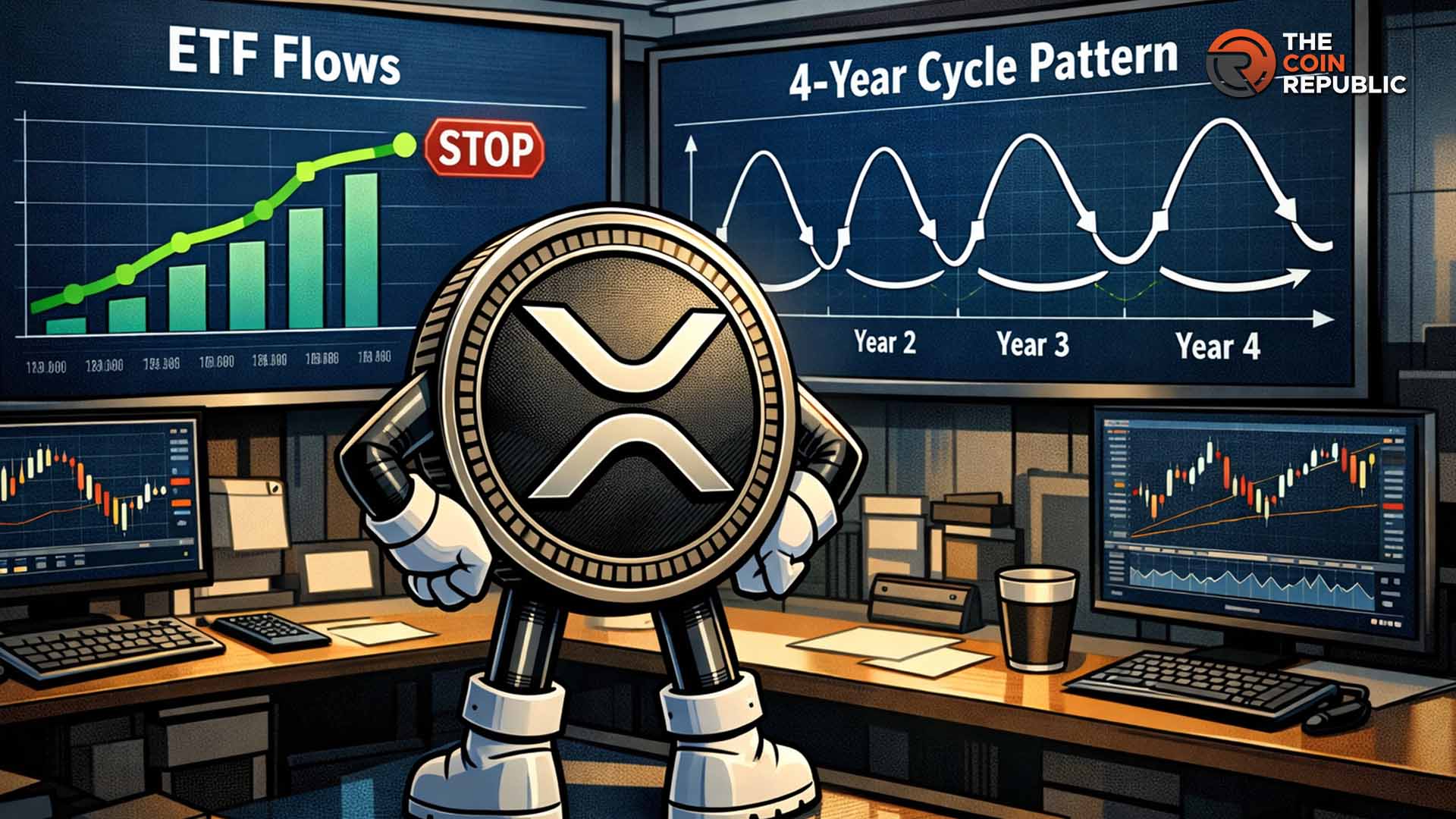
XRP ETFs experienced their first net outflows in seven days, totaling $6.15 million, signaling a potential shift in investor sentiment following a period of consistent inflows. Despite ETF outflows, large XRP holders (whales) have accumulated over 4.18 billion XRP since October 2025, increasing their total holdings to 19.61 billion XRP (32% of supply), indicating strong underlying conviction from major players. Analyst EGRAG Crypto highlights a 4-year cycle correlation for XRP, suggesting that while bullish long-term, traders should await a weekly close above $2.20 for confirmation before chasing pumps, implying a period of consolidation or choppiness.

Bitcoin's consolidation near $71K, coupled with decelerating long-term holder distribution, signals a potential exhaustion of profit-taking and sets the stage for a bullish breakout. The current market equilibrium, characterized by a shift from selling to accumulation and healthy price action, suggests that Bitcoin is building a strong foundation for an upward movement, with analysts targeting $80K in March. Institutional demand via spot ETFs continues to counterbalance retail sell-offs, providing a safety net for Bitcoin's price and indicating an approaching balance between supply and demand, which could drive prices higher.

Florida's Senate passage of SB 314 establishes a state-level regulatory framework for payment stablecoins, signaling a move towards clearer operational guidelines for issuers within the state. The bill's alignment with federal guidelines and clarification that certain stablecoins will not be classified as securities provides a more predictable environment for regulated stablecoin operations. This legislative development in Florida, alongside other state-level initiatives, contributes to a fragmented but evolving regulatory landscape for stablecoins in the US, potentially influencing broader adoption and integration.

Vitalik Buterin's 2026 roadmap emphasizes self-sovereignty and long-term resilience, pushing developers to build applications that function independently of developers or centralized infrastructure. The planned 'Glamsterdam' and 'Hegotá' protocol upgrades aim to enhance Ethereum's base layer scalability and reduce node bloat, potentially increasing transaction throughput and accessibility. The focus on 'sanctuary tech' and privacy as infrastructure signals a strategic shift away from speculative trends towards building resilient tools for real-world pressures, potentially impacting the narrative around Ethereum's utility. With ETH trading significantly below its ATH and facing competition, Buterin's directives for increased censorship resistance, resilience, and privacy infrastructure represent a core strategy to re-establish Ethereum's foundational strengths.
Signal context only. Validate with price action, liquidity, and risk limits before taking a position.
Quick market read from this story
A US federal court's approval of class action status in the Tether and Bitfinex lawsuit signifies a significant legal development that could lead to substantial market scrutiny.
The lawsuit's core claim that Tether (USDT) issuance was used to manipulate Bitcoin and Ethereum prices during the 2017 bull run, if proven, could have profound implications for stablecoin market integrity and investor confidence.
While the court's decision is procedural, it opens the door for evidence presentation, potentially impacting future regulations on stablecoin transparency and market practices.
Deep Dive
A U.S. federal court has granted class action status to a lawsuit against Tether and Bitfinex, allowing thousands of investors to proceed with claims that the companies manipulated Bitcoin and Ethereum prices during the 2017 crypto boom. The decision, made by U.S. District Court Judge Katherine Polk Failla, enables investors who bought cryptocurrencies directly in the spot market and those who used futures contracts to join the lawsuit collectively.
The lawsuit alleges that Tether (USDT) tokens were issued without adequate backing between 2017 and 2019. Investors claim these newly issued tokens were then used to purchase Bitcoin and Ethereum, artificially inflating their prices and creating a market bubble. This alleged manipulation is said to have caused significant losses for investors when the market subsequently corrected, with estimates suggesting billions of dollars in damages across the crypto market.
Both Tether and Bitfinex have vehemently denied these accusations, stating that the lawsuit is based on flawed assumptions about USDT issuance and trading dynamics.
With class action status approved, the case will now advance to the evidence presentation stage. The court is currently reviewing parts of the judge's sealed opinion, and legal teams for both sides are expected to submit their proposals by March 9. Any significant ruling in this case could potentially influence future regulations concerning stablecoin transparency and market practices.
Robert Kiyosaki's assertion that war drives silver demand, citing its use in rockets, suggests a potential bullish sentiment for silver as geopolitical tensions escalate. Despite recent volatility, silver's significant year-on-year surge and Kiyosaki's $200 price target highlight its perceived role as a safe-haven asset amidst global instability. While Kiyosaki links gold, silver, and Bitcoin as hedges against inflation from government spending on war, the article does not provide direct crypto market catalysts or price action.
