
200+ crypto news providers in one place.

CoinFeather
200+ crypto news providers in one place.
Quick market read from this story
Amazon stock fell over 3% after drone strikes damaged AWS data centers in the Middle East
AWS Middle East (UAE) and Bahrain regions experienced disruptions affecting power and causing water damage
AMZN stock rebounded from lows, suggesting market views disruption as potentially temporary
Key technical support levels identified at $200, with potential downside to $190-$195 if broken.
Deep Dive
Amazon's stock experienced a significant drop, falling to an intraday low of $203.46, after drone strikes impacted three of its data centers in the Middle East. This event raised immediate concerns regarding the reliability of Amazon Web Services (AWS) and the company's geopolitical exposure. Despite the sharp decline from its previous close of $210.00, the stock managed to recover, ending the trading day at $208.39, a decrease of 0.87%. This rebound suggests that market participants view the disruption as a temporary issue rather than a fundamental problem.
Amazon confirmed that drone strikes directly affected two facilities in the United Arab Emirates and caused structural damage to a nearby facility in Bahrain. These attacks disrupted the AWS Middle East (UAE) region (ME-CENTRAL-1) and the AWS Middle East (Bahrain) region (ME-SOUTH-1). The disruptions impacted power delivery and led to water damage from fire suppression efforts. Amazon has advised its customers to implement disaster recovery plans and consider migrating their workloads to alternative AWS regions due to the ongoing uncertainty.
From a technical standpoint, the $200 mark has emerged as a critical level for psychological and chart support. A sustained breach below this level could lead to further declines, potentially targeting the $190–$195 range, which previously served as a consolidation area. Conversely, a recovery above the $210-$215 range would indicate a resurgence of bullish sentiment, suggesting the market perceives the disruption as contained. A move beyond $220 would likely signal a return to the broader uptrend.
Fundamentally, analysts may adjust their short-term revenue forecasts for the AWS segment, a key contributor to Amazon's operating profit. However, if the outages are not prolonged or do not expand geographically, long-term projections are expected to remain largely unaffected. These forecasts are supported by the growing demand for AI infrastructure and ongoing enterprise cloud migration trends.
In the short term, market volatility is anticipated to continue, influenced by geopolitical developments. Over the longer term, investor confidence will likely depend on AWS's demonstrated resilience and the speed of its recovery, reinforcing the robustness of Amazon's global infrastructure.
Source, catalyst, and sector overlap from the latest feed.
S&P 500 and futures traded near flat after Tuesday's volatility driven by U.S.-Iran conflict. Geopolitical tensions and oil price swings are creating market uncertainty, impacting investor sentiment. Stronger than expected private job growth (63,000 vs 50,000 estimate) adds complexity to Fed rate cut expectations. Upcoming economic data and earnings reports will be key in balancing geopolitical risk with economic fundamentals.
Suzlon shares fell below ₹40, reaching a two-year low. The company announced a leadership restructuring with Ajay Kapur appointed as group CEO. Despite the price drop, multiple brokers maintain a 'Buy' rating with a target price of ₹60. The leadership overhaul aims to transition Suzlon into an integrated renewable energy solutions provider.
Ray Dalio warns Bitcoin cannot replace gold as a safe-haven. Gold gains amid market stress while Bitcoin drops 45% from recent highs.
Solana casinos are gaining popularity due to the network's fast transactions and low fees. Several crypto casinos are highlighted for supporting SOL deposits and withdrawals. Platforms offer diverse game libraries, crypto bonuses, and fast payouts for SOL players.
Ethereum Smart DCA indicator shows a surge, historically signaling accumulation phases. ETH price is forming higher lows and testing the $2.1K resistance level. Analyst charts indicate a consolidation structure with support near $1,800 and resistance around $2,100. Breakout above $2,100 is needed to shift short-term momentum.
Hackers are using the 'ClickFix' technique to steal crypto by impersonating VCs and hijacking browser extensions. The ClickFix attack bypasses security controls by having victims manually execute malicious commands. The QuickLens Chrome extension was compromised and used to push malware, affecting approximately 7,000 users. This attack vector has been observed since 2024 and targets multiple industries beyond crypto.
Crypto hacks and scams in February resulted in the lowest monthly losses since March 2025, totaling $26.5 million. This significant decrease is attributed to a lack of major exploits, heightened market volatility shifting focus away from protocol attacks, and potentially improved security measures and risk controls across platforms. While phishing remains a persistent threat, the overall trend indicates a cooling period in exploit activity.
This week's crypto news highlights a significant Uniswap phishing scam that cost a trader six figures after clicking a fake ad. Meanwhile, Engie is exploring Bitcoin mining for surplus solar power in Brazil, and Numo launched a tap-to-pay Bitcoin app via Cashu. Binance CEO Richard Teng refuted claims of facilitating $1.7 billion in crypto transfers to Iran, though regulatory scrutiny persists.
Cryptocurrency markets experienced a sharp sell-off following geopolitical news but rapidly recovered, driven by significant short liquidations. Bitcoin bounced back from lows near $63K to over $67K, with Ethereum and major altcoins also seeing strong gains. The total market cap surpassed $2.3 trillion, indicating a swift return of risk appetite despite ongoing regional instability.
An exposé by ZachXBT revealed alleged insider trading by Axiom employees who exploited internal tools to access private wallet data. This led to suspicious Polymarket bets with high odds predicting the outcome hours before the announcement, netting significant profits for some traders. The incident highlights significant data security and access control failures within a prominent crypto platform.
Standard Chartered hired Naveen Mallela, architect of JPMorgan's $5B/day blockchain payments platform. This move signals Standard Chartered's intent to build proprietary on-chain infrastructure rather than relying on third-party networks. The hiring highlights the intense competition for specialized blockchain talent among major financial institutions. Mallela previously led JPM Coin, processing over $5 billion daily, and the Kinexus platform.
Morgan Stanley updated its SEC filing for a Bitcoin Trust ETF. BNY Mellon named as administrator and cash custodian. Coinbase Custody to safeguard bitcoin holdings. Trust will hold physical bitcoin and track its value via CoinDesk Bitcoin Benchmark.
Market infrastructure operators DTCC, Euroclear, and Clearstream highlight interoperability as crucial for tokenized securities adoption. Lack of interoperability between DLT and traditional finance systems risks higher costs and fragmented liquidity. The industry needs agreed-upon standards for seamless asset movement across diverse blockchain and legacy systems. The goal is 'same asset, same rights, same outcome' across all platforms.
SpaceX valuation reaches $1.75 trillion driven by Starlink expansion and launch dominance. Routine Starlink satellite launches reinforce SpaceX's position in the space-internet market. Reusability of Falcon 9 boosters significantly reduces marginal launch costs. Risks include regulatory scrutiny, competition, and capital intensity for future Starship development.
Live Feed
Loading the broader stream in the same flow as the homepage feed.
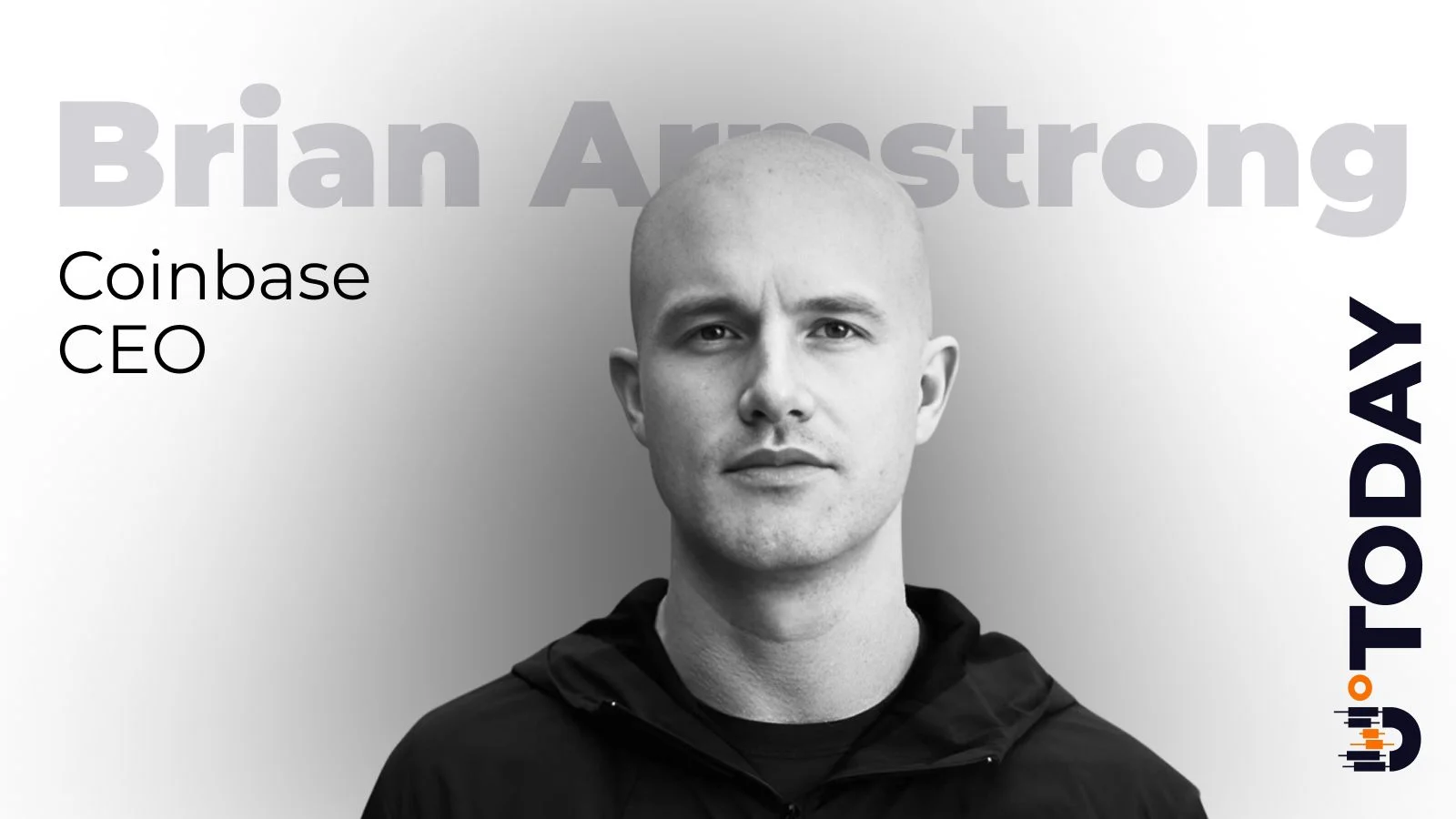
Coinbase CEO Brian Armstrong states crypto fundamentals are stronger than ever. Institutional adoption and sovereign demand for digital assets are increasing. Coinbase Premium gap indicates strong U.S. institutional buying of BTC at higher prices. Downturns are a natural return to the mean for scarce assets like Bitcoin.
Bitcoin price surged to near $71,370, up 6.35% in 24 hours. Rally driven by a short squeeze in derivatives markets, liquidating over $190 million in positions. Bitcoin dominance increased to 59.0%, indicating capital rotation from altcoins. Key support at $70,553; potential targets $71,886 and $72,000-$74,000 range.
The post How High Will Bitcoin Price Go This Week? appeared first on Coinpedia Fintech News Bitcoin climbed over the past 24 hours, raising a question across the market: how high can Bitcoin go this week? Bitcoin is currently trading near $71,370, up about 6.35% in the last 24 hours. The rally appears to be driven mainly by activity in derivatives markets, where a large number of bearish bets were suddenly …

UK House of Lords questioned Coinbase executive on stablecoin risks and financial stability. Coinbase argued regulated stablecoins are safer than uninsured bank deposits and can reduce payment costs. Concerns raised about stablecoins triggering bank deposit drains and facilitating illicit finance. UK risks falling behind US and EU in stablecoin innovation due to overly strict proposed regulations.

Cardano founder Charles Hoskinson criticizes the CLARITY Act as "horrific" and "trash." Hoskinson argues the bill could classify all digital assets as securities, harming new crypto projects. He disagrees with Ripple CEO Brad Garlinghouse's support for the bill, questioning the rush to pass it. The CLARITY Act could lead to increased SEC oversight and regulatory ambiguity for the crypto industry.

Former Binance global communications lead Brad Jaffe hired as CCO at KAST. KAST is a stablecoin firm focused on international entrepreneurs and digital asset users. KAST has made over 300 hires in the past year across engineering, product, and compliance.

Sui's native stablecoin USDsui has launched. Yield from USDsui's backing assets will be used to repurchase SUI tokens or deploy to DeFi protocols. This model contrasts with Tether and Circle, which retain yield externally. USDsui is issued by Bridge, a stablecoin firm acquired by Stripe.

Tether invested $50 million in sleep technology startup Eight Sleep. Eight Sleep will use the funding to develop new AI health features using Tether's QVAC architecture. This investment marks Tether's expansion beyond crypto into longevity and AI. Tether reported over $10 billion in net profits through 2025, channeling earnings into venture investments.

The South Korean stock market (KOSPI) closed near 5,094 after falling 12.06% in a single session today. The index had already fallen 7.24% the prior session, taking the two-day slide to roughly 18.4% on a compounded basis. South Korean equities did not fall alone, but the magnitude set Korea apart in a global risk-off window. […] The post Bitcoin surges past $71,000 during a record South Korean stock market crash of 18% this week appeared first on CryptoSlate.
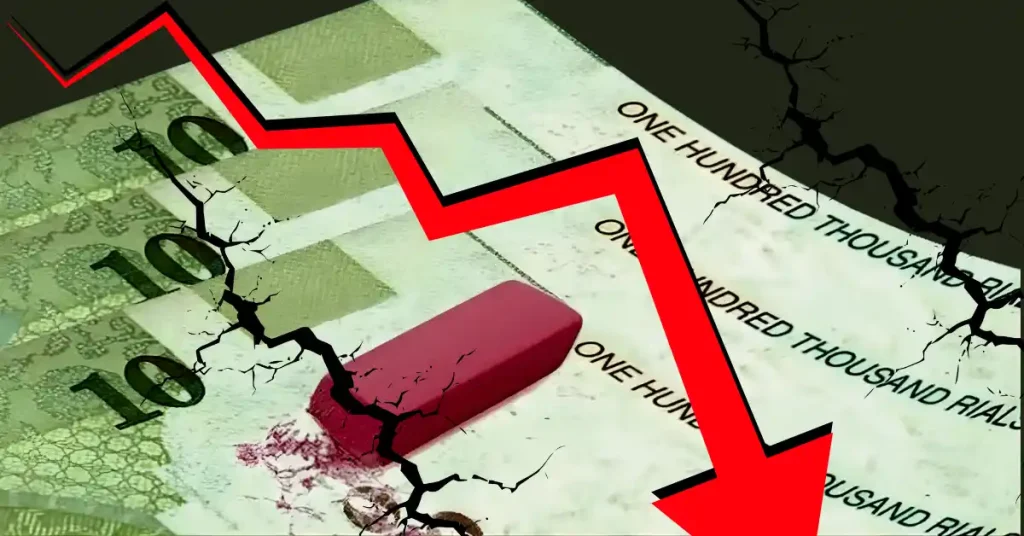
Iranian crypto market activity surged 873% above normal levels following regional airstrikes. Individuals and organizations are moving funds out of Iranian exchanges for safety and to bypass restrictions. High inflation and currency devaluation are driving Iranians to crypto as a financial hedge. The Iranian government utilizes crypto to mitigate economic pressure from international sanctions.

White House advisor Patrick Witt disputes JPMorgan CEO Jamie Dimon's claims on yield-bearing stablecoins. Witt argues stablecoin issuers under the GENIUS Act cannot lend reserves, unlike banks. The dispute is stalling the passage of the broader CLARITY Act for U.S. crypto regulation. Coinbase offers 3.5% yield on USDC, a rate traditional banks struggle to match.
CFTC Chair Mike Selig indicates U.S. perpetual futures are expected within the next month. This regulatory clarity could bring institutional capital back to the U.S. derivatives market. Onchain perps leader Hyperliquid faces both opportunity from increased demand and threat from regulated U.S. alternatives. Perpetual futures volume is expected to increase, with potential for both onchain and centralized venues to capture growth.
Dogecoin trading below $0.0932 and 100-hour SMA, indicating bearish short-term outlook. Bears control DOGE price action since losing the $0.10 level. Key resistance at $0.0920 and $0.0932 must be cleared for potential recovery. Breakdown below $0.0885 could accelerate losses towards $0.0850 and $0.0800.
Signal context only. Validate with price action, liquidity, and risk limits before taking a position.
