
Navigating Crypto News

CoinFeather
Navigating Crypto News
Quick market read from this story
Aldi's continued operation as a private entity, driven by family ownership and a long-term strategy, means direct investment opportunities via an IPO are not currently available.
The unique dual-entity structure of Aldi Nord and Aldi Süd presents significant complexities that would need to be resolved before any potential public listing could occur.
While Aldi itself is not publicly traded, investors can gain exposure to the competitive grocery retail sector by investing in publicly listed competitors affected by Aldi's pricing strategies.
Deep Dive
Aldi, the globally recognized discount grocery chain, is not publicly traded, meaning there is currently no Aldi stock price or ticker symbol available to investors. Despite its massive global presence and ongoing expansion, the company operates as a privately held entity, leading to frequent investor speculation about a potential initial public offering (IPO).
Founded in 1946 by brothers Karl and Theo Albrecht in Germany, Aldi (Albrecht Diskont) is known for its streamlined operations, offering high-quality products at low prices. The company operates over 13,000 stores worldwide, characterized by smaller store footprints, a limited product selection, and a strong emphasis on private-label brands. These efficiencies allow Aldi to maintain some of the lowest prices in the grocery industry.
Aldi has maintained its private status for several key reasons. Firstly, the Albrecht family and associated foundations retain long-term control, prioritizing strategic growth over the pressures of public shareholders and quarterly earnings reports. Secondly, the company's long-term business strategy, focused on efficiency and gradual expansion, is better served by private ownership, allowing management to concentrate on investments without short-term market reactions. Lastly, Aldi has demonstrated significant financial strength, growing through internal resources and maintaining high profitability, thus reducing the incentive to pursue an IPO for capital.
Adding complexity to a potential IPO is Aldi's unique corporate structure, which is divided into two independent entities: Aldi Nord (North) and Aldi Süd (South). Aldi Nord operates in parts of Europe and owns Trader Joe's in the US, while Aldi Süd manages stores in the United States, the UK, Australia, and other markets. These entities split in the 1960s and have operated separately since, meaning any public listing would likely require significant structural changes.
While occasional speculation about an Aldi IPO persists, analysts consider it unlikely in the near term due to the company's sustained profitability, family ownership, and management's preference for operational independence. There are currently no official plans for Aldi to list on a stock exchange. Investors interested in the grocery retail sector can gain exposure by investing in publicly traded competitors, including large supermarket chains, discount retailers, and consumer staples companies that often feel the competitive pressure of the "Aldi effect."
Source, catalyst, and sector overlap from the latest feed.
The Teucrium CEO's projection that Ripple could become a top-20 bank hinges on securing a national trust bank charter, a development that would significantly validate blockchain-based financial institutions. Ripple's substantial XRP holdings, estimated at 40 billion, could serve as a major balance sheet asset, potentially driving institutional valuation if the company achieves banking status. The potential integration of Ripple's blockchain infrastructure and XRP reserves into a regulated banking framework signifies a convergence of digital assets and traditional finance, impacting the broader financial sector.
Dogecoin price is showing signs of recovery from recent lows, with short liquidations indicating a potential shift in bearish sentiment. A breakout above the 50-day moving average near $0.10 could propel DOGE towards $0.12, a key level to watch for further upside potential. Speculation around X's upcoming payments feature integration with Dogecoin is a speculative catalyst, but its confirmation could significantly impact price action. Despite recent gains, Dogecoin remains within a broader trading range, suggesting that a decisive catalyst is needed to break out of its current consolidation.
The 63% surge in SHIB's burn rate, while notable, involves a small absolute volume of 4 million tokens, suggesting limited immediate price impact given the massive circulating supply. Shiba Inu's price is currently dictated more by broader altcoin market sentiment and a lack of retail enthusiasm for an 'altseason' than by token burn mechanics. Despite the recent price dip and weak altcoin sentiment, consistent token burns contribute to long-term supply reduction, which could support price stability if demand materializes.
Ethereum faces significant resistance at the $2.1K level, with a developing bear flag pattern suggesting a potential breakdown below the $1.8K support zone. The current consolidation pattern indicates a fragile market structure for Ethereum, where a break below the established support could lead to a more substantial price decline. Traders should monitor the $1.8K support level closely, as its defense is critical for maintaining bullish sentiment, while a breach could signal a shift towards lower price targets.
A significant crypto investor realized an 83% loss on a $508,000 SHIB position, highlighting the extreme volatility and risk associated with meme coin investments bought at market peaks. The investor's two-year holding period despite substantial unrealized losses suggests a potential belief in SHIB's recovery, which ultimately failed to materialize, underscoring the difficulty of timing speculative assets. This event serves as a cautionary tale for traders, demonstrating that even large positions can be wiped out by market downturns, particularly when entering at or near historical highs.
Live Feed
Loading the broader stream in the same flow as the homepage feed.

The TRUMP coin experienced a significant 53% price surge driven by the announcement of an upcoming Mar-a-Lago dinner event for top holders, mirroring past price action around similar events. Whale activity shows substantial bullish positioning in derivatives markets, with nearly $250 million in long positions opened, indicating anticipation of further price appreciation. While the event has historically preceded price rallies, the article notes a substantial cooling off post-event, suggesting potential for a retracement after the April 25th gala. The meme coin's price action is heavily influenced by speculative events tied to political figures, highlighting its nature as a sentiment-driven asset rather than one based on fundamental utility.
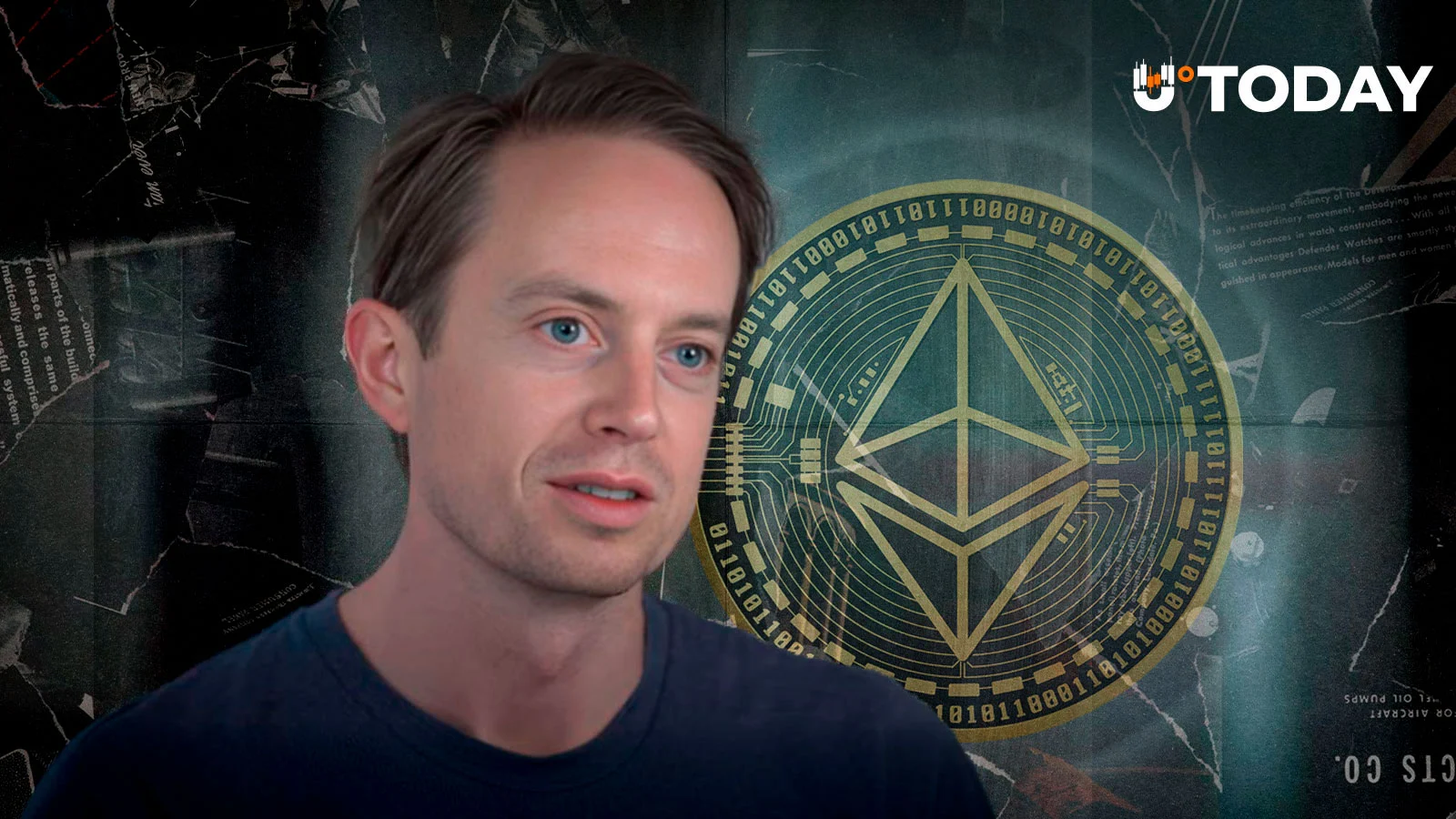
Erik Voorhees, a prominent early Bitcoin adopter, is aggressively accumulating Ethereum (ETH) with $49 million deployed, signaling a potential smart money rotation from Bitcoin or stablecoins into ETH. The significant capital inflow from high-profile investors like Voorhees, an early Ethereum builder, and Cumberland indicates strong conviction in ETH's near-term price appreciation, driving its current upward momentum. This concentrated buying activity, coupled with ETH clearing the $2,200 resistance, suggests a potential short-term bullish trend for Ethereum as market participants interpret these moves as a positive signal for demand.

The total crypto market cap surpassing $2.5 trillion, driven by Bitcoin's near-$74K price and Ethereum's outperformance, signals a broadening market recovery beyond just BTC. Ethereum's stronger weekly gains compared to Bitcoin suggest a potential shift in momentum, indicating increased investor interest in altcoins as the market expands. Despite the upward trend, sentiment indicators like the Fear & Greed Index at 41 and the Altcoin Season Index at 45 suggest a cautiously optimistic market, not yet in a full altcoin bull run. The sustained trading volume and the mention of continued BTC accumulation by entities like MicroStrategy indicate underlying strength and institutional interest supporting the current market rally.

The increasing competition for electricity between AI data centers and Bitcoin miners presents a potential threat to Bitcoin's network security and its store-of-value narrative, as AI offers significantly higher revenue per megawatt. Despite concerns over miners pivoting to AI, the Bitcoin network's inherent difficulty adjustment mechanism is expected to rebalance profitability, potentially driving out less efficient miners and making mining attractive again. The debate highlights a critical juncture for Bitcoin, where its price action in the near term will likely determine whether miners continue to exit the network due to AI competition or if profitability can be restored. While some see AI as a 'doomsday' scenario for Bitcoin, others argue that the network's design and the potential for AI to rely on Bitcoin infrastructure suggest a more symbiotic or self-correcting relationship.

The SEC's dismissal of the BitClout founder case, citing reassessment of evidence, signals a potential shift in regulatory approach, though the SEC cautions against broad interpretation. This development removes a significant legal overhang for Nader Al-Naji and the DeSo ecosystem, potentially improving sentiment and reducing uncertainty for related projects. While the case was dismissed with prejudice, the SEC's explicit statement that this outcome is case-specific limits its direct impact on other ongoing enforcement actions.

Bittensor's TAO experienced a significant 40% price surge, driven by rapid network expansion and the introduction of a new large decentralized language model, indicating strong market interest in its AI capabilities. The growth in active AI subnets to 128 and the training of a large language model on 1.1 trillion tokens suggest a fundamental expansion of Bittensor's ecosystem, potentially supporting sustained positive sentiment. Despite some profit-taking after the sharp rally, the combination of network growth and supply tightening suggests a constructive outlook for TAO, warranting a 'watchlist' approach for potential further upside.

Australian Senate committee backs proposed legislation to integrate crypto platforms into the financial services framework, signaling a move towards clearer regulatory oversight. The proposed Corporations Amendment (Digital Assets Framework) Bill 2025 aims to modernize digital asset oversight by applying traditional market safeguards and establishing a licensing system for digital token managers. Existing crypto exchanges in Australia already face registration requirements with AUSTRAC, indicating a progressive approach to crypto regulation in the country. This development suggests a growing trend of established jurisdictions implementing comprehensive regulatory frameworks for digital assets, potentially impacting market participant behavior and compliance strategies.

Bitcoin and Ethereum are showing resilience, trading at $73,910 and $2,265 respectively, indicating a potential stabilization before key macroeconomic events. Increased market activity is evident with a jump in global crypto market capitalization to over $2.5 trillion and a significant rise in 24-hour trading volume, suggesting renewed investor interest. Upcoming US economic data releases, including PPI and Fed interest rate decisions, are poised to introduce significant volatility, creating a cautious trading environment.

Short seller Culper Research's bearish thesis on Ethereum's tokenomics, citing impaired fee revenue post-Fusaka upgrade, introduces near-term headwinds and impacts sentiment. Despite negative sentiment from short sellers, the article highlights a presale for Pepeto, framing it as a potential opportunity for early entry before its upcoming listing. The narrative contrasts Ethereum's price pressures with the perceived value proposition of Pepeto's presale, suggesting a divergence in market focus for opportunistic traders. While Ethereum faces fundamental questions, the impending listing of Pepeto is presented as a distinct catalyst, potentially drawing capital away from established assets.

BlockFills' Chapter 11 filing signals significant financial distress within a major institutional crypto trading firm, potentially impacting liquidity and counterparty risk for its ~2,000 institutional clients. The bankruptcy proceedings, involving up to 5,000 creditors and over $119 million in top unsecured claims, highlight the fragility of some crypto market intermediaries and could lead to contagion fears. With $50 million to $1 billion in assets and $100 million to $500 million in liabilities, the scale of BlockFills' financial issues suggests a complex restructuring process that may take considerable time to resolve.
Bitcoin is exhibiting a recurring bull trap pattern near $71K, with a breakdown below $68K potentially targeting $62K, while a sustained move above $74K would invalidate this bearish structure. A negative Sharpe Ratio suggests deteriorating risk-adjusted returns, historically signaling periods of high danger for short-term traders but potential accumulation opportunities for long-term investors willing to endure drawdowns. The Long-Term Holder MVRV metric is approaching historical accumulation zones around 0.85, indicating that any further price dips could present significant buying opportunities for patient, conviction-driven investors. The confluence of technical patterns, risk metrics, and on-chain accumulation signals suggests the $68K-$74K range is a critical decision zone that will likely dictate Bitcoin's near-term trajectory.
Pi Network's release of its Pi Launchpad on Testnet, featuring experimental token launches and a utility-first model, signals a strategic move to test new tokenomics and reduce rug pull risks before Mainnet deployment. The launchpad's focus on working applications and directing launch proceeds towards liquidity, rather than project treasuries, represents a departure from typical Web3 token launches, potentially enhancing market stability and investor confidence. While the PI/USDT chart shows early recovery signs around $0.19-$0.20, the Testnet launch of the Launchpad is primarily an infrastructure development, with direct price impact contingent on Mainnet success and broader ecosystem adoption.
BlockFills' Chapter 11 bankruptcy filing, with liabilities significantly exceeding assets, signals a severe liquidity crisis and potential loss for unsecured creditors. The bankruptcy follows a lawsuit from Dominion Capital over commingled client funds and a freeze on 70.6 Bitcoin, indicating operational and legal distress impacting client assets. The company's cessation of deposits during Bitcoin price drops suggests a direct correlation between market volatility and its financial instability, highlighting counterparty risk in lending operations.
Bitcoin's surge past $74,000 is primarily driven by sustained inflows into spot ETFs, indicating renewed institutional interest and potential capital rotation from traditional assets like gold. While the price action is positive, the article notes Bitcoin is still significantly down from its all-time high, suggesting that the current rally may be a recovery phase rather than a definitive trend reversal. The market is observing whether Bitcoin can maintain its 'digital gold' narrative as it appears to be decoupling from traditional markets, with expert opinions divided on the sustainability of the current price floor.
![Bitcoin Price Today [LIVE] Updates, Why is Crypto Going Up? 16th March](/api/image-proxy?url=https%3A%2F%2Fimage.coinpedia.org%2Fwp-content%2Fuploads%2F2026%2F02%2F27172508%2FBitcoin-Price-Prediction-by-Wikipedia-Co-Founder-10000-or-Lower-for-BTC-1-1024x536.webp)
Bitcoin's rapid ascent to a 40-day high near $74,300, fueled by significant short liquidations, indicates strong short-term buying pressure that could sustain upward momentum. The continued inflows into Bitcoin and Ethereum spot ETFs, alongside Erik Voorhees' substantial ETH purchase, signal sustained institutional and high-net-worth interest, reinforcing bullish sentiment for major assets. Geopolitical tensions and rising oil prices are driving inflation concerns, potentially leading the Federal Reserve to maintain higher interest rates, which could temper broader market enthusiasm for risk assets like crypto. While Bitcoin approaches a key liquidity zone around $74,000, traders should monitor for potential pullbacks if this resistance is rejected, with support levels at $71,500 and $69,000–$69,500 being critical.

XRP has broken through a significant multi-month resistance at $1.426, indicating a potential shift in short-term momentum to the upside. The breakout occurred on increased volume, suggesting growing trader interest, with the next key levels to watch being support around $1.43-$1.44 and resistance near $1.50-$1.55. While lacking a specific XRP catalyst, the broader market's upward trend, led by Bitcoin, and increasing activity on the XRP Ledger, particularly in tokenized real-world assets, provide a supportive backdrop for this price action.

Bitcoin's break above $74,000, coupled with significant altcoin outperformance, signals a return of broader risk appetite driven by easing geopolitical tensions and a weaker dollar. The outperformance of Ether and Solana over Bitcoin suggests capital rotation into higher-risk altcoins, indicating genuine market recovery rather than just a Bitcoin-led rally. Upcoming Fed meeting on March 17-18 becomes critical, as the market will assess whether rate cut expectations can survive elevated oil prices and potential inflation shifts. The softening geopolitical stance around the Strait of Hormuz provides a favorable macro environment for risk assets, potentially unlocking liquidity chains that have constrained crypto.

Australian regulators are increasing scrutiny on financial influencers and AI platforms, highlighting risks for Gen Z investors in crypto and other markets. The ASIC's warning about 'finfluencers' and AI potentially leading to risky financial decisions, including scams, suggests a heightened regulatory environment for crypto marketing. With 23% of Australian Gen Z owning crypto and a significant portion influenced by social media, regulatory actions against misleading content could impact retail investor sentiment and trading behavior.
Signal context only. Validate with price action, liquidity, and risk limits before taking a position.
