
Navigating Crypto News

CoinFeather
Navigating Crypto News

Quick market read from this story
The SEC's dismissal of the BitClout founder case, citing reassessment of evidence, signals a potential shift in regulatory approach, though the SEC cautions against broad interpretation.
This development removes a significant legal overhang for Nader Al-Naji and the DeSo ecosystem, potentially improving sentiment and reducing uncertainty for related projects.
While the case was dismissed with prejudice, the SEC's explicit statement that this outcome is case-specific limits its direct impact on other ongoing enforcement actions.
Deep Dive
The U.S. Securities and Exchange Commission (SEC) has officially dropped its two-year-long case against Nader Al-Naji, the founder of the blockchain-based social media platform BitClout. The dismissal was filed in the US District Court for the Southern District of New York last Thursday, citing a "reassessment of the evidentiary record" as the basis for the decision.
Al-Naji, a former Google engineer and founder of the Basis protocol and DeSo blockchain, launched BitClout in March 2021. The SEC's July 2024 complaint had accused Al-Naji of raising over $257 million by selling BitClout's native token, BTCLT. Investors were allegedly told these funds would not be used for team salaries.
Further accusations included Al-Naji spending more than $7 million on personal expenses, such as rent for a Beverly Hills mansion and cash gifts to family. The SEC also alleged that Al-Naji misrepresented the platform as decentralized while controlling it behind the scenes.
As part of the settlement, Al-Naji has waived claims for reimbursement of legal fees. The SEC dismissed the case with prejudice, preventing the regulator from pursuing the same charges again against Al-Naji or related relief defendants. Separately, the Department of Justice also ended a wire fraud case against Al-Naji in February 2025 without prejudice, which Al-Naji stated was due to the government's case not holding up under scrutiny.
The SEC cautioned that this dismissal is specific to the particular facts and circumstances of this case and does not set a precedent for other similar enforcement actions. This move aligns with a broader trend under the current administration where the SEC has been dismissing a growing number of enforcement actions against crypto firms.
Source, catalyst, and sector overlap from the latest feed.
Australia's Senate committee backing the Corporations Amendment (Digital Assets Framework) Bill 2025 signals a significant step towards a comprehensive regulatory framework for crypto exchanges and tokenization platforms. The proposed licensing regime, which aims to align digital asset platforms with existing financial services laws, is a direct response to past failures like FTX, indicating a focus on investor protection and market stability. While industry groups like Coinbase welcome the progress, concerns remain regarding the precise definitions of 'digital token' and 'factual control,' potentially impacting infrastructure providers and necessitating further regulatory refinement. The bill's progression to a Senate vote suggests a growing global trend of established jurisdictions implementing clearer rules for the digital asset sector, which could foster institutional adoption but also increase compliance burdens for businesses.
The increasing competition for electricity between AI data centers and Bitcoin miners presents a potential threat to Bitcoin's network security and its store-of-value narrative, as AI offers significantly higher revenue per megawatt. Despite concerns over miners pivoting to AI, the Bitcoin network's inherent difficulty adjustment mechanism is expected to rebalance profitability, potentially driving out less efficient miners and making mining attractive again. The debate highlights a critical juncture for Bitcoin, where its price action in the near term will likely determine whether miners continue to exit the network due to AI competition or if profitability can be restored. While some see AI as a 'doomsday' scenario for Bitcoin, others argue that the network's design and the potential for AI to rely on Bitcoin infrastructure suggest a more symbiotic or self-correcting relationship.
Australian regulators are increasing scrutiny on financial influencers and AI platforms, highlighting risks for Gen Z investors in crypto and other markets. The ASIC's warning about 'finfluencers' and AI potentially leading to risky financial decisions, including scams, suggests a heightened regulatory environment for crypto marketing. With 23% of Australian Gen Z owning crypto and a significant portion influenced by social media, regulatory actions against misleading content could impact retail investor sentiment and trading behavior.
The implementation of a 180-day token lock-up for governance participation in WLFI signals a move towards prioritizing long-term holders, potentially reducing short-term speculative trading pressure. The introduction of a 2% APY incentive for staking and voting aims to encourage deeper engagement and commitment from WLFI token holders, addressing common DAO participation issues. WLFI's broader ambitions to build a crypto-enabled financial ecosystem centered around its stablecoin USD1, alongside seeking a bank charter, indicate a strategic push into regulated financial services and RWA tokenization.
A US ban on stablecoin yields could lead other jurisdictions to adopt more favorable policies, potentially shifting capital flows and innovation offshore. The ongoing debate in the US Senate over crypto regulation, specifically regarding stablecoin yields, highlights a critical juncture for the sector's integration into traditional finance. While US institutions are reportedly decoupling from crypto, Asian financial heavyweights are increasingly focused on blockchain applications like tokenization and stablecoin issuance, signaling a divergence in regional adoption strategies. The potential for other countries to offer stablecoin yields if the US enacts a ban suggests a competitive landscape where regulatory arbitrage could drive market development.
World Liberty Financial's introduction of 'Super Nodes' requiring a $5 million WLFI token lockup directly contradicts its 'democratized finance' branding, creating a pay-to-play hierarchy that prioritizes capital-heavy participants. The project's move to monetize direct access to its business development and compliance teams for 'Super Node' holders, while simultaneously seeking a national trust bank charter, raises concerns about regulatory capture and the appearance of impropriety, especially given its political ties. This development signals a potential shift in crypto governance models, where influence and access are increasingly tied to capital commitment and lockup duration, potentially normalizing a 'lobbying budget' or 'private membership card' function for tokens. The explicit pricing of access and prioritization for partnership discussions, coupled with the pursuit of a federal banking license, positions WLFI as a politically branded stablecoin platform where 'business development fees' may become a standard component of accessing services.
Australian Senate committee backs a bill to integrate crypto platforms and custody providers into the existing financial services system, signaling a move towards clearer regulatory oversight. The proposed legislation focuses on licensing and compliance for firms managing digital assets, aiming to enhance investor protection by aligning crypto services with traditional market standards. While the bill has committee support, it has not yet become law, meaning affected crypto firms will have a six-month grace period to comply once enacted, providing a window for adaptation. This regulatory development could offer greater certainty for exchanges, custody firms, and investors in Australia by establishing a more defined market conduct and licensing regime.
The Teucrium CEO's projection that Ripple could become a top-20 bank hinges on securing a national trust bank charter, a development that would significantly validate blockchain-based financial institutions. Ripple's substantial XRP holdings, estimated at 40 billion, could serve as a major balance sheet asset, potentially driving institutional valuation if the company achieves banking status. The potential integration of Ripple's blockchain infrastructure and XRP reserves into a regulated banking framework signifies a convergence of digital assets and traditional finance, impacting the broader financial sector.
Australian Senate committee backs proposed legislation to integrate crypto platforms into the financial services framework, signaling a move towards clearer regulatory oversight. The proposed Corporations Amendment (Digital Assets Framework) Bill 2025 aims to modernize digital asset oversight by applying traditional market safeguards and establishing a licensing system for digital token managers. Existing crypto exchanges in Australia already face registration requirements with AUSTRAC, indicating a progressive approach to crypto regulation in the country. This development suggests a growing trend of established jurisdictions implementing comprehensive regulatory frameworks for digital assets, potentially impacting market participant behavior and compliance strategies.
Bitcoin demand dynamics are showing signs of shifting, with institutional inflows and whale activity testing previous suppression levels. Despite positive ETF flows totaling $586.1 million, a portion of whale activity showed mixed signals, indicating caution amidst potential market risks. While some analysts suggest Bitcoin may be on the verge of a breakout, others warn of potential downside and volatility due to structural bottoms not yet forming and external macro risks like private credit crises. The market is closely watching Bitcoin's demand trends against the backdrop of potential spillover from private credit issues, which could impact large holders like BlackRock.
The upcoming week features rate decisions from seven central banks, including the U.S. Federal Reserve, which could introduce volatility to risk assets like Bitcoin if hawkish inflation concerns emerge. Despite potential inflation-driven tightening of financial conditions, historical precedent suggests that geopolitical tensions, which are currently a dominant market factor, tend to fade, potentially creating buying opportunities for Bitcoin. Several token unlocks are scheduled, notably Arbitrum (ARB) and LayerZero (ZRO), which could increase circulating supply and potentially pressure prices if not absorbed by market demand. The week includes significant token generation events and listings, such as Backpack (BP) and Katana (KAT) on Binance, which could drive short-term trading interest and price action for these specific assets.
Erik Voorhees, a prominent early Bitcoin adopter, is aggressively accumulating Ethereum (ETH) with $49 million deployed, signaling a potential smart money rotation from Bitcoin or stablecoins into ETH. The significant capital inflow from high-profile investors like Voorhees, an early Ethereum builder, and Cumberland indicates strong conviction in ETH's near-term price appreciation, driving its current upward momentum. This concentrated buying activity, coupled with ETH clearing the $2,200 resistance, suggests a potential short-term bullish trend for Ethereum as market participants interpret these moves as a positive signal for demand.
Bitcoin's rapid $1,800 surge in 30 minutes triggered a significant short squeeze, liquidating over $113 million and adding substantial buying pressure to the market. The price action suggests a potential shift in market sentiment, with Bitcoin outperforming traditional assets like gold and silver during periods of geopolitical tension, reinforcing its diversification narrative. Strong institutional demand, evidenced by consistent inflows into Bitcoin spot ETFs and significant capital rotation from traditional markets, provides a fundamental underpinning for the current rally. Analysts are observing bullish macro confluence and historical patterns suggesting a potential relief rally, with key price levels indicating further upside if momentum is sustained.
Ripple's $750 million buyback at a $50 billion valuation validates the exchange model's revenue-generating potential, providing a confidence boost for XRP and highlighting the perceived value gap in early-stage exchange projects like Pepeto. The article positions Pepeto as a high-potential investment opportunity due to its low presale price, a former Binance expert on its development team, and significant early funding, drawing parallels to BNB's historical growth from its presale phase. Despite the positive narrative around Ripple and XRP, the core focus shifts to Pepeto's presale, suggesting a potential near-term catalyst for Pepeto upon its exchange listing, which is framed as the moment its valuation is expected to reprice.
Live Feed
Loading the broader stream in the same flow as the homepage feed.
JPMorgan's acceptance of Bitcoin and Ethereum as loan collateral signifies a major institutional embrace of digital assets, potentially unlocking significant liquidity for holders and increasing demand. This development by a leading financial institution suggests a growing convergence between traditional finance and the crypto market, potentially paving the way for broader adoption by other major banks. While currently limited to select trading desks, the move by JP Morgan to accept BTC and ETH as collateral could encourage investors to maintain long-term exposure while leveraging their holdings for short-term financing needs.
UniCredit's formal takeover offer for Commerzbank, valuing shares at a modest premium, signals a significant push for European banking consolidation. The market reaction shows a divergence, with Commerzbank shares rising on takeover speculation while UniCredit shares dipped due to investor caution over integration costs and regulatory hurdles. This potential merger represents a test case for cross-border banking consolidation in Europe, highlighting the challenges and potential benefits of creating larger, more competitive financial institutions. While the deal faces opposition from Commerzbank's management and government, UniCredit aims to increase its stake beyond 30% to gain influence, with a formal offer expected in early May.
Huawei remains a privately held, employee-owned company, meaning there is no publicly traded stock or ticker symbol available for investors. Despite persistent speculation, Huawei has not announced any concrete plans for an IPO, citing strategic independence and potential geopolitical complexities as reasons for remaining private. Investors interested in Huawei's market segments can explore competitors in telecom infrastructure and supply chain companies, as direct investment is not possible. The company's significant influence in global telecommunications, smartphones, and AI means any future IPO would be a major market event, though currently speculative.

Dogecoin's 11% weekly rally, outperforming the broader market, suggests renewed investor interest driven by short liquidations and increased whale accumulation. The price action has erased a zero from DOGE's valuation, with a key resistance at $0.105 poised to determine if the upward momentum can extend towards $0.110-$0.120. Surging trading volume and derivatives activity confirm a bullish trend, indicating potential for continued upside if market conditions remain favorable.
The traditional 'altcoin season' is structurally dead, replaced by rapid, short-lived sector rotations driven by institutional capital flows into BTC and ETH ETFs. Institutional capital anchored to BTC and ETH ETFs is starving mid-cap altcoins of liquidity, fundamentally altering market dynamics away from broad-based rallies. DWF Labs anticipates new ATHs for major assets in H1 2026, but warns that only projects with tangible utility and RWA or infrastructure focus will survive the shift. The CMC Altcoin Season Index remains in 'Bitcoin Season' territory (45/100), indicating a market structure that favors dominant assets over speculative altcoin plays.
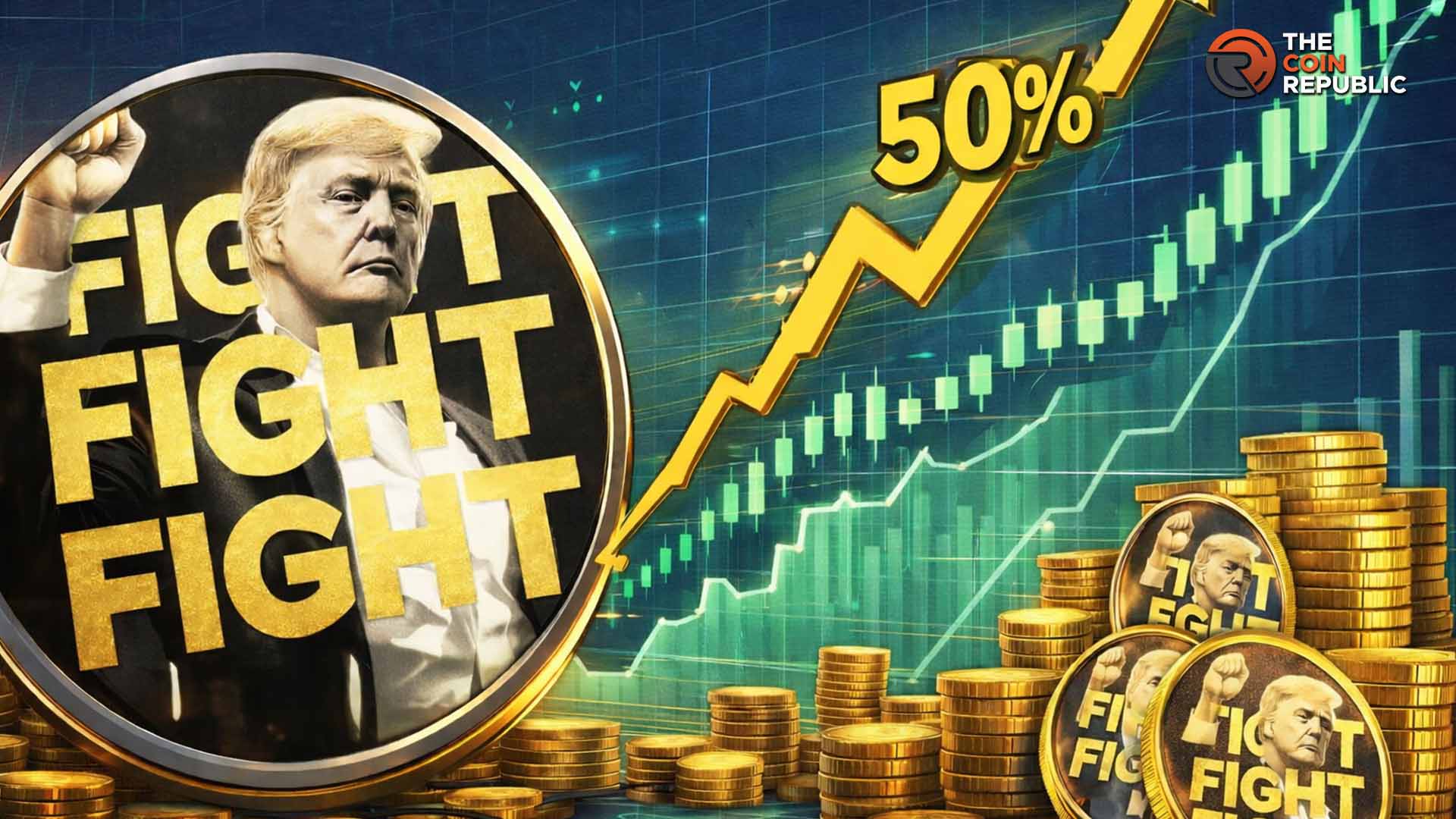
The TRUMP coin experienced a significant 53% price surge driven by the announcement of an upcoming Mar-a-Lago dinner event for top holders, mirroring past price action around similar events. Whale activity shows substantial bullish positioning in derivatives markets, with nearly $250 million in long positions opened, indicating anticipation of further price appreciation. While the event has historically preceded price rallies, the article notes a substantial cooling off post-event, suggesting potential for a retracement after the April 25th gala. The meme coin's price action is heavily influenced by speculative events tied to political figures, highlighting its nature as a sentiment-driven asset rather than one based on fundamental utility.

TradeEU Global positions itself as a regulated CFD broker offering leveraged trading on a diverse range of assets including forex, indices, commodities, shares, and cryptocurrency CFDs. The platform is designed for retail traders, emphasizing a web-based interface with tools for technical analysis, suitable for day and swing traders. While the article mentions cryptocurrency CFDs, specific digital assets are not detailed, suggesting potential but unconfirmed crypto exposure. The review highlights that TradeEU Global operates within a regulated framework, which includes client fund segregation and KYC procedures, but stresses that regulation does not eliminate market risk inherent in leveraged trading.
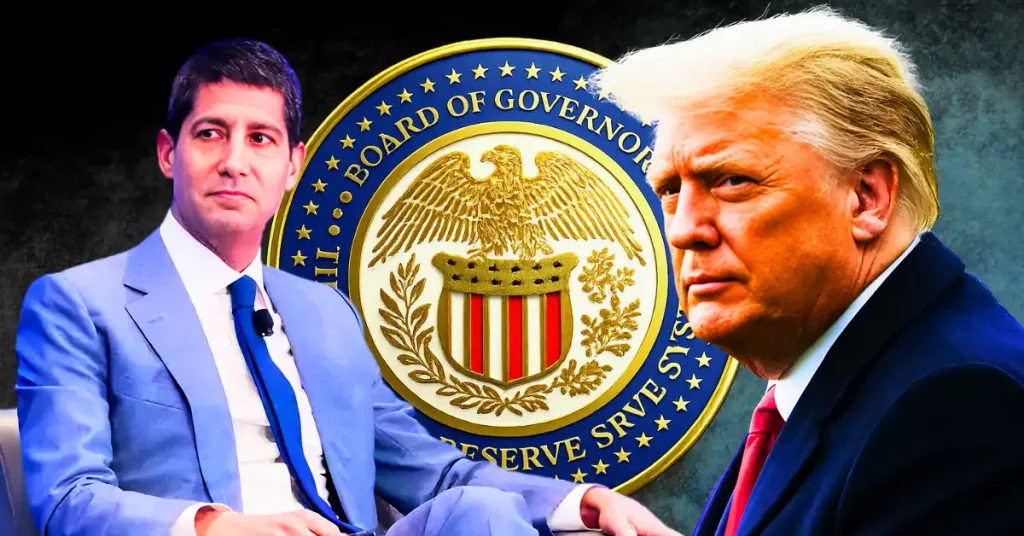
The Federal Reserve's upcoming interest rate decision is widely expected to be a hold, with market focus shifting to forward guidance on potential rate cuts. Divergent forecasts from major financial institutions on future rate cuts highlight significant economic uncertainty, creating a mixed outlook for risk assets like Bitcoin. Crypto markets historically exhibit a 'sell-the-news' reaction post-FOMC meetings, often followed by a rebound within 48 hours, presenting potential trading opportunities. The Fed's signaling regarding rate cuts directly correlates with Bitcoin's price outlook, with a hawkish stance potentially pushing BTC towards $65,000 and dovish signals aiming for above $75,000.
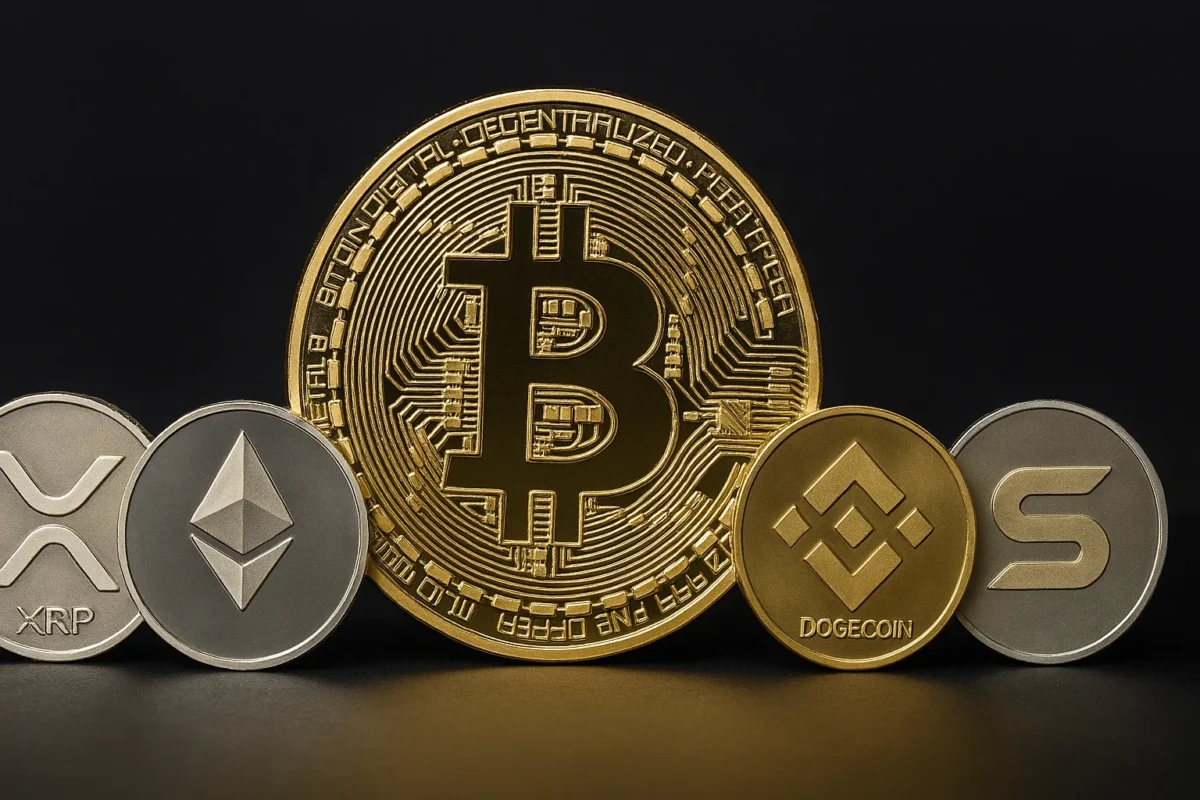
The total crypto market cap surpassing $2.5 trillion, driven by Bitcoin's near-$74K price and Ethereum's outperformance, signals a broadening market recovery beyond just BTC. Ethereum's stronger weekly gains compared to Bitcoin suggest a potential shift in momentum, indicating increased investor interest in altcoins as the market expands. Despite the upward trend, sentiment indicators like the Fear & Greed Index at 41 and the Altcoin Season Index at 45 suggest a cautiously optimistic market, not yet in a full altcoin bull run. The sustained trading volume and the mention of continued BTC accumulation by entities like MicroStrategy indicate underlying strength and institutional interest supporting the current market rally.
Signal context only. Validate with price action, liquidity, and risk limits before taking a position.
