
Navigating Crypto News

CoinFeather
Navigating Crypto News

Quick market read from this story
Ripple's $750 million buyback at a $50 billion valuation validates the exchange model's revenue-generating potential, providing a confidence boost for XRP and highlighting the perceived value gap in early-stage exchange projects like Pepeto.
The article positions Pepeto as a high-potential investment opportunity due to its low presale price, a former Binance expert on its development team, and significant early funding, drawing parallels to BNB's historical growth from its presale phase.
Despite the positive narrative around Ripple and XRP, the core focus shifts to Pepeto's presale, suggesting a potential near-term catalyst for Pepeto upon its exchange listing, which is framed as the moment its valuation is expected to reprice.
Deep Dive
Ripple has launched a $750 million share buyback at a $50 billion valuation, marking a 25% increase from its November valuation. This significant move underscores the substantial value and revenue-generating potential of the exchange model, even in a challenging market. The confidence generated by Ripple's buyback is expected to positively influence the XRP price prediction.
The article highlights a new exchange project, Pepeto, which is being built at a presale price of $0.000000186. This low entry cost, contrasted with Ripple's $50 billion valuation, presents a significant opportunity for investors. A former Binance expert is part of the development team, drawing parallels to Binance's growth from a presale to a leading global exchange.
Pepeto aims to offer zero-cost trading, allowing users to retain trading fees. Additionally, it includes a risk scorer that audits contracts in seconds, helping traders avoid potential pitfalls. Over $8 million has already been invested in the Pepeto presale, driven by the mathematical advantage of its low entry price compared to established exchange valuations.
The XRP price is currently trading around $1.41, with a near-term target of $1.45 and potential to reach $2.00. Whale addresses holding between 10 to 100 million XRP have maintained a consistent stake of 16% to 17% since December. Spot XRP ETFs have seen cumulative inflows of $1.26 billion.
The article draws a parallel between early BNB investors, who saw substantial returns as Binance grew, and potential investors in Pepeto. It suggests that early entry into promising exchange models, like Pepeto at its presale price, offers a unique opportunity for wealth creation, similar to how BNB's value surged from its presale stage.
The narrative emphasizes that significant wealth is often built by identifying and investing in promising projects before they gain mainstream attention. Investors who recognize the potential of platforms like Pepeto, especially with experienced team members and substantial early funding, are positioned to benefit from future growth. The article encourages potential investors to consider the Pepeto presale before its official listing, highlighting the current gap between its entry cost and projected exchange valuation.
Source, catalyst, and sector overlap from the latest feed.
Australian Senate committee backs a bill to integrate crypto platforms and custody providers into the existing financial services system, signaling a move towards clearer regulatory oversight. The proposed legislation focuses on licensing and compliance for firms managing digital assets, aiming to enhance investor protection by aligning crypto services with traditional market standards. While the bill has committee support, it has not yet become law, meaning affected crypto firms will have a six-month grace period to comply once enacted, providing a window for adaptation. This regulatory development could offer greater certainty for exchanges, custody firms, and investors in Australia by establishing a more defined market conduct and licensing regime.
TradeEU Global positions itself as a regulated CFD broker offering leveraged trading on a diverse range of assets including forex, indices, commodities, shares, and cryptocurrency CFDs. The platform is designed for retail traders, emphasizing a web-based interface with tools for technical analysis, suitable for day and swing traders. While the article mentions cryptocurrency CFDs, specific digital assets are not detailed, suggesting potential but unconfirmed crypto exposure. The review highlights that TradeEU Global operates within a regulated framework, which includes client fund segregation and KYC procedures, but stresses that regulation does not eliminate market risk inherent in leveraged trading.
Bitcoin's rapid $1,800 surge in 30 minutes triggered a significant short squeeze, liquidating over $113 million and adding substantial buying pressure to the market. The price action suggests a potential shift in market sentiment, with Bitcoin outperforming traditional assets like gold and silver during periods of geopolitical tension, reinforcing its diversification narrative. Strong institutional demand, evidenced by consistent inflows into Bitcoin spot ETFs and significant capital rotation from traditional markets, provides a fundamental underpinning for the current rally. Analysts are observing bullish macro confluence and historical patterns suggesting a potential relief rally, with key price levels indicating further upside if momentum is sustained.
The Federal Reserve's upcoming interest rate decision is widely expected to be a hold, with market focus shifting to forward guidance on potential rate cuts. Divergent forecasts from major financial institutions on future rate cuts highlight significant economic uncertainty, creating a mixed outlook for risk assets like Bitcoin. Crypto markets historically exhibit a 'sell-the-news' reaction post-FOMC meetings, often followed by a rebound within 48 hours, presenting potential trading opportunities. The Fed's signaling regarding rate cuts directly correlates with Bitcoin's price outlook, with a hawkish stance potentially pushing BTC towards $65,000 and dovish signals aiming for above $75,000.
Bittensor's TAO experienced a significant 40% price surge, driven by rapid network expansion and the introduction of a new large decentralized language model, indicating strong market interest in its AI capabilities. The growth in active AI subnets to 128 and the training of a large language model on 1.1 trillion tokens suggest a fundamental expansion of Bittensor's ecosystem, potentially supporting sustained positive sentiment. Despite some profit-taking after the sharp rally, the combination of network growth and supply tightening suggests a constructive outlook for TAO, warranting a 'watchlist' approach for potential further upside.
MicroStrategy's continued aggressive Bitcoin accumulation, adding $1.28 billion in BTC, signals strong conviction in the asset's long-term value and potentially influences institutional adoption trends. Ripple's partnership with Mastercard to facilitate CBDC usage, alongside other major players, indicates a strategic move towards integrating blockchain technology into traditional payment systems, potentially boosting XRP's utility narrative. The Bollinger Bands squeeze on XRP suggests an impending price volatility event, with increased trading volume hinting at potential accumulation ahead of a significant move, warranting trader attention. SBI Holdings' expansion of its XRP rewards program to include more subsidiaries demonstrates ongoing commitment to integrating XRP into its financial services, reinforcing its ecosystem and potential demand.
Polymarket and Kalshi are reportedly seeking valuations around $20 billion, indicating strong investor confidence in prediction markets as a data and transaction layer, despite looming regulatory scrutiny. The Iran-related trading activity has intensified regulatory focus, with lawmakers drafting legislation and the CFTC moving towards new rulemaking, creating significant uncertainty for the future operational scope of prediction markets. Major media partnerships with Dow Jones and CNBC signal a push for mainstream integration of prediction market data, potentially transforming them into a core component of financial news and analysis, but also increasing the stakes for market integrity. A lawsuit against Kalshi over disputed payouts highlights inherent trust and fairness challenges within prediction markets, particularly when dealing with sensitive geopolitical events, which could impact user adoption and regulatory approaches.
The VanEck CEO's assertion of a Bitcoin bottom, coupled with institutional buying, suggests a potential market recovery that could indirectly benefit Solana (SOL) by improving overall sentiment. Pepeto's exchange token presale is highlighted as a potentially higher-return opportunity compared to SOL, driven by its presale pricing and the projected impact of its zero-fee, cross-chain swap functionality. The article emphasizes that early entry into presale tokens like Pepeto, before their exchange listing, is presented as the primary driver of significant wealth creation in crypto, contrasting it with the more capped upside potential of established large-cap assets like SOL. Pepeto's value proposition includes a built-in risk scorer and a former Binance expert on the dev team, aiming to differentiate it from other projects and attract capital seeking high multiples post-listing.
While Cardano's ADA price prediction shows a bullish outlook with targets around $0.40, whale wallets are reportedly prioritizing presale tokens like Pepeto, anticipating significantly higher returns from its upcoming listing. The surge in USDC transaction volume surpassing Tether indicates growing on-chain activity, positioning infrastructure tokens like Pepeto, which offer zero-fee swaps and integrated risk scoring, to potentially capture substantial value. The article highlights a contrast between the moderate recovery potential of ADA and the perceived exponential growth opportunities in presale projects like Pepeto, driven by its founder's past success and a focus on exchange infrastructure development. With Pepeto's presale offering a 199% APY on staking and a strong audit, the narrative suggests smart money is accumulating before its listing, implying a potential for significant price appreciation driven by demand for its integrated trading and security tools.
XRP's breakout above $1.39 with significant volume surge signals a bullish shift, potentially opening a path towards $1.61 and $3, aligning with broader market strength driven by ETF inflows and Bitcoin's rally. While XRP shows bullish momentum, the article highlights a presale project, Pepeto, which is building exchange infrastructure and offers revenue sharing and high APY staking, suggesting potentially higher multiples compared to XRP's projected gains. The comparison between XRP's price prediction and Pepeto's presale emphasizes the potential for outsized returns from early-stage infrastructure projects during bull markets, contrasting with the more modest gains expected from established assets like XRP. The article frames Pepeto's presale as a high-conviction entry point, drawing parallels to early BNB investments, and suggests that the upcoming listing will permanently remove the current presale pricing, creating a time-sensitive opportunity.
ARK Invest's report quantifies ~35% of Bitcoin supply as theoretically vulnerable to quantum attacks, shifting the discussion from abstract risk to concrete exposure. While the threat is long-term (mid-2030s earliest), the proposed BIP-360 upgrade highlights Bitcoin's slow governance process, suggesting a potential lag in addressing quantum risks compared to other blockchains. Developer Matt Corallo argues that capital rotation into AI, not quantum fear, is the primary driver of recent Bitcoin price weakness, suggesting market participants may be misattributing macro trends. The debate over quantum risk is splitting into three camps: those who believe it will ultimately strengthen Bitcoin, skeptics who see potential capital rotation to Ethereum, and those who view it as a broader civilizational threat.
Bitcoin's potential breakout above $74,000 could propel it towards $80,000, signaling continued bullish momentum if resistance is overcome. The surge in altcoins, particularly memecoins like PEPE and BONK, indicates a heightened risk appetite within the market, though overbought RSI suggests a potential short-term pullback. Increased open interest in ETH and ADA futures points to strong investor conviction in smart contract platforms, driving demand for leveraged bullish positions. Despite the overall market optimism, the persistent premium on Bitcoin and Ether puts suggests ongoing demand for downside protection, hinting at cautious sentiment among some traders.
Bernstein's analysis suggests that sustained ETF inflows and corporate treasury accumulation are fundamentally altering Bitcoin's ownership structure, shifting it towards a more resilient long-term holder base. The increasing proportion of Bitcoin supply held by long-term holders and ETFs may reduce the impact of short-term sell pressure, potentially leading to a more stable market during periods of geopolitical stress. Despite geopolitical tensions, Bitcoin's outperformance relative to gold and major equity indexes highlights its perceived role as a portable, digital asset with no counterparty risk, reinforcing its appeal to institutional capital.
Bitcoin's recent price action shows bulls reclaiming key technical levels like the 200-week EMA and 50-day SMA, but significant seller resistance remains around $75,000, suggesting a potential short-term consolidation or pullback. Despite the short-term price recovery, the lingering 'death cross' on the weekly chart and ongoing macro uncertainties (Fed rates, inflation, geopolitical tensions) maintain a cautious outlook, with potential downside targets near $58,900 if support fails. Onchain data indicates increasing bullish signals, including reduced exchange inflows and consistent ETF demand, alongside a significant USDT mint, suggesting growing liquidity and potentially easing selling pressure. The comparative weakness of gold as a safe-haven asset, despite geopolitical tensions, coupled with bullish RSI divergence on the BTC/XAU pair, hints at a potential capital rotation from gold into Bitcoin.
Solana is exhibiting conflicting technical patterns, with a bearish head and shoulders formation suggesting a potential breakdown below neckline support around the mid-$80s. Simultaneously, an ascending structure with higher lows indicates building buying pressure, keeping a breakout above the upper $90s resistance towards the $100 psychological level in play. Traders should monitor the interplay between the head and shoulders neckline and the ascending support trendline, as a decisive break in either direction will likely dictate near-term price action.
Live Feed
Loading the broader stream in the same flow as the homepage feed.
IDBI Bank shares dropped sharply after reports the Indian government may scrap the planned majority stake sale following bids below the reserve price.

Significant outflows of 45 billion SHIB from exchanges suggest a shift towards holding, potentially reducing immediate sell pressure and signaling increased investor confidence. Despite recent outflows, substantial exchange reserves of 80.8 trillion SHIB indicate that the overall supply available for trading remains high, limiting the immediate bullish impact of the current trend. Shiba Inu is attempting to break short-term resistance at the 26-day EMA, with a successful breach potentially leading to a test of the 50-day EMA, a key indicator for a broader trend reversal.
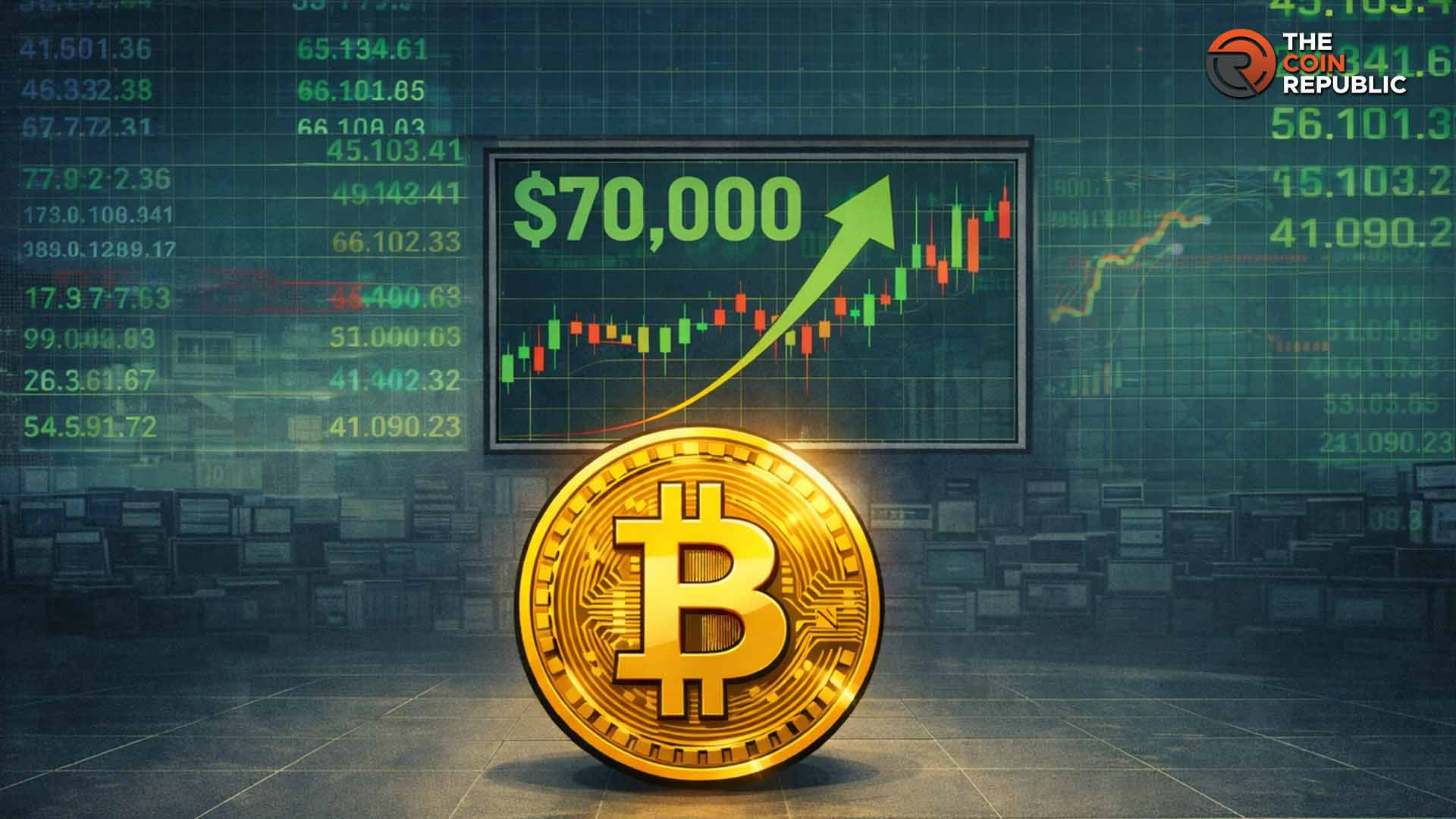
Bitcoin's recent price surge above $73,000 is primarily driven by macroeconomic factors like weak U.S. growth data and geopolitical tensions, positioning it as a scarce asset amidst increasing global uncertainty. While spot Bitcoin ETF inflows suggest institutional demand, on-chain metrics indicate weakening short-term demand, signaling a potential divergence in market sentiment and a fragile rally. The persistent high correlation between Bitcoin and the Nasdaq 100 suggests that broader equity market sentiment, influenced by factors like rising oil prices, continues to significantly impact Bitcoin's price action, challenging its narrative as a pure macro hedge. Despite holding the $70,000 support level, the negative short-term holder realized price momentum and reactive ETF flows raise questions about the sustainability of current price levels, suggesting a cautious outlook for immediate upside.

Australia's Senate committee recommendation to pass the Digital Assets Framework Bill 2025 signals a significant step towards comprehensive crypto regulation, potentially impacting exchanges and custody platforms by requiring licensing under existing financial services laws. The proposed 'function over technology' approach by ASIC aims to regulate crypto activities based on economic purpose, aligning them with traditional financial services and potentially creating a more stable operating environment for compliant entities. While the bill aims to protect consumers and foster innovation, industry concerns regarding broad definitions of digital tokens and factual control could inadvertently capture infrastructure providers, necessitating careful refinement in future regulations. If passed, this framework could establish Australia as a leader in crypto regulation within the Asia-Pacific region, potentially influencing other jurisdictions and unlocking significant economic potential through wider adoption of tokenized assets.
XRP's breach of a descending resistance structure and move towards the 50-day EMA at $1.48 signals a potential shift in market structure after months of decline. Confirmation of XRP holding above the 50 EMA is crucial, as past fakeouts highlight the need for sustained price action to validate a true recovery trend. A successful hold above the 50 EMA could position XRP to target the next resistance zone between $1.70 and $1.90, indicating potential near-term upside.

Legendary trader Peter Brandt identifies a bullish 'horn' pattern on the Bitcoin chart, suggesting a potential breakout and price surge towards the $88,000-$90,000 range. The analysis by Brandt, referencing a 1934 technical analysis book, indicates a short-term bullish outlook for Bitcoin, driven by chart patterns rather than fundamental news. While Brandt's technical analysis points to a near-term price increase, the article also includes Robert Kiyosaki's prediction of a market crash followed by a Bitcoin rally, highlighting divergent market sentiment.

Charles Hoskinson's offer of assistance to the Ethereum Foundation, framed as a response to their new Mandate, highlights Cardano's perceived advancements in on-chain governance and constitutional frameworks. The commentary suggests a continued rivalry and differing approaches to decentralized governance between Cardano and Ethereum, with Hoskinson positioning Cardano's model as more robust due to its constitutional committee and veto power. While framed as an offer, Hoskinson's statement implies a critique of Ethereum's governance evolution, suggesting it is 'catching up' to Cardano's established constitutional structure.
JPMorgan's acceptance of Bitcoin and Ethereum as loan collateral signifies a major institutional embrace of digital assets, potentially unlocking significant liquidity for holders and increasing demand. This development by a leading financial institution suggests a growing convergence between traditional finance and the crypto market, potentially paving the way for broader adoption by other major banks. While currently limited to select trading desks, the move by JP Morgan to accept BTC and ETH as collateral could encourage investors to maintain long-term exposure while leveraging their holdings for short-term financing needs.

World Liberty Financial's introduction of 'Super Nodes' requiring a $5 million WLFI token lockup directly contradicts its 'democratized finance' branding, creating a pay-to-play hierarchy that prioritizes capital-heavy participants. The project's move to monetize direct access to its business development and compliance teams for 'Super Node' holders, while simultaneously seeking a national trust bank charter, raises concerns about regulatory capture and the appearance of impropriety, especially given its political ties. This development signals a potential shift in crypto governance models, where influence and access are increasingly tied to capital commitment and lockup duration, potentially normalizing a 'lobbying budget' or 'private membership card' function for tokens. The explicit pricing of access and prioritization for partnership discussions, coupled with the pursuit of a federal banking license, positions WLFI as a politically branded stablecoin platform where 'business development fees' may become a standard component of accessing services.

The introduction of a $5 million staking tier for WLFI governance tokens, granting 'direct access' to the team, creates a direct buy-side pressure mechanism by requiring significant capital commitment for partnership discussions. This governance proposal effectively redirects value from market makers to long-term stakers by altering the economics of stablecoin conversions and partnership inquiries, potentially benefiting large token holders. The structure incentivizes substantial WLFI accumulation and locking, reducing circulating supply and aligning the interests of potential partners with the protocol's long-term success before formal engagement. While framed as governance, the tiered staking system with high capital requirements for 'direct access' functions as a de facto mechanism to boost token demand and reduce liquidity for strategic purposes.

Bitcoin demand dynamics are showing signs of shifting, with institutional inflows and whale activity testing previous suppression levels. Despite positive ETF flows totaling $586.1 million, a portion of whale activity showed mixed signals, indicating caution amidst potential market risks. While some analysts suggest Bitcoin may be on the verge of a breakout, others warn of potential downside and volatility due to structural bottoms not yet forming and external macro risks like private credit crises. The market is closely watching Bitcoin's demand trends against the backdrop of potential spillover from private credit issues, which could impact large holders like BlackRock.

UniCredit's formal takeover offer for Commerzbank, valuing shares at a modest premium, signals a significant push for European banking consolidation. The market reaction shows a divergence, with Commerzbank shares rising on takeover speculation while UniCredit shares dipped due to investor caution over integration costs and regulatory hurdles. This potential merger represents a test case for cross-border banking consolidation in Europe, highlighting the challenges and potential benefits of creating larger, more competitive financial institutions. While the deal faces opposition from Commerzbank's management and government, UniCredit aims to increase its stake beyond 30% to gain influence, with a formal offer expected in early May.

The upcoming week features rate decisions from seven central banks, including the U.S. Federal Reserve, which could introduce volatility to risk assets like Bitcoin if hawkish inflation concerns emerge. Despite potential inflation-driven tightening of financial conditions, historical precedent suggests that geopolitical tensions, which are currently a dominant market factor, tend to fade, potentially creating buying opportunities for Bitcoin. Several token unlocks are scheduled, notably Arbitrum (ARB) and LayerZero (ZRO), which could increase circulating supply and potentially pressure prices if not absorbed by market demand. The week includes significant token generation events and listings, such as Backpack (BP) and Katana (KAT) on Binance, which could drive short-term trading interest and price action for these specific assets.

Australia's Senate committee backing the Corporations Amendment (Digital Assets Framework) Bill 2025 signals a significant step towards a comprehensive regulatory framework for crypto exchanges and tokenization platforms. The proposed licensing regime, which aims to align digital asset platforms with existing financial services laws, is a direct response to past failures like FTX, indicating a focus on investor protection and market stability. While industry groups like Coinbase welcome the progress, concerns remain regarding the precise definitions of 'digital token' and 'factual control,' potentially impacting infrastructure providers and necessitating further regulatory refinement. The bill's progression to a Senate vote suggests a growing global trend of established jurisdictions implementing clearer rules for the digital asset sector, which could foster institutional adoption but also increase compliance burdens for businesses.
Huawei remains a privately held, employee-owned company, meaning there is no publicly traded stock or ticker symbol available for investors. Despite persistent speculation, Huawei has not announced any concrete plans for an IPO, citing strategic independence and potential geopolitical complexities as reasons for remaining private. Investors interested in Huawei's market segments can explore competitors in telecom infrastructure and supply chain companies, as direct investment is not possible. The company's significant influence in global telecommunications, smartphones, and AI means any future IPO would be a major market event, though currently speculative.
Signal context only. Validate with price action, liquidity, and risk limits before taking a position.
