
Navigating Crypto News

CoinFeather
Navigating Crypto News

Quick market read from this story
The upcoming week features rate decisions from seven central banks, including the U.S. Federal Reserve, which could introduce volatility to risk assets like Bitcoin if hawkish inflation concerns emerge.
Despite potential inflation-driven tightening of financial conditions, historical precedent suggests that geopolitical tensions, which are currently a dominant market factor, tend to fade, potentially creating buying opportunities for Bitcoin.
Several token unlocks are scheduled, notably Arbitrum (ARB) and LayerZero (ZRO), which could increase circulating supply and potentially pressure prices if not absorbed by market demand.
The week includes significant token generation events and listings, such as Backpack (BP) and Katana (KAT) on Binance, which could drive short-term trading interest and price action for these specific assets.
Deep Dive
The week starting March 16, 2026, is poised to be pivotal for cryptocurrency markets, including Bitcoin, as seven major central banks, including the U.S. Federal Reserve, are set to announce interest-rate decisions. Concerns over rising inflation, fueled by war-driven oil price gains, threaten to reignite global economic pressures.
While most central banks are expected to maintain current interest rates, hawkish commentary from policymakers regarding inflation could lead to increased volatility in risk assets. André Dragosch, European head of research at Bitwise, noted that rising inflation expectations are driving up bond yields and tightening financial conditions, typically making riskier investments less attractive. However, he also pointed out that geopolitical tensions are currently a dominant market factor, and historically, such shocks tend to be short-lived, with Bitcoin often showing strong performance afterward. Dragosch suggested that investors should view these events as potential short-term buying opportunities, indicating that Bitcoin is trading at a significant macro discount with sentiment near lows seen during the FTX collapse.
The week's agenda includes several significant crypto-related developments and macroeconomic data releases. Notable crypto events include expansion plans for Lava Network on March 17, a data migration deadline for Walrus users on March 19, and the Backpack token generation event on March 23. Macroeconomic highlights feature Canada's consumer price index (CPI) on March 16, interest rate decisions from the Reserve Bank of Australia and the Bank of Canada on March 17 and 18 respectively, and the U.S. Federal Reserve's interest rate decision and economic projections on March 18, followed by a press conference from Fed Chair. Other central banks with rate decisions include those in Brazil, Japan, Switzerland, and England.
Several token events and governance votes are scheduled. These include the public beta launch of HTX DAO staking on March 16, a listing for Katana (KAT) on Binance on March 18, and a Soulbound Token airdrop for Pudgy Penguins (PENGU) with Jupiter Mobile on March 21. Governance activities involve discussions and voting on various proposals across platforms like Mantle, Jupiter, Theta Network, Decentraland DAO, Convex Finance, Aavegotchi DAO, Aura Finance, ShapeShift DAO, WalletConnect Network, ENS, and Cratos DAO, covering topics from ecosystem updates and UI improvements to treasury management and reward budgets. Token unlocks are also expected for Arbitrum (ARB) on March 16 and LayerZero (ZRO) on March 20.
The week will also host several industry conferences, including the CBC Summit in London, the DC Blockchain Summit 2026 in Washington, D.C., and Merge São Paulo in Brazil, all commencing on March 17.
Source, catalyst, and sector overlap from the latest feed.
Bitcoin's potential breakout above $74,000 could propel it towards $80,000, signaling continued bullish momentum if resistance is overcome. The surge in altcoins, particularly memecoins like PEPE and BONK, indicates a heightened risk appetite within the market, though overbought RSI suggests a potential short-term pullback. Increased open interest in ETH and ADA futures points to strong investor conviction in smart contract platforms, driving demand for leveraged bullish positions. Despite the overall market optimism, the persistent premium on Bitcoin and Ether puts suggests ongoing demand for downside protection, hinting at cautious sentiment among some traders.
The introduction of a $5 million staking tier for WLFI governance tokens, granting 'direct access' to the team, creates a direct buy-side pressure mechanism by requiring significant capital commitment for partnership discussions. This governance proposal effectively redirects value from market makers to long-term stakers by altering the economics of stablecoin conversions and partnership inquiries, potentially benefiting large token holders. The structure incentivizes substantial WLFI accumulation and locking, reducing circulating supply and aligning the interests of potential partners with the protocol's long-term success before formal engagement. While framed as governance, the tiered staking system with high capital requirements for 'direct access' functions as a de facto mechanism to boost token demand and reduce liquidity for strategic purposes.
Australian Senate committee backs proposed legislation to integrate crypto platforms into the financial services framework, signaling a move towards clearer regulatory oversight. The proposed Corporations Amendment (Digital Assets Framework) Bill 2025 aims to modernize digital asset oversight by applying traditional market safeguards and establishing a licensing system for digital token managers. Existing crypto exchanges in Australia already face registration requirements with AUSTRAC, indicating a progressive approach to crypto regulation in the country. This development suggests a growing trend of established jurisdictions implementing comprehensive regulatory frameworks for digital assets, potentially impacting market participant behavior and compliance strategies.
XRP has broken through a significant multi-month resistance at $1.426, indicating a potential shift in short-term momentum to the upside. The breakout occurred on increased volume, suggesting growing trader interest, with the next key levels to watch being support around $1.43-$1.44 and resistance near $1.50-$1.55. While lacking a specific XRP catalyst, the broader market's upward trend, led by Bitcoin, and increasing activity on the XRP Ledger, particularly in tokenized real-world assets, provide a supportive backdrop for this price action.
Bitcoin's break above $74,000, coupled with significant altcoin outperformance, signals a return of broader risk appetite driven by easing geopolitical tensions and a weaker dollar. The outperformance of Ether and Solana over Bitcoin suggests capital rotation into higher-risk altcoins, indicating genuine market recovery rather than just a Bitcoin-led rally. Upcoming Fed meeting on March 17-18 becomes critical, as the market will assess whether rate cut expectations can survive elevated oil prices and potential inflation shifts. The softening geopolitical stance around the Strait of Hormuz provides a favorable macro environment for risk assets, potentially unlocking liquidity chains that have constrained crypto.
ARK Invest's report quantifies ~35% of Bitcoin supply as theoretically vulnerable to quantum attacks, shifting the discussion from abstract risk to concrete exposure. While the threat is long-term (mid-2030s earliest), the proposed BIP-360 upgrade highlights Bitcoin's slow governance process, suggesting a potential lag in addressing quantum risks compared to other blockchains. Developer Matt Corallo argues that capital rotation into AI, not quantum fear, is the primary driver of recent Bitcoin price weakness, suggesting market participants may be misattributing macro trends. The debate over quantum risk is splitting into three camps: those who believe it will ultimately strengthen Bitcoin, skeptics who see potential capital rotation to Ethereum, and those who view it as a broader civilizational threat.
The debate around BIP-110 highlights a critical juncture for Bitcoin's governance, with prominent figures like Adam Back warning of potential 'downgrades' and risks to network neutrality and user funds. The proposal's temporary soft fork mechanism and a lower activation threshold (55%) raise concerns about potential network splits, which could fragment the Bitcoin ecosystem and impact its perceived stability. Rejection of BIP-110 would signal Bitcoin's continued commitment to censorship resistance, while acceptance could mark a shift towards more centralized governance, influencing future development and market perception.
Vitalik Buterin's proposal to merge Ethereum's Beacon Chain and execution layer backend programs aims to simplify node setup, potentially increasing decentralization by making it easier for individual users to run their own nodes. Reducing the technical complexity of running an Ethereum node addresses centralization concerns stemming from reliance on third-party service providers and high hardware/time requirements. This initiative, alongside previous proposals for stateless nodes, signals a continued focus on improving Ethereum's accessibility and scalability, which could have long-term positive implications for network participation and security.
The emergence of AI agents capable of autonomous, high-frequency, low-value transactions presents a structural challenge to traditional payment networks like Visa and Mastercard, potentially driving significant adoption of stablecoins for machine-to-machine economies. Coinbase's x402 protocol, designed for seamless stablecoin integration into HTTP requests, is positioned to capitalize on the predicted surge in AI agent-driven payments, although current adoption remains nascent. While traditional payment giants like Visa and Mastercard are developing their own AI agent protocols, the economic efficiency of blockchain-based micropayments for AI tasks suggests a potential bifurcation in payment infrastructure.
XRP Ledger's upcoming integration of zero-knowledge proofs (ZKPs) and the XLS-372 standard signals a significant move towards enhanced privacy, potentially attracting institutional interest and addressing past criticisms of transparency. The development of a hybrid privacy model for XRP Ledger, allowing for selective disclosure to auditors, aims to balance user confidentiality with regulatory compliance, a crucial factor for broader adoption. XRP Ledger's expansion into AI integration, new stablecoins, FX markets, ETFs, and full smart contract programmability positions it to compete more directly with established DeFi platforms like Ethereum and Solana. The testing of quantum-resistant algorithms and derivative sidechains on XRP Alphanetwork indicates a forward-looking approach to security and advanced financial product development.
Bernstein's analysis suggests that sustained ETF inflows and corporate treasury accumulation are fundamentally altering Bitcoin's ownership structure, shifting it towards a more resilient long-term holder base. The increasing proportion of Bitcoin supply held by long-term holders and ETFs may reduce the impact of short-term sell pressure, potentially leading to a more stable market during periods of geopolitical stress. Despite geopolitical tensions, Bitcoin's outperformance relative to gold and major equity indexes highlights its perceived role as a portable, digital asset with no counterparty risk, reinforcing its appeal to institutional capital.
Bitcoin's recent price action shows bulls reclaiming key technical levels like the 200-week EMA and 50-day SMA, but significant seller resistance remains around $75,000, suggesting a potential short-term consolidation or pullback. Despite the short-term price recovery, the lingering 'death cross' on the weekly chart and ongoing macro uncertainties (Fed rates, inflation, geopolitical tensions) maintain a cautious outlook, with potential downside targets near $58,900 if support fails. Onchain data indicates increasing bullish signals, including reduced exchange inflows and consistent ETF demand, alongside a significant USDT mint, suggesting growing liquidity and potentially easing selling pressure. The comparative weakness of gold as a safe-haven asset, despite geopolitical tensions, coupled with bullish RSI divergence on the BTC/XAU pair, hints at a potential capital rotation from gold into Bitcoin.
Solana is exhibiting conflicting technical patterns, with a bearish head and shoulders formation suggesting a potential breakdown below neckline support around the mid-$80s. Simultaneously, an ascending structure with higher lows indicates building buying pressure, keeping a breakout above the upper $90s resistance towards the $100 psychological level in play. Traders should monitor the interplay between the head and shoulders neckline and the ascending support trendline, as a decisive break in either direction will likely dictate near-term price action.
Live Feed
Loading the broader stream in the same flow as the homepage feed.
IDBI Bank shares dropped sharply after reports the Indian government may scrap the planned majority stake sale following bids below the reserve price.

Significant outflows of 45 billion SHIB from exchanges suggest a shift towards holding, potentially reducing immediate sell pressure and signaling increased investor confidence. Despite recent outflows, substantial exchange reserves of 80.8 trillion SHIB indicate that the overall supply available for trading remains high, limiting the immediate bullish impact of the current trend. Shiba Inu is attempting to break short-term resistance at the 26-day EMA, with a successful breach potentially leading to a test of the 50-day EMA, a key indicator for a broader trend reversal.
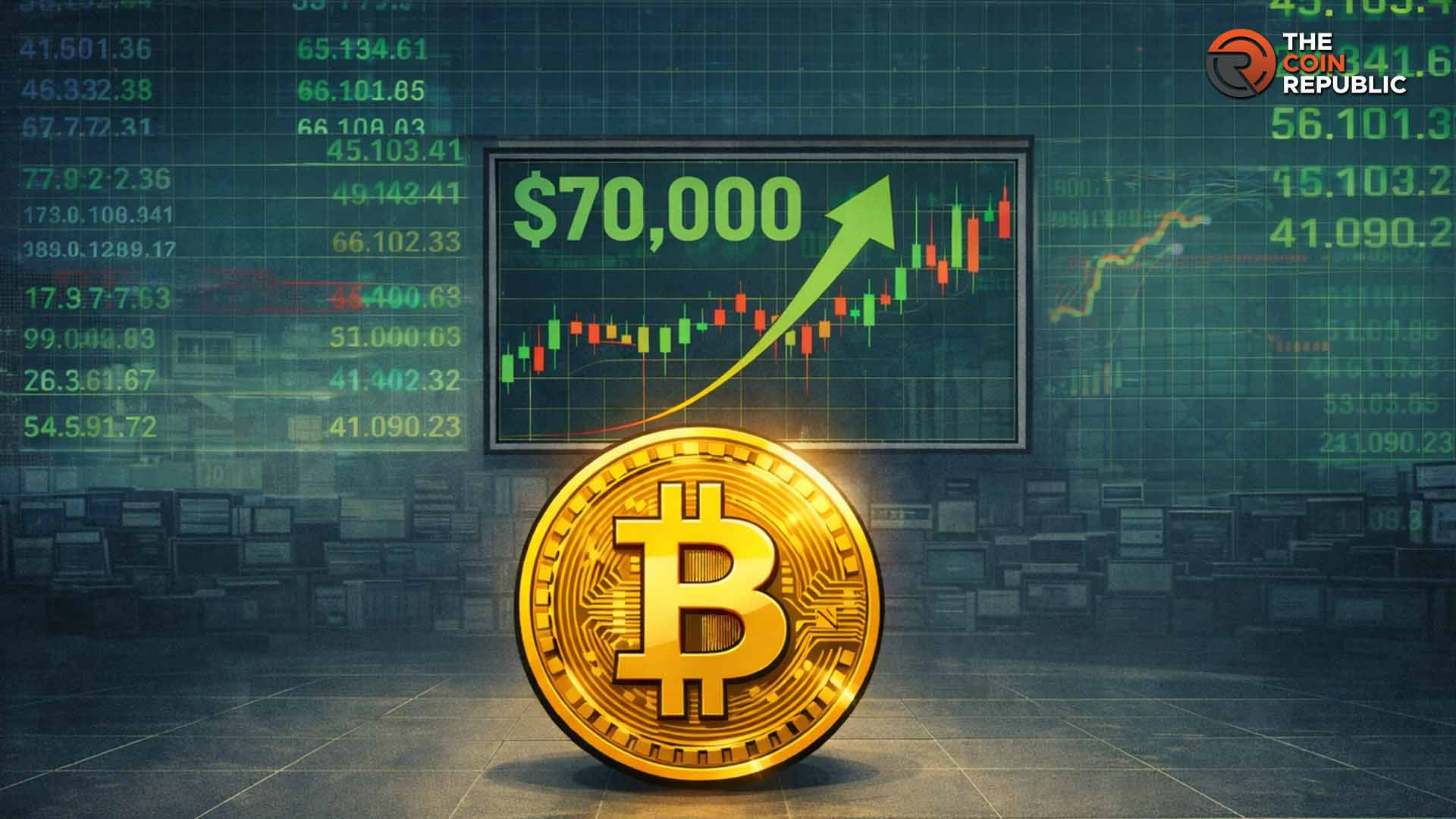
Bitcoin's recent price surge above $73,000 is primarily driven by macroeconomic factors like weak U.S. growth data and geopolitical tensions, positioning it as a scarce asset amidst increasing global uncertainty. While spot Bitcoin ETF inflows suggest institutional demand, on-chain metrics indicate weakening short-term demand, signaling a potential divergence in market sentiment and a fragile rally. The persistent high correlation between Bitcoin and the Nasdaq 100 suggests that broader equity market sentiment, influenced by factors like rising oil prices, continues to significantly impact Bitcoin's price action, challenging its narrative as a pure macro hedge. Despite holding the $70,000 support level, the negative short-term holder realized price momentum and reactive ETF flows raise questions about the sustainability of current price levels, suggesting a cautious outlook for immediate upside.

Australia's Senate committee recommendation to pass the Digital Assets Framework Bill 2025 signals a significant step towards comprehensive crypto regulation, potentially impacting exchanges and custody platforms by requiring licensing under existing financial services laws. The proposed 'function over technology' approach by ASIC aims to regulate crypto activities based on economic purpose, aligning them with traditional financial services and potentially creating a more stable operating environment for compliant entities. While the bill aims to protect consumers and foster innovation, industry concerns regarding broad definitions of digital tokens and factual control could inadvertently capture infrastructure providers, necessitating careful refinement in future regulations. If passed, this framework could establish Australia as a leader in crypto regulation within the Asia-Pacific region, potentially influencing other jurisdictions and unlocking significant economic potential through wider adoption of tokenized assets.
XRP's breach of a descending resistance structure and move towards the 50-day EMA at $1.48 signals a potential shift in market structure after months of decline. Confirmation of XRP holding above the 50 EMA is crucial, as past fakeouts highlight the need for sustained price action to validate a true recovery trend. A successful hold above the 50 EMA could position XRP to target the next resistance zone between $1.70 and $1.90, indicating potential near-term upside.

Legendary trader Peter Brandt identifies a bullish 'horn' pattern on the Bitcoin chart, suggesting a potential breakout and price surge towards the $88,000-$90,000 range. The analysis by Brandt, referencing a 1934 technical analysis book, indicates a short-term bullish outlook for Bitcoin, driven by chart patterns rather than fundamental news. While Brandt's technical analysis points to a near-term price increase, the article also includes Robert Kiyosaki's prediction of a market crash followed by a Bitcoin rally, highlighting divergent market sentiment.

Charles Hoskinson's offer of assistance to the Ethereum Foundation, framed as a response to their new Mandate, highlights Cardano's perceived advancements in on-chain governance and constitutional frameworks. The commentary suggests a continued rivalry and differing approaches to decentralized governance between Cardano and Ethereum, with Hoskinson positioning Cardano's model as more robust due to its constitutional committee and veto power. While framed as an offer, Hoskinson's statement implies a critique of Ethereum's governance evolution, suggesting it is 'catching up' to Cardano's established constitutional structure.
JPMorgan's acceptance of Bitcoin and Ethereum as loan collateral signifies a major institutional embrace of digital assets, potentially unlocking significant liquidity for holders and increasing demand. This development by a leading financial institution suggests a growing convergence between traditional finance and the crypto market, potentially paving the way for broader adoption by other major banks. While currently limited to select trading desks, the move by JP Morgan to accept BTC and ETH as collateral could encourage investors to maintain long-term exposure while leveraging their holdings for short-term financing needs.

World Liberty Financial's introduction of 'Super Nodes' requiring a $5 million WLFI token lockup directly contradicts its 'democratized finance' branding, creating a pay-to-play hierarchy that prioritizes capital-heavy participants. The project's move to monetize direct access to its business development and compliance teams for 'Super Node' holders, while simultaneously seeking a national trust bank charter, raises concerns about regulatory capture and the appearance of impropriety, especially given its political ties. This development signals a potential shift in crypto governance models, where influence and access are increasingly tied to capital commitment and lockup duration, potentially normalizing a 'lobbying budget' or 'private membership card' function for tokens. The explicit pricing of access and prioritization for partnership discussions, coupled with the pursuit of a federal banking license, positions WLFI as a politically branded stablecoin platform where 'business development fees' may become a standard component of accessing services.

Bitcoin demand dynamics are showing signs of shifting, with institutional inflows and whale activity testing previous suppression levels. Despite positive ETF flows totaling $586.1 million, a portion of whale activity showed mixed signals, indicating caution amidst potential market risks. While some analysts suggest Bitcoin may be on the verge of a breakout, others warn of potential downside and volatility due to structural bottoms not yet forming and external macro risks like private credit crises. The market is closely watching Bitcoin's demand trends against the backdrop of potential spillover from private credit issues, which could impact large holders like BlackRock.
UniCredit's formal takeover offer for Commerzbank, valuing shares at a modest premium, signals a significant push for European banking consolidation. The market reaction shows a divergence, with Commerzbank shares rising on takeover speculation while UniCredit shares dipped due to investor caution over integration costs and regulatory hurdles. This potential merger represents a test case for cross-border banking consolidation in Europe, highlighting the challenges and potential benefits of creating larger, more competitive financial institutions. While the deal faces opposition from Commerzbank's management and government, UniCredit aims to increase its stake beyond 30% to gain influence, with a formal offer expected in early May.

Australia's Senate committee backing the Corporations Amendment (Digital Assets Framework) Bill 2025 signals a significant step towards a comprehensive regulatory framework for crypto exchanges and tokenization platforms. The proposed licensing regime, which aims to align digital asset platforms with existing financial services laws, is a direct response to past failures like FTX, indicating a focus on investor protection and market stability. While industry groups like Coinbase welcome the progress, concerns remain regarding the precise definitions of 'digital token' and 'factual control,' potentially impacting infrastructure providers and necessitating further regulatory refinement. The bill's progression to a Senate vote suggests a growing global trend of established jurisdictions implementing clearer rules for the digital asset sector, which could foster institutional adoption but also increase compliance burdens for businesses.
Huawei remains a privately held, employee-owned company, meaning there is no publicly traded stock or ticker symbol available for investors. Despite persistent speculation, Huawei has not announced any concrete plans for an IPO, citing strategic independence and potential geopolitical complexities as reasons for remaining private. Investors interested in Huawei's market segments can explore competitors in telecom infrastructure and supply chain companies, as direct investment is not possible. The company's significant influence in global telecommunications, smartphones, and AI means any future IPO would be a major market event, though currently speculative.
Signal context only. Validate with price action, liquidity, and risk limits before taking a position.
