
Navigating Crypto News

CoinFeather
Navigating Crypto News
Quick market read from this story
Ethereum faces significant resistance at the $2.1K level, with a developing bear flag pattern suggesting a potential breakdown below the $1.8K support zone.
The current consolidation pattern indicates a fragile market structure for Ethereum, where a break below the established support could lead to a more substantial price decline.
Traders should monitor the $1.8K support level closely, as its defense is critical for maintaining bullish sentiment, while a breach could signal a shift towards lower price targets.
Deep Dive
Ethereum is currently trading below a significant resistance zone around $2.1K, with support levels near $1.8K being repeatedly tested. Recent chart analyses indicate a fragile market sentiment, suggesting that the next significant price movement, whether an upward breakout or a downward breakdown, will likely define the near-term trend for the cryptocurrency.
Technical analysis highlights that Ethereum has consistently failed to break above the $2,100 mark. A supply area identified between approximately $2,106 and $2,166 has acted as a barrier, with sellers actively pushing back against price increases. This keeps $2.1K as the primary resistance in the immediate future. On the support side, the $1,808 level has proven to be a crucial area where buyers have previously intervened. This broader $1.8K zone is considered vital for bulls to defend; a breach below it could signal a weakening structure and potentially lead to a more substantial decline.
Further analysis reveals that Ethereum is consolidating within a pattern resembling a bear flag on the daily chart. This structure emerged after a sharp decline earlier in the year. The pattern is characterized by price action compressing between rising trend lines while remaining below a key resistance zone near $2,127. Such upward channels within a broader downtrend often act as continuation patterns rather than reversal signals.
Repeated attempts to surpass the upper boundary of this channel have been met with rejection, indicating persistent selling pressure. The lower boundary of the bear flag is situated near the $1,937 support zone, which has absorbed multiple pullbacks. While Ethereum remains within this channel, its price is expected to fluctuate between these boundaries.
Analysts caution that prolonged consolidation within a bear flag can amplify the impact of a subsequent breakdown. Extended periods of sideways movement allow liquidity to build, potentially leading to rapid price movements once the structure is breached. Below the current consolidation, a significant weekly support level is noted around $1,587, representing the next major area of interest for buyers.
As it stands, Ethereum is confined to a tightening range beneath resistance, maintaining a bearish market structure until a decisive break above the flag and sustained higher prices are achieved.
Source, catalyst, and sector overlap from the latest feed.
The 63% surge in SHIB's burn rate, while notable, involves a small absolute volume of 4 million tokens, suggesting limited immediate price impact given the massive circulating supply. Shiba Inu's price is currently dictated more by broader altcoin market sentiment and a lack of retail enthusiasm for an 'altseason' than by token burn mechanics. Despite the recent price dip and weak altcoin sentiment, consistent token burns contribute to long-term supply reduction, which could support price stability if demand materializes.
A significant crypto investor realized an 83% loss on a $508,000 SHIB position, highlighting the extreme volatility and risk associated with meme coin investments bought at market peaks. The investor's two-year holding period despite substantial unrealized losses suggests a potential belief in SHIB's recovery, which ultimately failed to materialize, underscoring the difficulty of timing speculative assets. This event serves as a cautionary tale for traders, demonstrating that even large positions can be wiped out by market downturns, particularly when entering at or near historical highs.
PEPE is consolidating near key support and resistance levels, indicating a potential for a significant price move based on a breakout. A decisive break above $0.0000050 could trigger a substantial rally towards $0.0000120, while failure to hold support near $0.00000327 risks a sharp decline. Technical indicators like the RSI and MACD suggest weakening bearish momentum, but sellers still hold short-term control, creating a precarious balance.
Bitcoin's MVRV Z Score suggests the market is in a mid-cycle recovery phase, historically preceding significant bull runs after hitting extreme lows. The current price action faces critical Fibonacci resistance between $75K and $78K, a failure to break through could signal a near-term pullback. Traders should monitor the $75K-$78K resistance zone as a key determinant for Bitcoin's immediate direction, with a rejection potentially leading to a test of lower support levels.
Solana's SuperTrend indicator has flipped bullish for the first time since January, signaling a potential shift from a prolonged downtrend to an early recovery phase. Technical analysis suggests a multi-stage recovery path for Solana, with potential intermediate targets around $110 and a long-term projection towards $360 by Q1 2027, contingent on breaking current resistance. The bullish SuperTrend signal, combined with chart patterns indicating consolidation and potential breakout, suggests a near-term positive bias for SOL, though a deeper pullback to $50 is still a possibility within the descending channel.
Ripple's CTO Emeritus David Schwartz addressed accusations that the company's XRP sales disadvantage retail buyers, arguing that suppressed prices could benefit long-term holders by allowing cheaper accumulation. The debate highlights a fundamental disagreement on whether company equity sales and public token sales create inherent conflicts of interest or if token utility and network growth ultimately benefit all stakeholders. Comparisons to ETH and LINK token sales suggest a potential double standard in how Ripple's XRP sales are scrutinized, implying market perception plays a significant role in the narrative.
The $3.7 million flash loan attack on Venus Protocol highlights ongoing security vulnerabilities within DeFi lending platforms, potentially impacting investor confidence in the sector. The exploit, which involved manipulating supply caps using the THE token, demonstrates a sophisticated attack vector that could be replicated, warranting increased scrutiny of oracle price feeds and collateralization mechanisms. Venus Protocol's response of pausing borrowing and withdrawals for THE and other concentrated markets indicates a reactive measure to contain losses, suggesting potential contagion risks for related assets if not managed effectively.
The VanEck CEO's assertion of a Bitcoin bottom, coupled with institutional buying, suggests a potential market recovery that could indirectly benefit Solana (SOL) by improving overall sentiment. Pepeto's exchange token presale is highlighted as a potentially higher-return opportunity compared to SOL, driven by its presale pricing and the projected impact of its zero-fee, cross-chain swap functionality. The article emphasizes that early entry into presale tokens like Pepeto, before their exchange listing, is presented as the primary driver of significant wealth creation in crypto, contrasting it with the more capped upside potential of established large-cap assets like SOL. Pepeto's value proposition includes a built-in risk scorer and a former Binance expert on the dev team, aiming to differentiate it from other projects and attract capital seeking high multiples post-listing.
While Cardano's ADA price prediction shows a bullish outlook with targets around $0.40, whale wallets are reportedly prioritizing presale tokens like Pepeto, anticipating significantly higher returns from its upcoming listing. The surge in USDC transaction volume surpassing Tether indicates growing on-chain activity, positioning infrastructure tokens like Pepeto, which offer zero-fee swaps and integrated risk scoring, to potentially capture substantial value. The article highlights a contrast between the moderate recovery potential of ADA and the perceived exponential growth opportunities in presale projects like Pepeto, driven by its founder's past success and a focus on exchange infrastructure development. With Pepeto's presale offering a 199% APY on staking and a strong audit, the narrative suggests smart money is accumulating before its listing, implying a potential for significant price appreciation driven by demand for its integrated trading and security tools.
XRP's breakout above $1.39 with significant volume surge signals a bullish shift, potentially opening a path towards $1.61 and $3, aligning with broader market strength driven by ETF inflows and Bitcoin's rally. While XRP shows bullish momentum, the article highlights a presale project, Pepeto, which is building exchange infrastructure and offers revenue sharing and high APY staking, suggesting potentially higher multiples compared to XRP's projected gains. The comparison between XRP's price prediction and Pepeto's presale emphasizes the potential for outsized returns from early-stage infrastructure projects during bull markets, contrasting with the more modest gains expected from established assets like XRP. The article frames Pepeto's presale as a high-conviction entry point, drawing parallels to early BNB investments, and suggests that the upcoming listing will permanently remove the current presale pricing, creating a time-sensitive opportunity.
Live Feed
Loading the broader stream in the same flow as the homepage feed.

The CLARITY Act, despite aiming for regulatory clarity, risks centralizing crypto by forcing activity through intermediaries, potentially undermining user ownership of networks. Concerns over stablecoin yields and DeFi provisions have stalled the CLARITY Act, indicating significant industry disagreement that could lead to no bill passing rather than a flawed one. The potential failure of the CLARITY Act to pass by April 2026 significantly reduces its chances of becoming law, leaving the regulatory landscape for digital assets uncertain.

The integration of Ledger hardware wallets with MoonPay Agents enhances security for AI-driven crypto transactions, mitigating risks associated with autonomous agents managing private keys directly. This development signals a growing trend towards securing AI-powered financial activities in crypto, potentially increasing user confidence and adoption of AI agents for trading and asset management. By requiring manual on-device approval for AI-initiated trades and transfers across multiple blockchains, Ledger and MoonPay are establishing a critical security layer for the emerging AI agent ecosystem.

Polymarket and Kalshi are reportedly seeking valuations around $20 billion, indicating strong investor confidence in prediction markets as a data and transaction layer, despite looming regulatory scrutiny. The Iran-related trading activity has intensified regulatory focus, with lawmakers drafting legislation and the CFTC moving towards new rulemaking, creating significant uncertainty for the future operational scope of prediction markets. Major media partnerships with Dow Jones and CNBC signal a push for mainstream integration of prediction market data, potentially transforming them into a core component of financial news and analysis, but also increasing the stakes for market integrity. A lawsuit against Kalshi over disputed payouts highlights inherent trust and fairness challenges within prediction markets, particularly when dealing with sensitive geopolitical events, which could impact user adoption and regulatory approaches.

The memorandum of understanding between the SEC and CFTC signals a coordinated regulatory approach, potentially reducing uncertainty for digital asset firms and fostering clearer market definitions. This inter-agency cooperation aims to harmonize regulatory responses, which could streamline compliance and encourage institutional participation by mitigating conflicting oversight. While the agreement is a positive step towards regulatory clarity, the market still awaits concrete rulemaking and legislative action, particularly concerning the market structure bill.
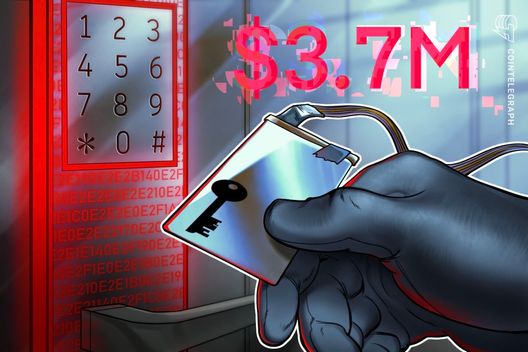
Venus Protocol experienced a supply cap attack resulting in a loss of over $3.7 million, highlighting ongoing security vulnerabilities in DeFi protocols. The exploit involved manipulating the Thena (THE) token to borrow significant amounts of CAKE, USDC, BNB, and BTC, demonstrating complex attack vectors within lending platforms. The incident led to a pause in THE borrows and withdrawals, directly impacting liquidity and user access on the Venus Protocol, with THE token price dropping over 17%.

The transition from crypto's 'rock and roll' era to a focus on infrastructure signifies a maturation of the market, attracting institutional capital and prioritizing sustainable development over speculative hype. The development of 'boring institutional plumbing' like stablecoins and tokenized assets, alongside improvements in self-custody, suggests a foundational build-out that will support future growth and adoption. While the 'weirdness' of crypto may diminish in mainstream visibility, it is expected to migrate to niche communities and decentralized channels, fostering innovation outside of traditional corporate structures. The influx of institutional capital, driven by the end of the hype cycle, is viewed as a positive development, providing stability and long-term investment that is less susceptible to market sentiment shifts.

A significant SHIB holder capitulated, selling 14.5 billion tokens at an 83% loss after buying at the March 2024 peak. This event highlights the risk of buying into meme coin rallies at their zenith, demonstrating a classic 'buy high, sell low' scenario for retail investors. The sale of a large SHIB position on Binance could introduce temporary selling pressure, though its impact on the broader market is likely minimal given the token's speculative nature.

Tether's claim of superior decentralization, supported by data showing lower single-sender volume compared to rivals, positions USDT as a preferred stablecoin for emerging markets and retail users seeking alternatives to traditional finance. The significant adoption of USDT in LATAM and Southeast Asia, driven by remittances and daily transactions, highlights its utility beyond speculative trading and suggests continued demand in these regions. Tether's launch of USAT to target institutional markets under the GENIUS Act, alongside Deloitte's sign-off on its reserve report, indicates a strategic move to balance its retail-centric approach with regulatory compliance and capture a share of the institutional stablecoin market. Despite Tether's decentralization narrative, criticisms regarding off-chain transactions and its role in illicit finance, coupled with the rise of USDC and PYUSD post-GENIUS Act, suggest potential headwinds and a competitive landscape for stablecoin dominance.

The integration of wrapped XRP (FXRP) onto Yellow Network, a Layer-3 clearing protocol backed by Ripple co-founder Chris Larsen, expands XRP's utility and liquidity across new blockchain environments. This development strengthens Flare Network's position as an infrastructure layer for XRP, potentially increasing DeFi engagement and capital locked in FXRP, as evidenced by strong community interest and existing DeFi deployments. The backing of Yellow Network by Chris Larsen and its recent integration with Flare, following FXRP's expansion to Base, suggests a strategic push to enhance XRP's interoperability and DeFi accessibility.

Coinbase's large-scale internal BTC and ETH wallet migration created a false signal of selling pressure on age-based on-chain metrics, highlighting the need for context beyond raw data. Traders relying solely on metrics like HODL Waves or Coin Days Destroyed can be misled by routine exchange housekeeping, underscoring the importance of entity-adjusted data and cross-referencing with other market indicators. The event demonstrates that while blockchain transparency is high, the interpretation of on-chain data requires careful analysis of the underlying activity, distinguishing between genuine distribution and internal operational movements. This incident suggests that age-based indicators, while useful, are less reliable for bottom signaling when not properly adjusted for exchange activity and combined with flow and price action analysis.

Allegations of Ripple running a $500 million per quarter wealth transfer scheme by selling XRP to retail investors could pressure sentiment and potentially impact XRP's price if substantiated. The accusation, originating from a Bitcoin advocate, highlights a long-standing debate about Ripple's business model and its impact on retail holders, suggesting a potential disconnect between marketing and fundamental value. While the article presents accusations of a 'scam,' it also includes counterarguments from XRP community members defending the project, indicating a divided market perception that warrants caution.
Signal context only. Validate with price action, liquidity, and risk limits before taking a position.
