
Navigating Crypto News

CoinFeather
Navigating Crypto News

Quick market read from this story
Bitcoin ETFs experienced their highest weekly inflows since February, totaling $789 million, indicating a significant return of institutional interest and potentially signaling renewed bullish sentiment for BTC.
The substantial inflow, particularly driven by BlackRock's $612 million contribution, suggests strong conviction from major institutional players, which could translate to sustained buying pressure on Bitcoin.
Following weeks of outflows and volatility, this surge in capital allocation to Bitcoin ETFs represents a positive shift in market dynamics, potentially setting a foundation for near-term price appreciation.
Source, catalyst, and sector overlap from the latest feed.
XRP has completed a short-term golden cross on its 2-hour chart, a technical signal that historically precedes price appreciation. Despite the bullish technical signal, weak spot demand and subdued futures activity suggest that the golden cross may be a 'fakeout' rather than a genuine breakout, indicating caution for traders. XRP ETFs experienced significant inflows of $9.09 million, the largest since early February, which could provide some underlying support despite broader market weakness. The average XRP wallet holding has seen a -41% decline, reaching its lowest MVRV since November 2022, suggesting potential for a contrarian rebound if sentiment shifts.
Live Feed
Loading the broader stream in the same flow as the homepage feed.
Bitcoin's monthly MACD histogram shows a potential early bottoming signal, suggesting fading downside pressure if it holds through the monthly close, which could encourage traders to view this as a sign of stabilization. The critical resistance zone between $73,000 and $74,000 presents a make-or-break scenario for Bitcoin; a successful reclaim could lead to further upside, while failure risks a test of lower support levels. Despite a potential MACD bottoming signal, the overall structure remains fragile, with analysts cautioning that a reclaim of resistance might only be a final rally before potential broader weakness, indicating a need for cautious positioning.
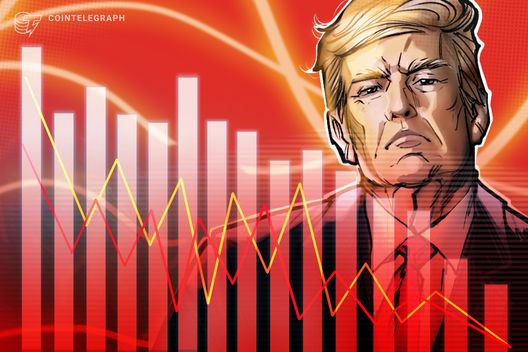
The significant price declines in Trump-linked tokens (TRUMP and WLFI) suggest a loss of investor confidence and potential regulatory scrutiny, impacting the perception of political-tied crypto projects. US lawmakers' inquiry into the TRUMP memecoin creator highlights growing concerns over potential conflicts of interest and the use of tokens to gain political access, signaling increased regulatory attention on such ventures. The crash of these tokens, despite their association with a prominent political figure, underscores the speculative nature of memecoins and the risks associated with projects lacking fundamental utility or clear regulatory standing.

AI agents are evolving from simple automation to complex orchestration, creating a new economy where humans are organized and delegated tasks by machines. The emergence of platforms like Rentahuman.ai signifies a shift where human labor becomes callable infrastructure, integrated into AI-directed workflows and potentially creating new global income streams. Crypto infrastructure is positioned as a key enabler for these agent economies, facilitating autonomous transactions, programmable coordination, and permissionless access to human labor as a service. The development necessitates robust guardrails for transparency, fair compensation, accountability, and consent to ensure ethical implementation and prevent exploitation in AI-driven labor markets.
Shiba Inu is consolidating within a tight range, with support holding at $0.00000550 and resistance near $0.0000060, indicating a potential breakout is building. Significant exchange outflows of over 321 billion SHIB tokens suggest accumulation by holders, potentially reducing selling pressure and supporting a future price increase. The burn rate has increased, with over 4.1 million tokens removed from supply, which, combined with Shibarium ecosystem upgrades, provides fundamental support for SHIB.
Dogecoin has broken a year-long descending resistance line, signaling a potential end to its downtrend and a shift towards bullish sentiment. The breakout is attributed to election-related speculation and renewed investor interest, suggesting that narrative-driven hype could be a near-term catalyst for DOGE. While the technical breakout is positive, sustained volume and demand are crucial for confirming a trend reversal, indicating a watchlist scenario for traders.

Declining realized losses and a shift to net buying pressure on spot markets suggest that Bitcoin may be entering a phase of seller exhaustion, potentially paving the way for upward price movement. With realized profits now outweighing losses and the profit-to-loss ratio at its highest in months, current market conditions indicate that investors who bought around $60,000 are beginning to take marginal gains, reducing immediate selling pressure. While realized losses remain elevated compared to historical averages, the downward trend suggests that the most capitulated selling may have already occurred, creating a more favorable environment for price appreciation.

Telegram founder Pavel Durov highlights a critical privacy vulnerability in push notification logs, suggesting that even deleted messages can be retrieved by law enforcement. The incident with Signal messages retrieved by the FBI underscores the limitations of end-to-end encryption when metadata and notification logs are accessible. This development may increase demand for truly decentralized messaging applications that do not store such sensitive user data, potentially benefiting projects focused on privacy infrastructure. The article notes a surge in user interest for decentralized messaging and social media platforms amid geopolitical turmoil, indicating a growing market for privacy-focused communication tools.
The CFTC's formation of an Innovation Task Force signals a proactive regulatory approach to emerging digital asset markets, potentially reducing uncertainty for crypto and AI projects. The SEC's recent classification of BTC, ETH, and SOL as commodities, coupled with the CFTC-SEC MOU, clarifies jurisdictional boundaries, which could lead to more defined market structures. The withdrawal of the ban proposal on political and sports event contracts indicates a shift towards regulating prediction markets rather than prohibiting them, opening new avenues for financial innovation. The inclusion of AI and prediction markets alongside crypto in the CFTC's new task force highlights the convergence of these technologies and the need for integrated regulatory frameworks.
The CFTC's establishment of an Innovation Task Force, with crypto policy at its core, signals a proactive regulatory approach to digital assets within broader emerging technology frameworks. This initiative suggests increased interagency coordination, particularly with the SEC, aiming to clarify the boundaries between securities and commodities oversight for crypto assets. The CFTC's move towards formal policy channels, beyond enforcement, indicates a potential for clearer guidance and rulemaking, which could impact firms operating in derivatives and digital asset markets.

Major investment firms are preemptively downgrading crypto platforms like Coinbase due to a significant Q1 profit squeeze driven by declining trading volumes and falling token prices. Analysts are revising Q1 earnings expectations downward across the sector, with Barclays highlighting Coinbase's March trading volume as the lowest since September 2024, indicating sustained weakness. The decline in trading activity, which directly impacts fee-based revenue for exchanges, is forcing a recalibration of market expectations ahead of Q1 earnings reports. While stablecoin activity shows some growth, the core crypto trading business is slowing, suggesting that diversification efforts by platforms may take time to offset current revenue pressures.

The termination of the $1.6 billion SPAC merger between Dynamix and The Ether Machine, citing unfavorable market conditions, signals a cautious sentiment among institutional players looking to go public via SPAC. The Ether Machine, holding over $1 billion in ETH, faces a setback in its public listing plans, potentially impacting its treasury yield strategies and investor confidence. Dynamix Corporation will receive a $50 million termination payment, indicating a significant cost associated with the failed SPAC deal and highlighting the risks in current market conditions for such transactions.

The market is trading flat as U.S.-Iran negotiations commence, indicating geopolitical events are currently overshadowing crypto market drivers. A prior derivatives short squeeze, triggered by a ceasefire announcement, has already unwound significant bearish positions, suggesting potential for reduced volatility from that specific catalyst. While Bitcoin and Ethereum show minimal movement, the broader market's flatness suggests a lack of strong conviction from traders amidst ongoing geopolitical uncertainty. The article highlights the fragility of the U.S.-Iran truce, implying that any escalation could introduce new market risks and volatility.
Signal context only. Validate with price action, liquidity, and risk limits before taking a position.
Cardano's upcoming Van Rossem hard fork to Protocol Version 11, targeting late June 2026, aims to enhance Plutus performance and node security, signaling ongoing development efforts. A memory regression issue in the 10.7.0 pre-release caused a setback, but the core development team believes it's identified and fixable, maintaining the projected hard fork timeline. The integration of Cardano's on-chain data onto Dune analytics is expanding ecosystem tooling and community engagement, providing new avenues for data analysis and dashboard creation.
