
Navigating Crypto News

CoinFeather
Navigating Crypto News
Quick market read from this story
Dogecoin has broken a year-long descending resistance line, signaling a potential end to its downtrend and a shift towards bullish sentiment.
The breakout is attributed to election-related speculation and renewed investor interest, suggesting that narrative-driven hype could be a near-term catalyst for DOGE.
While the technical breakout is positive, sustained volume and demand are crucial for confirming a trend reversal, indicating a watchlist scenario for traders.
Source, catalyst, and sector overlap from the latest feed.
Reports suggest Iran may accept Bitcoin for oil tanker passage, potentially bypassing sanctions and creating a new demand source for BTC, though stablecoins or CNY are also considered. The technical feasibility of near-instant, large-value Bitcoin payments for oil transit likely hinges on the Lightning Network, but on-chain settlement may be more practical for significant sums. If implemented, this would represent a significant real-world use case for Bitcoin in global trade, potentially influencing other sanctioned nations and challenging traditional financial systems.
Live Feed
Loading the broader stream in the same flow as the homepage feed.

Bitcoin orderbook depth has fallen 50% since September 2025, indicating a significant reduction in market liquidity that predates and extends beyond the October 2025 flash crash. While derivatives volumes have decreased, the stable funding rates suggest a balanced market sentiment between longs and shorts, mitigating immediate bearish pressure. Despite a decline in ETF trading volumes in early April 2026, the market structure showed resilience through February 2026, suggesting the long-term impact of the October 2025 crash may have been overstated. The current market fragility appears more influenced by recent 2026 trends than the historical 2025 flash crash, implying that traders should focus on current liquidity and volume dynamics.

SpaceX's decision to maintain its $603 million Bitcoin holdings despite a nearly $5 billion loss signals a strong conviction in Bitcoin as a treasury asset, potentially influencing corporate treasury strategies. The company's substantial Bitcoin position, even amidst financial losses and an upcoming IPO, highlights a divergence between traditional financial reporting and the strategic allocation of digital assets by major entities. As the fourth-largest corporate Bitcoin holder, SpaceX's continued commitment could provide a subtle bullish signal for Bitcoin's institutional adoption narrative, especially as it prepares for public market scrutiny.

Ray Dalio's "war thesis" highlights a potential breakdown of monetary and geopolitical orders, suggesting investors should seek assets that retain value against currency debasement. While Dalio acknowledges Bitcoin's scarcity and sovereignty as a hedge against debasement, historical precedent and recent market behavior during geopolitical stress favor gold as the immediate safe-haven asset. The article posits that Bitcoin's role as a non-sovereign monetary asset is a forward-looking argument, contrasting with gold's established role as a first-round refuge, implying a potential hierarchy in investor preference during crises. The current macro environment of sticky inflation, slower growth, and delayed Fed easing supports a portfolio allocation favoring assets with less duration and credit risk, with gold currently outperforming Bitcoin in safe-haven scenarios.

Rising Bitcoin open interest to five-week highs combined with deeply negative funding rates suggests a crowded short positioning, increasing the probability of a short squeeze event. The current market structure, characterized by negative funding rates and accumulating leveraged short positions, mirrors conditions seen before significant upward price movements in 2023, potentially signaling a similar breakout scenario. While short liquidations remain modest, the accumulation of short positions and the potential for a squeeze indicate a near-term catalyst for price appreciation, though the sustainability depends on broader market sentiment and demand.

Declining realized losses and a shift to net buying pressure on spot markets suggest that Bitcoin may be entering a phase of seller exhaustion, potentially paving the way for upward price movement. With realized profits now outweighing losses and the profit-to-loss ratio at its highest in months, current market conditions indicate that investors who bought around $60,000 are beginning to take marginal gains, reducing immediate selling pressure. While realized losses remain elevated compared to historical averages, the downward trend suggests that the most capitulated selling may have already occurred, creating a more favorable environment for price appreciation.

Telegram founder Pavel Durov highlights a critical privacy vulnerability in push notification logs, suggesting that even deleted messages can be retrieved by law enforcement. The incident with Signal messages retrieved by the FBI underscores the limitations of end-to-end encryption when metadata and notification logs are accessible. This development may increase demand for truly decentralized messaging applications that do not store such sensitive user data, potentially benefiting projects focused on privacy infrastructure. The article notes a surge in user interest for decentralized messaging and social media platforms amid geopolitical turmoil, indicating a growing market for privacy-focused communication tools.
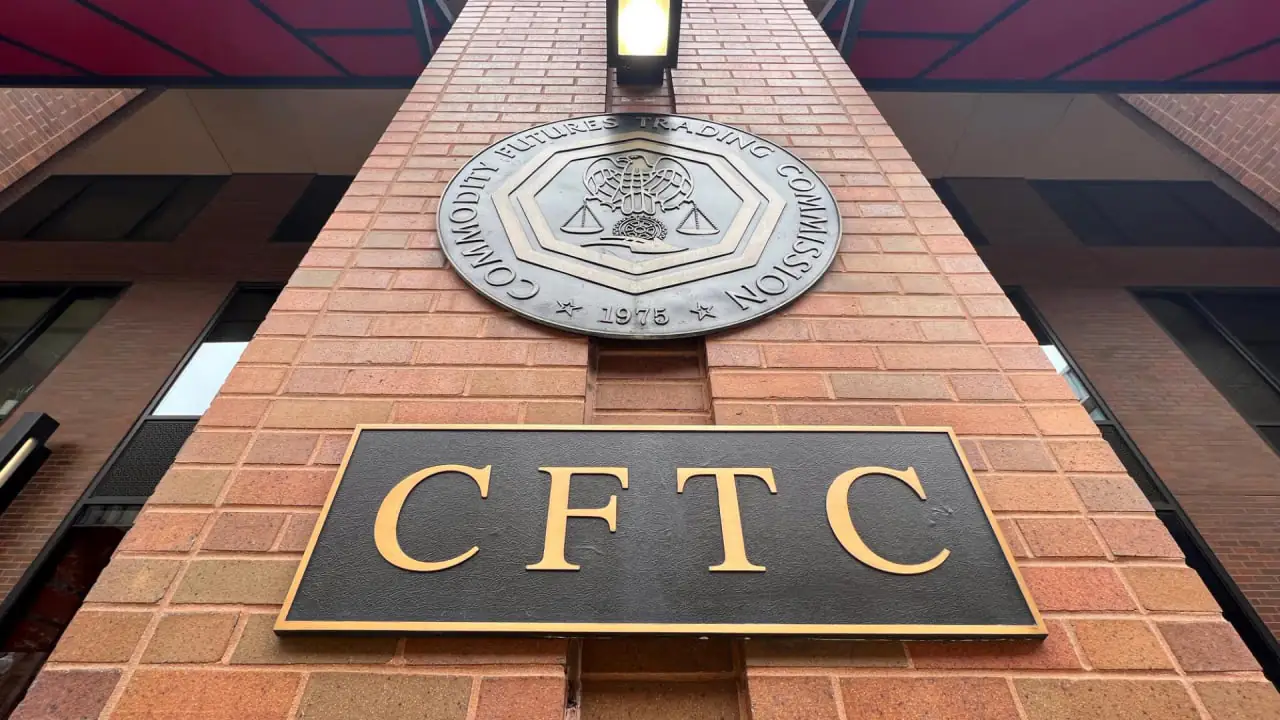
The CFTC's formation of an Innovation Task Force signals a proactive regulatory approach to emerging digital asset markets, potentially reducing uncertainty for crypto and AI projects. The SEC's recent classification of BTC, ETH, and SOL as commodities, coupled with the CFTC-SEC MOU, clarifies jurisdictional boundaries, which could lead to more defined market structures. The withdrawal of the ban proposal on political and sports event contracts indicates a shift towards regulating prediction markets rather than prohibiting them, opening new avenues for financial innovation. The inclusion of AI and prediction markets alongside crypto in the CFTC's new task force highlights the convergence of these technologies and the need for integrated regulatory frameworks.

Major investment firms are preemptively downgrading crypto platforms like Coinbase due to a significant Q1 profit squeeze driven by declining trading volumes and falling token prices. Analysts are revising Q1 earnings expectations downward across the sector, with Barclays highlighting Coinbase's March trading volume as the lowest since September 2024, indicating sustained weakness. The decline in trading activity, which directly impacts fee-based revenue for exchanges, is forcing a recalibration of market expectations ahead of Q1 earnings reports. While stablecoin activity shows some growth, the core crypto trading business is slowing, suggesting that diversification efforts by platforms may take time to offset current revenue pressures.

The termination of the $1.6 billion SPAC merger between Dynamix and The Ether Machine, citing unfavorable market conditions, signals a cautious sentiment among institutional players looking to go public via SPAC. The Ether Machine, holding over $1 billion in ETH, faces a setback in its public listing plans, potentially impacting its treasury yield strategies and investor confidence. Dynamix Corporation will receive a $50 million termination payment, indicating a significant cost associated with the failed SPAC deal and highlighting the risks in current market conditions for such transactions.

Morgan Stanley's strategic expansion into tokenized money-market funds and potential tax-loss harvesting for digital assets signals a deepening institutional commitment to crypto beyond initial ETF offerings. The firm's exploration of tokenized products and tax solutions, leveraging its extensive wealth advisor network, indicates a multi-faceted approach to integrating digital assets into traditional finance. While the immediate focus is on Bitcoin ETFs, Morgan Stanley's stated intention to not 'stop at just Bitcoin' suggests potential future product development for other digital assets like Ethereum and Solana, impacting their respective ecosystems. Morgan Stanley's competitive fee structure for its Bitcoin ETF and its exploration of tokenized assets highlight a trend towards institutional products that prioritize efficiency and broader client access, potentially pressuring competitors.

The market is trading flat as U.S.-Iran negotiations commence, indicating geopolitical events are currently overshadowing crypto market drivers. A prior derivatives short squeeze, triggered by a ceasefire announcement, has already unwound significant bearish positions, suggesting potential for reduced volatility from that specific catalyst. While Bitcoin and Ethereum show minimal movement, the broader market's flatness suggests a lack of strong conviction from traders amidst ongoing geopolitical uncertainty. The article highlights the fragility of the U.S.-Iran truce, implying that any escalation could introduce new market risks and volatility.

Analyst Benjamin Cowen assigns a 75% probability to Bitcoin making a new cycle low around October 2026, projecting a potential 70% drop to $39,000-$40,000 based on historical on-chain indicators and cycle duration patterns. Cowen's bearish outlook is predicated on three specific on-chain indicators (supply in profit/loss cross, MVRV Z-Score below zero, and price below realized/balance price) that have historically preceded every Bitcoin bear market bottom but have not yet triggered in the current cycle. Despite the bearish forecast, Cowen suggests accumulating by summer of a midterm year, emphasizing that market gains are made in the middle of trends, implying that waiting for the exact bottom is not necessary for profitable participation. Current market action shows Bitcoin holding above its 50-day SMA and consolidating, with near-term price action potentially influenced by US-Iran peace talks, which could impact geopolitical premiums and inflation pressures.

The escalating geopolitical tensions and subsequent oil price shock are reviving inflation concerns, creating a potential demand for stablecoins that can preserve purchasing power, not just facilitate transactions. USDi's novel approach to track inflation rather than a fixed dollar value addresses a perceived gap in the current stablecoin market, positioning it as a potential solution for institutional treasurers and payment platforms concerned about real-term value erosion. The proposed customizable inflation exposure feature of USDi could unlock new hedging strategies for institutional players like insurance companies and education finance programs, offering a more precise alternative to traditional financial instruments. While Bitcoin is seen as a long-term store of value, its volatility limits its utility for shorter horizons, suggesting a market need for stable, inflation-hedged digital assets to complete the on-chain monetary system.

The WLFI token has experienced an 83% price decline due to its use as collateral for a $75 million stablecoin loan, raising concerns about potential liquidation risks and market stability. Despite the significant price drop and controversy, WLFI claims its position is safe and not near liquidation, citing plans to add more collateral if necessary and highlighting strong revenue from its USD1 stablecoin. The reliance on a project's own token as collateral, especially on a less prominent DeFi platform like Dolomite, amplifies the risk of cascading price drops and investor losses, creating a fragile market dynamic.

The post Will Chainlink Price Break Its Long Consolidation Phase? appeared first on Coinpedia Fintech News Right now, Chainlink price is hovering in a well-defined range, with support sitting around $8 and resistance creeping higher toward $12–$15 zones. It’s not exciting on the surface. But markets rarely are before they move. CMF has climbed back to 0, suggesting capital inflows are stabilizing. Not explosive, but definitely not bearish either. Meanwhile, the …
Signal context only. Validate with price action, liquidity, and risk limits before taking a position.
No explicit catalyst tagged.
The CFTC's establishment of an Innovation Task Force, with crypto policy at its core, signals a proactive regulatory approach to digital assets within broader emerging technology frameworks. This initiative suggests increased interagency coordination, particularly with the SEC, aiming to clarify the boundaries between securities and commodities oversight for crypto assets. The CFTC's move towards formal policy channels, beyond enforcement, indicates a potential for clearer guidance and rulemaking, which could impact firms operating in derivatives and digital asset markets.
