
Navigating Crypto News

CoinFeather
Navigating Crypto News

Quick market read from this story
Morgan Stanley's strategic expansion into tokenized money-market funds and potential tax-loss harvesting for digital assets signals a deepening institutional commitment to crypto beyond initial ETF offerings.
The firm's exploration of tokenized products and tax solutions, leveraging its extensive wealth advisor network, indicates a multi-faceted approach to integrating digital assets into traditional finance.
While the immediate focus is on Bitcoin ETFs, Morgan Stanley's stated intention to not 'stop at just Bitcoin' suggests potential future product development for other digital assets like Ethereum and Solana, impacting their respective ecosystems.
Morgan Stanley's competitive fee structure for its Bitcoin ETF and its exploration of tokenized assets highlight a trend towards institutional products that prioritize efficiency and broader client access, potentially pressuring competitors.
Source, catalyst, and sector overlap from the latest feed.
The partnership between Matterhorn and ASI Alliance introduces auditing tools for AI-generated smart contracts, aiming to mitigate risks associated with automated code generation in crypto. This initiative addresses a critical emerging risk in AI-driven development, potentially increasing trust and adoption for AI-assisted dApp creation. The focus on 'correct-by-construction' architecture and mathematical proof of safety suggests a move towards more robust smart contract development, contrasting with traditional 'patch-and-pray' methods. The goal to onboard 20,000 developers by 2026 on ASI:Chain highlights a strategic push for ecosystem growth centered around AI-generated code and enhanced security.
Live Feed
Loading the broader stream in the same flow as the homepage feed.

Declining realized losses and a shift to net buying pressure on spot markets suggest that Bitcoin may be entering a phase of seller exhaustion, potentially paving the way for upward price movement. With realized profits now outweighing losses and the profit-to-loss ratio at its highest in months, current market conditions indicate that investors who bought around $60,000 are beginning to take marginal gains, reducing immediate selling pressure. While realized losses remain elevated compared to historical averages, the downward trend suggests that the most capitulated selling may have already occurred, creating a more favorable environment for price appreciation.
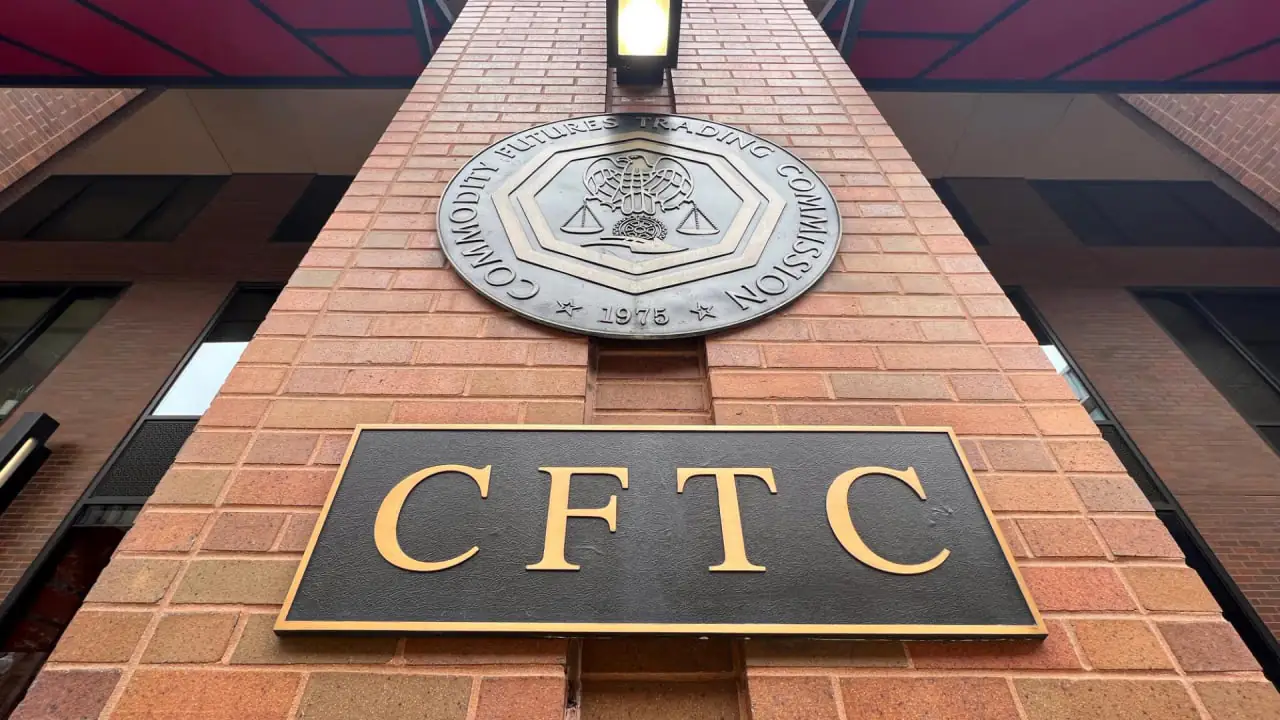
The CFTC's formation of an Innovation Task Force signals a proactive regulatory approach to emerging digital asset markets, potentially reducing uncertainty for crypto and AI projects. The SEC's recent classification of BTC, ETH, and SOL as commodities, coupled with the CFTC-SEC MOU, clarifies jurisdictional boundaries, which could lead to more defined market structures. The withdrawal of the ban proposal on political and sports event contracts indicates a shift towards regulating prediction markets rather than prohibiting them, opening new avenues for financial innovation. The inclusion of AI and prediction markets alongside crypto in the CFTC's new task force highlights the convergence of these technologies and the need for integrated regulatory frameworks.
The CFTC's establishment of an Innovation Task Force, with crypto policy at its core, signals a proactive regulatory approach to digital assets within broader emerging technology frameworks. This initiative suggests increased interagency coordination, particularly with the SEC, aiming to clarify the boundaries between securities and commodities oversight for crypto assets. The CFTC's move towards formal policy channels, beyond enforcement, indicates a potential for clearer guidance and rulemaking, which could impact firms operating in derivatives and digital asset markets.

The market is trading flat as U.S.-Iran negotiations commence, indicating geopolitical events are currently overshadowing crypto market drivers. A prior derivatives short squeeze, triggered by a ceasefire announcement, has already unwound significant bearish positions, suggesting potential for reduced volatility from that specific catalyst. While Bitcoin and Ethereum show minimal movement, the broader market's flatness suggests a lack of strong conviction from traders amidst ongoing geopolitical uncertainty. The article highlights the fragility of the U.S.-Iran truce, implying that any escalation could introduce new market risks and volatility.

Melania Trump's denial of ties to Jeffrey Epstein and call for congressional hearings has failed to impact the MELANIA memecoin, highlighting a disconnect between political events and speculative crypto assets. The MELANIA token's 99% decline from its peak, despite significant media attention on the first lady's statement, indicates a severe loss of speculative interest and suggests that political narratives alone are insufficient to sustain memecoin value. The market's indifference to the political spectacle surrounding Melania Trump's statement underscores the waning influence of politically-themed meme coins, suggesting a shift away from 'attention economy' drivers towards more fundamental value or established narratives.

Analyst Benjamin Cowen assigns a 75% probability to Bitcoin making a new cycle low around October 2026, projecting a potential 70% drop to $39,000-$40,000 based on historical on-chain indicators and cycle duration patterns. Cowen's bearish outlook is predicated on three specific on-chain indicators (supply in profit/loss cross, MVRV Z-Score below zero, and price below realized/balance price) that have historically preceded every Bitcoin bear market bottom but have not yet triggered in the current cycle. Despite the bearish forecast, Cowen suggests accumulating by summer of a midterm year, emphasizing that market gains are made in the middle of trends, implying that waiting for the exact bottom is not necessary for profitable participation. Current market action shows Bitcoin holding above its 50-day SMA and consolidating, with near-term price action potentially influenced by US-Iran peace talks, which could impact geopolitical premiums and inflation pressures.
Shiba Inu's foundational tokenomics, including the permanent locking of 50% of supply in Uniswap V2/V3 liquidity pools by founder Ryoshi, are being re-examined, reinforcing the project's initial commitment to decentralization and scarcity. The historical burn of approximately 410 trillion SHIB tokens by Vitalik Buterin is highlighted as a key event that reshaped supply dynamics, underscoring the community's focus on token scarcity as a potential price driver. Despite renewed focus on tokenomics, SHIB's price action is currently influenced by broader market sentiment and macro data, with the token needing to hold key technical levels around $0.00000586 to confirm a potential breakout.

The post Will Chainlink Price Break Its Long Consolidation Phase? appeared first on Coinpedia Fintech News Right now, Chainlink price is hovering in a well-defined range, with support sitting around $8 and resistance creeping higher toward $12–$15 zones. It’s not exciting on the surface. But markets rarely are before they move. CMF has climbed back to 0, suggesting capital inflows are stabilizing. Not explosive, but definitely not bearish either. Meanwhile, the …

Cardano's upcoming Van Rossem hard fork to Protocol Version 11, targeting late June 2026, aims to enhance Plutus performance and node security, signaling ongoing development efforts. A memory regression issue in the 10.7.0 pre-release caused a setback, but the core development team believes it's identified and fixable, maintaining the projected hard fork timeline. The integration of Cardano's on-chain data onto Dune analytics is expanding ecosystem tooling and community engagement, providing new avenues for data analysis and dashboard creation.

Crypto perpetual futures markets are demonstrating a significant predictive capability for traditional finance (TradFi) opening prices, with an 89% directional accuracy for Monday opens, indicating a growing role for crypto exchanges in global price discovery. The 57% median 'capture ratio' suggests that a substantial portion of TradFi price movements is being priced into crypto markets before traditional exchanges open, offering traders an informational edge and a tool for risk management during off-hours. The increasing volume and accuracy of TradFi-linked perpetuals highlight a convergence between crypto and traditional markets, potentially attracting new capital and participants to crypto platforms seeking 24/7 access to diverse asset classes.
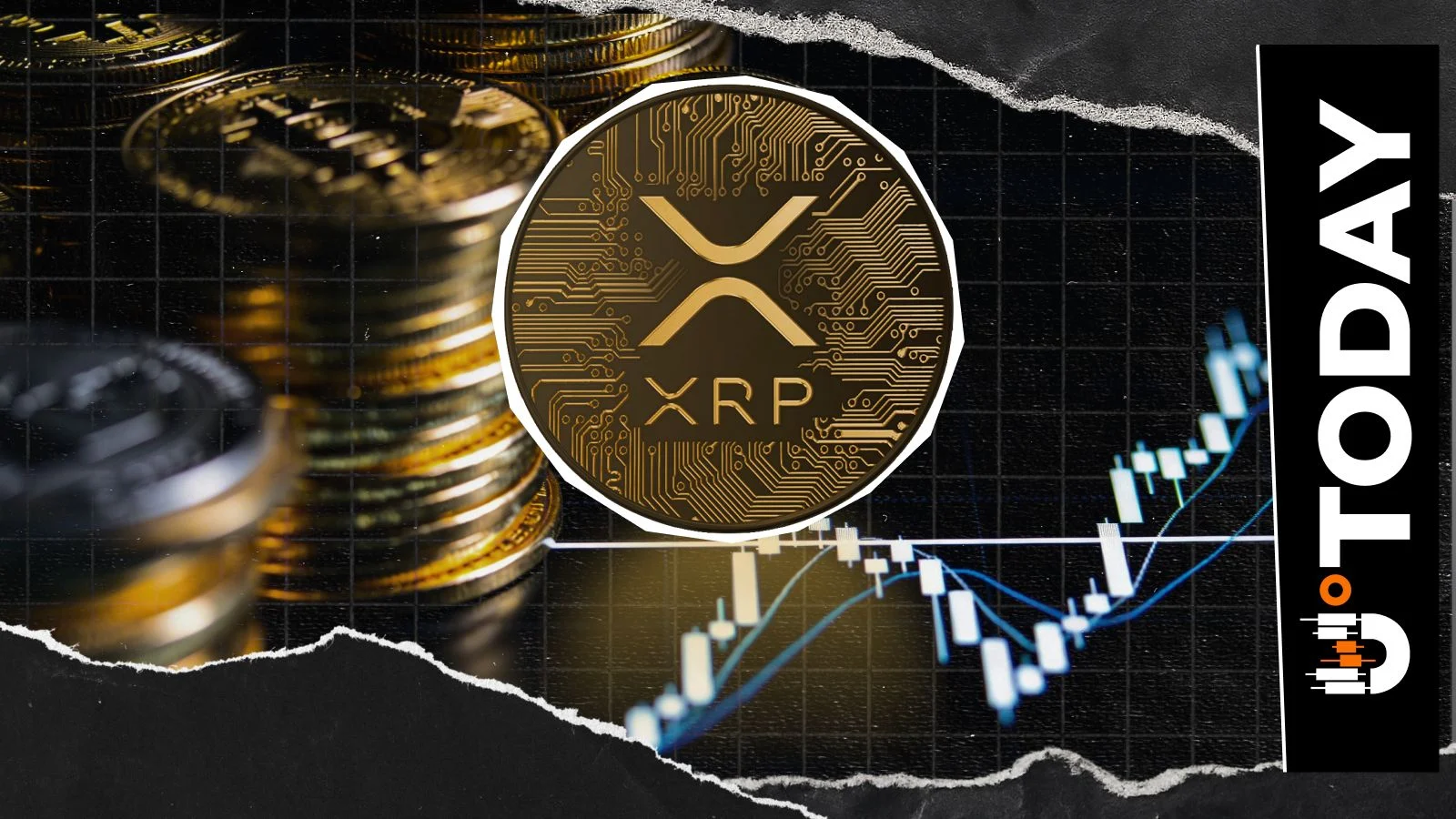
XRP payment volume has seen a significant 77% drop to 86 million transactions, indicating a sharp decline in on-chain activity that may signal weakening investor interest. The substantial decrease in XRP's on-chain payment volume, coupled with its flat price action, suggests a potential loss of momentum and could precede further price volatility. Despite a mild price increase earlier, XRP's inability to sustain gains alongside declining network activity points to underlying weakness that traders should monitor for potential downside risk.
World Liberty Financial's WLFI token is experiencing significant price pressure due to concerns over its borrowing strategy on Dolomite, where it uses its own token as collateral, raising fears of a circular risk loop and liquidity strain for other users. The project's defense of its borrowing strategy and recent $25M USD1 repayment have failed to alleviate trader concerns, with an upcoming proposal for token unlocks adding further selling pressure due to potential new supply entering the market. Despite claims of being far from liquidation, the strategy of borrowing stablecoins against a depreciating native token, coupled with large treasury buybacks at higher prices, highlights potential financial mismanagement and weighs heavily on market sentiment.

RAVE token experienced a 900% price surge driven by significant open interest and short liquidations, indicating leveraged trading activity rather than fundamental adoption. The rally lacks fundamental justification, with the primary recent development being a 'Dim Sum Rave' event, raising concerns about the sustainability of the price explosion. On-chain data shows deposits of $40 million worth of RAVE tokens into Bitget from addresses linked to the token's deployment, suggesting potential insider selling into strength. Speculation around a Donald Trump Jr. association, though unconfirmed, fueled further price action, highlighting the market's sensitivity to narrative over substance in this rally.
Signal context only. Validate with price action, liquidity, and risk limits before taking a position.
A new multi-university study indicates that rapid AI advancement could significantly reduce labor force participation, with economists forecasting a drop from 62% to 54% by 2050 under a 'rapid' scenario. The consensus among economists is shifting from AI augmenting jobs to AI potentially replacing the need for new job creation entirely, raising concerns about future employment structures. While aggregate employment data appears stable, early indicators show a notable employment drop in the most AI-exposed occupations for younger workers, suggesting a leading edge of disruption. Projected GDP growth alongside significant job displacement suggests a future of concentrated wealth creation, potentially exacerbating inequality if not addressed by policy interventions.
