
Navigating Crypto News

CoinFeather
Navigating Crypto News

Quick market read from this story
The bitcoin market is bifurcating between mandated institutional buyers and discretionary sellers, creating a stable surface price that masks underlying distribution.
Sustained buying from entities like Strategy and U.S. spot Bitcoin ETFs is absorbing sell pressure, but a slowdown in ETF inflows and continued whale distribution pose risks to this floor.
The recent ceasefire announcement has temporarily boosted sentiment and short liquidations, but has not altered the fundamental dynamic of narrowing buyer conviction.
The shift of miners and sovereign nations like Bhutan to selling BTC, coupled with miners pivoting to AI hosting, indicates a structural change in supply dynamics.
Source, catalyst, and sector overlap from the latest feed.
Bhutan's significant liquidation of 70% of its Bitcoin holdings over 18 months signals a shift away from its sovereign mining experiment, driven by potentially unfavorable economics at current difficulty and price levels. The kingdom's decision to sell Bitcoin, while major holders and ETFs are accumulating, highlights the operational realities and potential unprofitability of sovereign mining operations in the current market environment. Bhutan's move to sell down its BTC reserves suggests a pragmatic approach to asset management, prioritizing potential revenue from energy sales over the speculative or operational costs of maintaining a large Bitcoin mining and holding position.
Live Feed
Loading the broader stream in the same flow as the homepage feed.
Dogecoin is consolidating near $0.093, with analysts highlighting $0.09 as a critical support level; failure to hold this could lead to a drop towards $0.06 or even $0.03. The price action suggests indecision, and Dogecoin's near-term trajectory is heavily correlated with Bitcoin's performance, lacking strong independent catalysts. Despite bearish short-term targets, some analysts see the current consolidation as a potential accumulation zone, referencing historical patterns that preceded significant rallies. While ambitious long-term targets like surpassing $1 exist, current market conditions and Bitcoin's influence suggest a cautious approach is warranted for traders.

Shippers using cryptocurrency to pay transit fees to Iran face significant sanctions risk due to the transparent nature of blockchain, which allows for easier tracing of illicit flows by authorities. While Iran has explored using digital assets for trade, the inherent traceability of crypto makes it a less effective tool for sanctions evasion than traditional methods, potentially leading to asset freezes or seizures. The report highlights that Iran's Bitcoin mining hashrate has dropped significantly, indicating potential internal operational challenges or external pressures impacting its crypto infrastructure.
Arweave (AR) is consolidating in a technically compressed structure, suggesting potential for a broader expansion cycle driven by its role in Web3 infrastructure. Price predictions for AR range from $4-$15 in 2026 and up to $80 by 2030, contingent on reclaiming key resistance levels and sustained market momentum. The current technical setup indicates a transition from controlled distribution to accumulation, with a breakout above $2.20-$2.50 needed to confirm renewed demand and shift short-term momentum. Arweave's long-term potential is tied to its permanent storage utility and sustained relevance in enterprise blockchain use cases, with price forecasts heavily dependent on adoption and market cycles.

A significant 237% surge in Shiba Inu's token burn rate, removing over 15.5 million SHIB from circulation, indicates a strong deflationary pressure that could support future price appreciation by increasing scarcity. Despite substantial burn activity, Shiba Inu's price remains largely stagnant, suggesting that current market sentiment or broader macroeconomic factors are overshadowing the positive tokenomic development for near-term price action. The sustained network activity and deflationary mechanism, coupled with Robinhood's participation in burns, highlight ongoing fundamental support for SHIB, positioning it for potential upside if demand increases.
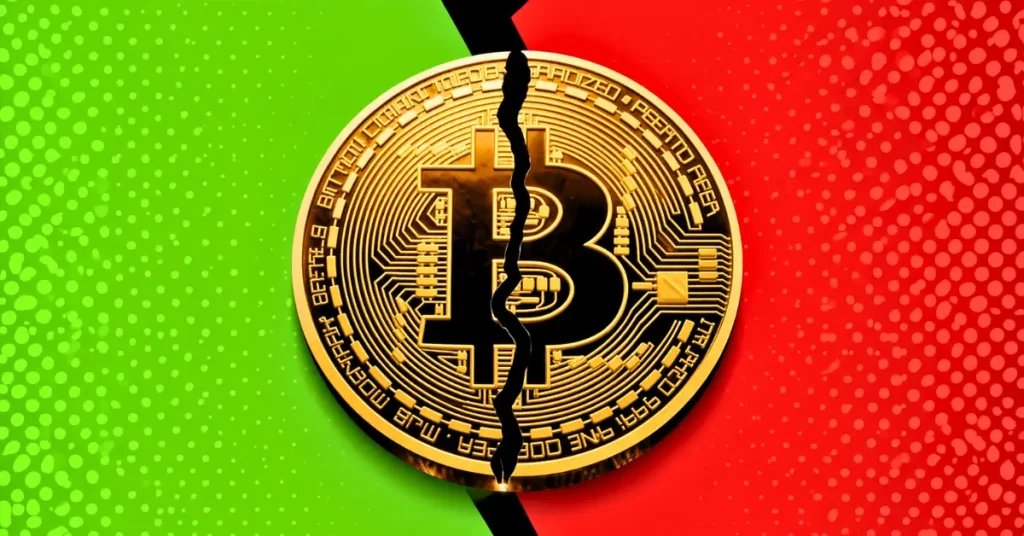
The Bitcoin weekly MACD has turned bullish, signaling a potential shift in momentum, but historical data suggests this indicator has previously appeared during downtrends without confirming a market bottom. Traders should monitor Bitcoin's price action around the $70,972 to $74,585 resistance zone, as a failure to break through could lead to a significant pullback, potentially below $50,000. While the MACD crossover suggests improving momentum, the lack of a clear higher high and low structure indicates consolidation rather than a confirmed reversal, necessitating caution.
The debate surrounding a viral $169 to $5B Shiba Inu investment highlights the speculative nature of altcoin cycles and questions the accuracy of historical claims. While early Shiba Inu investors saw life-changing returns, current market data shows SHIB trading significantly below its all-time high, suggesting past performance is not indicative of future results. The scrutiny of the $169 SHIB claim, with evidence suggesting an initial investment closer to $8,000, underscores the importance of verifying data in evaluating extreme altcoin narratives.

Bitcoin Core v31.0rc4 testnet release introduces significant mempool redesign for improved transaction selection and fee efficiency, potentially enhancing network throughput and user experience. Enhanced privacy features in the new Bitcoin Core version, including mandatory Tor/I2P broadcasting, aim to obscure user IP addresses and improve transaction anonymity, a positive development for privacy-conscious users. The increase in default database cache to 1,024 MB (for systems with 4GB+ RAM) and faster block validation are performance upgrades designed to improve node synchronization and overall network efficiency. This release is currently in the testing phase, indicating that widespread adoption and market impact will depend on successful validation by node operators and miners before the final rollout.
The upcoming XRP community night event in Paris during Paris Blockchain Week, alongside the XRPL hackathon and audit contest, signals increased developer and community engagement which could foster positive sentiment for XRP. The XRPL audit contest, covering features like Batch Transactions and Confidential Transfers, represents a proactive approach to protocol security and development, potentially enhancing the ledger's robustness and attracting further innovation. The convergence of community events and technical development initiatives around XRPL during Paris Blockchain Week suggests a focused effort to highlight ecosystem growth and upcoming functionalities, potentially driving short-term interest.

US Treasury and Federal Reserve leaders convened an urgent meeting with bank CEOs to discuss AI-driven cyber risks, signaling a systemic concern over advanced AI models like Mythos potentially exploiting zero-day vulnerabilities across critical software infrastructure. The meeting highlights a dual approach where regulators are simultaneously warning financial institutions about AI cyber threats while the Treasury has also ceased using products from Anthropic, the developer of Mythos, due to national security concerns. The development suggests a proactive regulatory stance, moving from theoretical risk assessment to operationalizing frameworks for AI cybersecurity, with potential for stricter supervisory expectations and compliance burdens for banks if offensive AI capabilities outpace defensive patching. The urgency underscores the potential for AI to compress the timeline between vulnerability discovery and exploitation, posing a significant threat to the interconnected financial system and necessitating enhanced resilience and vendor risk management.
Japan's approval of amendments to the Financial Instruments and Exchange Act, classifying cryptocurrencies as financial products, signals a significant step towards regulatory clarity and potential institutional adoption in the region. The new regulatory framework is expected to position Bitcoin favorably for increased adoption in Japan, potentially enhancing the country's global competitiveness in digital finance. Metaplanet's CEO indicates the company will leverage this regulatory development to double down on its Bitcoin-focused capital strategy, suggesting a potential increase in corporate treasury holdings of BTC.

The upcoming SEC Clarity Act roundtable on April 16th is a key catalyst for XRP, as discussions on digital asset classification could significantly alter market sentiment and regulatory outlook. XRP's price is consolidating above a critical demand zone near $1.30, indicating potential for a breakout if regulatory clarity emerges, with immediate resistance at $1.40-$1.45. Cooling on-chain activity and low trading volume suggest XRP is in a pre-breakout consolidation phase, historically preceding significant directional moves. While improved macro conditions support XRP, the primary driver for a near-term rally hinges on positive outcomes from the SEC roundtable, potentially shifting its regulatory status.

Despite a significant spike in whale transactions and exchange outflows, WLFI's price has declined over 22% in four days, indicating that on-chain activity does not yet confirm accumulation and suggests potential for further downside. The divergence between increased whale activity and a falling price creates uncertainty, implying that traders should await clear price action confirmation of a trend reversal rather than relying solely on whale movements. With RSI near oversold levels but Chaikin Money Flow negative and volume lacking accumulation signals, WLFI faces strong resistance on any bounce and a breakdown below $0.077 could accelerate losses, making the current setup high-risk.

Regulators are probing major US banks and insurance companies for exposure to the $1.8 trillion private credit market, signaling growing concern over potential systemic stress similar to the 2008 crisis. The private credit market faces significant refinancing risk in 2025-2026 due to loans originated at near-zero interest rates now needing to be refinanced at much higher rates, increasing default probabilities. While not currently deemed a systemic threat to the core banking system, pockets of stress are evident, with funds like Blue Owl Capital limiting redemptions, indicating potential liquidity issues within the sector. The stress in private credit, coupled with inflation and a hawkish Fed stance, contributes to a late-cycle macro environment that is capping risk asset performance, including Bitcoin's recent range-bound trading.

The potential passage of the CLARITY Act is interpreted as a significant catalyst for institutional capital inflow into the crypto market, suggesting a proactive accumulation strategy for key assets before regulatory clarity is fully priced in. Ethereum is highlighted as the primary institutional entry point due to existing ETF momentum and expanded exposure from traditional finance players, positioning it as a leading asset in anticipation of regulatory developments. While Solana and Chainlink are identified as secondary beneficiaries of potential institutional adoption, their near-term performance is contingent on broader market stability, particularly Bitcoin and Ethereum's price action.
Signal context only. Validate with price action, liquidity, and risk limits before taking a position.
Ethereum
ETH
A federal judge has temporarily blocked Arizona from pursuing criminal charges against Kalshi, siding with the CFTC's argument that federal regulation preempts state law for prediction markets. This ruling establishes a temporary restraining order against Arizona's enforcement of gambling laws on CFTC-regulated contracts, impacting the regulatory landscape for prediction markets. The decision highlights ongoing jurisdictional battles between state and federal regulators over novel financial products, with potential implications for other states and platforms.
