
Navigating Crypto News

CoinFeather
Navigating Crypto News

Quick market read from this story
A federal judge has temporarily blocked Arizona from pursuing criminal charges against Kalshi, siding with the CFTC's argument that federal regulation preempts state law for prediction markets.
This ruling establishes a temporary restraining order against Arizona's enforcement of gambling laws on CFTC-regulated contracts, impacting the regulatory landscape for prediction markets.
The decision highlights ongoing jurisdictional battles between state and federal regulators over novel financial products, with potential implications for other states and platforms.
Source, catalyst, and sector overlap from the latest feed.
Public disputes between founders of major exchanges like OKX and Binance, while not directly impacting trading, can create reputational noise and highlight ongoing governance or historical issues. The resurfacing of decade-old allegations between Star Xu and CZ, triggered by CZ's memoir, suggests lingering unresolved conflicts that could potentially resurface in future regulatory or legal contexts. The $1 billion wager proposed by CZ and rejected by Xu due to compliance concerns underscores the increasing regulatory scrutiny on major crypto entities and their founders.
Live Feed
Loading the broader stream in the same flow as the homepage feed.

A newly disclosed Android vulnerability, dubbed "intent redirection," has put approximately 30 million crypto wallet credentials at risk, highlighting ongoing security challenges in mobile crypto access. While the vulnerability has been patched with SDK version 5.2.1, users are advised to update apps and consider migrating funds from older wallets to mitigate potential exposure. The incident underscores the critical need for continuous vigilance in mobile security for crypto users and the importance of prompt patching by developers.
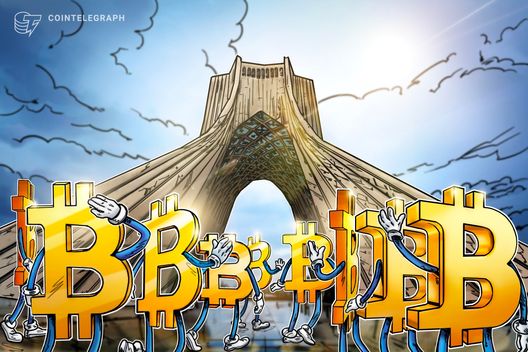
Reports suggest Iran may accept Bitcoin for oil tolls, potentially bypassing US sanctions and enhancing BTC's role as a neutral settlement layer for international transactions. The feasibility of rapid BTC payments for oil tankers hinges on Layer-2 solutions like the Lightning Network, though transaction limits and the use of QR codes for address provision are practical considerations. Conflicting reports regarding stablecoin or Yuan payments introduce uncertainty, highlighting the need for on-chain verification of any actual BTC transactions for these tolls.
Solana has broken a prolonged downtrend, with technical indicators suggesting a potential shift into a mark-up phase, signaling a bullish continuation toward $90 and potentially $120 in the near term. The current price action around the $85 level represents a critical decision point; a sustained break above $90 would confirm stronger bullish momentum, while a rejection could lead to a pullback towards $80. Long-term analysis indicates Solana is respecting a macro ascending trendline, with projections suggesting potential new highs towards $280 and $520 by late 2026 to early 2027 if current support holds.
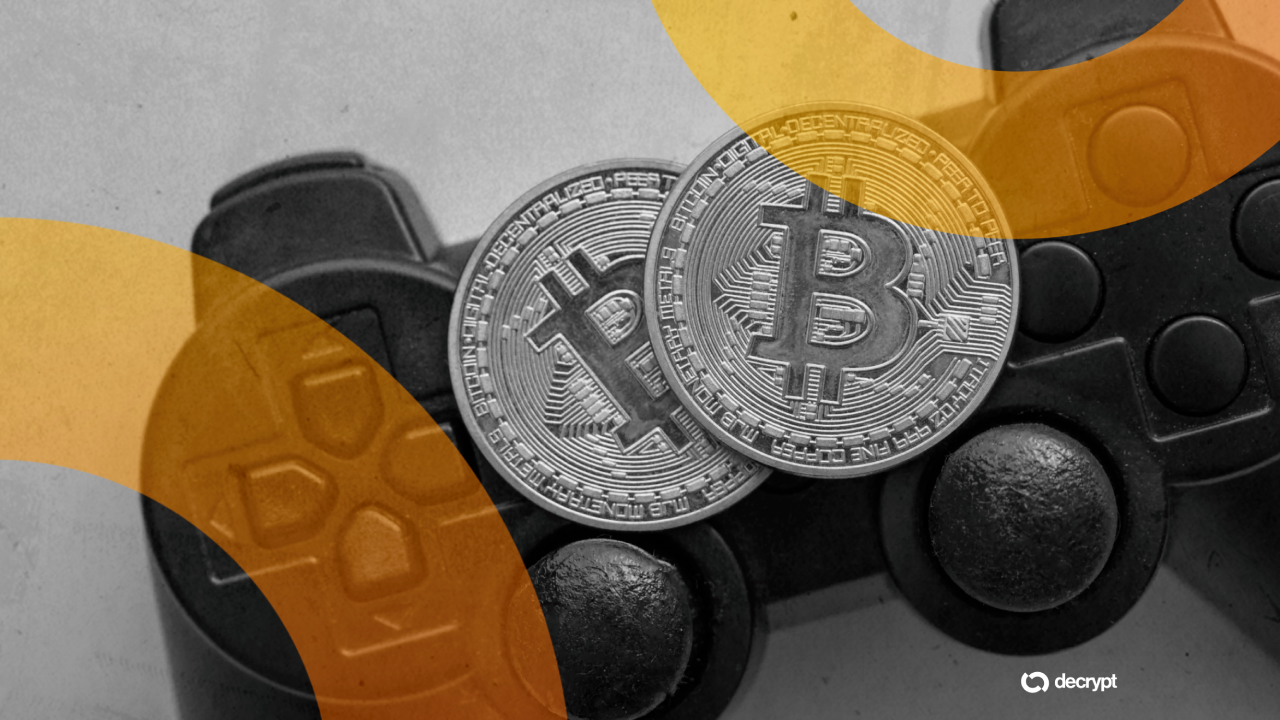
A new Bitcoin-based game, 'Mempool Space Invaders,' offers a small BTC bounty for players who can destroy transactions representing 10,000 BTC in value. The game incentivizes players to engage with the Bitcoin blockchain by simulating transaction destruction, though the primary reward is minimal ($7.30). While the game is free-to-play, an option to pay a small fee (1,000 sats) to continue a run suggests a minor revenue stream for the developer, but the core mechanic is novelty rather than a significant economic driver. The game's design, which includes a 'people's approach' to win by sending a large BTC transaction to oneself, highlights a creative, albeit impractical, way to interact with blockchain activity for a small reward.
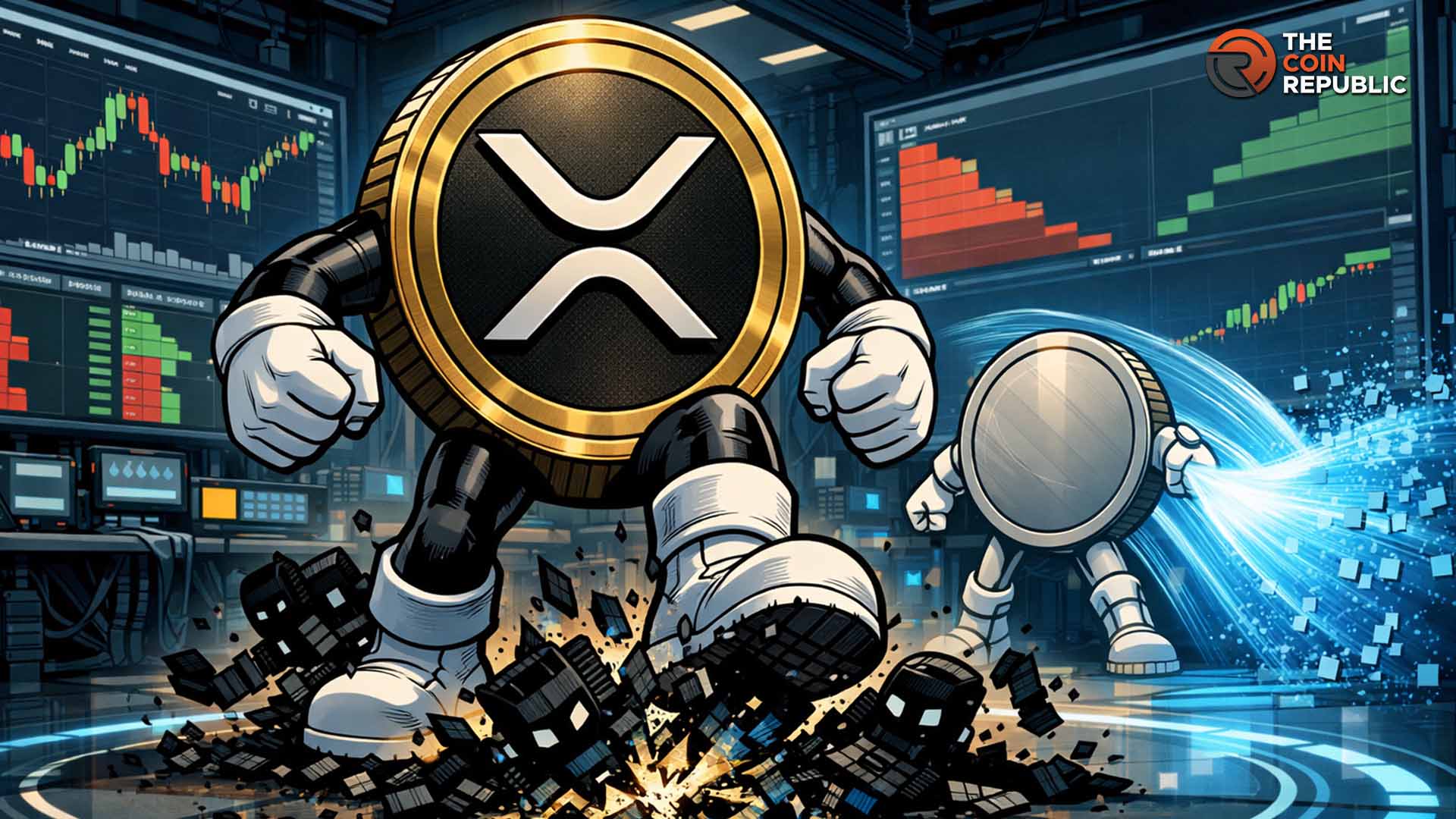
XRP Ledger demonstrates robust scalability by handling over 140 TPS with low fees and fast settlement, indicating strong underlying infrastructure despite mixed market signals. Despite high on-chain activity, XRP ETF data shows net outflows, suggesting a divergence between network usage and investor sentiment or capital allocation. The surge in XRP Ledger transactions is largely attributed to bot activity and 'ghost liquidity' on the DEX, leading to a high rate of failed transactions which the network efficiently rejects. XRP's price outlook hinges on breaking the $1.80 resistance; failure could lead to a significant dip towards $0.70-$0.80, a pattern historically preceding upward trends.

The multi-year agreement between CoreWeave and Anthropic signifies a substantial demand for AI-specific cloud infrastructure, potentially diverting resources and talent from traditional crypto mining operations. CoreWeave's strategic pivot from crypto mining to AI infrastructure, supported by significant capital raises, highlights a broader industry trend of repurposing hardware and expertise for AI workloads. The increasing profitability of AI compute compared to Bitcoin mining, as indicated by AI's willingness to pay higher prices for electricity, suggests a continued shift away from mining for many operators.

Iran's reported requirement for oil tankers to pay tolls in Bitcoin for passage through the Strait of Hormuz introduces a novel geopolitical use case for BTC, potentially bypassing sanctions and demonstrating its utility in circumventing traditional financial systems. This development signals a strategic shift for Iran, moving from accepting only the Chinese yuan to embracing cryptocurrency for critical trade route payments, highlighting the increasing integration of digital assets into global geopolitical and economic strategies. The potential for Bitcoin to be used in bypassing sanctions could attract further attention from regulators and policymakers, while also presenting a unique risk/reward scenario for traders monitoring geopolitical events and their impact on crypto markets.
Shiba Inu community sentiment is currently anchored by a return to foundational principles, suggesting a focus on long-term resilience rather than immediate price action. SHIB price is exhibiting stability, indicating a lack of strong directional conviction as traders await macroeconomic data, particularly inflation figures, to dictate market sentiment. Anticipated higher-than-expected US inflation data could pressure risk assets like SHIB, potentially leading to a bearish short-term outlook if the market reacts negatively to tightening monetary policy expectations. The current market environment for SHIB is characterized by consolidation, with its price significantly below its all-time high, underscoring the need for a substantial catalyst to drive renewed interest and upward momentum.
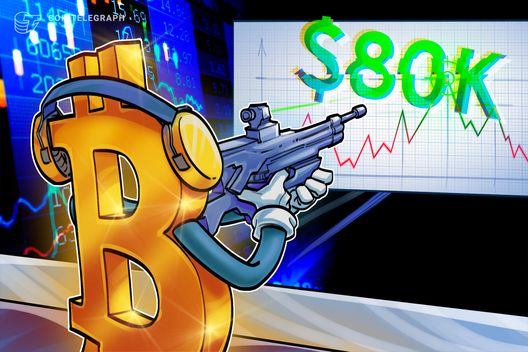
Bitcoin has broken out of a bearish chart pattern and reclaimed key moving averages, suggesting a potential continuation of its bullish trend. On-chain data indicates significant resistance between $78,000 and $80,000, suggesting that while upside potential exists, distribution pressure from recent buyers could cap gains. The market sentiment, as reflected by Polymarket odds, shows increasing conviction for Bitcoin to reach $75,000 and a notable, albeit lower, probability of hitting $80,000 by April.

The arrest of a suspect for an attack on Sam Altman's home and threats against OpenAI headquarters highlights escalating security concerns for AI leaders. While the incident is concerning, it does not directly impact crypto market assets or protocols, suggesting a limited immediate trading implication. The event underscores a broader narrative of potential backlash against AI development, which could indirectly influence investor sentiment towards AI-related crypto projects.

The impending 16 billion WLFI token unlock, valued at $1.28 billion, coupled with a $75 million stablecoin debt on Dolomite, presents a significant risk of market flooding and potential cascading liquidations. The project's strategy of borrowing stablecoins against its illiquid WLFI token on Dolomite, where it constitutes over 50% of TVL, has locked retail depositors and created a high-risk scenario mirroring past DeFi collapses like FTX and Curve. Despite assurances from World Liberty Financial, the combination of lawsuits from early investors and the imminent token unlock suggests a potential liquidity crisis, with the unlock potentially exacerbating price declines and impacting retail lenders.
Bitcoin demonstrated resilience by rallying despite a higher-than-expected CPI print, indicating that market participants are looking past current inflation data towards future rate cut expectations or other bullish narratives. The price action suggests that Bitcoin is reacting more to liquidity and technical levels than macroeconomic headlines, with buyers stepping in at key support zones to push the price towards new resistance. A sustained hold above the $70K-$72K range is crucial for Bitcoin to confirm a breakout and potentially target higher levels around $75K, while failure could lead to a consolidation or pullback.
Signal context only. Validate with price action, liquidity, and risk limits before taking a position.
The core argument for digital asset adoption hinges on providing market participants with choice across networks, tokenization sequencing, custody models, and wallet solutions, rather than imposing a single standard. A lack of interoperability and forced choices could lead to fragmented ecosystems and recreate past financial market inefficiencies, hindering the potential of Web3. The author emphasizes that successful digital asset evolution requires collaboration between infrastructure providers, tech firms, and regulators to build frameworks prioritizing compatibility and interoperability. The article suggests that tokenization should be approached with caution and intentionality, allowing market participants to decide the pace and assets to tokenize based on evolving infrastructure and demand.
