
Navigating Crypto News

CoinFeather
Navigating Crypto News

Quick market read from this story
Senator Lummis warns that failure to pass the Digital Asset Market Clarity Act could lead to a regulatory freeze until 2030, highlighting the critical window for establishing a clear framework in the US.
The urgency expressed by Senator Lummis and supported by Coinbase CEO Brian Armstrong suggests a potential breakthrough in the legislative deadlock, which could significantly impact the US crypto regulatory landscape.
White House advisor Patrick Witt's warning about harsher crackdowns under a hostile administration underscores the importance of the current bipartisan compromise for DeFi, developer protections, and digital commodity classification.
Source, catalyst, and sector overlap from the latest feed.
Persistent liquidity impairment across major cryptocurrencies like XRP, BTC, and ETH six months post-October crash suggests a fundamental structural weakness in market depth, potentially impacting price discovery and volatility. The $19 billion liquidation event in October appears to have permanently altered market maker and leveraged position dynamics, leading to sustained lower order book depth that may require significant time to recover, if at all. While the crash removed artificial inflation, the ongoing liquidity deficit could present opportunities for genuine institutional price discovery, but also indicates a less resilient market to future shocks.
Live Feed
Loading the broader stream in the same flow as the homepage feed.
A new Bitcoin-based game, 'Mempool Space Invaders,' offers a small BTC bounty for players who can destroy transactions representing 10,000 BTC in value. The game incentivizes players to engage with the Bitcoin blockchain by simulating transaction destruction, though the primary reward is minimal ($7.30). While the game is free-to-play, an option to pay a small fee (1,000 sats) to continue a run suggests a minor revenue stream for the developer, but the core mechanic is novelty rather than a significant economic driver. The game's design, which includes a 'people's approach' to win by sending a large BTC transaction to oneself, highlights a creative, albeit impractical, way to interact with blockchain activity for a small reward.

The multi-year agreement between CoreWeave and Anthropic signifies a substantial demand for AI-specific cloud infrastructure, potentially diverting resources and talent from traditional crypto mining operations. CoreWeave's strategic pivot from crypto mining to AI infrastructure, supported by significant capital raises, highlights a broader industry trend of repurposing hardware and expertise for AI workloads. The increasing profitability of AI compute compared to Bitcoin mining, as indicated by AI's willingness to pay higher prices for electricity, suggests a continued shift away from mining for many operators.
Bitcoin's price action shows a concerning divergence where spot traders are selling while perpetual futures traders remain bullish, suggesting potential instability and a fragile upward move. The rebound from the 0.5 Fibonacci fan support zone indicates a constructive weekly structure, but confirmation of higher fan levels is needed before a strong bullish continuation can be expected. The current market setup, with leveraged futures buying not being confirmed by spot demand, increases the risk of a price rejection or a squeeze in the opposite direction, warranting caution.

Iran's reported requirement for oil tankers to pay tolls in Bitcoin for passage through the Strait of Hormuz introduces a novel geopolitical use case for BTC, potentially bypassing sanctions and demonstrating its utility in circumventing traditional financial systems. This development signals a strategic shift for Iran, moving from accepting only the Chinese yuan to embracing cryptocurrency for critical trade route payments, highlighting the increasing integration of digital assets into global geopolitical and economic strategies. The potential for Bitcoin to be used in bypassing sanctions could attract further attention from regulators and policymakers, while also presenting a unique risk/reward scenario for traders monitoring geopolitical events and their impact on crypto markets.
Shiba Inu community sentiment is currently anchored by a return to foundational principles, suggesting a focus on long-term resilience rather than immediate price action. SHIB price is exhibiting stability, indicating a lack of strong directional conviction as traders await macroeconomic data, particularly inflation figures, to dictate market sentiment. Anticipated higher-than-expected US inflation data could pressure risk assets like SHIB, potentially leading to a bearish short-term outlook if the market reacts negatively to tightening monetary policy expectations. The current market environment for SHIB is characterized by consolidation, with its price significantly below its all-time high, underscoring the need for a substantial catalyst to drive renewed interest and upward momentum.
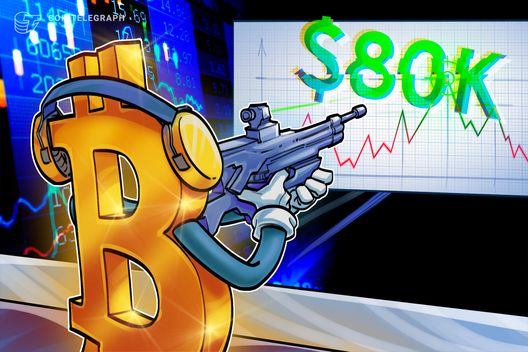
Bitcoin has broken out of a bearish chart pattern and reclaimed key moving averages, suggesting a potential continuation of its bullish trend. On-chain data indicates significant resistance between $78,000 and $80,000, suggesting that while upside potential exists, distribution pressure from recent buyers could cap gains. The market sentiment, as reflected by Polymarket odds, shows increasing conviction for Bitcoin to reach $75,000 and a notable, albeit lower, probability of hitting $80,000 by April.

The arrest of a suspect for an attack on Sam Altman's home and threats against OpenAI headquarters highlights escalating security concerns for AI leaders. While the incident is concerning, it does not directly impact crypto market assets or protocols, suggesting a limited immediate trading implication. The event underscores a broader narrative of potential backlash against AI development, which could indirectly influence investor sentiment towards AI-related crypto projects.
Bitcoin demonstrated resilience by rallying despite a higher-than-expected CPI print, indicating that market participants are looking past current inflation data towards future rate cut expectations or other bullish narratives. The price action suggests that Bitcoin is reacting more to liquidity and technical levels than macroeconomic headlines, with buyers stepping in at key support zones to push the price towards new resistance. A sustained hold above the $70K-$72K range is crucial for Bitcoin to confirm a breakout and potentially target higher levels around $75K, while failure could lead to a consolidation or pullback.
Bitcoin reclaimed $72,000 following a 3.3% year-over-year CPI increase, indicating market resilience to inflation data driven by energy costs. Despite headline inflation acceleration, core CPI remained moderate at 2.6%, suggesting traders are focused on underlying price trends and the Federal Reserve's potential rate path. The market's measured response to the CPI data, with Bitcoin holding gains and altcoins following, suggests that current price levels may already reflect expectations of a slower monetary easing cycle. Geopolitical tensions and their impact on energy markets add a layer of uncertainty, but Bitcoin's ability to hold gains above $72,000 highlights its relative strength amidst macro and risk factors.
Dogecoin has successfully completed an experimental post-quantum secure transaction on its mainnet, signaling proactive development in addressing long-term quantum computing threats. This milestone indicates that Dogecoin is actively working on integrating post-quantum cryptography (PQC) solutions, potentially enhancing its security posture against future cryptographic vulnerabilities. While not a full implementation, the successful test demonstrates tangible progress in preparing Dogecoin's infrastructure for quantum resistance, a critical but often overlooked aspect of blockchain security. The development positions Dogecoin as an early mover in addressing quantum threats, which could be a positive narrative driver for the asset as the broader industry grapples with this emerging risk.

Despite increased usage, Gen Z's enthusiasm for AI has significantly declined, signaling a growing distrust and concern over its long-term cognitive and career impacts. The rising skepticism among young users, who are increasingly viewing AI as a potential detriment to learning and originality, suggests a potential slowdown in organic adoption and a need for more responsible AI integration. Workplace anxiety is intensifying as Gen Z perceives AI as a threat to their careers, with nearly half believing the risks outweigh the benefits, indicating a challenging future for AI adoption in professional environments.
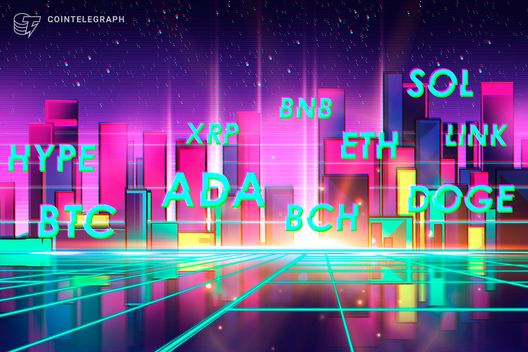
Bitcoin faces critical resistance around $76,000, with a breach potentially reigniting a bull market, but analysts caution that sustained recovery requires surpassing $78,000 and $81,600 to overcome selling pressure from recent buyers. Ether shows signs of undervaluation with its oscillator at -2.42, a level not seen since its 2022 bottom, suggesting limited downside risk and potential for upside if it breaks above $2,274 towards $2,800. Several major altcoins including XRP, BNB, SOL, DOGE, ADA, BCH, and LINK are at key technical junctures, with their short-term price action dependent on breaking or holding critical resistance and support levels, indicating a mixed outlook for the altcoin market. While US spot BTC ETFs have seen net inflows, the overall market sentiment remains cautious as Bitcoin needs to clear significant overhead resistance levels to confirm a sustainable recovery, highlighting the importance of technical levels for near-term price action.
Signal context only. Validate with price action, liquidity, and risk limits before taking a position.
Hyperliquid's HYPE token has achieved an all-time high against Coinbase stock (COIN), signaling a significant shift in market perception favoring decentralized derivatives platforms over traditional centralized exchanges. The platform's surge in open interest and daily volume, exceeding $8.28 billion, highlights its growing dominance in on-chain derivatives and its success in tokenizing traditional assets like oil and gold, positioning it as a key competitor to established players. Hyperliquid's tokenomics, with 97% of revenue directed towards buybacks, is a key driver of its current rally, indicating that market participants are valuing deflationary mechanisms and aggressive reward structures.
