
Navigating Crypto News

CoinFeather
Navigating Crypto News
Quick market read from this story
XRP Ledger demonstrates robust scalability by handling over 140 TPS with low fees and fast settlement, indicating strong underlying infrastructure despite mixed market signals.
Despite high on-chain activity, XRP ETF data shows net outflows, suggesting a divergence between network usage and investor sentiment or capital allocation.
The surge in XRP Ledger transactions is largely attributed to bot activity and 'ghost liquidity' on the DEX, leading to a high rate of failed transactions which the network efficiently rejects.
XRP's price outlook hinges on breaking the $1.80 resistance; failure could lead to a significant dip towards $0.70-$0.80, a pattern historically preceding upward trends.
Source, catalyst, and sector overlap from the latest feed.
The increasing adoption of crypto-backed cards for everyday retail purchases signifies a shift from niche speculation to practical utility, suggesting broader integration into consumer spending habits by 2026. Faster payment clearing, reduced international transaction friction, and dynamic reward programs offered by crypto-backed payment solutions are enhancing the checkout experience, potentially driving increased consumer loyalty and spending. Millennials and Gen Z are leading the adoption of crypto-backed spending, indicating that retailers focusing on these demographics must embrace digital-first payment methods to maintain relevance and capture market share.
Live Feed
Loading the broader stream in the same flow as the homepage feed.

The multi-year agreement between CoreWeave and Anthropic signifies a substantial demand for AI-specific cloud infrastructure, potentially diverting resources and talent from traditional crypto mining operations. CoreWeave's strategic pivot from crypto mining to AI infrastructure, supported by significant capital raises, highlights a broader industry trend of repurposing hardware and expertise for AI workloads. The increasing profitability of AI compute compared to Bitcoin mining, as indicated by AI's willingness to pay higher prices for electricity, suggests a continued shift away from mining for many operators.

Iran's reported requirement for oil tankers to pay tolls in Bitcoin for passage through the Strait of Hormuz introduces a novel geopolitical use case for BTC, potentially bypassing sanctions and demonstrating its utility in circumventing traditional financial systems. This development signals a strategic shift for Iran, moving from accepting only the Chinese yuan to embracing cryptocurrency for critical trade route payments, highlighting the increasing integration of digital assets into global geopolitical and economic strategies. The potential for Bitcoin to be used in bypassing sanctions could attract further attention from regulators and policymakers, while also presenting a unique risk/reward scenario for traders monitoring geopolitical events and their impact on crypto markets.
Shiba Inu community sentiment is currently anchored by a return to foundational principles, suggesting a focus on long-term resilience rather than immediate price action. SHIB price is exhibiting stability, indicating a lack of strong directional conviction as traders await macroeconomic data, particularly inflation figures, to dictate market sentiment. Anticipated higher-than-expected US inflation data could pressure risk assets like SHIB, potentially leading to a bearish short-term outlook if the market reacts negatively to tightening monetary policy expectations. The current market environment for SHIB is characterized by consolidation, with its price significantly below its all-time high, underscoring the need for a substantial catalyst to drive renewed interest and upward momentum.
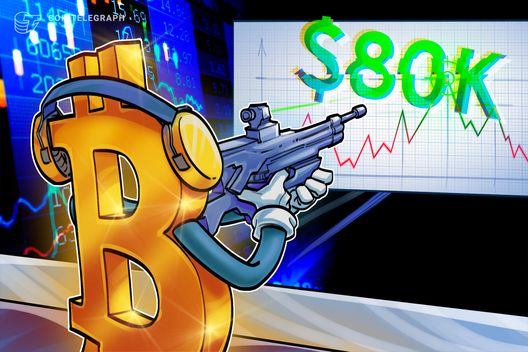
Bitcoin has broken out of a bearish chart pattern and reclaimed key moving averages, suggesting a potential continuation of its bullish trend. On-chain data indicates significant resistance between $78,000 and $80,000, suggesting that while upside potential exists, distribution pressure from recent buyers could cap gains. The market sentiment, as reflected by Polymarket odds, shows increasing conviction for Bitcoin to reach $75,000 and a notable, albeit lower, probability of hitting $80,000 by April.

The arrest of a suspect for an attack on Sam Altman's home and threats against OpenAI headquarters highlights escalating security concerns for AI leaders. While the incident is concerning, it does not directly impact crypto market assets or protocols, suggesting a limited immediate trading implication. The event underscores a broader narrative of potential backlash against AI development, which could indirectly influence investor sentiment towards AI-related crypto projects.
Hong Kong's issuance of the first stablecoin licenses to HSBC and Anchorpoint under new HKMA regulations signifies a significant step towards regulated digital asset adoption in the region. The bank-backed model adopted by Hong Kong for stablecoins, mirroring traditional note-issuing practices, suggests a cautious approach focused on stability and compliance, potentially limiting rapid decentralized innovation. Strict compliance rules, including identity verification for wallet access and a travel rule for larger transactions, indicate that these licensed stablecoins will operate differently from existing, more permissionless tokens like USDT and USDC. The anticipated launch of these HKD stablecoins in H2 2026 for payments and digital asset services, with integration into existing banking apps, could drive institutional adoption and test demand for regulated stablecoins in trade finance.

The impending 16 billion WLFI token unlock, valued at $1.28 billion, coupled with a $75 million stablecoin debt on Dolomite, presents a significant risk of market flooding and potential cascading liquidations. The project's strategy of borrowing stablecoins against its illiquid WLFI token on Dolomite, where it constitutes over 50% of TVL, has locked retail depositors and created a high-risk scenario mirroring past DeFi collapses like FTX and Curve. Despite assurances from World Liberty Financial, the combination of lawsuits from early investors and the imminent token unlock suggests a potential liquidity crisis, with the unlock potentially exacerbating price declines and impacting retail lenders.
Bitcoin demonstrated resilience by rallying despite a higher-than-expected CPI print, indicating that market participants are looking past current inflation data towards future rate cut expectations or other bullish narratives. The price action suggests that Bitcoin is reacting more to liquidity and technical levels than macroeconomic headlines, with buyers stepping in at key support zones to push the price towards new resistance. A sustained hold above the $70K-$72K range is crucial for Bitcoin to confirm a breakout and potentially target higher levels around $75K, while failure could lead to a consolidation or pullback.
Bitcoin reclaimed $72,000 following a 3.3% year-over-year CPI increase, indicating market resilience to inflation data driven by energy costs. Despite headline inflation acceleration, core CPI remained moderate at 2.6%, suggesting traders are focused on underlying price trends and the Federal Reserve's potential rate path. The market's measured response to the CPI data, with Bitcoin holding gains and altcoins following, suggests that current price levels may already reflect expectations of a slower monetary easing cycle. Geopolitical tensions and their impact on energy markets add a layer of uncertainty, but Bitcoin's ability to hold gains above $72,000 highlights its relative strength amidst macro and risk factors.

Coinbase CEO Brian Armstrong's renewed support for the CLARITY Act signals a potential shift towards regulatory clarity, which could positively impact the broader crypto market if passed. The endorsement, following earlier reservations, suggests progress in negotiations and a more unified industry stance, potentially reducing regulatory uncertainty for exchanges and other crypto firms. The CLARITY Act's advancement, supported by key industry players like Coinbase, could pave the way for clearer rules on digital assets, influencing investment strategies and market sentiment.
Dogecoin has successfully completed an experimental post-quantum secure transaction on its mainnet, signaling proactive development in addressing long-term quantum computing threats. This milestone indicates that Dogecoin is actively working on integrating post-quantum cryptography (PQC) solutions, potentially enhancing its security posture against future cryptographic vulnerabilities. While not a full implementation, the successful test demonstrates tangible progress in preparing Dogecoin's infrastructure for quantum resistance, a critical but often overlooked aspect of blockchain security. The development positions Dogecoin as an early mover in addressing quantum threats, which could be a positive narrative driver for the asset as the broader industry grapples with this emerging risk.

Despite increased usage, Gen Z's enthusiasm for AI has significantly declined, signaling a growing distrust and concern over its long-term cognitive and career impacts. The rising skepticism among young users, who are increasingly viewing AI as a potential detriment to learning and originality, suggests a potential slowdown in organic adoption and a need for more responsible AI integration. Workplace anxiety is intensifying as Gen Z perceives AI as a threat to their careers, with nearly half believing the risks outweigh the benefits, indicating a challenging future for AI adoption in professional environments.

Dogecoin's active wallet surge indicates renewed retail interest, but price action remains constrained, suggesting a disconnect between on-chain activity and immediate market repricing. Pepeto's upcoming Binance listing is presented as a significant catalyst, with projections of 150x returns, positioning it as a high-risk, high-reward opportunity compared to the slower growth potential of established assets like DOGE and LINK. The narrative highlights a preference for presale opportunities with imminent listing catalysts over large-cap assets facing price pressure, implying a trader focus on short-term alpha generation.
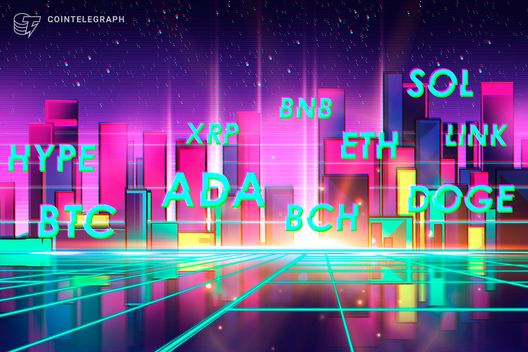
Bitcoin faces critical resistance around $76,000, with a breach potentially reigniting a bull market, but analysts caution that sustained recovery requires surpassing $78,000 and $81,600 to overcome selling pressure from recent buyers. Ether shows signs of undervaluation with its oscillator at -2.42, a level not seen since its 2022 bottom, suggesting limited downside risk and potential for upside if it breaks above $2,274 towards $2,800. Several major altcoins including XRP, BNB, SOL, DOGE, ADA, BCH, and LINK are at key technical junctures, with their short-term price action dependent on breaking or holding critical resistance and support levels, indicating a mixed outlook for the altcoin market. While US spot BTC ETFs have seen net inflows, the overall market sentiment remains cautious as Bitcoin needs to clear significant overhead resistance levels to confirm a sustainable recovery, highlighting the importance of technical levels for near-term price action.
Signal context only. Validate with price action, liquidity, and risk limits before taking a position.
No explicit catalyst tagged.
Ethereum is at a critical pivot point around the $2,150-$2,200 range, with a sustained break above $2,402 needed to signal a potential local bottom and invalidate bearish scenarios. Upcoming ETH options expiry near the $2,050 max-pain level and US CPI data releases are key short-term volatility catalysts that could influence price direction. Despite current resistance, the Binance taker buy-sell ratio above 1 and a macro oscillator in deeply undervalued territory suggest potential for accumulation and a gradual upside if key resistance breaks. Failure to hold the $2,150 support could lead to a rapid decline towards the $1,972-$1,818 band, highlighting the immediate downside risk if bullish momentum falters.
