
Navigating Crypto News

CoinFeather
Navigating Crypto News
Quick market read from this story
The successful execution of the first ZK-proof privacy transaction on XRPL addresses a critical barrier to institutional adoption by enabling data verification without exposure.
This development positions XRPL as a leading platform for privacy-centric financial applications, potentially driving demand for its ecosystem services and infrastructure.
The integration of ZK-proofs, alongside native XRP lending and AI security, signals XRPL's strategic evolution into a comprehensive, institution-ready financial ecosystem.
Deep Dive
The XRP Ledger (XRPL) has successfully executed the first-ever zero-knowledge (ZK) privacy transaction on its testnet, a significant development enabling secure on-chain data verification without exposing sensitive information. This breakthrough, achieved by DNA Protocol, addresses a major hurdle for institutional adoption of blockchain technology by removing privacy concerns associated with handling confidential data.
Zero-knowledge proofs allow sensitive data to be transformed into cryptographic evidence that can be validated on-chain without revealing the original details. The process on XRPL involves converting data into a ZK proof, validating this proof on the ledger, and ensuring that no private information is ever disclosed. This capability positions XRPL as a leading platform for privacy-focused applications, including KYC compliance, medical records management, secure financial reporting, and on-chain regulatory oversight.
The XRPL ecosystem is undergoing rapid evolution, with plans for native XRP lending by Evernorth aiming to unlock up to $100 billion in idle capital and boost on-chain liquidity. This development, combined with ZK-proof privacy, is transforming XRPL into a next-generation financial platform capable of supporting complex, institution-grade services. Furthermore, AI-driven security mechanisms are being implemented to detect and neutralize vulnerabilities, enhancing the ledger's safety for innovations like ZK transactions and native lending.
Looking ahead, Agent Commerce is set to revolutionize on-chain payments through AI-powered autonomous transactions. When integrated with XRPL's privacy and security upgrades, these advancements position the ledger as a highly advanced, institution-ready blockchain. The successful ZK-proof transaction demonstrates XRPL's capacity to support private, secure, and compliant financial ecosystems at scale, signaling that institutional adoption is actively progressing with XRPL at the forefront.
Source, catalyst, and sector overlap from the latest feed.
SpaceX's potential IPO, targeting a $1.75T valuation, may significantly impact retail brokerages like Robinhood and SoFi by prioritizing underwriter-linked platforms such as E*Trade for retail share allocation. The exclusion of Robinhood and SoFi from a substantial retail allocation in the SpaceX IPO could negatively affect their trading volume and customer engagement, as evidenced by Robinhood's stock pressure following the news. A new Nasdaq rule allowing faster inclusion of large-cap companies into the Nasdaq 100 could further boost demand for the SpaceX IPO, potentially increasing its attractiveness and influencing brokerage participation.
Ethereum's price action is currently constrained by descending trendline resistance, suggesting a continuation of the bearish structure observed in recent chart patterns. Technical analysis indicates that a failure to break above key resistance levels could lead to further downside, with potential targets identified below the $2,000 mark. Traders should monitor the descending trendline as the primary technical barrier; a sustained break above it would be required to invalidate the current bearish outlook.
Federal Reserve Chair Jerome Powell's remarks indicate a patient approach to monetary policy, suggesting that rate cuts are unlikely in the near term due to persistent inflation and geopolitical oil price risks. The Fed's stance implies a continued period of higher interest rates, which could pressure risk assets like cryptocurrencies by increasing the cost of capital and reducing speculative investment appetite. Powell's emphasis on waiting for more data, despite some labor market softness, signals that the Fed prioritizes inflation control over immediate economic stimulus, potentially prolonging market uncertainty. The acknowledgement of internal FOMC disagreements highlights the complex economic outlook, suggesting that future policy decisions will be data-dependent and subject to ongoing debate, making forward guidance less reliable.
Bitcoin experienced significant volatility, with liquidations on both long and short positions, indicating a battle for control around key price levels. The $69,000 to $70,000 zone represents critical resistance; a failure to break through this area could signal a continuation of the downtrend, while a sustained hold above it may indicate a bullish reversal. Liquidation heatmaps suggest that while the $65,000 support held, the $63,500 to $66,500 range has higher liquidation clusters, making it a potential revisit area if downward pressure resumes.
Dogecoin's price action is consolidating within a descending triangle pattern, indicating a potential 29% downside move to $0.075 if the bearish resolution occurs. The overwhelming liquidation of long positions (98%) and bearish technical indicators like EMAs, RSI, and MACD suggest strong sell-side pressure and a lack of buyer conviction. While a bullish scenario exists with a reclaim of $0.0932, the current technical setup and market sentiment heavily favor a bearish outcome, making short-term downside the primary risk.
Mitsubishi's adoption of JPMorgan's Kinexys blockchain for corporate payments signals growing institutional trust in blockchain-based financial infrastructure, potentially driving further adoption in traditional finance. The expansion of Kinexys beyond payments into tokenization of assets like private credit and real estate, coupled with other major institutions like BlackRock and Franklin Templeton exploring tokenization, indicates a significant shift towards RWA and tokenized assets. JPMorgan's continued investment in blockchain infrastructure, despite CEO Jamie Dimon's past skepticism, highlights a strategic pivot towards leveraging distributed ledger technology for core financial services and future market opportunities.
Square's strategic shift to automatically enable Bitcoin payments for millions of U.S. sellers, moving from opt-in to opt-out, significantly lowers the barrier to entry for mainstream BTC adoption at the point of sale. This development, driven by Jack Dorsey's maximalist stance, could lead to a substantial increase in Bitcoin transaction volume for everyday purchases, provided merchants do not actively disable the feature. The zero-fee structure for accepting Bitcoin and automatic USD conversion mitigates merchant risk and operational complexity, making it a more attractive, albeit default, payment option.
Square's auto-enabled Bitcoin payments for millions of U.S. businesses represent a significant step towards mainstream crypto adoption by abstracting away volatility and complexity for merchants. This integration, which converts BTC to USD by default, lowers the barrier for small businesses to accept Bitcoin, potentially expanding its real-world payment utility beyond crypto-native users. The move by Jack Dorsey's Square, a major player in payment processing, signals a growing trend of established financial technology companies embedding digital assets into existing commerce infrastructure, contrasting with stablecoin-focused initiatives like PayPal's PYUSD. By offering zero processing fees through 2026 and instant USD conversion, Square is incentivizing adoption and positioning Bitcoin as a potential 'TCP/IP moment' for value transfer, as suggested by industry figures.
Aave V4's launch on Ethereum mainnet introduces a modular 'Hub-and-Spoke' architecture, aiming to enhance liquidity utilization and expand into structured and real-world credit markets. Despite the significant protocol upgrade, AAVE's price action remains subdued, tracking broader market sentiment and suggesting limited immediate upside without a broader market shift. Aave's continued dominance in the DeFi lending market, holding a substantial TVL and market share, provides a strong foundation for the V4 upgrade's success and potential for further growth.
Nium's launch of a stablecoin card issuance platform integrating with Visa and Mastercard signifies a significant step towards mainstream adoption of digital dollar spending at the point of sale. The platform's ability to shorten stablecoin card program launch times from months to days, by consolidating conversion, settlement, and compliance, could accelerate the integration of stablecoins into traditional payment rails. This development, alongside Visa's expanded stablecoin support and Mastercard's acquisition of BVNK, indicates a growing trend of major payment networks embracing stablecoin utility, potentially increasing demand for stablecoins like USDT and PYUSD. While regulatory clarity remains a hurdle, the increasing infrastructure for stablecoin payments suggests a growing market for tokenized assets and their integration into everyday commerce.
The Ethereum Foundation's increased ETH staking, now totaling $50 million, signals a strategic shift towards enhancing financial sustainability through DeFi yield generation. This proactive treasury management by the Ethereum Foundation, aiming to stake up to 70,000 ETH, could set a precedent for other large holders and potentially increase demand for staking services. The Foundation's involvement in staking aligns with broader ecosystem developments like the Ethereum Economic Zone, suggesting a coordinated effort to bolster Ethereum's infrastructure and financial health.
Alibaba's Qwen 3.5 Omni release signifies a significant advancement in native omnimodal AI, integrating text, audio, and video processing for more seamless and interactive AI agents. The model's superior performance on audio benchmarks and real-time web search capabilities suggest a competitive edge against existing large language models, potentially driving adoption for advanced AI applications. Features like voice cloning and audio-visual vibe coding indicate a push towards more sophisticated AI functionalities, which could redefine user interaction and workflow automation in the near future. While the technology is impressive, its direct impact on the crypto market is currently limited as it is an AI development rather than a blockchain-specific event.
Bitcoin's continuous trading allows it to act as a real-time macro market, pricing geopolitical events and sentiment shifts outside traditional U.S. trading hours. The interplay between Iranian geopolitical developments and U.S. political messaging is directly influencing cross-asset pricing, with Bitcoin acting as an early indicator. The upcoming week's economic data, particularly concerning oil prices and inflation, will be interpreted through the lens of geopolitical risk, with Bitcoin's 24/7 price action providing immediate market feedback. Traders are closely monitoring Bitcoin's behavior during off-hours for clues on market sentiment regarding geopolitical events, potentially offering an asymmetric trading edge before traditional markets open.
Live Feed
Loading the broader stream in the same flow as the homepage feed.

The formation of the Blockchain Leadership Fund by Chainlink Labs and Anchorage Digital signals a coordinated industry effort to influence US crypto policy ahead of critical midterm elections. This PAC's hybrid structure allows direct candidate contributions and independent expenditures, mirroring strategies used in 2024 and indicating a sustained push for favorable regulatory outcomes. While specific funding amounts are undisclosed, the involvement of established players like Chainlink and Anchorage suggests a significant commitment to shaping the future regulatory landscape for digital assets. The initiative highlights the increasing importance of political engagement for the crypto sector, particularly concerning legislation like the CLARITY Act, which could impact market structure and company operations.
Bernstein maintains 'Outperform' ratings on Coinbase, Robinhood, and Figure despite lowered price targets, signaling a belief in their long-term growth potential in areas like tokenized assets and prediction markets. The analysis suggests a potential bottom for crypto stocks, with current prices ~60% off their peaks, presenting a 'buy the dip' opportunity for investors anticipating a crypto market recovery. Despite weak Q1 earnings and reduced EPS estimates for Coinbase, its stablecoin revenue and derivatives business expansion, alongside Robinhood's prediction market growth and Figure's tokenization efforts, are highlighted as key resilience factors. The report indicates a strategic shift in analyst focus towards diversified revenue streams beyond direct crypto trading, emphasizing the growth prospects in tokenized real-world assets and prediction markets for these companies.

Analyst Aralez predicts a potential Bitcoin price drop to $54,000, citing a downward channel and consistent lower highs/lows, suggesting a risk-off sentiment driven by ETF outflows and macroeconomic factors. Significant weekly outflows from spot Bitcoin ETFs, totaling $290 million with BlackRock's IBIT seeing substantial single-day redemptions, indicate waning institutional demand and contribute to bearish price pressure. Historical data suggests that a deeper Bitcoin drawdown correlates with a longer recovery period, implying that the current 48% drawdown could necessitate approximately 300 days for a full recovery to previous all-time highs. Geopolitical tensions and inflation concerns, exacerbated by oil price surges and statements from Donald Trump regarding Iran, are contributing to a broader risk-off environment that negatively impacts Bitcoin and other risk assets.

The CLARITY Act, if passed, is positioned not to directly benefit Ripple but to remove regulatory uncertainty for all financial institutions, potentially unlocking broader adoption of digital assets by global banks. Brad Garlinghouse's commentary suggests that the primary impact of the CLARITY Act is enabling traditional finance to engage with crypto, rather than altering Ripple's existing legal standing post-SEC lawsuit. Ripple's prime brokerage revenue tripling indicates growing institutional confidence and demand for digital asset services, independent of the CLARITY Act's passage, highlighting current business momentum. The article highlights XRP Ledger's expanding use cases beyond payments, including real-world asset tokenization, suggesting a diversification of utility that could support its long-term value proposition.
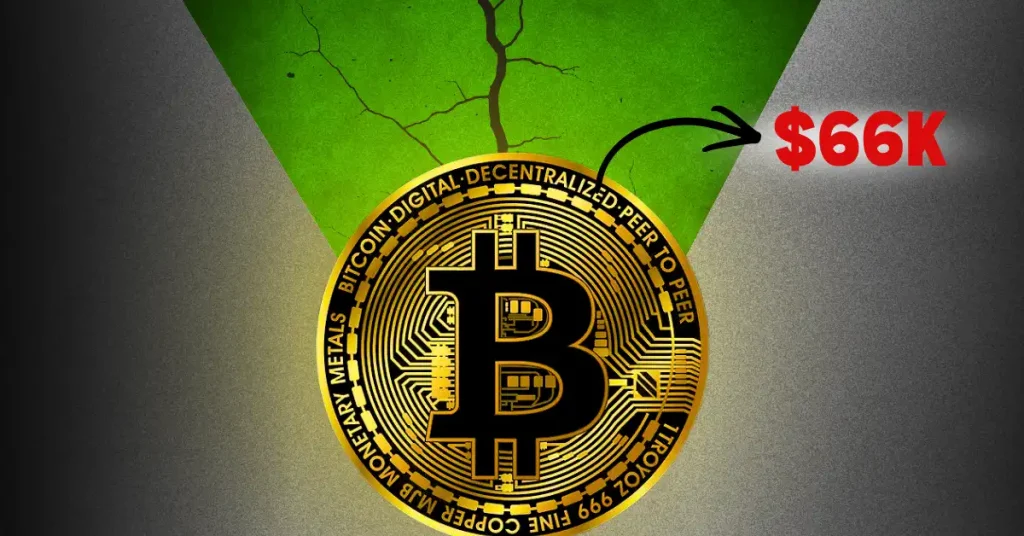
Potential government stimulus events, driven by geopolitical conflict, AI job displacement, or fiscal crises, could trigger significant inflation and repricing of hard assets like Bitcoin. An analyst predicts that one of nine potential catalysts could materialize within 3 to 24 months, leading to money printing that may significantly boost Bitcoin's value due to its fixed supply. The article highlights that historical government responses to crises involve substantial money printing, suggesting a recurring pattern that could benefit Bitcoin as a hedge against currency devaluation.

Increased demand from Bitcoin accumulator addresses, absorbing 67,000 BTC over the past week, suggests strong long-term holder conviction despite recent price dips. A significant drop in miner selling pressure, with the MPI hitting 2024 lows, reduces immediate sell-side supply and supports potential price stabilization. While long-term accumulation is positive, a sharp reversal in Binance's net taker flow and a negative sentiment index indicate short-term selling pressure and potential for continued volatility. The divergence between long-term accumulation and short-term exchange flows suggests a market awaiting clearer direction, with price action likely tied to liquidity within the $60k-$75k range.
Understanding user cognitive load and mobile interface design is crucial for crypto casino platforms aiming to optimize short-session gameplay. Fast-paced games like roulette, Keno, and Plinko are favored for short crypto casino sessions due to their simple rules and quick outcomes, reducing mental effort. The choice of game format in crypto casinos significantly impacts the user experience during brief sessions, with clarity and quick resolution being key factors for player satisfaction. While slots are often perceived as short-session games, modern variants with complex features can extend engagement, offering a different dynamic for players.
Deloitte's independent audit confirming Ripple's RLUSD stablecoin is fully backed by liquid reserves provides a significant de-risking event for the asset, potentially increasing institutional confidence and adoption. The RLUSD audit, coupled with recent listings and new partnerships for Ripple's ecosystem, signals a strategic push for regulatory compliance and utility, differentiating it from less transparent stablecoins. While the audit itself is a positive factual development, the immediate market impact on RLUSD's price is likely to be gradual as adoption and utility gains materialize, suggesting a 'watchlist' rather than an immediate 'buy' signal.

Ran Neuner's questioning of Bitcoin's core narrative and value proposition highlights a fundamental identity crisis, suggesting potential investor hesitancy and a need for clearer use cases beyond speculative digital gold. The discussion emphasizes the increasing influence of macro trends like geopolitical events and inflation on crypto markets, signaling that traditional economic factors may outweigh internal project developments in the short to medium term. Neuner's vision of AI agents driving autonomous transactions points to a potential future where crypto infrastructure underpins a new digital economy, though this remains a long-term speculative outlook.

Bluesky users are actively rejecting AI integration, evidenced by the high number of blocks for the Attie tool, signaling potential friction in adopting AI-driven features on decentralized social platforms. The strong user backlash against Attie highlights a user preference for decentralized platforms to remain free from perceived AI overreach, potentially impacting future development strategies for Bluesky and similar platforms. The significant blocking activity for Attie, surpassing even government accounts, indicates a strong community-driven moderation approach on Bluesky and a potential cultural resistance to AI-driven content curation.
Signal context only. Validate with price action, liquidity, and risk limits before taking a position.
