
Navigating Crypto News

CoinFeather
Navigating Crypto News

Quick market read from this story
XRP's failure to sustain above $1.35, coupled with rising volume on the rejection, indicates strong selling pressure at higher levels, suggesting a bearish short-term outlook.
Thinning liquidity on Binance and increasing open interest alongside falling prices point to growing short positions, which could lead to amplified price swings if key support or resistance levels break.
The technical setup shows weakening support around $1.30-$1.31 and a clear resistance ceiling at $1.35, suggesting traders should monitor these levels for potential breakout or breakdown trading opportunities.
Source, catalyst, and sector overlap from the latest feed.
Spot Bitcoin ETF inflows reached $471 million on April 6, the highest since February, indicating sustained institutional demand that is absorbing selling pressure and potentially anchoring prices. Bitcoin's correlation with global monetary policy appears to be shifting, with ETFs enabling a more forward-looking price discovery mechanism that anticipates central bank actions rather than reacting to them. Despite Bitcoin stalling below $70,000 due to weak spot demand and large holder distribution, the consistent ETF inflows suggest a structural shift in demand drivers, potentially supporting price levels.
Live Feed
Loading the broader stream in the same flow as the homepage feed.
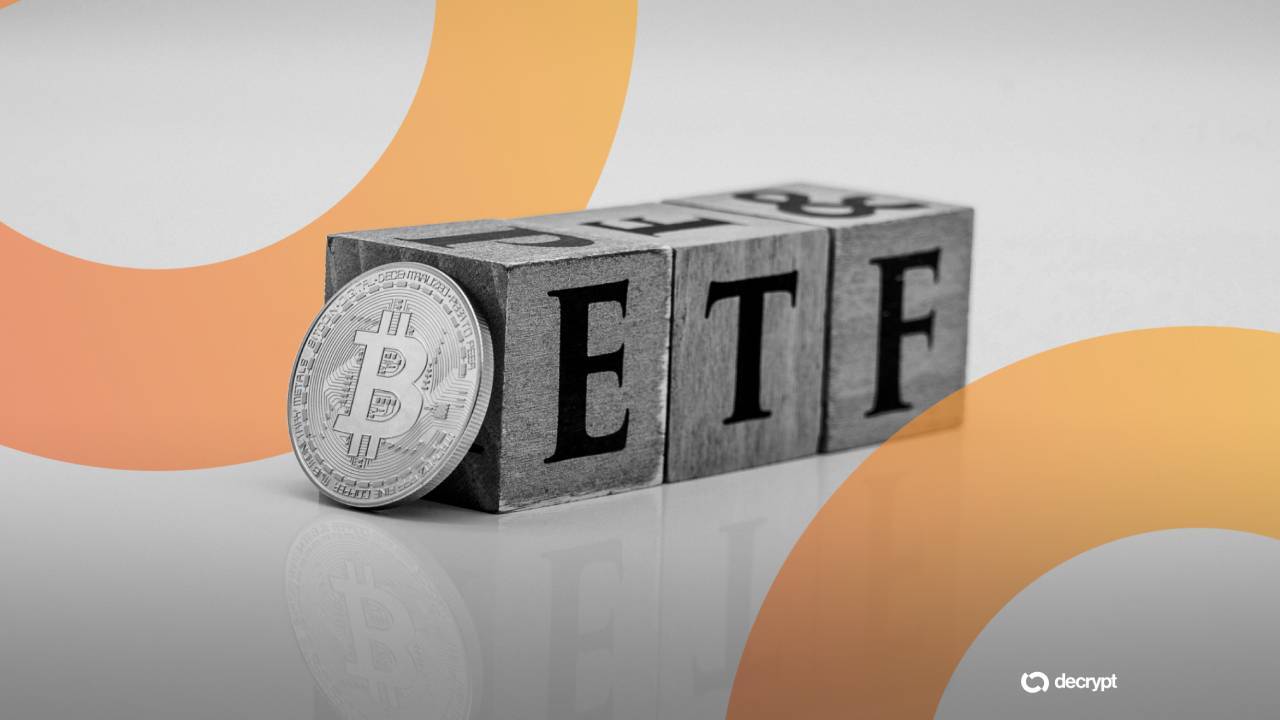
Bitcoin ETFs experienced their largest single-day inflow since February, totaling $471 million, indicating renewed institutional interest potentially driven by geopolitical positioning ahead of a US-Iran deadline. While geopolitical tensions and potential Strait of Hormuz disruptions are influencing oil prices and market sentiment, analysts suggest institutional accumulation in Bitcoin ETFs is more about structured allocation than a direct bet on conflict resolution. The sustained demand for Bitcoin ETFs, coupled with Bitcoin's resilience, suggests underlying support near current levels, though a significant bull run may still depend more on global liquidity than immediate geopolitical events.
Metaspins' introduction of instant-win games, featuring high RTP and blockchain verification, caters to growing demand for faster, transparent crypto gambling experiences. The expansion into rapid-play formats with verifiable outcomes signals a strategic move by crypto casinos to enhance user engagement and trust, potentially attracting a broader player base. By integrating familiar game mechanics with provable fairness, Metaspins is adapting to evolving player preferences in the crypto gaming sector, which could set a precedent for similar platforms.

The article highlights IPO Genie as a notable crypto presale project in April 2026, emphasizing its AI-based platform for private market opportunities and its reported user growth and audit activity. Presales remain a high-risk investment segment, with success contingent on factors like audited smart contracts, defined token utility, and user participation, as demonstrated by the evaluation criteria for projects like IPO Genie. IPO Genie's structured token model, including defined lock-up periods, buyback/burn mechanisms, and tiered access, alongside security measures like CertiK audits and Fireblocks custody, aims to mitigate risks inherent in early-stage crypto investments. The article serves as a promotional piece for IPO Genie, detailing its participation process and presale price, while also cautioning readers about the inherent risks of presales and the need for independent research.

Shiba Inu's breach of the $0.000006 support level confirms a persistent downtrend, suggesting that previous accumulation zones are now acting as resistance. The current price action indicates weakening demand and a lack of conviction, with limited bullish arguments and a high probability of further downside consolidation. Without a significant increase in volume and a sustained reclaim of the $0.000006 level, any short-term bounces are likely to be liquidity grabs followed by further price depreciation.
Dogecoin is testing a critical long-term ascending channel support, a historically significant level that has preceded major rallies, suggesting potential for a significant upward move if current accumulation trends continue. On-chain data indicates net outflows from exchanges, signaling accumulation by investors who are positioning for a potential price surge rather than distributing assets. The price action is consolidating around the $0.085–$0.090 support level, with a confirmed break above $0.105 needed to validate bullish momentum and target higher levels, while a failure to hold support could lead to a drop to $0.075.

Indian tax authorities are actively pursuing unreported crypto income by issuing Section 148A notices, signaling increased regulatory scrutiny for traders. The notices may flag gross trading volume as income, potentially leading to inflated "undisclosed income" figures if not properly reconciled by traders. Trading across multiple exchanges or failing to file ITRs with crypto activity significantly increases the risk of receiving these notices, highlighting the need for meticulous record-keeping. While a Section 148A notice is not a tax demand, it requires traders to provide explanations and documentation, indicating a shift towards full traceability of crypto transactions in India.

XRP's 365-day MVRV indicates deep undervaluation, historically a precursor to significant recoveries, but current price action lacks confirmation. While on-chain data suggests a potential accumulation zone for XRP, the persistent descending channel and lack of strong volume indicate continued short-term bearish pressure. Traders face a conflict between long-term value signals and short-term technical weakness, necessitating a breakout above $1.36 for a bullish shift. The divergence between long-term holder losses and short-term trader sentiment creates a mixed outlook, requiring price action to validate on-chain metrics.

Cardano's significant drawdown and extreme negative MVRV suggest a statistically favorable entry zone, reducing the likelihood of further organic selling pressure. The record-high short positioning on Binance, combined with a resilient community sentiment, creates a high-risk scenario for short sellers, potentially leading to a short squeeze. Despite a 400% decline since November, 79% of the Cardano community remains bullish, indicating strong holder conviction that could challenge prevailing bearish sentiment.

The significant increase in crypto project closures, with 86 projects failing in Q1, signals a market-wide reset driven by the end of the 'easy money' era. Capital is rotating from speculative projects towards institutional-grade infrastructure like Bitcoin ETFs, stablecoins, and RWAs, indicating a flight to quality and durability. The shift in market dynamics necessitates that surviving projects must demonstrate real infrastructure, user engagement, and revenue, rather than relying on past speculative hype. The consolidation of activity towards dominant platforms and products integrated with traditional finance suggests a maturing market demanding specialization and robust unit economics.

The article contrasts Hyperliquid's long-term price prediction with Pepeto's potential for rapid gains, suggesting traders may favor the latter's shorter-term speculative opportunity. Pepeto is positioned as a high-risk, high-reward play leveraging community momentum and a Binance listing, drawing parallels to Shiba Inu's explosive growth but with added utility. Significant capital is reportedly flowing into Pepeto's presale from whale wallets, indicating a potential shift in speculative interest away from established perps platforms like Hyperliquid. The comparison highlights a market dynamic where rapid, meme-driven gains with underlying utility are prioritized over slower, established growth narratives in the current trading environment.

Grayscale's alert on quantum computing advancements highlights the urgent need for blockchain networks to adopt post-quantum cryptography, as sudden breakthroughs could leave unprepared systems vulnerable. While Bitcoin's UTXO model and proof-of-work offer some resilience, the community faces a non-technical challenge in agreeing on how to handle potential quantum threats to its cryptography. XRP Ledger and Solana are noted as early movers experimenting with post-quantum cryptography, indicating a proactive approach to a future threat that could impact network security and asset value.
MARA's recent transfer of 250 BTC, following a substantial $1.1 billion sale in March, indicates a continued strategic management of its Bitcoin reserves. The ongoing movement of significant BTC amounts by MARA warrants close observation by market participants as it may signal shifts in miner liquidity or treasury strategies. While not a direct price catalyst, MARA's balance sheet adjustments provide insight into the operational strategies of major Bitcoin miners.

A legal expert's assessment of the Drift protocol exploit as civil negligence highlights potential liability for DeFi platforms, signaling increased regulatory scrutiny. The detailed account of the 6-month social engineering attack on Drift Protocol underscores the sophisticated tactics threat actors employ, emphasizing the need for enhanced security beyond standard protocols. The connection of the Drift exploit to North Korean state-backed hackers and similarities to the Radiant Capital hack suggest a pattern of coordinated attacks, potentially impacting trust in Solana-based DeFi projects.

MicroStrategy reported a significant unrealized loss of $14.46 billion on its Bitcoin holdings in Q1 2026, driven by a 23% price decline in BTC, highlighting the volatility associated with large corporate crypto treasuries. Despite the substantial paper loss, MicroStrategy continued its Bitcoin accumulation strategy, signaling strong conviction in its long-term investment thesis despite short-term market downturns. The company's Q1 performance underscores the direct correlation between Bitcoin's price action and the financial reporting of entities with significant BTC exposure, impacting investor sentiment towards both the asset and the company.

Polymarket's launch of its own stablecoin, Polymarket USD, aims to enhance trading efficiency and reduce reliance on USDC, potentially impacting Circle's revenue from deposits. The migration to Polymarket USD, backed 1:1 by USDC, represents a strategic move for greater platform control and liquidity management by the prediction market. While the upgrade promises improved performance and simplified orders, user adoption and trust in the new stablecoin remain key factors for its success, given past failures of similar initiatives. The platform upgrade necessitates changes for API traders and bot integrations, with existing order books being cleared, indicating a temporary disruption for advanced users.
Signal context only. Validate with price action, liquidity, and risk limits before taking a position.
No explicit catalyst tagged.
The increasing demand for AI compute power, exemplified by Anthropic's multi-gigawatt deal, is creating direct competition with Bitcoin mining for essential resources like cheap electricity and grid capacity. Miners are increasingly opting to rent their infrastructure to AI companies for predictable cash flows, a trend potentially impacting Bitcoin's energy consumption narrative and miner profitability. The shift towards AI hosting suggests a structural change in the Bitcoin mining industry, where miners may evolve into infrastructure providers leveraging their energy assets for diversified revenue streams. The competition for energy resources between AI and Bitcoin mining could lead to increased energy costs for both sectors, potentially affecting the economic viability of Bitcoin mining at current difficulty and price levels.
