
Navigating Crypto News

CoinFeather
Navigating Crypto News

Quick market read from this story
The increasing demand for AI compute power, exemplified by Anthropic's multi-gigawatt deal, is creating direct competition with Bitcoin mining for essential resources like cheap electricity and grid capacity.
Miners are increasingly opting to rent their infrastructure to AI companies for predictable cash flows, a trend potentially impacting Bitcoin's energy consumption narrative and miner profitability.
The shift towards AI hosting suggests a structural change in the Bitcoin mining industry, where miners may evolve into infrastructure providers leveraging their energy assets for diversified revenue streams.
The competition for energy resources between AI and Bitcoin mining could lead to increased energy costs for both sectors, potentially affecting the economic viability of Bitcoin mining at current difficulty and price levels.
Source, catalyst, and sector overlap from the latest feed.
Bitcoin briefly surpassed $70,000, driven by significant ETF inflows, indicating renewed institutional interest despite ongoing macro uncertainties. The correlation between Bitcoin and central bank easing has turned negative post-ETF launch, suggesting institutional capital is accumulating in anticipation of future monetary policy shifts. Despite positive ETF flows, the market remains fragile with weak organic demand and increasing downside protection in options below $68,000, highlighting a cautious sentiment. Geopolitical tensions and rising oil prices continue to exert macro pressure, with upcoming U.S. inflation data being a critical factor for the Federal Reserve's near-term rate decisions.
Live Feed
Loading the broader stream in the same flow as the homepage feed.
Daily Bitcoin ETF inflows reaching $471 million, the highest since February, indicate a significant resurgence in institutional demand and could signal a positive shift in market sentiment. The substantial inflows, led by major players like BlackRock and Fidelity, suggest renewed confidence in Bitcoin as an investment vehicle, potentially driving price appreciation. While Bitcoin ETFs show strong momentum, altcoin ETFs, including XRP and Solana, exhibit mixed or subdued performance, highlighting a potential divergence in institutional interest across different crypto assets. The rapid accumulation of assets in Bitcoin ETFs, comparable to gold ETFs' historical growth, underscores their increasing importance in institutional crypto exposure and suggests sustained participation.
Solana is exhibiting a short-term bullish technical pattern (inverse head and shoulders) suggesting potential upside, but this is tempered by historical seasonality indicating a weaker trend typically begins in May. Traders should monitor SOL's ability to break through key resistance around $82.55; a confirmed breakout could validate the bullish pattern, while failure may lead to consolidation. Historical seasonal data suggests May and June have often been periods of softer momentum for Solana, implying that even a successful technical breakout might face headwinds in the near term.
Polygon's Giugliano hardfork upgrade, aimed at improving transaction finality and fee management, is a significant infrastructure development that could enhance its competitive position in RWA settlement and DeFi, though market price action currently discounts this. Solana's STRIDE and SIRN security framework launch represents a structural shift towards proactive, institutional-grade security assessment and threat intelligence, a crucial development for attracting and retaining large-scale DeFi capital despite recent exploits. Both Polygon and Solana are executing substantial technical upgrades and security enhancements during a market downturn, positioning themselves for future growth cycles, but current macro headwinds from inflation and geopolitical risks are overshadowing these fundamental developments. The market's indifference to Polygon's and Solana's infrastructure advancements highlights the dominant influence of macro factors, such as upcoming CPI data and geopolitical tensions impacting oil prices, which are currently dictating price action more than on-chain developments.
Cardano whales are accumulating ADA at a 4-month high, signaling potential accumulation before a broader market recovery, despite current price weakness. The divergence between whale accumulation and bearish derivatives sentiment suggests a potential turning point for ADA, with large holders positioning ahead of retail sentiment. ADA is testing a critical support range between $0.22 and $0.28, where holding above could confirm bullish continuation patterns like a double bottom or falling wedge reversal. While on-chain data shows accumulation, negative funding rates in derivatives indicate short-term traders remain bearish, creating a divergence that traders should monitor for potential shifts.

Rwanda's central bank has issued a direct warning against Bybit's P2P platform for facilitating trades involving the Rwandan franc, citing illegality and financial risks. This regulatory action by Rwanda highlights a growing trend of emerging markets imposing stricter controls on crypto P2P services to protect local currencies and financial stability. The development underscores the ongoing tension between crypto platforms seeking broader accessibility and national regulators prioritizing financial sovereignty and consumer protection.
Binance's introduction of the Spot Price Range Execution Rule (PRER) aims to mitigate extreme price deviations on its spot market, directly addressing the fallout from the October 2025 flash crash. The PRER mechanism will prevent orders from executing at abnormal prices during high volatility, offering traders protection against flash crash scenarios that previously led to significant liquidations and de-pegging events. While the PRER does not prevent market crashes or fix underlying liquidity issues, it closes a specific execution gap that exacerbated losses during extreme events, potentially improving trader confidence on the platform. The gradual rollout starting April 14, 2026, suggests a cautious approach to implementing this significant change to Binance's spot trading infrastructure.
The article positions Pepeto's presale as a potentially higher-return investment compared to XRP and Ethereum, citing its lower entry price, confirmed Binance listing, and a live exchange as key differentiators. XRP's six consecutive monthly losses and Ethereum's limited projected upside (21%) are contrasted with Pepeto's presale, which claims 100x potential from a single listing event. The narrative emphasizes the importance of early entry in crypto, drawing parallels between past successes of XRP and Ethereum and the current opportunity presented by Pepeto's presale, backed by a known founder and audited contracts.

Bitcoin's stochastic RSI is exhibiting patterns that closely mirror the end of the 2022 bear market, suggesting a potential bottoming phase and subsequent recovery. The current price action and indicator readings are being compared to the early 2023 rebound, implying that historical patterns could signal a bullish continuation if similar conditions persist. While technical indicators show bullish parallels to past recoveries, traders should monitor for a potential bear flag breakdown on the daily chart, which could negate the optimistic outlook. The analysis highlights the importance of the weekly standard RSI for potential bullish divergence, a signal that previously coincided with significant price bottoms.
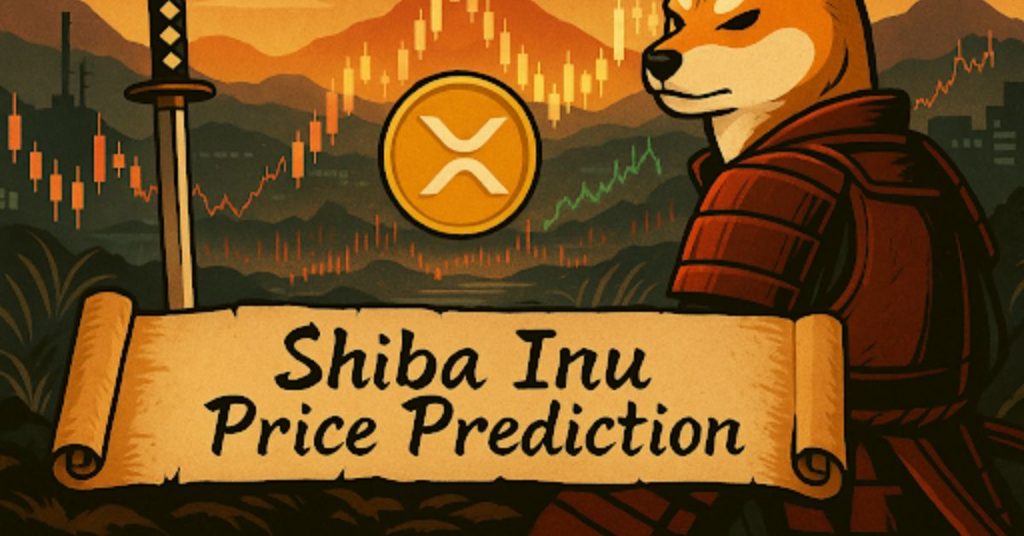
Shiba Inu's price is under significant pressure, down nearly 93% from its all-time high, with current trading levels around $0.000006 and projections indicating limited upside potential for 2026. Weak on-chain activity, declining trader interest, and a broader meme coin market contraction from $109B to $34B are key factors contributing to SHIB's downtrend. The Shibarium Layer-2 network is experiencing a sharp decline in transaction volume post-exploit, with current activity significantly lower than previous peaks, impacting the ecosystem's overall health. Rising exchange inflows of SHIB tokens suggest holders may be preparing to sell, further exacerbating downward price pressure in the near term.
Bitcoin ETFs experienced their largest single-day inflow since February, totaling $471 million, indicating renewed institutional interest potentially driven by geopolitical positioning ahead of a US-Iran deadline. While geopolitical tensions and potential Strait of Hormuz disruptions are influencing oil prices and market sentiment, analysts suggest institutional accumulation in Bitcoin ETFs is more about structured allocation than a direct bet on conflict resolution. The sustained demand for Bitcoin ETFs, coupled with Bitcoin's resilience, suggests underlying support near current levels, though a significant bull run may still depend more on global liquidity than immediate geopolitical events.
The XRP Ledger is establishing itself as a significant platform for enterprise-grade stablecoins, with six major tokens now live, indicating growing institutional interest in regulated digital payment solutions. The presence of prominent stablecoins like USDC and Ripple's RLUSD, backed by independent verification, enhances the XRPL's credibility and potential for cross-border payment innovation. The XRPL's increasing adoption for stablecoins, coupled with initiatives like the Japan-South Korea payment flow enhancement, signals a strategic push towards becoming a foundational layer for next-generation global payment infrastructure.
Metaspins' introduction of instant-win games, featuring high RTP and blockchain verification, caters to growing demand for faster, transparent crypto gambling experiences. The expansion into rapid-play formats with verifiable outcomes signals a strategic move by crypto casinos to enhance user engagement and trust, potentially attracting a broader player base. By integrating familiar game mechanics with provable fairness, Metaspins is adapting to evolving player preferences in the crypto gaming sector, which could set a precedent for similar platforms.
Signal context only. Validate with price action, liquidity, and risk limits before taking a position.
Bitcoin and Ether are consolidating within a two-month range, mirroring a historical pattern that preceded a price breakdown, suggesting potential downside risk if support levels fail. Geopolitical tensions and high oil prices are creating a bearish macro environment for risk assets like crypto, increasing inflation fears and weighing on market sentiment. Despite broad market apathy, AI and privacy tokens are showing relative strength, indicating a potential rotation into niche sectors based on perceived fundamental value rather than speculative hype. Derivatives market data shows cautious institutional conviction with stable open interest and neutral funding rates, suggesting a lack of strong positioning for a major breakout in either direction.
