
Navigating Crypto News

CoinFeather
Navigating Crypto News
Source, catalyst, and sector overlap from the latest feed.
The release of XRP Ledger Software version 3.1.2 addresses a critical node outage glitch, enhancing network stability and reliability for participants. This update follows an emergency patch for a bug in the Batch amendment, indicating ongoing efforts to secure and stabilize the XRPL protocol. While the immediate node outage is resolved, the ongoing voting process for the XRP Ledger Lending protocol amendment highlights the gradual nature of protocol upgrades and adoption.
Live Feed
Loading the broader stream in the same flow as the homepage feed.

MoonPay's integration of Ledger hardware signing for its AI agents addresses a critical security gap in autonomous trading, potentially enabling wider adoption of AI-driven financial management in crypto. By ensuring private keys remain on the hardware signer, this development mitigates the risk of key compromise associated with AI agents, a significant hurdle for institutional and retail users managing substantial assets. This move signals a growing trend towards enhanced security for AI-powered crypto tools, suggesting that future developments in this space will likely prioritize user control and non-custodial solutions.
Dogecoin is showing signs of a technical recovery, trading above the Bollinger Bands basis and defending a decade-long support trendline, indicating potential for a short-term bullish reversal. Analysts highlight a critical 10-year support trendline retest for DOGE, suggesting historical patterns could precede a significant rally if the support holds, with ambitious price targets projected. Despite positive price action and long-term support, momentum indicators remain cautious, signaling that a confirmed bullish breakout above $0.10 and the upper Bollinger Band is necessary to validate a sustained upward trend.

The increasing demand for AI-driven data centers is fueling a revival in nuclear power, with Bitcoin miners being early adopters of this energy source for high-performance computing operations. Bitcoin miners' strategic pivot towards nuclear energy, evidenced by growing adoption and partnerships like TeraWulf's with Talen Energy, signals a trend towards securing stable, carbon-free baseload power. The trend of Bitcoin miners utilizing nuclear power, which has grown from 4% in 2021 to nearly 10% in 2022 and continues to rise, highlights a significant shift in the energy mix for mining operations, potentially impacting operational costs and sustainability narratives. The development of small modular reactors (SMRs) presents a future opportunity for colocation with energy-intensive infrastructure like data centers and large-scale Bitcoin mining, indicating potential for further integration and efficiency gains.
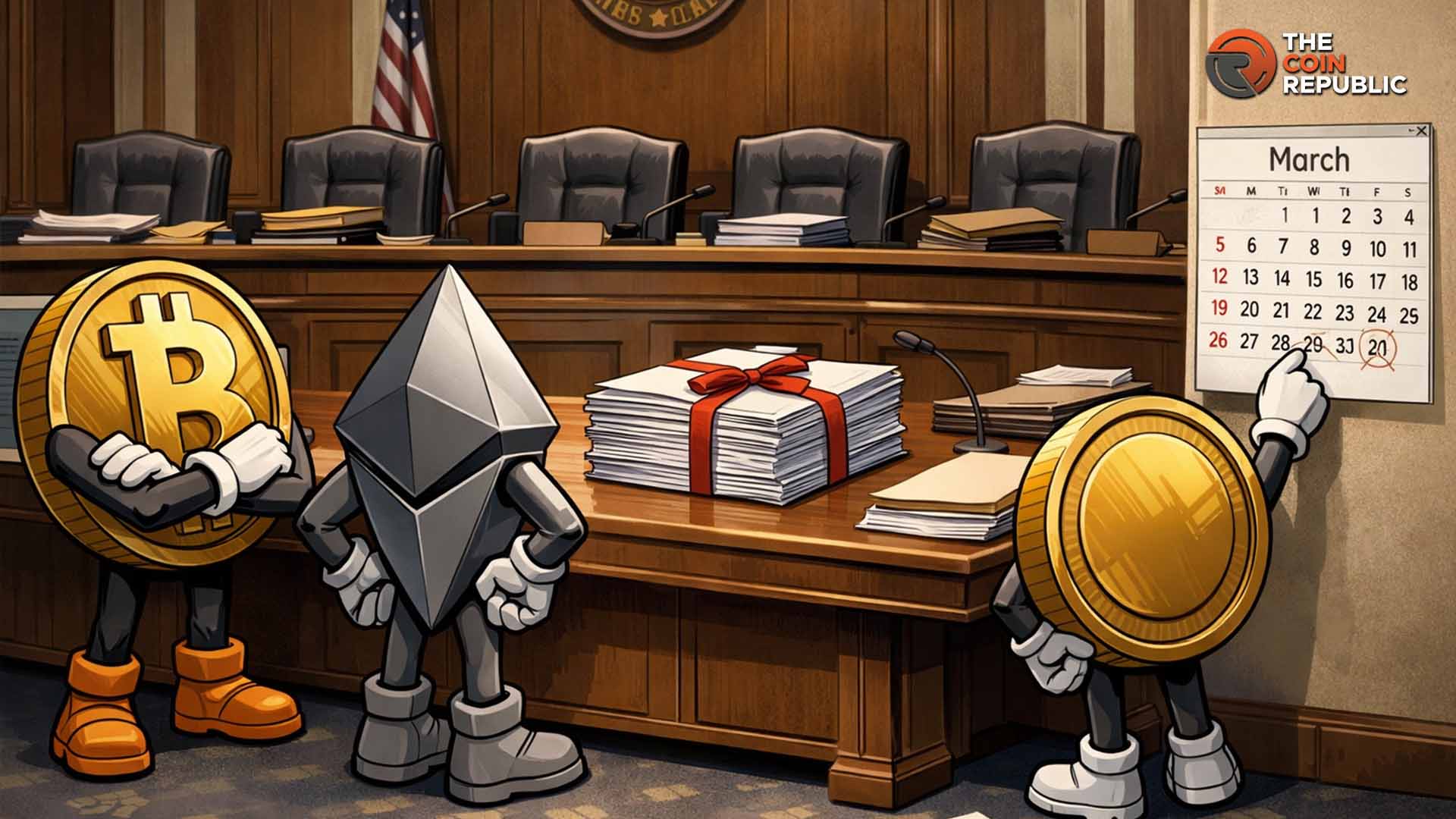
Senate Majority Leader John Thune indicates the CLARITY Act is unlikely to advance before April, citing other legislative priorities and potentially delaying regulatory clarity for the digital asset market. Despite potential delays, projections from Kristin Smith and JPMorgan suggest the CLARITY Act could still pass by July 2026, highlighting ongoing efforts to establish a clearer regulatory framework. Former President Donald Trump's call to fast-track the CLARITY Act and his warning about China gaining an advantage underscore the geopolitical implications of US regulatory inaction. The differing timelines and political pressures surrounding the CLARITY Act suggest a complex and uncertain path forward for crypto regulation in the US, impacting market sentiment and investment decisions.

Billionaire investor Stanley Druckenmiller predicts stablecoins could dominate global payment systems within 10-15 years, highlighting their efficiency and cost-effectiveness over traditional infrastructure. Despite skepticism towards most cryptocurrencies, Druckenmiller acknowledges Bitcoin's established role as a store of value, driven by its brand recognition and user adoption. Druckenmiller's long-term outlook suggests potential for crypto assets to challenge the U.S. dollar's reserve currency status, though he expresses personal dislike for many crypto projects.

Circle's USDC transaction volumes surpassing Tether's USDT for the first time since 2019 indicates a significant shift in stablecoin market dynamics, potentially driven by real economic usage rather than just market capitalization. Mizuho's price target hike for Circle to $120, despite a neutral rating, suggests growing institutional confidence in the stablecoin issuer's growth trajectory and market position. The increasing adoption of USDC for use cases like Polymarket and agentic commerce, coupled with Mizuho's revised long-term forecasts for wallet numbers and market capitalization, points to sustained growth potential for Circle's ecosystem.
The recent 10% price surge in PI coin is primarily driven by its listing on Kraken, significantly expanding trading access and liquidity for the token. Anticipation for the annual Pi Day event on March 14, coupled with ongoing mainnet technical upgrades, is fueling community activity and renewed trading interest. While technical indicators suggest strong momentum and a shift towards a stronger trend, the RSI nearing overbought territory indicates potential for short-term consolidation.

The article highlights the maturation of staking in 2026, moving from experimental to a foundational element of digital wallets, driven by predictable rewards and the rise of liquid staking. Platforms like ChangeNOW are emphasizing non-custodial staking, offering users greater control and security by retaining private keys, which appeals to privacy-conscious investors. Major exchanges such as Binance, Kraken, KuCoin, and Crypto.com are diversifying their staking offerings, catering to different user preferences from broad selection to curated security and lifestyle integration. The evolving staking landscape in 2026 suggests a shift towards user-centric options, where diversification across platforms and strategies is key for building a resilient portfolio.
Macroeconomic data indicating cooling inflation and a resilient jobs market is interpreted by the market as a positive signal for risk assets, potentially increasing the likelihood of Fed rate cuts and fueling crypto rallies. The crypto market experienced a significant short squeeze, with nearly $200 million in short positions liquidated, which accelerated the upward price movement across major assets like Bitcoin and Ethereum. Despite the current rally, the Fear and Greed Index remains in 'fear' territory, suggesting that while momentum is positive, underlying caution persists, creating potential for further volatility. Bitcoin's ability to hold above the $72,000 level is a key indicator for near-term price action, with a sustained close above this mark potentially opening the path towards $75,000 and higher.

Geopolitical tensions have led to the cancellation of major crypto conferences in Dubai, impacting networking and deal-making opportunities for industry participants. The postponement of Token2049 Dubai and cancellation of TON Connect highlight the sensitivity of large-scale events to regional instability, potentially shifting future event planning. While direct price impact is unlikely, the disruption to industry gatherings can indirectly affect sentiment and the flow of information within the crypto ecosystem.
SBI Holdings' expansion of its XRP rewards program to SBI ARUHI signifies a continued effort to integrate blockchain technology into traditional financial services, potentially increasing XRP adoption among a broader investor base in Japan. The inclusion of SBI ARUHI, a mortgage services provider, in the XRP rewards program could drive demand for XRP by offering it as a tangible shareholder benefit, thereby encouraging wider use and familiarity with the token. This strategic move by SBI Holdings, a major financial institution, reinforces XRP's utility beyond payments and could be interpreted as a positive signal for its ecosystem development and potential for increased institutional engagement.
Signal context only. Validate with price action, liquidity, and risk limits before taking a position.
Quick market read from this story
XRP Ledger validators are currently considering two amendments, 'SingleAssetVault' and 'Lending Protocol,' which aim to enhance lending capabilities and improve vault functionality.
The proposed amendments face a significant hurdle in achieving the required 80% validator consensus, with current voting percentages at 22.86% and 17.14% respectively, suggesting a potential reset and re-vote.
The low participation in the voting process indicates a lack of immediate consensus or urgency among validators, potentially delaying or indefinitely postponing the implementation of these new features.
Past issues with XRPL amendments, such as the 'Batch amendment' bug, underscore the critical importance of thorough review processes before activation, highlighting the network's focus on security and stability.
Deep Dive
The XRP Ledger (XRPL) is currently evaluating two significant amendments: v3.1.0 "SingleAssetVault" and v3.1.0 "Lending Protocol." These proposed changes aim to enhance lending capabilities and improve vault functionalities on the network. However, the amendments face an uncertain future due to low validator participation in the ongoing voting process.
As of the latest update, only eight validators have voted on the "SingleAssetVault" amendment and six on the "Lending Protocol." The consensus for each stands at 22.86% and 17.14%, respectively. To pass, both amendments require a minimum of 28 votes out of 35 validators, representing 80% of the total votes. With the current low engagement, there is a significant chance that neither amendment will meet the required threshold. If they fail to pass, the activation timers are expected to reset, potentially allowing them to be re-voted on in the future.
Amendments play a crucial role in the evolution of the XRP Ledger, enabling new features such as boosting on-chain lending. The importance of thorough review processes for these changes was underscored by a bug discovered in February within the proposed "Batch amendment" (XLS-56). This vulnerability, if not detected before activation, could have potentially allowed malicious actors to drain user funds without needing private keys. The timely discovery by security researchers prevented significant potential losses for users, highlighting the critical nature of vetting amendments before they are implemented.
Shiba Inu (SHIB) has experienced a significant weekly price increase of 17%, its strongest performance since December 2025, indicating a potential shift in market sentiment. Technical analysis using Bollinger Bands suggests a realistic upside potential of approximately 22% for SHIB, targeting a price of $0.00000760, driven by current market momentum. The current week's strong performance, the most 'green' since December 2025, combined with technical indicators, supports a bullish outlook for SHIB in the short term.
