
Navigating Crypto News

CoinFeather
Navigating Crypto News
Quick market read from this story
XRP holding strong support at $1.40 indicates potential for a significant breakout.
Increased whale accumulation of 1.3 billion XRP in 48 hours suggests preparation for a market shift.
A confirmed reclaim of the $1.80-$2.00 resistance zone could propel XRP towards the $3 target.
Moscow Exchange is considering cash-settled XRP futures following Russia's regulatory shifts.
Deep Dive
XRP is demonstrating resilience by consistently defending the crucial $1.40 support level, a key indicator for a potential significant price breakout. Market analyst Crypto Paykash and data from CoinCodex highlight that XRP has repeatedly maintained this price floor despite market volatility, suggesting growing stability and bullish momentum.
The $1.40 level has solidified as XRP's primary defensive line, attracting strong buying pressure and indicating a high-value accumulation point for traders and long-term holders. Concurrently, XRP's realized volatility has surged to its highest level since March 2025, coinciding with aggressive whale activity. In a 48-hour period, large holders accumulated 1.3 billion XRP, a move historically associated with preparation for significant market shifts.
The combination of sustained support defense and increased whale accumulation points to intensifying market compression, a condition often preceding a major price expansion. Analyst Paykash describes XRP's price action as forming a compression pattern, where consolidation within a narrowing range builds underlying volatility, typically leading to a sharp breakout. As long as the $1.40 support holds, bullish momentum is expected to remain intact.
A decisive reclaim of the $1.80–$2.00 resistance zone is identified as the next critical hurdle. A confirmed breakout above $2.00 could ignite fresh market momentum, potentially propelling XRP toward the $3 level. This scenario would signal a strong recovery and attract renewed trader interest.
In related news, the Moscow Exchange is considering cash-settled XRP futures following Russia's recent regulatory shifts, adding another layer to the market's cautious, watchful phase. With support at $1.40 holding firm and resistance tightening near $2.00, XRP's compression pattern is building significant pressure, setting the stage for a potential explosive breakout toward the $3 target.
Source, catalyst, and sector overlap from the latest feed.
Rising oil prices and geopolitical tensions are driving Treasury yields higher, pushing mortgage rates back towards 6% and negatively impacting housing market affordability. The current market dynamic, where geopolitical events increase inflation fears and lead to Treasury sell-offs, is an unusual deviation from typical safe-haven flows, directly influencing mortgage rates independent of Federal Reserve policy. For homebuyers, the outlook on mortgage rates in 2026 is now heavily dependent on the de-escalation of the Iran conflict and subsequent oil price stabilization, with potential for rates to fall back if these factors resolve favorably.
Marvell Technology's significant stock surge of 18% is driven by robust AI data center demand, signaling strong growth potential in the semiconductor sector tied to AI infrastructure. The company's Q4 revenue beat expectations with a 22% year-over-year increase, primarily from its data center segment which grew 21% YoY, highlighting Marvell's critical role in AI hardware supply chains. Marvell's optimistic revenue forecast of nearly $11 billion for fiscal year 2026, driven by over 30% projected growth, indicates sustained high demand for networking and connectivity solutions in AI-driven data centers. The strong performance and positive outlook suggest Marvell is a key beneficiary of the ongoing AI spending boom, potentially offering investors a compelling growth opportunity in the semiconductor space.
Russia is moving towards a regulated crypto trading model, classifying digital assets as tradeable while maintaining a ban on domestic payments, which could signal a shift in how state-level entities approach digital assets. The proposed one percent capital exposure limit for banks and a phased regulatory approach suggest a cautious integration of crypto services, aiming to balance innovation with risk management for financial institutions. This development occurs alongside BRICS nations exploring alternatives to SWIFT, indicating a broader geopolitical trend towards de-dollarization and potentially increased adoption of blockchain-based payment systems.
ChangeNOW's reported sub-minute swap times significantly outperform the market median of 45 minutes, highlighting a potential competitive advantage in execution speed. Faster swap settlement directly addresses user concerns about price slippage, as it minimizes the window for market volatility between trade initiation and completion. The emphasis on speed as a 'trust mechanism' suggests that platforms prioritizing efficient transaction finality may gain user preference in the non-custodial exchange space. While the report focuses on ChangeNOW's performance, the stark contrast with the industry median implies broader inefficiencies in the non-custodial swap market that could be addressed by competitors.
The surge in Brent oil to $90 and the Iran Hormuz crisis, which has paralyzed 21 million barrels per day of oil flow, directly triggered a 1.61% crash in the Dow Jones Industrial Average, highlighting the market's sensitivity to geopolitical energy shocks. Goldman Sachs models indicate a direct correlation between oil price increases and stock market losses, with every $10 rise in Brent potentially causing 200 Dow points in decline, suggesting a significant headwind for equities if energy prices remain elevated. The market's reaction, including a spike in the VIX fear gauge to 28 and increased recession odds to 45% according to JPMorgan, indicates a loss of investor confidence driven by energy supply disruptions and inflation fears. Future market direction for the Dow Jones will likely hinge on upcoming US payroll data and the potential for de-escalation in the Strait of Hormuz, with Barclays forecasting a potential drop to 46,000 if Brent crude reaches $100.
The launch of the first U.S. spot Polkadot ETF (TDOT) on Nasdaq marks a significant regulatory milestone, providing institutional investors with direct, regulated exposure to DOT and potentially paving the way for other altcoin ETFs. The TDOT ETF's ability to generate staking yield for investors, combined with Polkadot's upcoming tokenomics overhaul introducing a hard supply cap, creates a dual catalyst for potential DOT price appreciation, drawing parallels to the Bitcoin ETF and halving narrative. While the ETF launch is a positive development, its success hinges on attracting sufficient capital, as highlighted by Bloomberg analysts who note the risk of liquidation for underperforming niche products, making TDOT's performance a key indicator for future altcoin ETF approvals. Analysts project a wide range for DOT by year-end 2026, from $12-$20 in bullish scenarios to $5-$10 in bearish ones, indicating significant volatility and uncertainty despite the new regulated investment vehicle and tokenomic changes.
XRP exchange reserves have decreased to $2.75 billion, indicating a potential shift from selling to holding or private wallet accumulation, which could signal renewed buying pressure. Despite a recent price pullback and a 5.07% drop in the last 24 hours, the reduction in XRP's exchange supply suggests underlying investor confidence may support a resumption of its prior rally. The first ETF outflow for XRP in March, totaling $6.15 million, introduces a counter-narrative to the on-chain supply reduction, suggesting mixed sentiment among institutional and retail investors.
Bitcoin exchange supply drops to 1.17 million BTC, lowest since December 2017. Non-empty Bitcoin wallet count reaches an all-time high of 58.45 million. Bitcoin price is testing the $74,000 resistance zone, with potential to retest $100,000 if trendline is reclaimed. On-chain data suggests accumulation phase with potential for a supply-driven rally.
Publicly listed Bitcoin miners sold over 15,000 BTC since October. Companies like Cango and Riot Platforms have sold significant BTC holdings to reduce debt and improve liquidity. Miners are diversifying into AI projects and data centers, selling BTC to fund these ventures. Increased mining costs and recent price drops are reducing miner profit margins.
BlockDAG (BDAG) network officially launched with trading live on major exchanges. BlockDAG raised over $452 million in early phases and aims for a $1.2 billion market cap. Polkadot (DOT) price increased 41% with a planned 50% supply cut in March 2026. Pippin price prediction shows potential for 300% gains after a 73% increase.
The XRP Ledger lending protocol amendment is progressing through its voting process, currently requiring an additional 62.86% consensus to activate. Despite the slow voting pace, the development signifies a step towards enhanced DeFi capabilities on the XRP Ledger, potentially increasing its utility. A recent critical bug in the XRPL Batch amendment highlights ongoing security testing and Ripple's commitment to formal verification for future upgrades, impacting the timeline for new features.
XRP's perceived resilience during market downturns, attributed to its real-money use case in cross-border payments, suggests potential for outperformance against broader market assets like Bitcoin. The ongoing development of crypto-friendly regulations in the US, such as the GENIUS and CLARITY Acts, is seen as a crucial catalyst for institutional capital formation and broader market adoption. Despite current market conditions, a long-term perspective on innovation cycles, spanning up to 10 years, is advised, indicating that short-term price action may not reflect true underlying progress.
Bitcoin has formed a death cross on its three-day chart, a pattern historically preceding the final leg down in bear markets. Past instances of this three-day death cross have preceded significant price drops, suggesting potential downside risk if historical patterns hold. While not a guarantee, the recurring nature of this technical signal on a macro time frame warrants close observation for potential capitulation events.
Live Feed
Loading the broader stream in the same flow as the homepage feed.

Kazakhstan's central bank plans to invest up to $350 million in crypto-related assets, diversifying its foreign exchange reserves and signaling a potential shift towards digital finance integration. The investment strategy focuses on associated firms and financial products rather than direct cryptocurrency holdings, suggesting a cautious approach to digital asset exposure. This move by a national central bank, while a small fraction of its total reserves, indicates growing institutional interest in exploring the digital asset ecosystem beyond traditional financial instruments.
Bitcoin's breach of $73,500 signals accelerating recovery and potential altcoin rotation, impacting market sentiment and positioning. The article promotes Pepeto's presale as a superior investment opportunity compared to Cardano's price prediction, highlighting its exchange infrastructure and high staking rewards. While Cardano (ADA) and Ethereum (ETH) show price recovery, their large market caps limit near-term upside potential compared to early-stage presale projects like Pepeto. The narrative suggests that traders focusing on Cardano's price prediction are missing out on the potentially higher, faster returns offered by Pepeto's presale and upcoming listing.

Kraken's direct access to the Federal Reserve's payment rails represents a significant integration milestone, potentially reducing reliance on traditional banking partners and streamlining dollar flows for crypto firms. The development signals continued maturation of crypto infrastructure and its integration with traditional finance, despite broader market headwinds, suggesting a potential for increased institutional comfort. MARA Holdings' clarification on its Bitcoin treasury strategy, emphasizing flexibility rather than imminent liquidation, aims to quell market concerns and maintain investor confidence in its holdings. The NYSE's proposed tokenization framework, supported by TD Securities analysis, could attract greater institutional participation by offering 24-hour trading and near-instant settlement for tokenized assets.
A significant outflow of 733 billion SHIB from Binance, representing a 1.38% decrease in reserves, suggests a potential shift from speculative trading to long-term holding by investors. While the outflow indicates reduced exchange activity, Binance's continued 100.17% reserve coverage for SHIB reinforces its solvency and trust as a custodian. The migration of SHIB from exchange wallets to private hands could lead to a more distributed token supply, potentially reducing immediate selling pressure on the asset.
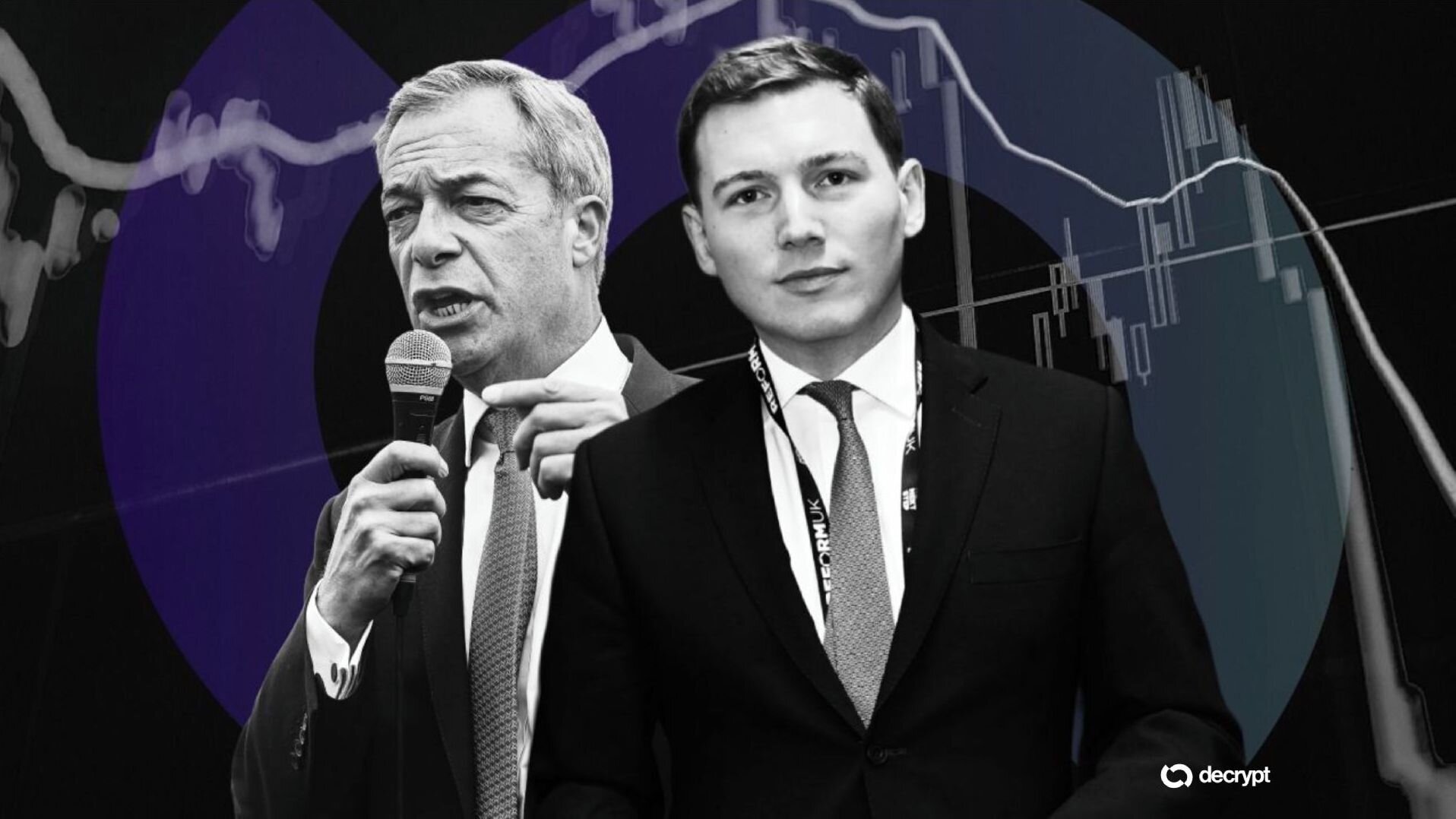
The reported significant losses by a political figure's associate on Polymarket highlight the speculative nature and potential financial risks associated with geopolitical prediction markets. Increased regulatory scrutiny on prediction markets like Polymarket, with authorities in multiple jurisdictions viewing them as unlicensed gambling operations, suggests potential future restrictions or operational challenges. The controversy surrounding the political figure's associate's betting activities, coupled with the party's pro-crypto stance and donation acceptance, could intensify debates around the regulation of digital assets in political financing.
Kazakhstan's central bank is allocating up to $350 million from national reserves into crypto-linked assets, signaling a growing institutional acceptance of digital assets beyond direct holdings. The investment strategy focuses on indirect exposure through ETFs, tech stocks, and hedge funds, indicating a risk-averse approach to entering the crypto market. This move by a Central Asian sovereign institution represents a significant step towards digital asset integration, potentially influencing other regional financial bodies. The parallel development of a separate national crypto reserve of up to $1 billion, funded by seized assets and mining taxes, highlights Kazakhstan's comprehensive strategy for crypto engagement.

Ripple's acquisition of an EMI license and cryptoasset registration from the UK's FCA, alongside an EU EMI license, signifies a major regulatory milestone that bridges traditional finance and decentralized finance. This regulatory clarity in the UK and EU marks the end of an experimental phase for Ripple, ushering in an era of regulated, institutional-grade production and potentially paving the way for broader adoption of its services. The strategic regulatory achievements in the UK and EU are expected to bolster Ripple's efforts to penetrate traditional financial markets and advance its tokenization infrastructure, despite the absence of specific crypto laws in the UK. With regulatory hurdles addressed in key jurisdictions, Ripple is well-positioned to enhance its payment services and potentially increase the utility of XRP as a bridge currency, while also focusing on US regulatory developments like the CLARITY Act.
Bloomberg's Mike McGlone forecasts a potential return of Bitcoin to $50,000 by 2026, citing a 'great reversion' to the mean after significant rallies. The analyst identifies international conflicts and a potentially unstable U.S. stock market, particularly the NASDAQ 100, as key risks that could pressure Bitcoin and other risk assets. McGlone's outlook suggests that Bitcoin's historical support level relative to silver may now act as resistance, indicating a bearish divergence for BTC against precious metals. The prediction implies a 'cleansing decline' for Bitcoin if broader market risks materialize, with a target of $50,000, suggesting a significant downside potential from current levels.

Dubai's VARA has issued a cease and desist order to KuCoin for operating without a license, signaling increased regulatory scrutiny on exchanges within the emirate. The regulatory action against KuCoin and a similar warning to MEXC highlight the growing risk for crypto exchanges operating in jurisdictions with evolving digital asset regulations. KuCoin's response, emphasizing its EU regulation and limited non-EU operations, suggests a strategy to compartmentalize regulatory challenges, but the Dubai order indicates potential broader compliance issues.
Tesla continues to hold a significant Bitcoin treasury balance, valued at approximately $812 million, indicating sustained confidence in BTC as a reserve asset. The absence of reported Bitcoin sales by Tesla in 2026, despite market volatility, suggests a long-term holding strategy rather than short-term trading. Tesla's consistent Bitcoin holdings, alongside other corporate treasuries like SpaceX, reinforce the narrative of Bitcoin as a digital store of value for major entities.
Signal context only. Validate with price action, liquidity, and risk limits before taking a position.
