
Navigating Crypto News

CoinFeather
Navigating Crypto News
Quick market read from this story
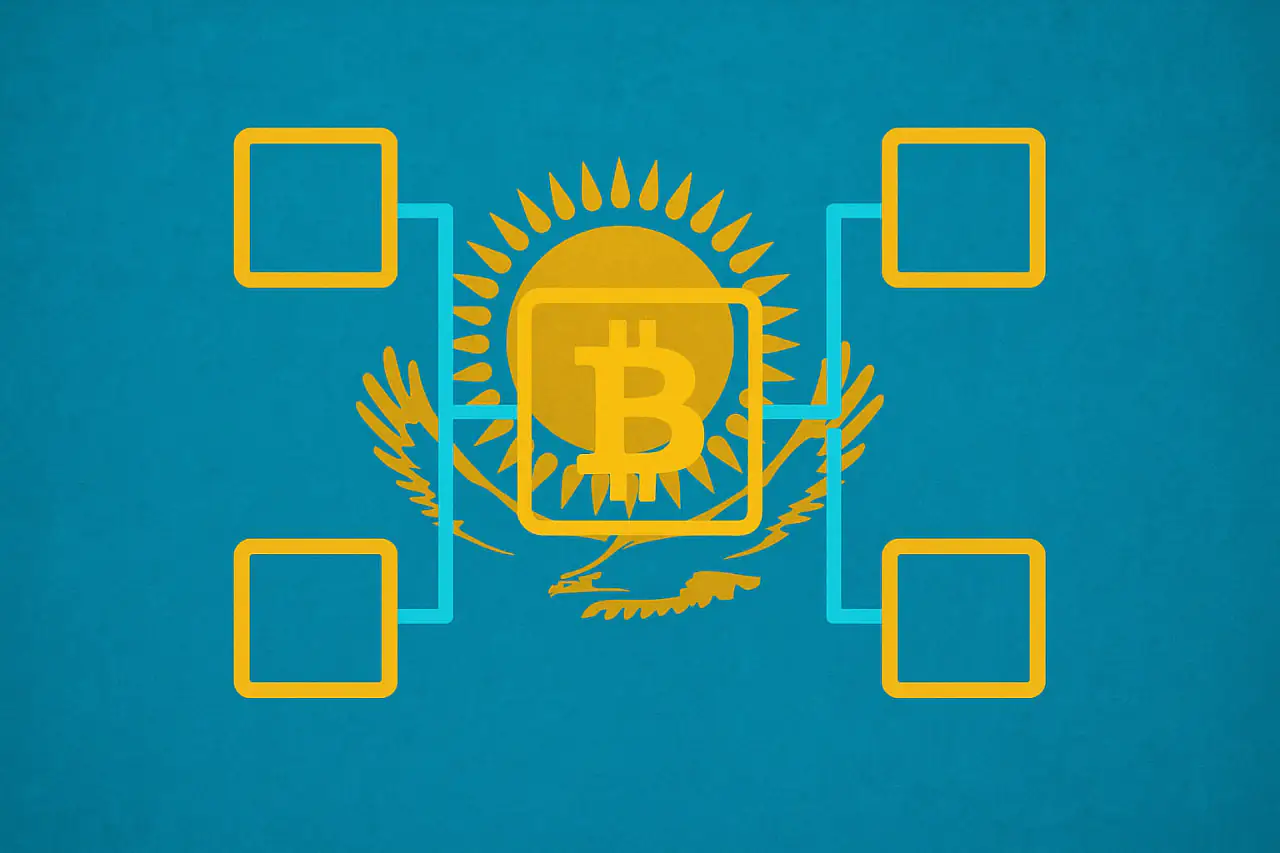
Kazakhstan's central bank is allocating up to $350 million from national reserves into crypto-linked assets, signaling a growing institutional acceptance of digital assets beyond direct holdings.
The investment strategy focuses on indirect exposure through ETFs, tech stocks, and hedge funds, indicating a risk-averse approach to entering the crypto market.
This move by a Central Asian sovereign institution represents a significant step towards digital asset integration, potentially influencing other regional financial bodies.
The parallel development of a separate national crypto reserve of up to $1 billion, funded by seized assets and mining taxes, highlights Kazakhstan's comprehensive strategy for crypto engagement.
Deep Dive
Kazakhstan's National Bank has designated up to $350 million from its gold and foreign exchange reserves for investment in cryptocurrency-linked instruments. This significant move, formalized in March 2026, represents a major step for a Central Asian sovereign institution towards digital asset exposure.
The bank's strategy focuses on indirect exposure rather than direct cryptocurrency purchases. Investments will target shares in high-tech companies connected to crypto infrastructure, Exchange Traded Funds (ETFs) and index funds that track digital asset performance, and positions through approximately five shortlisted hedge funds and venture capital vehicles. The initial capital deployment is anticipated in April or May 2026.
Governor Timur Suleimenov has emphasized a cautious approach, indicating that the bank will not rush investments into markets experiencing significant volatility. Risk management models are being recalibrated before full deployment, reflecting a blend of growing ambition and institutional prudence. The $350 million allocation is an increase from an earlier estimate of $300 million.
In addition to the investment portfolio, Kazakhstan is establishing a separate national crypto reserve with a target value between $500 million and $1 billion. This reserve will be funded through various sources, including digital assets confiscated from illegal exchanges (over $5 million already seized) and tax revenues from state-authorized crypto mining operations. A state-controlled national custodial service, built on the Central Depository, is slated to launch by May 2026 to support this infrastructure.
The pivot towards digital assets does not diminish Kazakhstan's commitment to gold. The country acquired 57 tons of gold in 2025, making it the second-largest purchaser globally. Gold continues to be viewed as an essential hedge against geopolitical risks, with the digital asset strategy running parallel to this conventional approach.
Furthermore, Kazakhstan is progressing with its central bank digital currency, the Digital Tenge. A full industrial-grade platform for the Digital Tenge was targeted for launch in late 2025 or early 2026, adding another digital financial instrument to the nation's evolving monetary system.
Analysts observe that few Central Asian governments have advanced as far or as quickly in state-level crypto integration as Kazakhstan. The success of the National Bank of Kazakhstan's (NBK) calibrated approach, particularly once market conditions stabilize and broader reserve targets are met, remains a key point of observation.
Source, catalyst, and sector overlap from the latest feed.
BlockDAG's debut on multiple global exchanges, supported by market maker projections of $0.20 to $0.50, signals strong initial market confidence and potential for significant price discovery. The project's substantial presale success ($452 million raised) and large international community provide a robust foundation for its open-market trading debut, potentially leading to stronger early liquidity. The simultaneous listing across Coinstore, LBank, BitMart, and Direct Swap aims to maximize initial liquidity and accessibility, a strategic move for a new asset entering price discovery. Market maker price expectations are based on presale scale, community size, and exchange listings, suggesting a potential mid-cap valuation if optimistic targets are met.
The arrest of a contractor's son for allegedly stealing $46M in crypto from U.S. government seizure wallets highlights significant security vulnerabilities in federal digital asset custody protocols. The incident, exposed by a blockchain investigator rather than internal controls, suggests a critical need for enhanced oversight and auditing of government contractors handling seized cryptocurrencies. While Bitcoin and Ethereum prices showed no immediate reaction, the event is likely to trigger policy reviews and potentially stricter regulations for government crypto seizure and storage practices. The reliance on a third-party investigator to uncover the theft underscores a potential systemic weakness in federal agencies' ability to safeguard high-value digital assets.
BlockDAG's multi-exchange launch and early trading volume suggest a structured entry, potentially attracting institutional interest if it achieves its $1.2B market cap target. Strong initial trading activity and increasing staking participation for BDAG, compared to early Solana and Kaspa, indicate robust demand that could drive price appreciation. The project's strategic market timing and focus on liquidity and accessibility at launch position it as a notable contender for early investors seeking high-growth opportunities. Anticipated further exchange listings and a clear roadmap towards a Top 50 market cap ranking provide a foundation for sustained investor attention and potential capital inflows.
The traditional 'altcoin season' characterized by broad market rallies is likely over, with future gains expected to be concentrated in select assets rather than a widespread 'rising tide' effect. The market is transitioning towards a more institutional and utility-focused environment, favoring established assets like Bitcoin, Ethereum, Solana, and Chainlink over speculative tokens. Significant institutional inflows and the expansion of regulated access points like ETFs are expected to reshape the market, driving demand for core infrastructure and tokenized real-world assets. The increasing supply of new tokens and a shift in retail investor behavior away from speculative chasing suggest a more selective and less forgiving market for projects lacking genuine utility.
Illicit crypto transaction volume surged 162% to $154 billion in 2025, driven by sanctions evasion and sophisticated criminal operations, indicating a growing systemic risk to market integrity. The shift towards stablecoins (84% of illicit volume) and state-sponsored financial infrastructure highlights a maturing threat landscape that requires enhanced regulatory and exchange oversight. While DeFi hack losses remained contained, the rise in phishing and physical coercion attacks, coupled with faster fund movement, compresses response windows for compliance and law enforcement. The absolute growth in illicit activity, despite remaining under 1% of total volume, suggests a need to re-evaluate risk perception beyond percentage-based metrics.
Kazakhstan's central bank plans to invest up to $350 million in crypto-related assets, diversifying its foreign exchange reserves and signaling a potential shift towards digital finance integration. The investment strategy focuses on associated firms and financial products rather than direct cryptocurrency holdings, suggesting a cautious approach to digital asset exposure. This move by a national central bank, while a small fraction of its total reserves, indicates growing institutional interest in exploring the digital asset ecosystem beyond traditional financial instruments.
Bitcoin's breach of $73,500 signals accelerating recovery and potential altcoin rotation, impacting market sentiment and positioning. The article promotes Pepeto's presale as a superior investment opportunity compared to Cardano's price prediction, highlighting its exchange infrastructure and high staking rewards. While Cardano (ADA) and Ethereum (ETH) show price recovery, their large market caps limit near-term upside potential compared to early-stage presale projects like Pepeto. The narrative suggests that traders focusing on Cardano's price prediction are missing out on the potentially higher, faster returns offered by Pepeto's presale and upcoming listing.
Marvell Technology's significant stock surge of 18% is driven by robust AI data center demand, signaling strong growth potential in the semiconductor sector tied to AI infrastructure. The company's Q4 revenue beat expectations with a 22% year-over-year increase, primarily from its data center segment which grew 21% YoY, highlighting Marvell's critical role in AI hardware supply chains. Marvell's optimistic revenue forecast of nearly $11 billion for fiscal year 2026, driven by over 30% projected growth, indicates sustained high demand for networking and connectivity solutions in AI-driven data centers. The strong performance and positive outlook suggest Marvell is a key beneficiary of the ongoing AI spending boom, potentially offering investors a compelling growth opportunity in the semiconductor space.
Intercontinental Exchange's $25 billion investment in OKX signals strong institutional confidence in the crypto exchange's infrastructure and future growth, potentially validating the sector for traditional finance players. The strategic partnership between OKX and ICE, focusing on regulated crypto futures and institutional-grade infrastructure, suggests a move towards greater compliance and accessibility for institutional investors in the digital asset space. OKB's 50% price surge following the ICE investment highlights immediate market reaction to significant backing from a traditional finance giant, indicating potential for further price appreciation if the partnership delivers on its promises.
The NYSE's parent company, ICE, investing in OKX at a $25B valuation signals a significant TradFi embrace of crypto exchanges and tokenized securities, potentially accelerating the integration of traditional and digital asset markets. OKB's substantial price surge following the ICE investment highlights strong market conviction in OKX's strategic positioning and future growth prospects, especially with the planned integration of tokenized NYSE-listed stocks. ICE's VP identifying DeFi protocols and super apps as the primary competition underscores a strategic shift towards embracing decentralized applications and user-centric crypto platforms over traditional financial infrastructure.
Kalshi faces a class action lawsuit alleging deceptive practices in resolving a prediction market tied to the Iranian leader's potential ousting, impacting user trust and potentially setting precedents for prediction market dispute resolution. The lawsuit centers on Kalshi's use of a 'death carveout' provision, which resolved the market based on the last traded price rather than a 'yes' outcome upon the leader's death, leading plaintiffs to claim they were denied expected payouts. Despite the lawsuit, Kalshi's CEO maintains the platform followed its rules and prevented profiting from death, while also noting that no trader lost money due to fee reimbursements, suggesting a nuanced market resolution rather than a direct financial loss for all participants. The legal challenge against Kalshi, a platform that recently raised funds at a significant valuation, highlights the evolving regulatory and legal landscape for prediction markets as they gain traction and volume.
US lawmakers are proposing legislation to ban prediction markets tied to military action and national security events, spurred by significant betting volumes on Iran-related outcomes, indicating a potential regulatory crackdown on specific market segments. The regulatory push highlights a divergence between regulated US exchanges like Kalshi and offshore crypto platforms like Polymarket, suggesting a possible future where controversial prediction markets are pushed offshore, mirroring trends seen in the broader crypto industry. While a blanket ban on prediction markets is unlikely due to CFTC rulemaking and industry arguments for their utility, the focus is shifting towards which types of contracts, particularly those involving war and sensitive government actions, will be tolerated, signaling a narrowing of acceptable market activities. Institutional interest, such as Intercontinental Exchange's investment in Polymarket, complicates the regulatory landscape, presenting prediction markets as a growing part of mainstream finance while simultaneously drawing scrutiny for their association with high-risk, ethically questionable events.
The potential passage of the Clarity Act in July presents a significant regulatory catalyst for the digital asset industry, potentially clarifying market structure and reducing uncertainty for participants. Despite past opposition and complexities, renewed engagement from the executive branch and ongoing negotiations suggest a shifting political landscape that could favor legislative progress. While optimistic timelines exist, the inherent difficulties of passing legislation during an election year and the need for bipartisan consensus indicate that passage is not guaranteed, warranting a cautious outlook.
Live Feed
Loading the broader stream in the same flow as the homepage feed.

Short-term Bitcoin holders are exhibiting significant selling pressure, offloading over 27,000 BTC in profit, which historically signals an impending capitulation phase. The formation of a Bitcoin 'death cross' (50-day MA below 200-day MA) reinforces bearish momentum, with past occurrences leading to substantial market drawdowns. Recent Bitcoin spot ETF outflows and institutional liquidity concerns, coupled with broader macroeconomic pressures, suggest a heightened risk-off sentiment impacting BTC's price trajectory. While Bitcoin faces immediate downside risk towards $65K if key support fails, market participants are also awaiting the Federal Reserve's policy announcement for further directional cues.

Key Insights: Ripple Prime has partnered with Coinbase to expand institutional access to crypto derivatives trading. The agreement allows the former firm’s clients to trade a range of derivatives contracts available on the Coinbase platform. The move expands the firm’s brokerage services as the firm continues to broaden its market infrastructure for institutional clients. Ripple […] The post Ripple Prime Teams With Coinbase to Expand Institutional Crypto Derivatives Access appeared first on The Coin Republic.
Florida's Senate passage of SB 314 establishes a local stablecoin framework, integrating them into existing AML laws and potentially paving the way for state-level adoption and payment utilization. Governor Ron DeSantis is expected to review the bill, and his approval would position Florida as a key state for stablecoin regulation, potentially influencing other jurisdictions. The legislation defines stablecoins as 'monetary value' and allows the state to accept them for payments, signaling a move towards practical integration of digital assets into state financial operations.
Former Ripple CTO's sentiment reflects broader market malaise, suggesting that current altcoin struggles, including XRP's, are symptomatic of a wider crypto downturn rather than project-specific issues. Shiba Inu's significant spike in futures flow, while symbolic, highlights increased speculative positioning amid rising volatility, though its underlying bearish chart structure remains intact. Dogecoin's brief 'zero removal' above $0.10 demonstrates temporary buying pressure but ultimately failed to break significant resistance, indicating continued downtrend pressure.

A former CFO's conviction for diverting $35 million to DeFi investments highlights the inherent risks and regulatory scrutiny surrounding decentralized finance, potentially impacting investor confidence in the sector. The loss of the entire $35 million due to market downturn and DeFi yield failures underscores the speculative nature and volatility of high-yield DeFi protocols, serving as a cautionary tale for asset managers. This regulatory action against Nevin Shetty, involving wire fraud and a prison sentence, reinforces the ongoing enforcement landscape for financial misconduct within the crypto space, signaling increased risk for illicit activities.

US banking regulators have clarified that tokenized securities will receive the same capital treatment as traditional securities, removing a significant barrier for banks. This regulatory clarity is expected to boost bank confidence and participation in the growing tokenized securities market, potentially accelerating adoption. The market for tokenized public equities has already reached $1.1 billion, indicating existing momentum that this regulatory development could further amplify. By treating tokenized assets under existing frameworks, regulators signal a supportive stance towards blockchain innovation without altering fundamental capital requirements.

Grammarly's new AI feature, 'Expert Review,' faces criticism for using deceased scholars' identities without explicit consent, raising ethical concerns about AI's use of personal data and intellectual property. The controversy highlights potential regulatory and trust issues for AI tools that mimic individuals, particularly in academic and professional contexts, potentially impacting user adoption and developer reputation. While Grammarly states the AI is inspired by published works and does not claim direct endorsement, the lack of consent and the 'morbid' nature of the feature could deter users and prompt scrutiny from ethicists and legal bodies.
Shiba Inu's successful defense of the $0.00000544 support level, coupled with broader market recovery, suggests potential for a short-term upward trend. Analysts have identified $0.00000586 as the immediate resistance target, with a break above this level potentially leading to a further 15.6% climb towards $0.00000644. While short-term targets are outlined, the sustainability of any uptrend for SHIB remains contingent on continued positive momentum in the broader cryptocurrency market, particularly Bitcoin's performance.
Bitcoin's failure to sustain above $70,000 suggests the recent rally was a relief bounce, with the $68,000-$70,000 zone now critical for preventing a further decline. Several major altcoins are also showing weakness at resistance levels, indicating a broader market sentiment shift towards bearishness or consolidation. While some analysts point to historical BTC/gold ratios suggesting a potential bottom, on-chain data indicates a persistent bear market, creating divergence in outlooks. Traders should monitor key moving averages and support/resistance levels for BTC and altcoins like ETH, BNB, XRP, SOL, DOGE, ADA, BCH, HYPE, and XMR to gauge short-term directional bias.
Dogecoin is trading below its daily middle Bollinger Band at $0.0963, indicating that bearish sentiment currently dominates price action. While short-term futures data shows net inflows, longer-term 24-hour and three-day data reveal net outflows, suggesting cautious sentiment among broader market participants. The asset is consolidating between $0.093 and $0.096, with a reclaim of the $0.096 midline needed to challenge the $0.1036 resistance zone.

Curve Finance has accused PancakeSwap of using its proprietary StableSwap code without proper licensing, highlighting potential legal and cybersecurity risks in DeFi development. This dispute underscores the importance of intellectual property and licensing in the rapidly evolving DeFi space, potentially impacting future code sharing and collaboration. PancakeSwap has indicated a willingness to discuss the issue with Curve, suggesting a potential resolution through licensing or partnership rather than outright conflict.

Despite a wave of positive institutional news including ETF custodianship and banking access, Bitcoin's price action was dominated by macro factors like a strengthening dollar and shifting interest rate expectations, highlighting crypto's increasing correlation with traditional risk assets. The pullback suggests that short-term holders are more sensitive to macro uncertainty and geopolitical events, leading to profit-taking rather than conviction-driven long-term holding. While short-term price action was negative, underlying structural developments like expanded custody services and exchange investments point to a maturing crypto market infrastructure, even as macro headwinds currently overshadow crypto-native catalysts. Positive net inflows into spot Bitcoin ETFs and unwound leveraged positions suggest a potential foundation for future rallies, contingent on a stabilization of macro conditions and reduced speculative excess.
Bitcoin's inability to sustain a break above $72,000 signals fading momentum, increasing the risk of a pullback to $68,000 as key resistance holds firm. Rising oil prices and Treasury yields are creating macro headwinds for risk assets like Bitcoin, suggesting that interest rate cut expectations may be too optimistic. Despite recent ETF inflows, Bitcoin's failure to break through the $71,500 resistance highlights significant supply pressure, potentially leading to leveraged long liquidations if support breaks. The market's psychological reaction to the $71,500 level, a former breakout point, is shifting sentiment, with short sellers gaining confidence and bulls becoming more cautious.

Senator Warren's call for anti-corruption provisions in crypto legislation, referencing the Justin Sun settlement, signals increased regulatory scrutiny on the intersection of crypto and political influence. The ongoing debate around the crypto market structure bill, with differing views from lawmakers and industry participants, suggests potential legislative hurdles and uncertainty for the sector. The SEC's settlement with Justin Sun, while resolving an unrelated case, has become a focal point for broader discussions on crypto regulation and potential conflicts of interest.
Signal context only. Validate with price action, liquidity, and risk limits before taking a position.
