
Navigating Crypto News

CoinFeather
Navigating Crypto News
Quick market read from this story
Bitcoin's breach of $73,500 signals accelerating recovery and potential altcoin rotation, impacting market sentiment and positioning.
The article promotes Pepeto's presale as a superior investment opportunity compared to Cardano's price prediction, highlighting its exchange infrastructure and high staking rewards.
While Cardano (ADA) and Ethereum (ETH) show price recovery, their large market caps limit near-term upside potential compared to early-stage presale projects like Pepeto.
The narrative suggests that traders focusing on Cardano's price prediction are missing out on the potentially higher, faster returns offered by Pepeto's presale and upcoming listing.
Deep Dive
Bitcoin has surged past $73,500 for the first time in a month, marking a significant recovery and outperforming gold as a safe-haven asset amidst Middle East tensions. This breach of a long-standing resistance level indicates an accelerating recovery, with capital rotation into altcoins expected to follow. While Cardano (ADA) is predicted to recover to $0.40, new presale projects with robust exchange infrastructure, such as Pepeto, offer potentially higher returns.
On March 4, Bitcoin reached a one-month high of $73,500 during European trading, driven by the return of institutional buyers through spot ETFs. The market is increasingly viewing BTC as a safe haven. Following Bitcoin's lead, altcoins also saw gains, with Solana (SOL) jumping 7.2% and Chainlink (LINK) surging 8%. This pattern of Bitcoin breaking resistance often precedes a rotation into presale opportunities.
Pepeto aims to simplify crypto market navigation with its advanced exchange infrastructure, featuring cross-chain bridging, zero-fee execution, and a risk-scoring system. This infrastructure connects liquidity across Ethereum, BNB Chain, and Solana, while its risk scoring system evaluates token profiles before capital commitment. This aims to significantly enhance trading for the global crypto market of over 600 million participants.
The project has seen rapid presale accumulation, raising over $7.5 million at $0.000000186 per token. The development is backed by a SolidProof audit and led by a co-founder of the Pepe ecosystem. Early investors can earn approximately $1,741 per month in staking rewards at a 209% APY on a $10,000 position, with these rewards compounding as the listing date approaches.
Cardano (ADA) surpassed $0.28 on March 4, with price predictions for March targeting $0.40, representing a 43% increase. However, achieving significant gains for ADA, which has a $10 billion market cap, requires substantial capital inflow. In comparison, Pepeto's presale pricing offers potentially higher multiples in a shorter timeframe.
Ethereum (ETH) is trading near $2,043, with targets set at $2,300 and long-term projections of $40,000 by the end of the decade. Despite its strong recovery, ETH's large market cap means returns require patience, unlike the faster multiplier potential offered by presale projects like Pepeto.
The current gap between Pepeto's presale price and its future listing price represents a significant opportunity for substantial returns. With Bitcoin's rally accelerating, presale stages are filling faster than anticipated. The project offers substantial monthly staking income while awaiting its listing, which is expected to close this gap permanently. Interested investors are encouraged to visit the Pepeto official website to participate in the presale.
Source, catalyst, and sector overlap from the latest feed.
Short-term Bitcoin holders are exhibiting significant selling pressure, offloading over 27,000 BTC in profit, which historically signals an impending capitulation phase. The formation of a Bitcoin 'death cross' (50-day MA below 200-day MA) reinforces bearish momentum, with past occurrences leading to substantial market drawdowns. Recent Bitcoin spot ETF outflows and institutional liquidity concerns, coupled with broader macroeconomic pressures, suggest a heightened risk-off sentiment impacting BTC's price trajectory. While Bitcoin faces immediate downside risk towards $65K if key support fails, market participants are also awaiting the Federal Reserve's policy announcement for further directional cues.
XRP's perceived resilience during market downturns, attributed to its real-money use case in cross-border payments, suggests potential for outperformance against broader market assets like Bitcoin. The ongoing development of crypto-friendly regulations in the US, such as the GENIUS and CLARITY Acts, is seen as a crucial catalyst for institutional capital formation and broader market adoption. Despite current market conditions, a long-term perspective on innovation cycles, spanning up to 10 years, is advised, indicating that short-term price action may not reflect true underlying progress.
Significant XRP outflows from Binance, totaling 74 million tokens across two major events, suggest a potential reduction in immediate sell pressure. The XRP price is exhibiting a bullish technical pattern, consolidating within a descending wedge while resting on multi-month support, which could precede a significant upward move. A breakout from the current descending wedge pattern, if sustained, could target the upper boundary of a long-term ascending channel, projecting a potential 180% rally towards $4.07. The confluence of reduced exchange supply and a repeating bullish fractal pattern on the XRP chart indicates a developing setup that technical traders are closely monitoring for potential upside.
Bitcoin's failure to break the $72,000 resistance and subsequent drop below $69,000, coupled with bearish technical indicators, suggests a weakening short-term bullish momentum. Speculation around Jane Street's reported $19 million BTC transfer to exchanges introduces a potential bearish catalyst, as large transfers can signal selling intent during volatile periods. The price action shows BTC breaking below the 200-period moving average, highlighting a shift in short-term momentum and bringing the $66,000-$66,500 demand zone into focus as a critical support level. Traders are monitoring potential institutional trading patterns, such as sell-offs around the 10 AM window, which, while unconfirmed, are being discussed in relation to Jane Street's market-making role.
Pakistan's formalization of its crypto market via the Virtual Assets Act 2026 establishes a regulatory framework, potentially increasing institutional confidence and adoption. The creation of the Pakistan Virtual Assets Regulatory Authority (PVARA) and its initial NOCs to Binance and HTX signal a proactive approach to integrating major exchanges, which could boost local trading liquidity. The government's strategic plans for a Bitcoin reserve and allocating energy for mining, alongside exploring stablecoin infrastructure, indicate a broader national strategy to leverage digital assets for economic development. The inclusion of a Shariah Advisory Committee in the regulatory framework is a significant development, potentially attracting a large segment of the population and aligning crypto with Islamic finance principles.
BlockDAG's debut on multiple global exchanges, supported by market maker projections of $0.20 to $0.50, signals strong initial market confidence and potential for significant price discovery. The project's substantial presale success ($452 million raised) and large international community provide a robust foundation for its open-market trading debut, potentially leading to stronger early liquidity. The simultaneous listing across Coinstore, LBank, BitMart, and Direct Swap aims to maximize initial liquidity and accessibility, a strategic move for a new asset entering price discovery. Market maker price expectations are based on presale scale, community size, and exchange listings, suggesting a potential mid-cap valuation if optimistic targets are met.
BlockDAG's multi-exchange launch and early trading volume suggest a structured entry, potentially attracting institutional interest if it achieves its $1.2B market cap target. Strong initial trading activity and increasing staking participation for BDAG, compared to early Solana and Kaspa, indicate robust demand that could drive price appreciation. The project's strategic market timing and focus on liquidity and accessibility at launch position it as a notable contender for early investors seeking high-growth opportunities. Anticipated further exchange listings and a clear roadmap towards a Top 50 market cap ranking provide a foundation for sustained investor attention and potential capital inflows.
BlockDAG's successful $452M presale and simultaneous listing on multiple major exchanges (Coinstore, LBank, BitMart) indicate strong initial market interest and liquidity, positioning it for potential rapid price discovery. Analysts project BlockDAG could reach $0.20-$0.50 in the short term and a $1.2B market cap, potentially entering the top 50 cryptocurrencies, driven by community demand and multi-exchange accessibility. The project's strategy of launching on several exchanges at once, coupled with a large presale community, suggests a deliberate effort to maximize early visibility and trading volume, setting it apart from typical token debuts. While the launch is framed as potentially one of crypto's biggest, the actual market performance will determine if BlockDAG can sustain its early momentum and achieve ambitious market cap targets, with further exchange listings anticipated.
The launch of the first U.S. spot Polkadot ETF (TDOT) on Nasdaq marks a significant regulatory milestone, providing institutional investors with direct, regulated exposure to DOT and potentially paving the way for other altcoin ETFs. The TDOT ETF's ability to generate staking yield for investors, combined with Polkadot's upcoming tokenomics overhaul introducing a hard supply cap, creates a dual catalyst for potential DOT price appreciation, drawing parallels to the Bitcoin ETF and halving narrative. While the ETF launch is a positive development, its success hinges on attracting sufficient capital, as highlighted by Bloomberg analysts who note the risk of liquidation for underperforming niche products, making TDOT's performance a key indicator for future altcoin ETF approvals. Analysts project a wide range for DOT by year-end 2026, from $12-$20 in bullish scenarios to $5-$10 in bearish ones, indicating significant volatility and uncertainty despite the new regulated investment vehicle and tokenomic changes.
Kazakhstan's central bank plans to invest up to $350 million in crypto-related assets, diversifying its foreign exchange reserves and signaling a potential shift towards digital finance integration. The investment strategy focuses on associated firms and financial products rather than direct cryptocurrency holdings, suggesting a cautious approach to digital asset exposure. This move by a national central bank, while a small fraction of its total reserves, indicates growing institutional interest in exploring the digital asset ecosystem beyond traditional financial instruments.
Kalshi faces a class action lawsuit alleging deceptive practices in resolving a prediction market tied to the Iranian leader's potential ousting, impacting user trust and potentially setting precedents for prediction market dispute resolution. The lawsuit centers on Kalshi's use of a 'death carveout' provision, which resolved the market based on the last traded price rather than a 'yes' outcome upon the leader's death, leading plaintiffs to claim they were denied expected payouts. Despite the lawsuit, Kalshi's CEO maintains the platform followed its rules and prevented profiting from death, while also noting that no trader lost money due to fee reimbursements, suggesting a nuanced market resolution rather than a direct financial loss for all participants. The legal challenge against Kalshi, a platform that recently raised funds at a significant valuation, highlights the evolving regulatory and legal landscape for prediction markets as they gain traction and volume.
The arrest of a contractor's son for allegedly stealing $46M in crypto from U.S. government seizure wallets highlights significant security vulnerabilities in federal digital asset custody protocols. The incident, exposed by a blockchain investigator rather than internal controls, suggests a critical need for enhanced oversight and auditing of government contractors handling seized cryptocurrencies. While Bitcoin and Ethereum prices showed no immediate reaction, the event is likely to trigger policy reviews and potentially stricter regulations for government crypto seizure and storage practices. The reliance on a third-party investigator to uncover the theft underscores a potential systemic weakness in federal agencies' ability to safeguard high-value digital assets.
US lawmakers are proposing legislation to ban prediction markets tied to military action and national security events, spurred by significant betting volumes on Iran-related outcomes, indicating a potential regulatory crackdown on specific market segments. The regulatory push highlights a divergence between regulated US exchanges like Kalshi and offshore crypto platforms like Polymarket, suggesting a possible future where controversial prediction markets are pushed offshore, mirroring trends seen in the broader crypto industry. While a blanket ban on prediction markets is unlikely due to CFTC rulemaking and industry arguments for their utility, the focus is shifting towards which types of contracts, particularly those involving war and sensitive government actions, will be tolerated, signaling a narrowing of acceptable market activities. Institutional interest, such as Intercontinental Exchange's investment in Polymarket, complicates the regulatory landscape, presenting prediction markets as a growing part of mainstream finance while simultaneously drawing scrutiny for their association with high-risk, ethically questionable events.
The potential passage of the Clarity Act in July presents a significant regulatory catalyst for the digital asset industry, potentially clarifying market structure and reducing uncertainty for participants. Despite past opposition and complexities, renewed engagement from the executive branch and ongoing negotiations suggest a shifting political landscape that could favor legislative progress. While optimistic timelines exist, the inherent difficulties of passing legislation during an election year and the need for bipartisan consensus indicate that passage is not guaranteed, warranting a cautious outlook.
Live Feed
Loading the broader stream in the same flow as the homepage feed.

Key Insights: Ripple Prime has partnered with Coinbase to expand institutional access to crypto derivatives trading. The agreement allows the former firm’s clients to trade a range of derivatives contracts available on the Coinbase platform. The move expands the firm’s brokerage services as the firm continues to broaden its market infrastructure for institutional clients. Ripple […] The post Ripple Prime Teams With Coinbase to Expand Institutional Crypto Derivatives Access appeared first on The Coin Republic.

Florida's Senate passage of SB 314 establishes a local stablecoin framework, integrating them into existing AML laws and potentially paving the way for state-level adoption and payment utilization. Governor Ron DeSantis is expected to review the bill, and his approval would position Florida as a key state for stablecoin regulation, potentially influencing other jurisdictions. The legislation defines stablecoins as 'monetary value' and allows the state to accept them for payments, signaling a move towards practical integration of digital assets into state financial operations.
Former Ripple CTO's sentiment reflects broader market malaise, suggesting that current altcoin struggles, including XRP's, are symptomatic of a wider crypto downturn rather than project-specific issues. Shiba Inu's significant spike in futures flow, while symbolic, highlights increased speculative positioning amid rising volatility, though its underlying bearish chart structure remains intact. Dogecoin's brief 'zero removal' above $0.10 demonstrates temporary buying pressure but ultimately failed to break significant resistance, indicating continued downtrend pressure.

A former CFO's conviction for diverting $35 million to DeFi investments highlights the inherent risks and regulatory scrutiny surrounding decentralized finance, potentially impacting investor confidence in the sector. The loss of the entire $35 million due to market downturn and DeFi yield failures underscores the speculative nature and volatility of high-yield DeFi protocols, serving as a cautionary tale for asset managers. This regulatory action against Nevin Shetty, involving wire fraud and a prison sentence, reinforces the ongoing enforcement landscape for financial misconduct within the crypto space, signaling increased risk for illicit activities.

US banking regulators have clarified that tokenized securities will receive the same capital treatment as traditional securities, removing a significant barrier for banks. This regulatory clarity is expected to boost bank confidence and participation in the growing tokenized securities market, potentially accelerating adoption. The market for tokenized public equities has already reached $1.1 billion, indicating existing momentum that this regulatory development could further amplify. By treating tokenized assets under existing frameworks, regulators signal a supportive stance towards blockchain innovation without altering fundamental capital requirements.

Grammarly's new AI feature, 'Expert Review,' faces criticism for using deceased scholars' identities without explicit consent, raising ethical concerns about AI's use of personal data and intellectual property. The controversy highlights potential regulatory and trust issues for AI tools that mimic individuals, particularly in academic and professional contexts, potentially impacting user adoption and developer reputation. While Grammarly states the AI is inspired by published works and does not claim direct endorsement, the lack of consent and the 'morbid' nature of the feature could deter users and prompt scrutiny from ethicists and legal bodies.
Shiba Inu's successful defense of the $0.00000544 support level, coupled with broader market recovery, suggests potential for a short-term upward trend. Analysts have identified $0.00000586 as the immediate resistance target, with a break above this level potentially leading to a further 15.6% climb towards $0.00000644. While short-term targets are outlined, the sustainability of any uptrend for SHIB remains contingent on continued positive momentum in the broader cryptocurrency market, particularly Bitcoin's performance.
Bitcoin's failure to sustain above $70,000 suggests the recent rally was a relief bounce, with the $68,000-$70,000 zone now critical for preventing a further decline. Several major altcoins are also showing weakness at resistance levels, indicating a broader market sentiment shift towards bearishness or consolidation. While some analysts point to historical BTC/gold ratios suggesting a potential bottom, on-chain data indicates a persistent bear market, creating divergence in outlooks. Traders should monitor key moving averages and support/resistance levels for BTC and altcoins like ETH, BNB, XRP, SOL, DOGE, ADA, BCH, HYPE, and XMR to gauge short-term directional bias.
Dogecoin is trading below its daily middle Bollinger Band at $0.0963, indicating that bearish sentiment currently dominates price action. While short-term futures data shows net inflows, longer-term 24-hour and three-day data reveal net outflows, suggesting cautious sentiment among broader market participants. The asset is consolidating between $0.093 and $0.096, with a reclaim of the $0.096 midline needed to challenge the $0.1036 resistance zone.

Curve Finance has accused PancakeSwap of using its proprietary StableSwap code without proper licensing, highlighting potential legal and cybersecurity risks in DeFi development. This dispute underscores the importance of intellectual property and licensing in the rapidly evolving DeFi space, potentially impacting future code sharing and collaboration. PancakeSwap has indicated a willingness to discuss the issue with Curve, suggesting a potential resolution through licensing or partnership rather than outright conflict.

Despite a wave of positive institutional news including ETF custodianship and banking access, Bitcoin's price action was dominated by macro factors like a strengthening dollar and shifting interest rate expectations, highlighting crypto's increasing correlation with traditional risk assets. The pullback suggests that short-term holders are more sensitive to macro uncertainty and geopolitical events, leading to profit-taking rather than conviction-driven long-term holding. While short-term price action was negative, underlying structural developments like expanded custody services and exchange investments point to a maturing crypto market infrastructure, even as macro headwinds currently overshadow crypto-native catalysts. Positive net inflows into spot Bitcoin ETFs and unwound leveraged positions suggest a potential foundation for future rallies, contingent on a stabilization of macro conditions and reduced speculative excess.
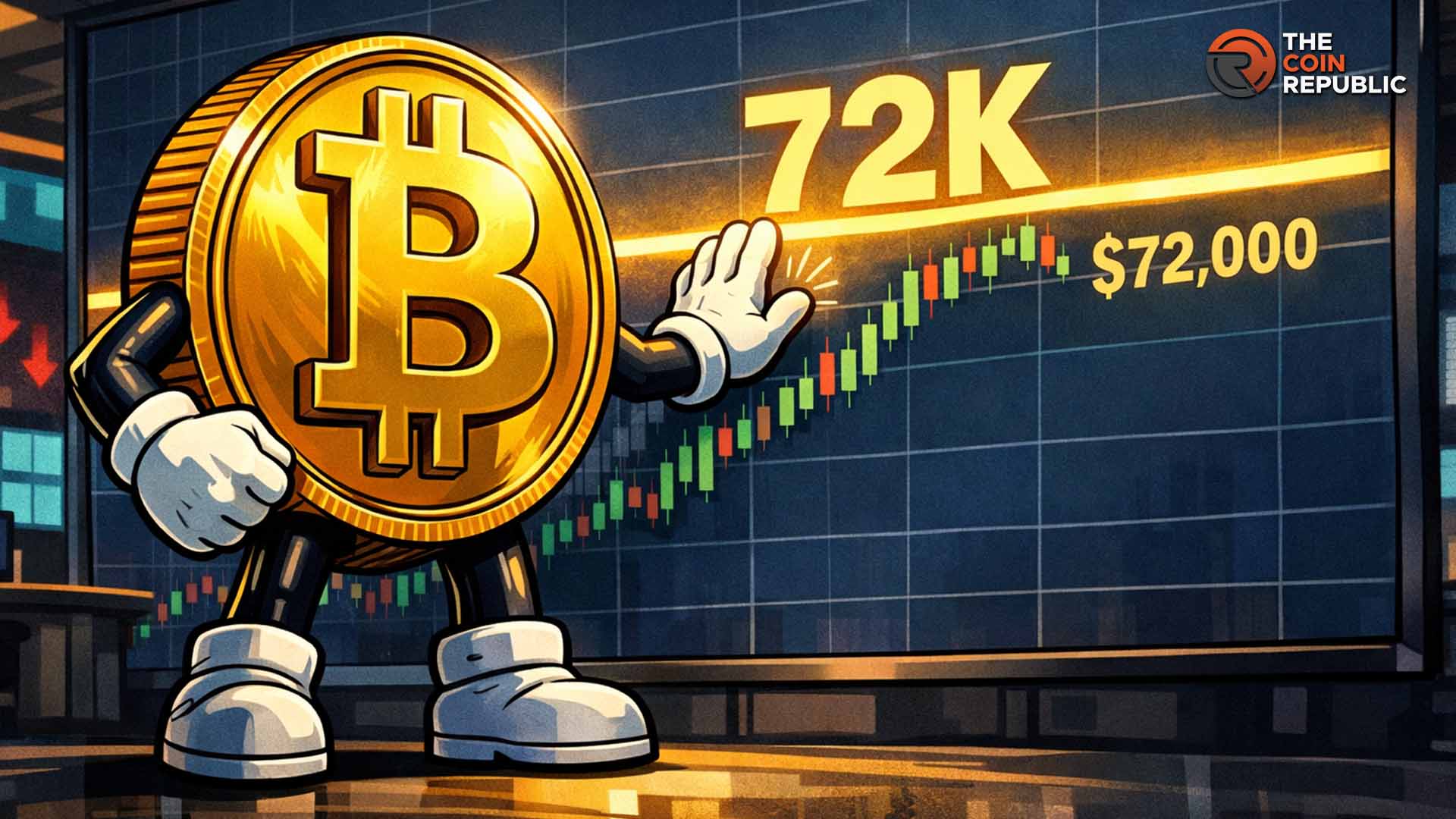
Bitcoin's inability to sustain a break above $72,000 signals fading momentum, increasing the risk of a pullback to $68,000 as key resistance holds firm. Rising oil prices and Treasury yields are creating macro headwinds for risk assets like Bitcoin, suggesting that interest rate cut expectations may be too optimistic. Despite recent ETF inflows, Bitcoin's failure to break through the $71,500 resistance highlights significant supply pressure, potentially leading to leveraged long liquidations if support breaks. The market's psychological reaction to the $71,500 level, a former breakout point, is shifting sentiment, with short sellers gaining confidence and bulls becoming more cautious.

Senator Warren's call for anti-corruption provisions in crypto legislation, referencing the Justin Sun settlement, signals increased regulatory scrutiny on the intersection of crypto and political influence. The ongoing debate around the crypto market structure bill, with differing views from lawmakers and industry participants, suggests potential legislative hurdles and uncertainty for the sector. The SEC's settlement with Justin Sun, while resolving an unrelated case, has become a focal point for broader discussions on crypto regulation and potential conflicts of interest.
Signal context only. Validate with price action, liquidity, and risk limits before taking a position.
