
Navigating Crypto News

CoinFeather
Navigating Crypto News
Quick market read from this story
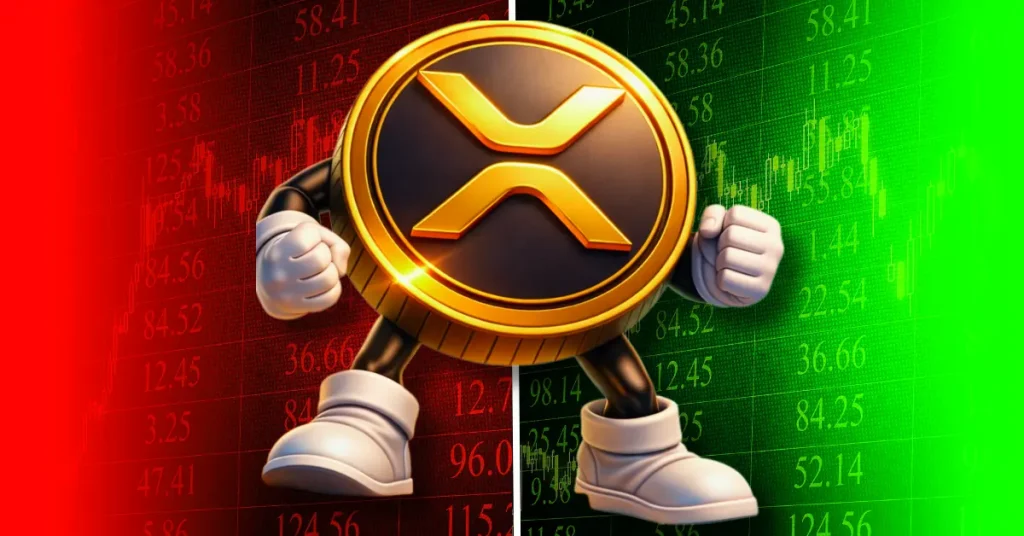
XRP has surpassed BNB in market capitalization, reclaiming the fourth-largest crypto asset position, indicating a significant capital rotation driven by internal momentum rather than broad market trends.
The substantial increase in XRP's futures open interest, up 59% from recent lows, signals renewed trader participation and suggests a potential setup for a continuation rally after a period of accumulation.
Technical analysis points to XRP consolidating below a critical $1.50-$1.60 resistance zone, with a confirmed breakout potentially targeting $1.85, while a failure to hold support could lead to a pullback to $1.35-$1.40.
The shift in market preference towards XRP, evidenced by its market cap gain and derivatives activity, suggests a potential near-term upside catalyst if key resistance levels are breached.
Deep Dive
XRP has experienced a significant surge, reclaiming its position as the fourth-largest cryptocurrency by market capitalization, surpassing BNB. This shift, with XRP's market cap reaching approximately $93 billion compared to BNB's $92 billion, indicates a notable capital rotation within the crypto market, driven by XRP's internal momentum rather than broad market catalysts.
The move highlights a clear change in market preference, with traders reallocating capital towards assets demonstrating both liquidity and directional strength. XRP's gradual climb in price and market cap, supported by consistent participation, suggests an accumulation-driven trend rather than a speculative spike. This contrasts with BNB's limited momentum, making XRP a key beneficiary of this capital reallocation.
A key indicator of XRP's resurgence is the significant increase in derivatives activity. Open interest in XRP futures has risen by 59% to approximately 353 million XRP, up from around 222 million XRP in October. This recovery follows a sharp decline after a previous cycle peak and suggests traders are re-entering the market in a measured way, rebuilding leverage after a market flush and potentially setting the stage for a new directional move.
XRP is currently consolidating below the $1.50–$1.60 resistance zone. Technical analysis suggests a tightening structure, often preceding a breakout. Analyst Ali Martinez noted XRP is breaking out of a triangle pattern on lower timeframes, a setup typically associated with continuation moves. A confirmed breakout above $1.60 could potentially target $1.85, aligning with the next visible resistance area. Failure to hold this breakout could see XRP pull back to the $1.35–$1.40 support range.
With XRP price holding near $1.50 and open interest rebuilding, the market appears to be positioning for further gains. The immediate trigger point remains the $1.60 level. A sustained breakout above this zone could accelerate momentum towards the $1.80–$1.85 range. Conversely, a failure to maintain upward pressure might lead to a pullback to the $1.35–$1.40 support zone. XRP is currently building pressure, and the next significant move is expected to define its future direction.
Source, catalyst, and sector overlap from the latest feed.
Mastercard's acquisition of BVNK for up to $1.8 billion signals a significant institutional push into stablecoin infrastructure and on-chain payments, potentially increasing adoption and integration of digital assets into traditional finance. The deal, expected to close by end of 2026, positions Mastercard to offer integrated fiat and stablecoin payment solutions globally, enhancing its existing digital asset services and potentially impacting competitors in the payment processing space. BVNK's capability to connect fiat and stablecoins across major blockchains, supporting payments in over 130 countries, suggests a strategic move by Mastercard to bridge traditional financial systems with the growing digital asset economy.
Bittensor (TAO) faces significant resistance at the $300 level, indicating potential for a pullback or consolidation despite broader market strength in Bitcoin and Ethereum. The daily RSI nearing overbought territory, coupled with price rejection, suggests a loss of bullish momentum, though steady OBV hints at underlying accumulation. Maintaining support above the $220-$230 zone is critical for TAO's bullish structure; failure to reclaim $300 could lead to a prolonged consolidation phase. While interim hurdles exist, the overall market sentiment for TAO remains bullish, with key levels at $300 for resistance and $220-$240 for support dictating near-term price action.
Institutional interest in Real-World Assets (RWA) is demonstrably increasing, driving significant price action and volume surges across top RWA projects like Chainlink, Stellar, Avalanche, Hedera, and Sky. While Chainlink shows steady gains and breaks consolidation, Stellar's volume surge and Avalanche's technical patterns suggest potential upside, indicating a sector-wide bullish sentiment driven by growing institutional adoption. Hedera is exhibiting pre-breakout consolidation, and Sky is showing strong momentum with high volume, highlighting potential for significant price discovery if key resistance levels are breached, though volatility remains a factor. The RWA sector is transitioning from theoretical to active and liquid, with specific projects showing distinct technical setups that traders are closely monitoring for potential entry points.
Ripple's strategic expansion into Brazil, offering a comprehensive suite of institutional financial services, signals a commitment to growth in a key emerging market. The planned application for a VASP license with Brazil's Central Bank indicates Ripple's proactive approach to regulatory compliance, potentially paving the way for broader adoption and integration within the Brazilian financial ecosystem. This expansion, coupled with Ripple's focus on cross-border payments and digital asset custody, suggests a strengthening of its institutional offerings and a potential positive sentiment for XRP as its utility and adoption narrative continues to develop.
The analyst identifies a specific trigger for altcoin season: Bitcoin reaching $80k-$90k while its dominance falls into the late 50s, indicating capital rotation from BTC into altcoins. With over 50 altcoins showing signs of breaking high time frame trends, traders are advised to focus on assets not yet experiencing significant volume, rather than chasing recent movers. Key altcoin setups mentioned include SUI, NEAR targeting $1.80-$2, Chainlink nearing a breakout, and ETH with a potential path to $3,400 if current support at $73,000 holds. The current market setup suggests a potential altcoin season is building, but the definitive trigger has not yet occurred, warranting a cautious accumulation strategy.
Phantom's CFTC no-action relief allows non-custodial wallets to access regulated derivatives markets, potentially expanding DeFi integration with traditional finance. This development sets a precedent for crypto infrastructure providers engaging proactively with regulators, paving the way for similar access for other wallets and protocols. The ruling clarifies regulatory pathways for non-custodial interfaces, reducing broker registration burdens and encouraging compliant innovation in the derivatives space.
XRP's trading volume surge in South Korea, surpassing BTC and ETH on Upbit, indicates strong localized demand and potential for broader market attention. Increased spot trading volume and exchange outflows suggest active accumulation by investors, signaling confidence in XRP's near-term price appreciation. Renewed derivatives activity, including rising futures volume and open interest, points to growing speculative interest and strategic positioning by traders. The significant trading activity originating from South Korea highlights the region's increasing influence on global crypto markets and specific asset performance.
Zcash (ZEC) has experienced a significant 108% surge in 24-hour trading volume, indicating renewed market interest and increased participation in the privacy coin sector. The increased volume coincides with a broader resurgence in privacy-focused cryptocurrencies, potentially driven by investor concerns over transaction transparency and a desire for financial privacy. A $25 million funding round for the Zcash Open Development Lab bolsters confidence in the project's long-term technological advancement and infrastructure development. While the current volume spike suggests stabilization, its sustainability as a trend reversal remains uncertain without further confirmation of sustained buying pressure.
Ethereum's open interest surge and positive funding rates indicate a strong build-up of long positions, suggesting potential vulnerability to a short-term pullback if momentum falters. A newly formed CME gap near $2,117 presents a technical target for a potential retracement, which could serve to liquidate excess leverage before any sustained upward continuation. While momentum indicators are strong, the crowded nature of long positions and the presence of a CME gap suggest a cautious approach is warranted for near-term ETH trading.
XRP Ledger's record 7.7 million holders and increased daily active addresses suggest growing network adoption and investor accumulation, potentially signaling a bullish trend. The price action is consolidating around the $1.50-$1.60 resistance, with a decisive break above this level being critical for bulls to target higher price points like $1.95 or $2.55. Whale accumulation and decreasing exchange balances, coupled with rising on-chain activity, indicate strong underlying support and could precede a significant price move if resistance is overcome.
Live Feed
Loading the broader stream in the same flow as the homepage feed.
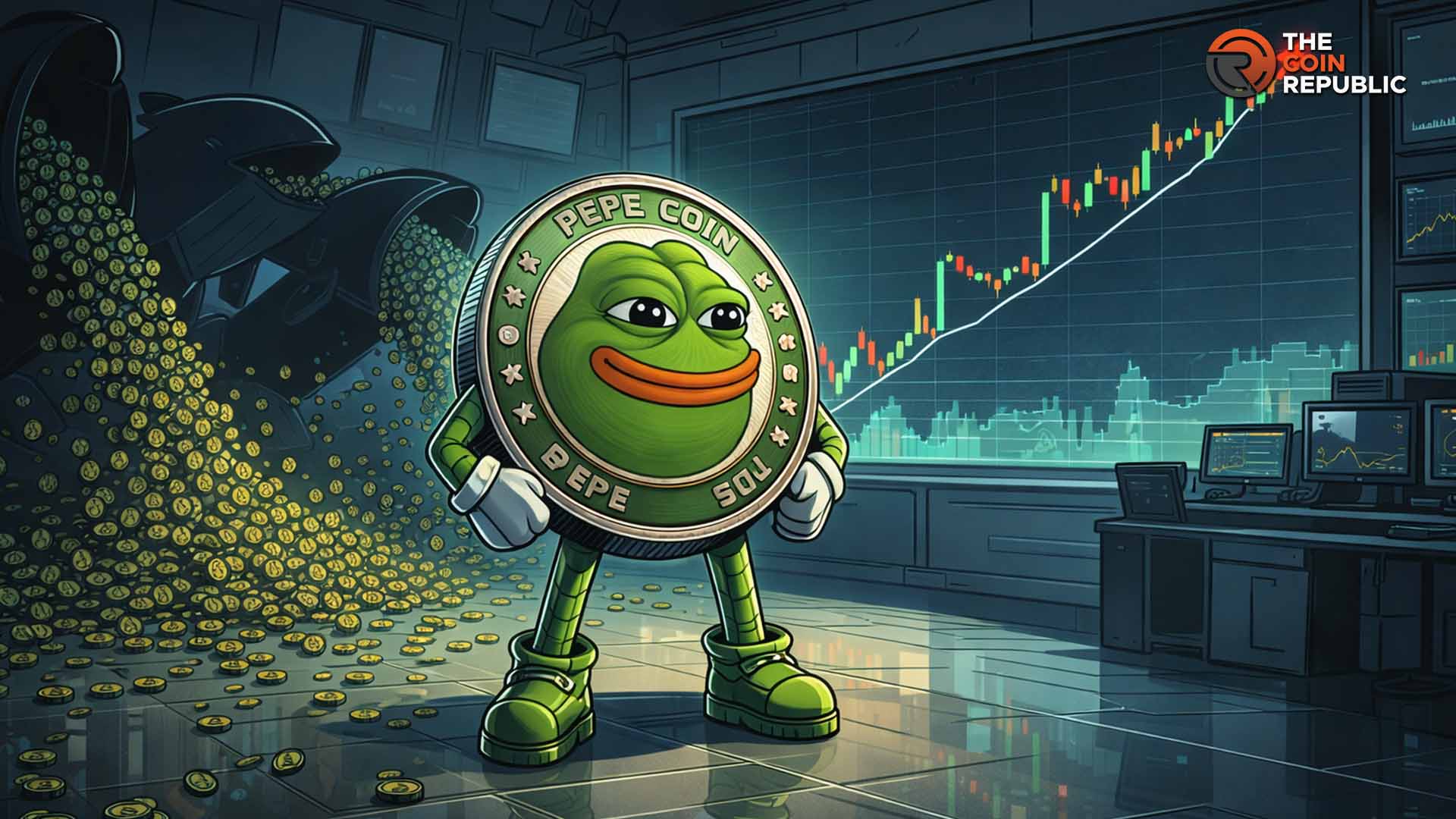
Pepe price is approaching a critical falling channel resistance, with a breakout potentially signaling a bullish reversal, but technical indicators suggest caution. Hidden bearish divergence on RSI and declining Chaikin Money Flow indicate that recent price gains may be driven by retail sentiment rather than strong institutional accumulation. Whale holders have reduced their Pepe holdings by approximately 3.43 trillion tokens since March 13, suggesting smart money is exiting positions ahead of potential downside. A failure to break the falling channel resistance could lead to a significant price drop, with support breaking at $0.0000033 potentially triggering a 26% decline.
Shiba Inu's exchange reserves approaching 81 trillion tokens signal increasing sell-side pressure, potentially leading to heightened volatility. The token's price action remains bearish, with multiple moving averages acting as resistance, indicating a lack of strong upward momentum. Despite minor short-term bounces, the absence of significant volume and sustained breaks above key EMAs suggest the broader downtrend is likely to persist. The current on-chain data points to holder uncertainty, with fluctuating netflows complicating any potential price recovery efforts.

World's new AgentKit integrates World ID with Coinbase's x402 protocol, enabling AI agents to cryptographically prove human backing to combat bots and online abuse. This development addresses the growing problem of AI agents overwhelming services like ticket sales and API access, potentially improving user experience and resource allocation for platforms. While Worldcoin (WLD) is mentioned as a reward for World ID verification, the AgentKit itself does not require WLD tokens, focusing on the 'proof of personhood' aspect for broader utility. The integration with Coinbase's protocol suggests a move towards standardized solutions for AI agent verification, potentially impacting how platforms manage automated interactions and payments.

Sam Altman's World ID is integrating with Coinbase's x402 protocol to provide cryptographic proof of human identity for AI agents, addressing a critical need in the burgeoning agentic commerce market. The partnership aims to bridge the gap between AI agents' transactional capabilities and verifiable human oversight, potentially enabling new economic models and preventing bot abuse in e-commerce. This development positions World ID as a foundational identity layer for an internet increasingly populated by AI agents, leveraging zero-knowledge proofs for privacy-preserving verification. The integration with Coinbase's agentic payment protocol signals a significant step towards enabling legitimate economic participation for AI agents, with potential implications for future digital commerce infrastructure.
THENA clarifies its smart contracts were not compromised in the exploit, attributing the $2.18M bad debt on Venus Protocol to an architectural flaw in the $THE market there. The $THE token price has fallen over 13% following the exploit, with trading volume down significantly, indicating a negative market reaction despite THENA's assurances of its own system's security. THENA plans to increase APRs on its vaults due to generated fees and will propose governance changes to address bad debt and adjust collateral parameters, aiming to restore stability.

Mastercard's acquisition of BVNK for up to $1.8 billion signals a significant strategic pivot towards integrating stablecoin infrastructure into traditional payment rails, potentially accelerating mainstream adoption of digital asset payments. The deal positions Mastercard ahead of competitors like Visa and Coinbase in the race to build bridges between fiat and on-chain transactions, highlighting the growing importance of stablecoins as a core financial infrastructure rather than a niche product. With BVNK's capabilities, Mastercard can leverage its extensive merchant network to facilitate seamless stablecoin transactions, potentially driving substantial growth in crypto payment volumes and impacting the competitive landscape of global finance.

Vietnam's government is actively moving to regulate its significant crypto market by restricting offshore trading and promoting domestic exchanges, signaling a shift towards formalization. The push for local exchanges and licensing could reshape Vietnam's crypto landscape, potentially impacting user access to foreign platforms and driving adoption of regulated domestic services. With Vietnam ranking high in global crypto adoption, these regulatory moves are critical for understanding capital flow controls and the future development of digital asset markets within the country.

Robinhood's venture fund has made its first disclosed investments in private companies Stripe and ElevenLabs, signaling a continued strategy to offer retail investors access to pre-IPO opportunities. The fund's focus on private market exposure, particularly in fintech and AI sectors, aligns with broader market trends and Robinhood's goal to democratize access to alternative investments. While Robinhood shares saw a modest gain, the venture fund's performance is a separate metric to monitor for its long-term success in capturing private market alpha.

The shutdown of Tally, a major DAO governance platform, signals a potential shift away from decentralized structures as regulatory clarity under the current administration reduces the perceived need for them. The decline in demand for DAO tooling, exemplified by Tally's closure, suggests that the anticipated growth of L2s and a broad ecosystem of decentralized applications has not materialized as expected. The narrative shift towards AI is drawing talent and focus away from the crypto space, potentially hindering innovation and the development of new builders and founders in the sector. The CEO's statement implies that a more lenient regulatory environment makes traditional corporate structures more appealing than DAOs, potentially reducing the market for governance infrastructure.

GSR's strategic acquisitions of Autonomous and Architech for $57 million signal a significant expansion into comprehensive token advisory and capital markets services, aiming to offer a unified platform for crypto projects. By integrating token launch, trading, and treasury management, GSR is positioning itself as a one-stop shop, potentially streamlining operations for new crypto ventures and enhancing their market access and financial stability. This move by a prominent crypto market maker indicates a maturing industry where integrated service providers are emerging to address the complex needs of tokenized asset lifecycles, from inception to ongoing management.

Aave has implemented a new safeguard, AAVE SHIELD, to prevent extreme slippage events following a recent $50 million loss, indicating a proactive response to user protection concerns. The introduction of AAVE SHIELD, which blocks trades exceeding 25% slippage, suggests a move towards enhanced protocol stability and user confidence, potentially mitigating future large-scale losses. Despite a significant slippage incident, AAVE's price has shown resilience, reclaiming $120 and exhibiting bullish momentum, implying that the market may be pricing in the protocol's quick response and ongoing development. The $50 million slippage incident, while substantial, did not impact the Aave protocol's overall health, and the platform is working to restore the affected user's funds, signaling operational integrity.
Mastercard's acquisition of BVNK for up to $1.8 billion signals a significant integration of stablecoin infrastructure into traditional payment networks, potentially accelerating mainstream adoption. The deal highlights a strategic shift by major financial players like Mastercard to bridge fiat and on-chain transactions, indicating a growing recognition of stablecoins' utility beyond speculative assets. BVNK's prior funding rounds and investments from Visa and Citi Ventures underscore a broader trend of traditional finance entities building capabilities in the digital asset space, validating the underlying technology and market potential. The acquisition, which includes contingent payments, suggests a valuation based on future performance and integration success, implying a bullish outlook on the growth of stablecoin-based payment solutions.

Solana is demonstrating its capability to host institutional financial products like tokenized stocks and ETFs, despite its 'memecoin chain' reputation, indicating a potential for broader adoption beyond speculative assets. Major financial players including Ondo, WisdomTree, Visa, PayPal, and Citi are leveraging Solana's infrastructure for tokenized assets and payments, signaling a growing acceptance of the network for high-volume, low-fee transactions. Regulatory clarity, such as the FDIC's stance on capital treatment for tokenized securities, is reducing barriers for traditional institutions to engage with blockchain settlement, potentially accelerating the adoption of networks like Solana for RWA. The 'barbell economy' strategy on Solana, where speculative retail activity coexists with institutional financial infrastructure, suggests that speed and cost efficiency are prioritized by traditional finance over brand association with crypto culture.

Cardano's price surge suggests a potential end to its five-month negative monthly performance, driven by increased market activity and a notable spike in trading volume. The current price action indicates a shift in momentum for ADA, with bulls aiming to break key resistance levels and sustain gains above critical support. While historical data shows a bullish trend for Cardano in March, recent performance deviated, making this month's potential positive close a significant indicator for short-term sentiment.
Signal context only. Validate with price action, liquidity, and risk limits before taking a position.
