
200+ crypto news providers in one place.

CoinFeather
200+ crypto news providers in one place.

Quick market read from this story
Federal judge dismissed fraud claims against Uniswap for the second time
Ruling establishes that neutral infrastructure providers are not liable for bad actors exploiting their tools
Decision has implications beyond crypto, applying a principle similar to not suing the NYSE for fraudulent stock sales
Courts distinguish between operating lawful infrastructure and materially assisting specific fraudulent schemes.
Deep Dive
A federal judge in New York has dismissed fraud claims against Uniswap for the second time, a decision with broad implications for platforms providing neutral infrastructure. The ruling by Judge Katherine Polk Failla establishes that such platforms cannot be held liable when bad actors exploit their tools for fraudulent activities, drawing a parallel to not suing the New York Stock Exchange for fraudulent stock sales.
Investors who lost money on tokens traded via Uniswap's interface attempted to hold the protocol developers liable by framing the provision of market infrastructure as "aiding and abetting" fraud. Judge Failla had previously rejected this argument in August 2023, stating plaintiffs were seeking a scapegoat. The Second Circuit affirmed the dismissal of federal securities claims in February 2025, deeming it illogical to hold smart contract developers responsible for third-party misuse of their platforms. Despite this, plaintiffs filed a second amended complaint in May 2025, focusing on state-law theories. They alleged that over 98% of tokens traded on the interface were scams and that Uniswap had collected over $100 million in fees from this activity. Failla dismissed these claims this month, reportedly with prejudice, setting the stage for a potential precedent-setting appeal.
The legal principle at play, which predates cryptocurrency, requires specific knowledge of wrongdoing and substantial assistance that materially aids the fraud for secondary liability. Providing general-purpose infrastructure that is also used for illicit purposes does not meet this standard. The Supreme Court's reasoning in Twitter v. Taamneh, which rejected holding social media platforms liable for terrorism simply because terrorists used their services, is cited as analogous. Judge Failla's opinion suggests that if anonymity in financial markets requires regulation, that decision rests with Congress, not with tort litigation. Courts apply existing law, while legislatures create new rules.
The "make the toolmaker pay" argument frequently appears in technology litigation, with app stores, AI companies, and payment processors facing similar claims. Plaintiffs often target platforms with assets when actual wrongdoers are unrecoverable. However, treating infrastructure providers as insurers could lead to significant distortions. Chainalysis estimates that crypto scams and fraud reached $17 billion in 2025. If liability were assigned to access layers instead of perpetrators, platforms might have to increase fees substantially or restrict access, counteracting the principles of decentralized systems. Even a small liability exposure could lead to material cost increases or strict curation.
While neutral tools may retain liability protection, curated platforms face different challenges. Features like featured token lists, promoted trading pairs, and recommended swap interfaces involve editorial judgment, which plaintiffs could argue implies knowledge and assistance. This pressure may lead interfaces to either remove curation entirely or implement extensive compliance measures, such as token allowlists, denylists, risk warnings, and geographic gating, all of which incur costs. Some platforms might opt to operate as purely neutral rails to minimize liability, though this could reduce user benefits derived from curation and quality filters.
| Feature / behavior | Neutral infrastructure or curated? | Knowledge signal | Assistance signal | Why plaintiffs target it | Likely defense framing |
|---|---|---|---|---|---|
| Uncurated swap interface / generic routing | Neutral | Low | Low | Deep-pocket “rails” defendant; argues access = facilitation | General-purpose tool used for lawful + unlawful activity; no specific knowledge; no material assistance |
| Public warnings / terms-of-service disclosures | Neutral | Low | Low | Tries to argue warnings were inadequate or misleading | Disclosures defeat deception/omission theories; information not unique/nonpublic; users assumed risk |
| Featured token lists | Curated | Med–High | Med | “You highlighted it” → implied endorsement; curation as participation | UI sorting ≠ guarantees; no specific knowledge of fraud; standard informational display |
| Promoted pairs / paid placements | Curated | High | High | Closest to “substantial assistance” + motive; looks like sponsorship | Clear labeling + separation of ads vs listings; no involvement in issuer misreps; compliance controls mitigate |
| “Recommended” swaps | Curated | Med–High | Med–High | Recommendation suggests suitability/endorsement; reliance + causation angle | Recommendations are algorithmic UX defaults, not advice; disclaimers; no knowledge of specific scheme |
| Default routing algorithm optimizations | Gray zone (lean curated) | Med | Med | Plaintiffs claim routing “steered” them to scam liquidity | Routing optimizes execution (price/liq), not token quality; content-neutral; no issuer coordination |
| Allow/deny lists (token gating) | Compliance-heavy (both) | Med | Low–Med | If you can block, plaintiffs argue you had control/notice duties | Risk controls reduce harm; lists are prudential safety measures; absence of listing ≠ endorsement; still no specific fraud knowledge |
| Manual token review / “verified” badges (if applicable) | Curated | High | High | “Verification” implies diligence + reliance | Verification scope is narrow (e.g., contract match), not investment quality; explicit criteria + disclaimers |
| Customer support escalation / internal reports handling | Neutral (process) | Med–High (post-notice) | Low–Med | Plaintiffs argue notice = knowledge; failure to act = assistance | Timing matters: notice often after losses; no conscious avoidance; reasonable response policies |
| Fee design tied to specific pairs/tokens (if applicable) | Gray zone | Med | Med | Argues profit motive from fraud + incentive to keep listings | Fees are transaction-based and content-neutral; no special relationship with issuers; not tied to misrepresentations |
Judge Failla's rulings clarify that generalized awareness of bad actors using a system does not equate to specific knowledge of particular scams. The distinction is made between operating lawful infrastructure that is also accessed by scammers and materially assisting specific fraudulent schemes. This preserves the ability to build general-purpose tools without underwriting every potential misuse, akin to hardware stores not being liable for how hammers are used. The core question remains whether digital infrastructure warrants the same treatment or if internet-scale fraud necessitates new solutions. Plaintiffs are expected to appeal, and if the Second Circuit affirms, it will solidify a clearer safe harbor for interface developers and infrastructure providers, potentially directing investment towards permissionless systems with reduced tail risk. Conversely, a reversal or legislative intervention could shift the compliance burden, increase costs, and drive innovation to jurisdictions with more predictable rules.
The immediate next step involves federal civil appeals, typically filed within 30 days of judgment, which will determine if this ruling becomes binding law. The broader policy question, as highlighted by Failla, is whether current laws adequately address anonymity and platform liability in financial markets, a decision that rests with lawmakers. The current standard of knowledge plus substantial assistance protects toolmakers of neutral systems and directs victims to pursue actual wrongdoers. However, as scams become more industrialized, the adequacy of this standard is being questioned. Judges interpret existing law, while elected officials write new statutes. The outcome will significantly influence who bears the burden of internet-scale fraud losses, with platforms often being the most visible targets, even if visibility does not equate to liability.
Source, catalyst, and sector overlap from the latest feed.
The CLARITY Act (H.R. 3633) aims to provide a federal rulebook for digital assets, replacing regulation by enforcement. JPMorgan believes the bill could be a catalyst for digital assets in H2 2026 by reducing legal uncertainty and encouraging institutional adoption. Charles Hoskinson warns the bill could classify new crypto projects as securities by default, potentially pushing US founders offshore. A key point of contention is stablecoin rewards, with banks opposing offerings that compete with traditional deposit bases.
Always-on derivatives platforms like Hyperliquid and Binance repriced geopolitical risk for gold and silver over a 48-hour weekend when CME futures were closed. Hyperliquid's gold and silver perpetuals traded at a premium to Binance, and their prices were closer to the COMEX reopening levels, suggesting better price discovery during the event. Continuous markets can lead price discovery when traditional benchmarks are offline, as traders express risk in real-time on available venues. While this event highlights the advantage of uptime, it's not a definitive proof of DeFi replacing traditional exchanges, as specific asset class and shock conditions played a role.
Oil prices surged to highest since January 2025 due to US-Israel conflict and fears of Strait of Hormuz disruption. New York Fed injected $3 billion into banking system via overnight repos, adding temporary reserves. Bitcoin price experienced volatility, trading around $66,801, influenced by conflicting macro narratives. Market structure remains fragile with subdued institutional OTC activity despite recent ETF inflows.
Bitcoin traded through a familiar sequence after U.S. and Israeli strikes on Iran: a fast weekend drop, a rebound that started before traditional markets reopened, and then a cleaner weekday repricing once U.S.-linked liquidity came back online. The operation was a major escalation, and cross-market positioning followed the script: energy higher, equity futures lower, and […] The post Only the US market is buying Bitcoin while the international ‘smart money’ keeps taking profit appeared first on CryptoSlate.
Cardano's Project Catalyst funding mechanism is undergoing a stewardship transition from IOG to the Cardano Foundation. Fund15 and Fund16 have been paused, with earmarked ADA and USDM returning to the treasury for redesign. The transition aims to improve governance oversight, accountability, and capital allocation for ecosystem grants. Existing Fund14 grantees will continue to receive disbursements under milestone administration.
Indiana mandates crypto inclusion in state-managed retirement and savings plans. House Bill 1042 signed into law by Governor Mike Braun on March 3. State plans must offer at least one cryptocurrency as an investment option in self-directed brokerage accounts. Pension providers have until July 1, 2027, for full integration.
President Trump urges Congress to pass crypto market structure legislation (CLARITY Act) urgently. Dispute over stablecoin yield programs between banks and crypto firms stalls CLARITY Act negotiations. JPMorgan CEO Jamie Dimon argues crypto firms offering stablecoin yield should operate as banks. The GENIUS Act, a stablecoin framework, has been enacted and is being implemented by regulators.
Crypto industry PACs are spending millions on US party primaries for the 2026 midterm elections. The outcome of these primaries could influence future crypto legislation in Congress. Super PACs like Fairshake have significant funds and a track record of influencing elections to support pro-crypto candidates. Specific races, such as the Texas Senate primary, are seeing substantial political spending.
Donald Trump urges passage of the Clarity Act to prevent crypto industry moving overseas. Banking industry opposes stablecoin yield offerings, fearing deposit flight. Negotiations continue between banking and crypto sectors over market structure bill language. The Clarity Act aims to regulate stablecoins and market structure, with ongoing debate on yield provisions.
CFTC Chair Michael Selig anticipates "true perpetual futures" for cryptocurrencies in the US within the next month. The CFTC is also preparing to issue guidance on prediction markets soon. Discussions on a market structure bill are ongoing, with a need for Congressional clarity for the SEC and CFTC. The CFTC aims to bring offshore liquidity back to the US by addressing these market structures.
Ripple Payments expanded to over 60 markets with new stablecoin and fiat collection, custody, and liquidity tools. The platform now supports unified collections and advanced liquidity features, aiming to reduce vendor complexity for businesses. Over $100 billion in volume has been processed, with more than 75 licenses globally, targeting financial institutions and fintechs. XRP price action remains volatile, with analysts suggesting a potential fractal pattern indicating a move higher later in March.
Live Feed
Loading the broader stream in the same flow as the homepage feed.
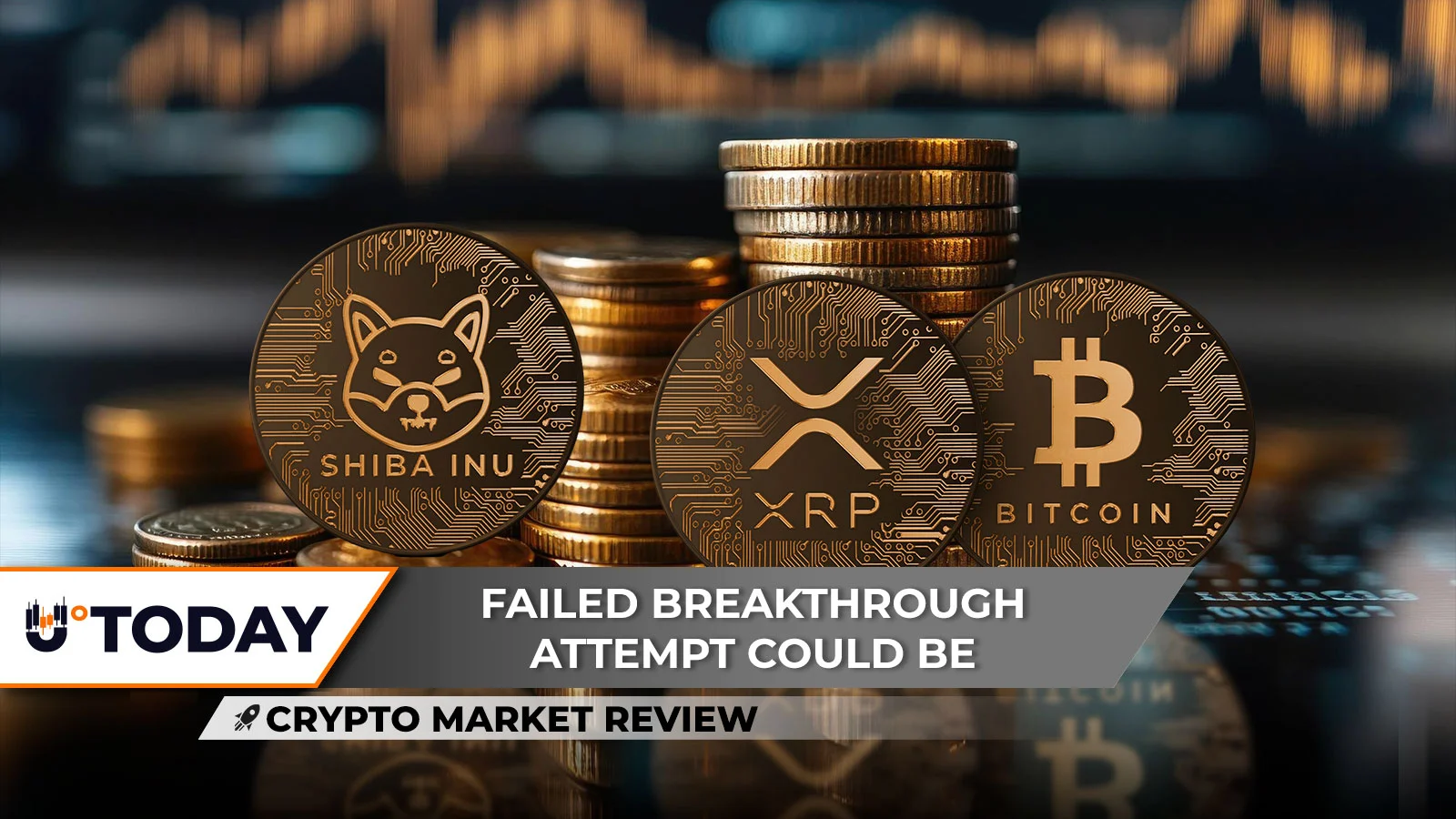
Shiba Inu (SHIB) price has fallen to 2023 levels with successive technical failures. XRP shows a modest attempt at stabilization with a short-term rising support line, but overall trend remains negative. Bitcoin (BTC) is consolidating below $70,000 after bouncing from $63,000, with increasing volume supporting the recovery. Market sentiment is weak due to institutional uncertainty and low retail liquidity.

X will suspend creators from its revenue-sharing program for 90 days if they post undisclosed AI-generated war videos. The policy aims to prevent manipulation and ensure access to authentic information during wartime. Violators face permanent removal from the monetization program for repeat offenses. This policy targets the financial incentives for creators to post misleading AI-generated content.
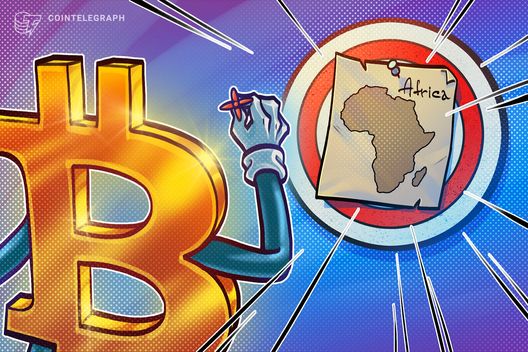
Bitcoin functions as everyday money in parts of Africa, not just a store of value. Merchants in some African economies prefer satoshis over dollars due to rapid inflation. Sub-Saharan Africa saw over $205 billion in onchain value from July 2024 to June 2025, a 52% year-on-year increase. Retail transfers under $10,000 represent over 8% of total value sent in Sub-Saharan Africa, indicating strong retail adoption.

Strategy Inc. acquired an additional 3,015 BTC for $204 million, increasing its total holdings to 720,737 BTC. 470 million XRP were deposited on Binance in the past week, raising concerns of potential sell-offs. Dogecoin ETFs have recorded zero net inflows since February 3rd, indicating a lack of investor demand.

South Korean police arrested individuals paid in cryptocurrency for "private revenge" attacks. Payments ranged from $337-$675 or 500,000-1,000,000 KRW worth of crypto. Tactics included vandalism, threats, and spreading human waste. Authorities are investigating potential links to a larger Telegram-based organization.

MARA Holdings clarifies its 10-K filing allows flexible Bitcoin sales, not a mandated sell-off strategy. Company VP Robert Samuels directly refuted claims of a shift toward a Bitcoin treasury sell-down. MARA holds 53,822 BTC valued at approximately $3.7 billion, making it a significant holder among public miners. The clarification aims to address market speculation regarding MARA's Bitcoin treasury management.

Jamie Dimon states stablecoin issuers paying interest should be regulated as banks. Dimon argues for a level playing field between traditional banks and crypto firms offering similar services. The CLARITY Act discussions are ongoing in Washington regarding stablecoin oversight. Banks want stablecoin issuers to meet bank standards including capital, liquidity, and AML rules.

Vitalik Buterin calls for Ethereum to shift focus from tech 'shininess' to sanctuary against authoritarianism. Buterin expresses frustration over Ethereum's limited role in improving lives beyond finance. He suggests Ethereum should act as a defensive perimeter for 'sanctuary technologies'. Buterin pushes back against limiting Ethereum's scope solely to DeFi.

IPO Genie ($IPO) aims to democratize private market investing by tokenizing access with a $10 minimum entry. The platform utilizes AI to identify early-stage investment opportunities, similar to traditional VC firms. The $IPO token offers tiered access, revenue sharing, staking rewards, and voting rights to holders. The project has undergone security audits by CertiK and SolidProof and uses Fireblocks for asset protection.

Visa and Bridge are expanding stablecoin card program to over 100 countries by end of 2026. MetaMask and Phantom users can spend crypto directly from self-custody wallets via Bridge's API. Visa is testing direct on-chain settlement using stablecoins on the Solana blockchain. Expansion follows recent regulatory clarity in the US with the GENIUS Act.

Aave Chan Initiative (ACI) will exit Aave DAO governance after a contested vote. ACI plans to wind down operations over four months, transferring responsibilities. The exit follows a dispute over a $42.5 million funding package and voting power concerns. Aave maintains a dominant DeFi position with $26.51 billion in total value locked.

BitGo expands MiCA-compliant crypto-as-a-service to 30 EEA countries. Service enables banks and fintechs to integrate licensed custody, payments, and trading via API. Offering includes multi-asset wallets, SEPA fiat rails, and $250 million in insured custodial wallets. Expansion follows MiCA implementation, aligning with broader European institutional adoption of digital assets.

Bitcoin shows resilience decoupling from traditional equities and gold despite US dollar strength. Robust institutional demand evident with $1.5 billion in Bitcoin ETF net inflows over 7 days. Concerns arise from potential miner liquidations and a shift in focus towards AI data centers. A definitive breakout above $75,000 is needed to confirm the end of the bear market.

OpenAI released GPT-5.3 Instant, updating ChatGPT's default model for improved accuracy and conversational flow. The new model reduces unnecessary refusals and disclaimers, aiming for more direct and helpful user interactions. Internal evaluations show hallucination rates dropped by nearly 30% with web use and 19.7% without. GPT-5.2 Instant will be retired on June 3, marking a transition period for users.
Signal context only. Validate with price action, liquidity, and risk limits before taking a position.
