
Navigating Crypto News

CoinFeather
Navigating Crypto News
Quick market read from this story
Bitcoin experienced a significant price drop to $66,000, driven by a shift in geopolitical sentiment related to Iran, causing it to erase recent gains and trade below key technical levels.
Despite the broader market downturn, specific altcoins like STO, NOM, and ONT are showing resilience and outperforming due to their own organic catalysts, suggesting sector-specific opportunities amidst macro-driven volatility.
ONT's recent surge is attributed to a significant partnership with European officials for the eIDAS 2.0 framework, highlighting the potential for real-world adoption to drive token value independently of broader market sentiment.
The market is exhibiting a divergence where macro-economic and geopolitical news heavily impacts major assets like BTC and ETH, while individual project developments and partnerships are creating isolated bullish narratives for select altcoins.
Deep Dive
The cryptocurrency market experienced significant volatility on Thursday, with Bitcoin (BTC) slipping to $66,000, erasing gains made after positive news regarding a de-escalation in geopolitical tensions. The price drop of 3.24% over 24 hours, accompanied by negative volume, followed a shift in President Donald Trump's stance towards Iran. Major altcoins such as Ethereum, XRP, Solana, BNB, and Dogecoin also registered extended losses.
Bitcoin failed to break above the $71,985 resistance level, which corresponds to the 61.8% Fibonacci retracement, and subsequently declined towards $65,030. Another significant resistance is observed at $69,200. Following a breakout from a rising channel near $67,200, Bitcoin is now trading below the SMA 100. A further decline below $65,000 could see support at $64,200. Conversely, any escalation in war news might push Bitcoin to close above $68,000.
Despite the general market downturn, several altcoins demonstrated resilience and outperformance. StakeStone's governance token, STO, surged nearly 300% in 24 hours before retracing 60% from its daily high. It traded at $0.8404, still up 226% with a 684% increase in volume. Technical indicators suggest bullish momentum, though the growth trend may slow without corrections. If social media sentiment remains positive, STO could target $1.2.
Nomina (NOM), formerly OMNI and backed by Coinbase, saw a significant spike, trading at $0.01031, up 65% for the day and nearly 400% over the week. This performance occurred despite delisting news from the Bithumb exchange and scrutiny from Korean exchanges. Current indicators suggest neutral trading between $0.010 and $0.012, with support at $0.00569 if the trend falters.
Ontology (ONT) experienced a notable surge, trading at $0.1164, up 11.17% in 24 hours and 112% in a week. This rally was fueled by its partnership with European officials to develop the eIDAS 2.0 framework, aiming to provide identity wallets for 450 million citizens by the end of 2026. Whale activity and high trading volumes in Korean markets also contributed. Technical analysis indicates a successful breakout from an upward channel, with the price trading above the Ichimoku Cloud and a bullish MACD signal. If the price holds above the channel, ONT could trade above $0.12, with support at $0.104 in case of a trend reversal.
Source, catalyst, and sector overlap from the latest feed.
Geopolitical tensions and oil price spikes significantly influenced crypto market behavior in March 2026, overshadowing traditional fundamentals and leading to volatile price action driven by news headlines rather than technical analysis. Despite broader market uncertainty, selective altcoins like Bittensor (TAO) and MemeCore demonstrated significant gains (+67%), indicating capital rotation into narrative-driven assets amidst a backdrop of reduced leverage and faster fear pricing by crypto markets. The narrative of Bitcoin's supply shock intensified with the 20 million BTC mined milestone, yet whale activity declined and large transactions decreased, suggesting a lack of strong conviction from major holders despite retail accumulation. Aggressive shorting in derivatives markets, evidenced by deeply negative funding rates, fueled violent price swings and liquidations, highlighting the market's sensitivity to leverage and the potential for rapid repricing events.
The post SoFi Launches 24/7 Crypto Banking on Solana With Mastercard, Galaxy, Wintermute on Board appeared first on Coinpedia Fintech News For years, the knock on traditional banking has been simple: markets move around the clock, but banks do not. SoFi is building the alternative. The nationally chartered US bank launched Big Business Banking today, an enterprise platform that lets companies hold deposits, move money, and settle transactions at any hour through fiat or crypto, all …
The significant capital raise for a gold-linked stablecoin and substantial Bitcoin ETF inflows signal strong institutional demand for crypto assets, potentially driving broader market liquidity. Pepeto's upcoming exchange listings and product launches, coupled with a PEPE co-founder's track record and high APY staking, present a high-upside opportunity compared to established assets like Solana and Ethereum. While Solana and Ethereum are expected to see moderate gains, early-stage projects like Pepeto, with substantial presale funding and imminent exchange listings, offer the potential for exponential returns for early investors. The development of AI verification toolkits highlights a growing trend in integrating AI with blockchain, suggesting future opportunities in decentralized AI infrastructure and applications.
Despite sideways price action around $2,130, Ethereum's network activity shows robust growth with over 788,000 daily active addresses and 255,000 new addresses daily, indicating strong underlying user engagement. Ethereum's dominance in the tokenization market, holding 61.4% of all tokenized assets and seeing the market grow to over $200 billion, positions it as critical infrastructure for this expanding sector. A significant decrease in ETH reserves on Binance, coupled with rising stablecoin reserves, suggests a potential supply shock brewing as ETH moves off-exchange, which could drive future price appreciation. While geopolitical uncertainty currently caps ETH's short-term price potential around $2,390, strong accumulation zones and holding high-volume support indicate smart money positioning for a potential breakout once macro conditions stabilize.
Hyperliquid (HYPE) is exhibiting a bullish trend structure with higher lows since February, but recent price action near $43 resistance and declining RSI suggest fading momentum, creating a dangerous conflict between trend and momentum. The potential golden cross formation indicates a bullish shift, yet the diverging RSI signals weakening buying pressure, implying a possible correction or consolidation before any sustained upward movement. Defending the $34-$36 support range is critical for HYPE to maintain its uptrend and potentially retest higher levels around $40-$45; failure to do so could lead to a sharp pullback towards $30.
Deloitte's independent verification of RLUSD reserves provides a significant credibility boost, addressing a core concern for stablecoin adoption and potentially increasing institutional trust. The successful high-volume, low-cost transfer of $92.5 million in RLUSD on the XRP Ledger demonstrates the protocol's efficiency, positioning it as a competitive alternative for digital payments against traditional systems. RLUSD's expansion into markets like Japan via SBI VC Trade, coupled with Deloitte's validation, signals growing global traction and adoption, suggesting a positive outlook for the stablecoin's market penetration.
Ripple Treasury processed $13 trillion in payments last year, with zero crypto integration, highlighting a significant opportunity for future digital asset adoption within traditional treasury management. The launch of Digital Asset Accounts and Unified Treasury by Ripple Treasury marks a pivotal step in embedding native digital asset capabilities into existing treasury management systems, potentially streamlining fiat and digital asset management for corporates. Ripple's expansion of its HyperliquidX integration to include HIP-3 symbols for traditional assets like gold and silver signals a broader strategy to bridge traditional finance with on-chain derivatives for institutional clients. The strategic collaboration with Convera to offer crypto-enabled payment and treasury solutions underscores Ripple's ongoing efforts to drive institutional adoption of digital assets within corporate finance workflows.
Stellar (XLM) has surpassed XRP Ledger in RWA tokenization by developer activity and distributed asset value, indicating a potential shift in institutional adoption towards XLM for RWA initiatives. Significant outflows of SHIB from exchanges to cold storage suggest a long-term accumulation strategy by large holders, potentially reducing immediate selling pressure but with current technical trends remaining weak. Binance's launch of Apple (AAPL) and other traditional asset futures signals a growing convergence between TradFi and crypto, potentially increasing trading volume and user demand for such hybrid instruments. Rising oil prices above $100 and strengthening dollar are increasing inflation concerns, reducing the likelihood of near-term Fed rate cuts and pressuring risk assets like Bitcoin, shifting market sentiment towards defensive plays.
Coinbase's x402 protocol joining the Linux Foundation signals a move towards open-source standardization for AI-driven micro-transactions, potentially addressing limitations of traditional finance. The broad industry support from major tech and finance players like Google, Stripe, and AWS indicates significant interest in developing a common infrastructure for agentic commerce. This initiative could establish a new standard for high-frequency, low-value transactions, akin to SSL for web security, which may unlock new use cases for AI agents and decentralized systems.
EMURGO's progress in the Mastercard "qualification stage" for Cardano integration signals a potential for increased institutional adoption and payment network integration for ADA. While not a confirmed partnership, reaching the qualification stage suggests Cardano's technical capabilities are being evaluated, which could lead to broader use cases and potential price appreciation if successful. The call for community support highlights the importance of demonstrating a strong user base to Mastercard, potentially influencing demand for services if Cardano is integrated into their crypto initiatives.
The CLARITY Act faces a four-way deadlock in the US Congress, stemming from disagreements over regulatory jurisdiction, stablecoin economics, and investor protection, which significantly hinders its progress and creates uncertainty for the crypto market structure. The deadlock implies that crypto firms may continue to operate under a patchwork of enforcement actions and agency guidance rather than a clear statutory framework, potentially impacting innovation and compliance costs. Regulators like the SEC and CFTC are proactively issuing guidance, which partially addresses the clarity sought by the CLARITY Act, but this also reduces the urgency for legislative action and shifts negotiation leverage. The ongoing political and economic conflicts, particularly around stablecoin yield, suggest that any eventual passage of the CLARITY Act may be a compromise that satisfies some factions but potentially limits the broader utility and competitive potential of crypto against traditional finance.
Geopolitical tensions in the Middle East are causing investors to remain on the sidelines, creating a holding pattern in crypto markets despite an otherwise improving macro backdrop. While short-term volatility is expected due to headline-driven swings tied to oil prices, Grayscale notes that underlying structural adoption trends and resilient valuations could support a future upward price movement. The market is awaiting greater clarity on the geopolitical situation; a de-escalation could lead to a rapid repricing towards a more supportive macro environment, while continued conflict may prolong pressure on growth and delay recovery. Despite current uncertainty, the growth in stablecoin supply and continued inflows into spot crypto products suggest underlying stability and potential opportunities for long-term investors.
Decreasing Ethereum reserves on Binance, coupled with rising stablecoin deposits, suggests a potential shift from selling to buying pressure, which could support a price rebound. The trend of net ETH withdrawals from Binance indicates reduced immediate sell-side pressure, creating a more favorable environment for price appreciation if sustained. While retail interest may be waning, significant institutional accumulation of ETH, as seen with Fidelity and Bitmine, provides underlying support and signals long-term conviction.
Live Feed
Loading the broader stream in the same flow as the homepage feed.
Lamar Odom's foray into meme coins, including his own ODOM token, highlights a trend of celebrities leveraging their platform for crypto ventures, though the speculative nature of meme coins suggests limited fundamental market impact. The article details Lamar Odom's significant financial fluctuations, from over $100 million earned in the NBA to a current estimated net worth of $20-30 million, underscoring the volatility of athlete earnings and personal financial management. Odom's involvement in cryptocurrency, particularly with a token aimed at supporting addiction recovery, represents a niche application of digital assets for social causes, but its market impact is likely to remain minimal.

The integration of perpetual futures trading directly within Telegram's Wallet app via Lighter DEX expands access to leveraged derivatives for a massive retail user base. This move democratizes complex financial instruments by embedding them into a widely used messaging platform, potentially increasing retail participation in derivatives markets. The expansion of leveraged trading options within Telegram, following previous tokenized stock offerings, signals a trend towards integrating diverse financial products into consumer-facing applications.

Long-term holder supply approaching historical bear market bottom levels suggests a potential floor, but the market may face several more months of range-bound trading before a sustained recovery. The current market dynamic is characterized by 'time pain' rather than sharp price drops, indicating a period of consolidation that could test investor patience and lead to exhaustion. While 80% of Bitcoin supply is held by long-term holders, the historical 85% threshold for confirmed bear market bottoms suggests further accumulation or holding is needed, implying a lack of immediate bullish catalysts.

XRP faces significant structural headwinds due to its large circulating supply and ongoing escrow releases, which create consistent sell-side pressure and limit price appreciation potential. The asset's current market capitalization and technical indicators suggest a weaker position relative to top-tier cryptocurrencies like Bitcoin and Ethereum, indicating a low probability of entering the 'big three'. A substantial portion of XRP holders being underwater creates overhead resistance, hindering upward price momentum and contributing to grinding price action rather than sharp rallies. Despite potential positive outlooks, XRP's relative performance is hampered by capital and institutional interest favoring Bitcoin and Ethereum, with stablecoins like USDT dominating liquidity infrastructure.
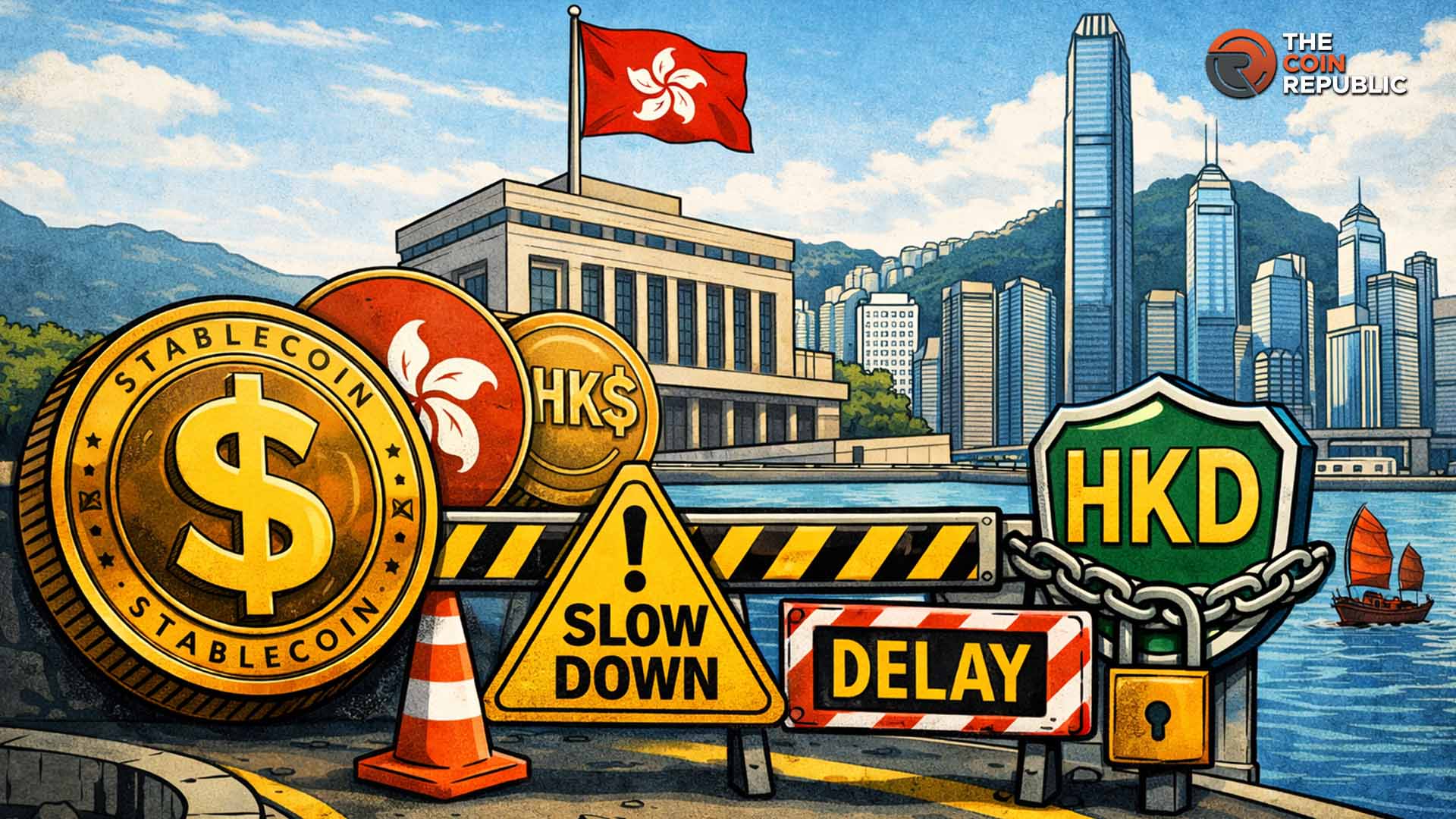
Hong Kong's missed March target for HKD stablecoin licenses introduces near-term uncertainty for issuers and potential investors. The delay underscores the Hong Kong Monetary Authority's commitment to stringent AML and KYC compliance, signaling a preference for regulated growth over rapid market entry. While execution is slower than anticipated, the established regulatory framework and continued institutional interest from banks like HSBC and Standard Chartered suggest potential for future credibility and adoption once licenses are granted.

The continued relevance of MetaTrader 4 (MT4) for algorithmic trading, driven by its extensive library of Expert Advisors (forex robots), highlights a persistent demand for accessible automated trading tools among retail traders. MT4's robust backtesting and demo testing capabilities, combined with its low system requirements, provide a strong foundation for strategy development and refinement, making it a preferred platform despite the existence of newer successors like MT5. The established ecosystem and deep integration of custom trading robots with MT4 present a significant barrier to adoption for newer platforms, indicating that legacy systems can maintain market share through specialized functionality and user familiarity.

David Schwartz clarifies Ripple's motivation for bank adoption of XRP, emphasizing utility over direct monetary incentives for Ripple, which suggests a focus on sustainable integration rather than short-term price pumps. The discussion highlights the potential for XRP to become a significant bridge currency, with Ripple's ongoing product launches and XRP Ledger adoption by firms like Aviva Investors indicating a strategic push for real-world asset integration. While Ripple benefits financially from XRP adoption, Schwartz's statement implies that the primary driver is the utility and value proposition for the adopting institutions, potentially mitigating concerns about Ripple manipulating XRP's price for its own gain.
Renewed geopolitical tensions stemming from President Trump's speech are driving a sharp decline in US stock futures, signaling increased market anxiety and a potential risk-off sentiment. Surging oil prices, up 9% for WTI, directly impact economic costs and corporate margins, creating headwinds for equity markets that are already sensitive to inflation and supply chain concerns. The timing of key economic data releases, particularly the March jobs report, juxtaposed with a shortened trading week and ongoing geopolitical uncertainty, suggests heightened volatility upon market reopening. Despite the focus on geopolitical events, the market's reaction to the Iran conflict and rising oil prices indicates a persistent sensitivity to supply-side shocks that could influence broader asset class performance.
Geopolitical uncertainty stemming from the Iran conflict and rising energy prices is driving a risk-off sentiment, pressuring Bitcoin below key technical levels. Bitcoin's break below its ascending channel suggests a shift in momentum, with traders watching the $67,000 level as potential resistance and $64,000 as the next downside target. Increased macro pressures from higher oil and gas prices are reducing risk appetite, a pattern that typically leads to capital rotation away from crypto assets. The market faces continued volatility as investors await clearer de-escalation signals from the geopolitical situation, with potential for rapid shifts if tensions ease.

The CoinDesk 20 Index experienced a broad-based decline of 4.5%, with all constituent assets trading lower, indicating a general market downturn affecting major cryptocurrencies. Uniswap (UNI) and Solana (SOL) were the laggards, falling 7.7% and 6.9% respectively, suggesting specific weakness or profit-taking in these altcoins within the broader market sell-off. The uniform decline across all CoinDesk 20 constituents points to a lack of positive catalysts or prevailing bearish sentiment, making it difficult to identify individual outperformers in the short term.
Signal context only. Validate with price action, liquidity, and risk limits before taking a position.
