
Navigating Crypto News

CoinFeather
Navigating Crypto News

Quick market read from this story
The U.S. Treasury's proposed rule under the GENIUS Act formalizes AML/sanctions program requirements for stablecoin issuers, aligning them with existing financial institutions.
This regulatory clarity aims to protect the U.S. financial system from illicit finance while seeking to foster innovation in the stablecoin ecosystem.
The proposal mandates that stablecoin issuers must offer tokens capable of being blocked or frozen, indicating a focus on control and compliance for transaction finality.
With multiple agencies like FinCEN, OFAC, FDIC, and OCC issuing proposals, the stablecoin regulatory landscape is solidifying, potentially impacting issuer operations and token utility.
Source, catalyst, and sector overlap from the latest feed.
Bitcoin Depot disclosed a significant $3.665 million BTC hack, impacting company reserves and potentially its operational liquidity, highlighting ongoing security risks for crypto ATM operators. The hack, which compromised settlement account credentials but not customer data, resulted in a material loss for Bitcoin Depot and could lead to increased regulatory scrutiny and operational costs. Despite a 15% intraday spike, Bitcoin Depot's stock (BTM) declined after hours following the hack disclosure, indicating market sensitivity to security breaches and financial losses in the crypto infrastructure sector.
Live Feed
Loading the broader stream in the same flow as the homepage feed.

Morgan Stanley's new Bitcoin ETF (MSBT) launched with $34 million in inflows on its first day, indicating strong initial demand from investors accessing crypto via traditional financial channels. The MSBT ETF's 0.14% expense ratio makes it the cheapest option in its category, suggesting a competitive shift towards cost and distribution advantages in the spot Bitcoin ETF market. The significant distribution network of Morgan Stanley's wealth management arm could drive substantial adoption for MSBT, as it facilitates access for investors who prefer working through financial advisors.

Michael Saylor disputes the New York Times' claim that Adam Back is Satoshi Nakamoto, citing contemporaneous emails between the two as evidence they were distinct individuals. The debate highlights the difficulty in definitively identifying Satoshi Nakamoto, with the crypto community emphasizing the need for cryptographic proof (signing with Satoshi's keys) over stylistic analysis. Industry figures like Jameson Lopp and Joe Weisenthal have also expressed skepticism, warning that the stylometry-based report unfairly targets Adam Back with weak evidence and potentially flawed methodology.
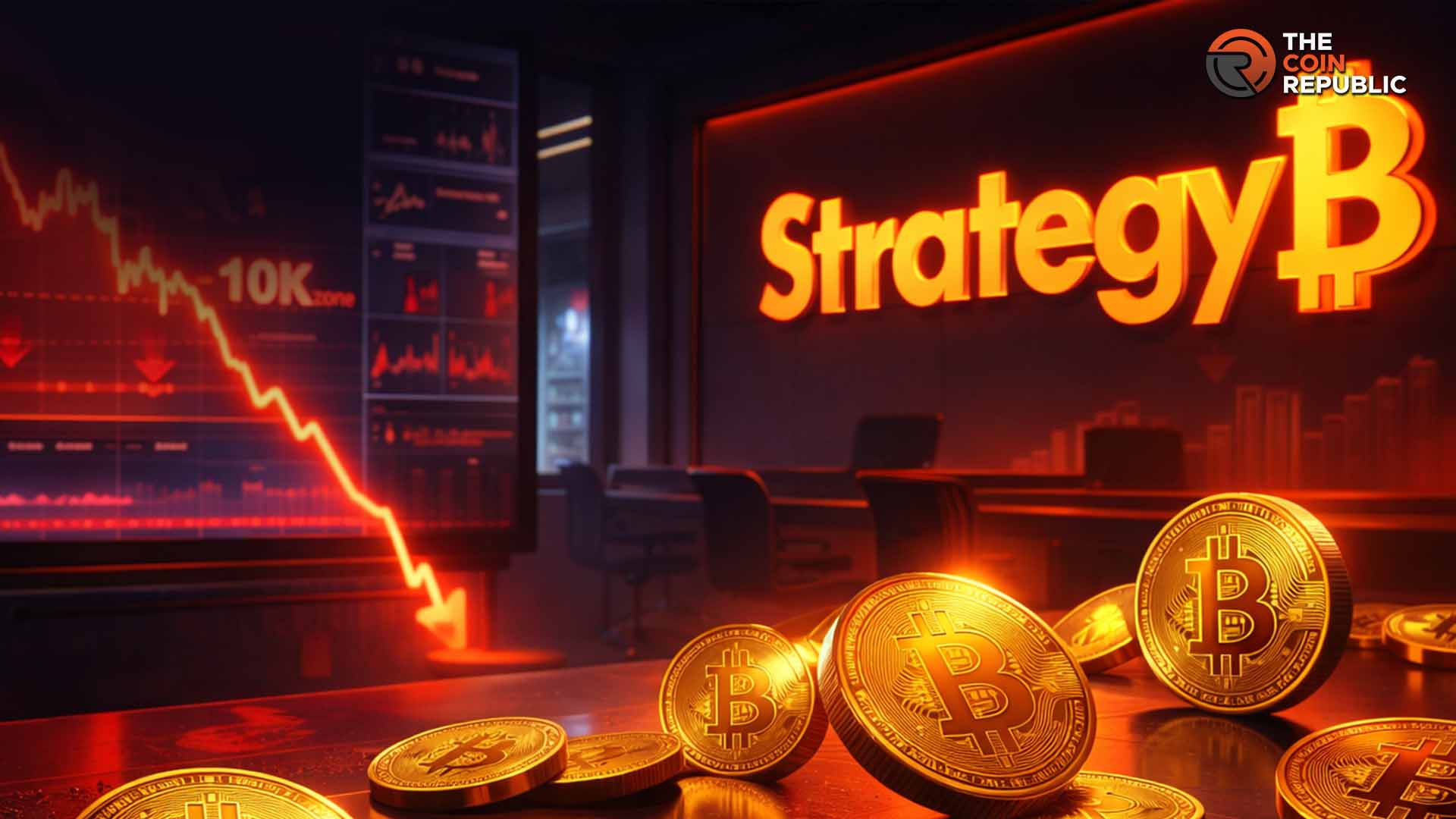
Peter Schiff's bearish price prediction for Bitcoin to $10,000 by 2026, while framed as a hypothetical, highlights persistent skepticism from traditional finance figures and could influence short-term sentiment among less conviction holders. Despite bearish commentary and geopolitical concerns, MicroStrategy's continued aggressive Bitcoin accumulation with a recent $330 million purchase signals strong conviction from a major corporate holder, potentially providing a floor for price action. The article presents conflicting outlooks on Bitcoin's price, with Schiff and a CryptoQuant report suggesting extreme downside scenarios, while other analysts anticipate a near-term recovery, creating a volatile trading environment driven by macro fears and corporate buying.
XRP's bullish Monthly Supertrend remains intact, suggesting potential for a relief rally towards the $1.80-$2 range, though confirmation requires breaking above $2. Key liquidation zones at $1.27-$1.28 and $1.35 present significant short-term hurdles that could trigger volatility if breached, impacting immediate price momentum. While technical indicators suggest a cautious outlook, recent macro events like the Strait of Hormuz ceasefire have demonstrated XRP's sensitivity to broader market sentiment, potentially fueling short-term upward moves.
Dogecoin's potential to reach $9.32 by matching Bitcoin's market cap presents a significant hypothetical upside, driven by analyst projections of a major rally. Technical analysis suggests Dogecoin is consolidating, with indicators pointing to a potential breakout and a move above $1, which would represent a new all-time high. Easing geopolitical tensions, such as the US-Iran ceasefire, could act as a macro tailwind for risk-on assets like Dogecoin, potentially fueling its anticipated rally. Despite bullish technicals, the article highlights that Dogecoin's increased supply means matching historical market caps of Bitcoin or Ethereum would result in significantly different price targets, with XRP's market cap being a more conservative benchmark.

Bernstein's analysis suggests Bitcoin has a 3-5 year window to implement quantum-resistant upgrades, framing quantum computing as a manageable upgrade cycle rather than an existential threat. The primary quantum risk is concentrated in older Bitcoin wallets and addresses with exposed public keys, implying that newer security practices and wallet formats significantly mitigate this threat. While Bitcoin's mining process (SHA-256) is deemed not meaningfully vulnerable, specific older address types like P2PK and P2MS present higher risks that the developer community must address. The market should view the quantum threat to Bitcoin as a long-term, addressable technical challenge requiring proactive protocol development, not an immediate systemic risk.

Generational wealth transfer and point-of-sale adoption could drive stablecoin volumes to eclipse traditional payment rails, says Chainalysis.
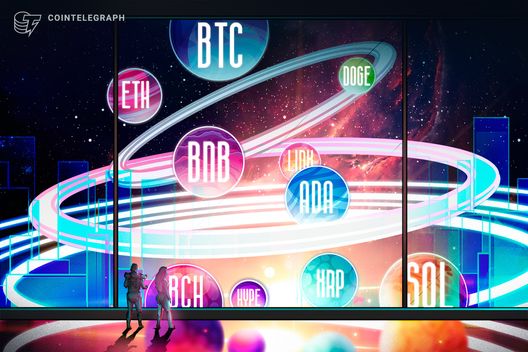
Bitcoin's technical indicators suggest a potential bottoming out, with key resistance at $72,000 to $76,000, a break above which could signal a move towards $84,000. Ether is showing early signs of a bullish trend, with potential upside targets at $2,400 and $2,800 if key resistance is overcome. Several major altcoins are exhibiting early buying signals, but require further confirmation to indicate a sustained trend reversal. Despite some bullish technicals, a final shakeout below $60,000 for Bitcoin is still considered a possibility by some analysts in the coming months.

Bernstein and Adam Back suggest the quantum threat to Bitcoin is manageable, framing it as a long-term upgrade cycle rather than an existential risk. While legacy Bitcoin wallets with exposed public keys are most vulnerable, newer protocols and Bitcoin mining are considered quantum-safe for the foreseeable future. The development highlights the ongoing need for quantum-resistant cryptography, with developers already preparing for future protocol transitions to mitigate long-term risks. Current quantum computing capabilities are far from posing a threat to Bitcoin's cryptography, requiring significant advancements in hardware and error correction.
Signal context only. Validate with price action, liquidity, and risk limits before taking a position.
The proposed Agentic Risk Standard introduces an insurance-like framework for AI agent transactions, aiming to mitigate financial losses for users by holding fees in escrow and involving underwriters for high-risk operations. While simulations showed potential loss reduction of up to 61%, the insolvency of underwriters due to zero-loading premiums highlights significant challenges in accurately estimating AI failure rates and designing sustainable risk models. This development signals a growing need for robust risk management and financial safeguards in AI-driven financial activities, potentially influencing future protocol designs and regulatory considerations in the AI and blockchain intersection.
