
Navigating Crypto News

CoinFeather
Navigating Crypto News

Source, catalyst, and sector overlap from the latest feed.
The proposed Agentic Risk Standard introduces an insurance-like framework for AI agent transactions, aiming to mitigate financial losses for users by holding fees in escrow and involving underwriters for high-risk operations. While simulations showed potential loss reduction of up to 61%, the insolvency of underwriters due to zero-loading premiums highlights significant challenges in accurately estimating AI failure rates and designing sustainable risk models. This development signals a growing need for robust risk management and financial safeguards in AI-driven financial activities, potentially influencing future protocol designs and regulatory considerations in the AI and blockchain intersection.
Live Feed
Loading the broader stream in the same flow as the homepage feed.

Morgan Stanley's new Bitcoin ETF (MSBT) launched with $34 million in inflows on its first day, indicating strong initial demand from investors accessing crypto via traditional financial channels. The MSBT ETF's 0.14% expense ratio makes it the cheapest option in its category, suggesting a competitive shift towards cost and distribution advantages in the spot Bitcoin ETF market. The significant distribution network of Morgan Stanley's wealth management arm could drive substantial adoption for MSBT, as it facilitates access for investors who prefer working through financial advisors.

The market is pricing a ceasefire relief rally, but the underlying macro conditions related to oil normalization remain uncertain, suggesting Bitcoin's upside may be capped by persistent inflation and delayed Fed rate cuts. While the immediate tail risk from the Strait of Hormuz disruption has eased, institutional analysis indicates that physical oil market normalization will take months, implying that inflation pressures and their impact on Fed policy could linger, creating a cautious outlook for risk assets like Bitcoin. Bitcoin's price action is still heavily influenced by the oil-inflation-Fed policy chain; a failure to achieve genuine normalization in energy flows could lead to a re-pricing of geopolitical risk, potentially pushing BTC back towards lower support levels.

Michael Saylor disputes the New York Times' claim that Adam Back is Satoshi Nakamoto, citing contemporaneous emails between the two as evidence they were distinct individuals. The debate highlights the difficulty in definitively identifying Satoshi Nakamoto, with the crypto community emphasizing the need for cryptographic proof (signing with Satoshi's keys) over stylistic analysis. Industry figures like Jameson Lopp and Joe Weisenthal have also expressed skepticism, warning that the stylometry-based report unfairly targets Adam Back with weak evidence and potentially flawed methodology.

Peter Schiff's bearish price prediction for Bitcoin to $10,000 by 2026, while framed as a hypothetical, highlights persistent skepticism from traditional finance figures and could influence short-term sentiment among less conviction holders. Despite bearish commentary and geopolitical concerns, MicroStrategy's continued aggressive Bitcoin accumulation with a recent $330 million purchase signals strong conviction from a major corporate holder, potentially providing a floor for price action. The article presents conflicting outlooks on Bitcoin's price, with Schiff and a CryptoQuant report suggesting extreme downside scenarios, while other analysts anticipate a near-term recovery, creating a volatile trading environment driven by macro fears and corporate buying.
XRP's bullish Monthly Supertrend remains intact, suggesting potential for a relief rally towards the $1.80-$2 range, though confirmation requires breaking above $2. Key liquidation zones at $1.27-$1.28 and $1.35 present significant short-term hurdles that could trigger volatility if breached, impacting immediate price momentum. While technical indicators suggest a cautious outlook, recent macro events like the Strait of Hormuz ceasefire have demonstrated XRP's sensitivity to broader market sentiment, potentially fueling short-term upward moves.
Dogecoin's potential to reach $9.32 by matching Bitcoin's market cap presents a significant hypothetical upside, driven by analyst projections of a major rally. Technical analysis suggests Dogecoin is consolidating, with indicators pointing to a potential breakout and a move above $1, which would represent a new all-time high. Easing geopolitical tensions, such as the US-Iran ceasefire, could act as a macro tailwind for risk-on assets like Dogecoin, potentially fueling its anticipated rally. Despite bullish technicals, the article highlights that Dogecoin's increased supply means matching historical market caps of Bitcoin or Ethereum would result in significantly different price targets, with XRP's market cap being a more conservative benchmark.

Major Swiss banks launching a CHF stablecoin sandbox signifies a significant institutional push into digital currency infrastructure, moving beyond discussion to production. The pilot's focus on atomic settlement and smart contract integration highlights the evolving technical capabilities required for regulated digital asset adoption. Switzerland's move positions it within a global race of stablecoin development, with potential implications for cross-border payment systems and regulatory frameworks. Unresolved interoperability with the SNB's wholesale CBDC and EU regulations presents a key challenge that could limit the pilot's broader impact.

Bernstein's analysis suggests Bitcoin has a 3-5 year window to implement quantum-resistant upgrades, framing quantum computing as a manageable upgrade cycle rather than an existential threat. The primary quantum risk is concentrated in older Bitcoin wallets and addresses with exposed public keys, implying that newer security practices and wallet formats significantly mitigate this threat. While Bitcoin's mining process (SHA-256) is deemed not meaningfully vulnerable, specific older address types like P2PK and P2MS present higher risks that the developer community must address. The market should view the quantum threat to Bitcoin as a long-term, addressable technical challenge requiring proactive protocol development, not an immediate systemic risk.
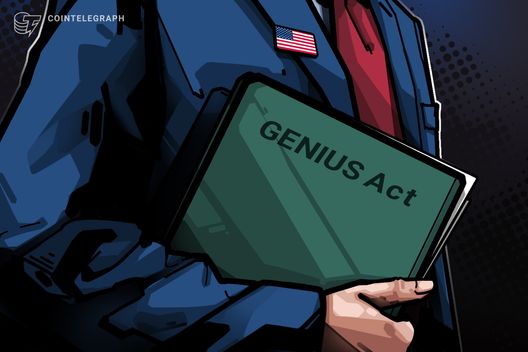
The US Treasury's proposed rule under the GENIUS Act mandates stablecoin issuers to implement AML/CFT and sanctions compliance programs, effectively treating them as financial institutions and increasing oversight on transactions. This regulatory push signifies a move towards stricter controls on stablecoins, potentially impacting their utility for illicit finance and increasing operational burdens for issuers, which could affect market participants' perception of stablecoin risk. While the GENIUS Act implementation is progressing, the broader CLARITY Act for digital asset markets remains stalled in the Senate, highlighting a fragmented approach to crypto regulation in the US.

Bitcoin's recent rebound is primarily driven by easing geopolitical tensions and falling oil prices, which reduce inflation fears and improve risk appetite, rather than political developments like impeachment odds. The market's transmission mechanism for Bitcoin remains tied to traditional macro factors such as energy prices, inflation expectations, and Federal Reserve policy, reinforcing its correlation with broader risk assets. While impeachment odds provide a political stress gauge, traders should prioritize monitoring oil price stability below $100 and the Fed's stance on interest rates for clearer directional signals for BTC. The current macro backdrop remains fragile, with potential for renewed volatility if oil prices surge above $110-$120 or if the current ceasefire fails, which could lead to a retest of Bitcoin's lower price ranges.

Bitcoin's technical indicators suggest a potential bottoming out, with key resistance at $72,000 to $76,000, a break above which could signal a move towards $84,000. Ether is showing early signs of a bullish trend, with potential upside targets at $2,400 and $2,800 if key resistance is overcome. Several major altcoins are exhibiting early buying signals, but require further confirmation to indicate a sustained trend reversal. Despite some bullish technicals, a final shakeout below $60,000 for Bitcoin is still considered a possibility by some analysts in the coming months.

Bernstein and Adam Back suggest the quantum threat to Bitcoin is manageable, framing it as a long-term upgrade cycle rather than an existential risk. While legacy Bitcoin wallets with exposed public keys are most vulnerable, newer protocols and Bitcoin mining are considered quantum-safe for the foreseeable future. The development highlights the ongoing need for quantum-resistant cryptography, with developers already preparing for future protocol transitions to mitigate long-term risks. Current quantum computing capabilities are far from posing a threat to Bitcoin's cryptography, requiring significant advancements in hardware and error correction.

OpenAI's release of a Child Safety Blueprint signals a proactive industry response to the growing threat of AI-enabled child exploitation, potentially influencing future regulatory frameworks and platform development. The blueprint's focus on legal reforms, enhanced reporting, and technical safeguards indicates a recognition of the need for multi-faceted solutions to combat AI misuse, suggesting a shift towards more responsible AI deployment. While not directly impacting crypto assets, this development highlights the broader societal and regulatory pressures on AI technologies, which could indirectly affect AI-focused crypto projects or infrastructure.
Ethereum breaks key resistance as ETH futures inflows, open interest, and net longs rise, though analysts still warn of lower lows.
Signal context only. Validate with price action, liquidity, and risk limits before taking a position.
Cango significantly reduced its Bitcoin mining costs by 19.3% to $68,216 per BTC through operational efficiencies and power cost optimization, signaling a strategic shift towards profitability over pure hash rate expansion. The miner sold 2,000 BTC ($143 million) to pay down debt, strengthening its balance sheet and reducing financial risk, which could be interpreted as a prudent move in a volatile market. Cango's pivot towards AI computing infrastructure, leveraging existing power and facility investments, indicates a broader industry trend of miners diversifying revenue streams beyond traditional Bitcoin mining.
