
Navigating Crypto News

CoinFeather
Navigating Crypto News
Quick market read from this story
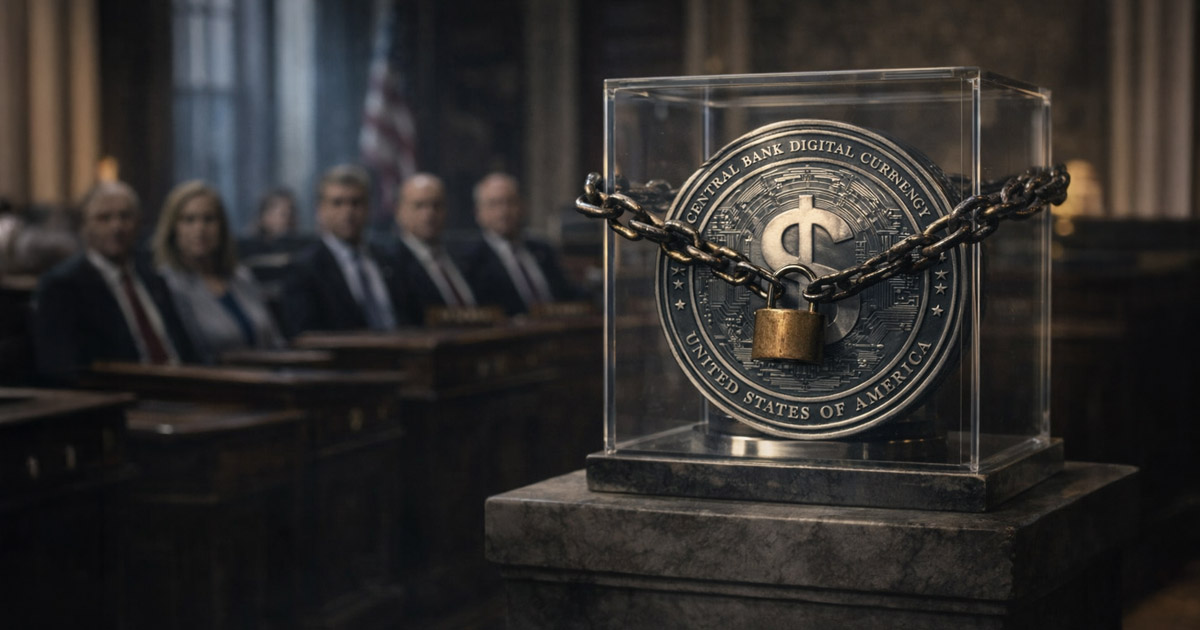
The Senate's overwhelming procedural vote to advance legislation banning a US CBDC until 2030 signals a significant shift in regulatory focus, potentially redirecting attention and capital towards private digital dollar alternatives like stablecoins and tokenized deposits.
While the vote was procedural and the specific senators' motivations are varied, the broad support for including anti-CBDC language in a larger package indicates a growing consensus in Congress to constrain the Federal Reserve's potential digital currency initiatives, impacting future policy debates.
The development reinforces the narrative that government-backed digital currencies face substantial political hurdles, which could be interpreted as a net positive for existing private stablecoin infrastructure and projects focused on decentralized dollar rails.
Deep Dive
Washington has taken a significant step towards regulating a potential U.S. Central Bank Digital Currency (CBDC), moving beyond abstract policy discussions. On March 2, the Senate voted 84-6 to invoke cloture on a broad housing and banking package, H.R. 6644, which includes a provision to bar the Federal Reserve from issuing a CBDC until the end of 2030.
The procedural vote to advance H.R. 6644, which passed with a substantial supermajority, signals that CBDCs have become a central point of debate in the Senate regarding privacy, state reach, and control. While the vote was not final passage, it indicated that a Senate supermajority was comfortable moving forward with legislation containing anti-CBDC language. Six senators voted against advancing the package: Ron Johnson (R-Wis.), Mike Lee (R-Utah), Chris Murphy (D-Conn.), Rick Scott (R-Fla.), Tommy Tuberville (R-Ala.), and Chris Van Hollen (D-Md.). Notably, Cory Booker voted present, and nine senators abstained.
The six senators who voted no were on record against moving H.R. 6644, a package that extends beyond digital currency policy to include housing-supply measures, disaster-recovery block grants, and rural housing initiatives. The anti-CBDC provision is embedded within the “21st Century ROAD to Housing Act.”
The CBDC language in the Senate amendment is notably direct, defining a CBDC as a digital asset denominated in U.S. dollars, treated as U.S. currency, and a direct liability of the Federal Reserve System, widely available to the public. It explicitly states that the Fed Board or any Federal Reserve Bank may not issue such a currency, directly or indirectly, before December 31, 2030. This sunset date indicates Congress's intent to constrain the issue for the remainder of the decade.
However, the Federal Reserve has stated it has made no decisions on issuing a CBDC. In a 2022 paper, the Fed outlined strict requirements for a potential U.S. CBDC but clarified it does not authorize direct Fed accounts for individuals. A subsequent research note reiterated that the central bank would not proceed without explicit authorization from the executive branch and Congress. Therefore, the Senate's action aims to block a form of digital currency that the Fed has indicated it does not intend to issue and could not issue unilaterally.
The move against a government-backed digital dollar is expected to redirect attention towards private-sector dollar rails, including bank deposits, tokenized deposits, exchange cash infrastructure, and stablecoins. Previous actions, such as the House passing its own anti-CBDC bill in 2024, aimed to prevent unelected officials from creating a digital dollar without congressional authorization. Reports questioning whether stablecoins could become “CBDCs in disguise” highlight concerns about control levers in private digital dollars mirroring those feared in state-issued versions.
Operational developments, like Kraken gaining direct access to Federal Reserve payment rails, underscore the significance of controlling dollar settlement infrastructure. This control impacts speed, resilience, predictability, and competitive advantage. The broader policy landscape, including the White House's stablecoin timetable and Senate gridlock on the CLARITY Act, reflects Washington's ongoing effort to define the future of digital dollars, who operates them, and the extent of federal control.
Following the initial vote, the Senate further demonstrated momentum by agreeing to the motion to proceed on March 4 with a vote of 90-8. This second vote reinforces the significance of the March 2 result, confirming floor support for legislation containing anti-CBDC text. The broader message from these votes is Washington's desire to constrain the digital dollar debate before the Federal Reserve explores its potential capabilities.
Source, catalyst, and sector overlap from the latest feed.
Coinbase's large-scale internal BTC and ETH wallet migration created a false signal of selling pressure on age-based on-chain metrics, highlighting the need for context beyond raw data. Traders relying solely on metrics like HODL Waves or Coin Days Destroyed can be misled by routine exchange housekeeping, underscoring the importance of entity-adjusted data and cross-referencing with other market indicators. The event demonstrates that while blockchain transparency is high, the interpretation of on-chain data requires careful analysis of the underlying activity, distinguishing between genuine distribution and internal operational movements. This incident suggests that age-based indicators, while useful, are less reliable for bottom signaling when not properly adjusted for exchange activity and combined with flow and price action analysis.
Bitcoin's recent price rally to $71,000 is primarily driven by leveraged derivatives trading rather than spot demand, indicating a potentially fragile market structure. The increasing dominance of derivatives volume over spot activity suggests that Bitcoin's price is more susceptible to volatility and rapid unwinds due to liquidations. While institutional adoption of derivatives on platforms like CME is growing, it contributes to a market behavior shaped more by contracts and leverage than by direct coin accumulation, increasing systemic risk. A significant macro scare or negative market event could trigger rapid position unwinding and margin calls in the current derivatives-heavy environment, leading to faster price repricing than in a spot-demand-driven market.
The CFTC's proactive stance on insider trading in prediction markets signals a significant regulatory shift, potentially impacting the operational integrity and market design of these platforms. The rapid growth of event contracts necessitates stricter oversight, suggesting that platforms focusing on narrow, single-actor markets may face increased scrutiny or restrictions. The CFTC's rulemaking process could redefine prediction markets as either derivatives or gambling-adjacent products, influencing their integration into mainstream finance and consumer protection frameworks. The potential for regulatory fragmentation between federal and state authorities poses a risk to market expansion, with a single major scandal capable of triggering severe restrictions across the sector.
February's CPI report presented a misleadingly calm inflation picture, as it failed to account for the recent surge in oil prices and underlying labor market weakness. The Fed faces a policy dilemma, caught between stale inflation data and a deteriorating economic backdrop, making rate cut expectations increasingly uncertain. Market participants should view recent optimism based on the February CPI as potentially fragile, given the confluence of rising energy costs and weakening employment. The divergence between the February CPI print and concurrent negative macro signals suggests a higher probability of policy missteps or market volatility.
While Tether's USDT maintains a larger supply, Circle's USDC is demonstrating superior growth in transaction volume and institutional adoption, signaling a potential shift in stablecoin market leadership. The divergence in stablecoin utility suggests a bifurcated market where USDT may continue to dominate exchange liquidity, while USDC gains traction in regulated payments and institutional settlement. For Bitcoin investors, this stablecoin dynamic implies that future liquidity inflows could be segmented, with offshore venues favoring USDT and institutional channels potentially leaning towards USDC. The increasing focus on regulatory compliance and transparency in stablecoin issuance favors Circle's model, positioning USDC to capture a larger share of future market growth, potentially reaching $2 trillion by 2028.
The SEC's dismissal of the BitClout fraud case with prejudice marks a significant legal victory for founder Nader Al-Naji and signals a broader trend of the agency retreating from aggressive crypto enforcement actions. This development, following similar dismissals and favorable settlements for other major crypto players, suggests a potential shift in regulatory strategy, moving away from 'regulation by enforcement' towards clearer policy frameworks. The resolution of legal uncertainty around Al-Naji could allow the DeSo blockchain to focus on its roadmap and development, potentially impacting its ecosystem and user adoption.
Florida's proposed stablecoin bill, requiring transaction monitoring for amounts over $10,000, introduces state-level regulation that mirrors federal AML rules, potentially creating a regulatory framework that aligns with but also complicates Governor DeSantis's anti-surveillance stance. The legislation positions Florida to potentially become a primary regulator for stablecoins, allowing the state's Office of Financial Regulation to issue licenses and enforce compliance, which could set a precedent for other states seeking to regulate digital assets independently. Despite Governor DeSantis's strong opposition to CBDCs due to privacy concerns, the stablecoin bill's AML requirements draw parallels to the 'Big Brother' tools he decries, highlighting a potential contradiction in his approach to digital asset regulation.
The US Treasury's temporary sanction waiver on Russian oil in transit signals a pragmatic shift, prioritizing global energy stability over strict enforcement amid geopolitical tensions. The move highlights a potential divergence within the G7, with some members expressing surprise and opposition to the US decision, indicating a crack in unified sanctions strategy. While the release of 120 million barrels of oil aims to alleviate immediate supply concerns, it represents a short-term buffer rather than a structural solution to potential oil shocks driven by Middle East conflicts. The US action demonstrates a willingness to adjust sanctions policy tactically when global energy security is threatened, setting a precedent for future geopolitical energy crises.
US Congressman French Hill urges the Senate to pass the House-approved Clarity Act, signaling a potential legislative push to resolve the stablecoin yield debate. The core conflict over whether crypto platforms can offer yield on stablecoins, with major firms like Coinbase withdrawing support due to clauses impacting their business models, highlights significant industry friction. With a critical deadline of end-April 2026 approaching for the bill to pass the Senate Banking Committee, the ongoing legislative deadlock poses a risk to US crypto competitiveness and institutional investment. Former CFTC Chair J. Christopher Giancarlo argues that the regulatory stalemate is more detrimental to US banks than crypto firms, potentially hindering institutional adoption of digital assets.
Tether's claim of superior decentralization, supported by data showing lower single-sender volume compared to rivals, positions USDT as a preferred stablecoin for emerging markets and retail users seeking alternatives to traditional finance. The significant adoption of USDT in LATAM and Southeast Asia, driven by remittances and daily transactions, highlights its utility beyond speculative trading and suggests continued demand in these regions. Tether's launch of USAT to target institutional markets under the GENIUS Act, alongside Deloitte's sign-off on its reserve report, indicates a strategic move to balance its retail-centric approach with regulatory compliance and capture a share of the institutional stablecoin market. Despite Tether's decentralization narrative, criticisms regarding off-chain transactions and its role in illicit finance, coupled with the rise of USDC and PYUSD post-GENIUS Act, suggest potential headwinds and a competitive landscape for stablecoin dominance.
XRP faces potential dethronement as a leading PayFi solution by emerging competitor Remittix, signaling a shift in market dynamics within the cross-border payments sector. Despite Ripple's infrastructure upgrades, XRP has shown limited price momentum, prompting some investors to reallocate capital to newer, higher-potential altcoins like Remittix. Remittix's significant private funding ($29.7M), CertiK audit, and upcoming CEX listings suggest strong investor confidence and potential for market disruption in the PayFi space.
Zcash and Monero, established privacy coins, are seeing renewed interest due to demand for privacy in DeFi and Web3, with Zcash showing potential accumulation signs around the $200 support level. Remittix (RTX) is positioning itself as a key player in payment infrastructure with its PayFi system, evidenced by significant private funding and the recent launch of its iOS wallet. The article highlights a growing market interest in privacy coins and payment infrastructure, suggesting a potential thematic rotation towards assets offering real-world utility and enhanced transaction privacy.
Live Feed
Loading the broader stream in the same flow as the homepage feed.

The integration of wrapped XRP (FXRP) onto Yellow Network, a Layer-3 clearing protocol backed by Ripple co-founder Chris Larsen, expands XRP's utility and liquidity across new blockchain environments. This development strengthens Flare Network's position as an infrastructure layer for XRP, potentially increasing DeFi engagement and capital locked in FXRP, as evidenced by strong community interest and existing DeFi deployments. The backing of Yellow Network by Chris Larsen and its recent integration with Flare, following FXRP's expansion to Base, suggests a strategic push to enhance XRP's interoperability and DeFi accessibility.
PEPE is consolidating near key support and resistance levels, indicating a potential for a significant price move based on a breakout. A decisive break above $0.0000050 could trigger a substantial rally towards $0.0000120, while failure to hold support near $0.00000327 risks a sharp decline. Technical indicators like the RSI and MACD suggest weakening bearish momentum, but sellers still hold short-term control, creating a precarious balance.

The debate around BIP-110 highlights a critical juncture for Bitcoin's governance, with prominent figures like Adam Back warning of potential 'downgrades' and risks to network neutrality and user funds. The proposal's temporary soft fork mechanism and a lower activation threshold (55%) raise concerns about potential network splits, which could fragment the Bitcoin ecosystem and impact its perceived stability. Rejection of BIP-110 would signal Bitcoin's continued commitment to censorship resistance, while acceptance could mark a shift towards more centralized governance, influencing future development and market perception.

Vitalik Buterin's proposal to merge Ethereum's Beacon Chain and execution layer backend programs aims to simplify node setup, potentially increasing decentralization by making it easier for individual users to run their own nodes. Reducing the technical complexity of running an Ethereum node addresses centralization concerns stemming from reliance on third-party service providers and high hardware/time requirements. This initiative, alongside previous proposals for stateless nodes, signals a continued focus on improving Ethereum's accessibility and scalability, which could have long-term positive implications for network participation and security.

Bitcoin's network demonstrates remarkable resilience to physical infrastructure failures, withstanding the disruption of up to 92% of global submarine cables. The primary infrastructure vulnerability for Bitcoin lies not in physical cables but in the concentration of network routing through five major cloud providers, posing a regulatory or coordinated action risk. While quantum computing poses a long-term threat to Bitcoin ownership security, with up to 7 million BTC potentially exposed, practical risks are estimated to be at least a decade away, with ongoing engineering efforts to mitigate it. The study reframes Tor adoption as a structural asset for Bitcoin resilience, as Tor nodes utilize obfuscated pathways less susceptible to regional cable failures.

Bitcoin is demonstrating a notable decoupling from traditional tech stocks and gold, outperforming them since the Middle East conflict began, suggesting a potential shift in its market correlation dynamics. Despite recent price strength and institutional inflows into US spot Bitcoin ETFs, cautious market sentiment persists, indicated by the 'extreme fear' in the fear and greed index and negative perpetual futures funding rates. Bitcoin's price action in response to the Middle East conflict suggests it may be evolving into a leading indicator for macro events, with other asset classes potentially following its lead rather than vice-versa.

Shiba Inu's recent token burn of over 4 million SHIB, while a positive supply-side event, has not yet translated into significant price appreciation, indicating market sentiment and broader altcoin weakness are currently overriding deflationary mechanics. The steady total supply of SHIB at 589 trillion, despite ongoing burns, suggests that the rate of new token issuance or other factors are balancing out the deflationary pressure, limiting immediate price impact. With SHIB trading down and the daily RSI near neutral, the market appears to be in a consolidation phase, suggesting that further price movement will likely depend on macro catalysts or a broader influx of capital into altcoins rather than solely on token burns.

Major exchange operators Nasdaq and ICE are integrating blockchain technology into the $126 trillion equity market, signaling a significant shift towards tokenized assets and the 'everything exchange' concept. These moves, driven by regulatory clarity and the pursuit of 24/7 trading, indicate a convergence of traditional finance and crypto, with established players partnering with crypto exchanges like Kraken and OKX. The tokenization of equities is projected for substantial growth, potentially reaching $18.9 trillion by 2033, and could unlock significant liquidity, capital efficiency, and new DeFi opportunities by bridging traditional and on-chain markets.
Bitcoin's MVRV Z Score suggests the market is in a mid-cycle recovery phase, historically preceding significant bull runs after hitting extreme lows. The current price action faces critical Fibonacci resistance between $75K and $78K, a failure to break through could signal a near-term pullback. Traders should monitor the $75K-$78K resistance zone as a key determinant for Bitcoin's immediate direction, with a rejection potentially leading to a test of lower support levels.
Solana's SuperTrend indicator has flipped bullish for the first time since January, signaling a potential shift from a prolonged downtrend to an early recovery phase. Technical analysis suggests a multi-stage recovery path for Solana, with potential intermediate targets around $110 and a long-term projection towards $360 by Q1 2027, contingent on breaking current resistance. The bullish SuperTrend signal, combined with chart patterns indicating consolidation and potential breakout, suggests a near-term positive bias for SOL, though a deeper pullback to $50 is still a possibility within the descending channel.

Bitcoin is attempting to reclaim the critical 200-week moving average and the previous all-time high around $70,000, a move that could signal renewed bullish momentum if sustained. Despite upward price action, steady profit-taking at local highs indicates potential resistance, suggesting a cautious approach to immediate upside targets. Geopolitical and macroeconomic factors, particularly oil supply shocks, continue to introduce downside risk, potentially capping any "relief rally" despite technical bullish signals. Analysts suggest Bitcoin may grind upwards towards $75-80K, contingent on macro stability and overcoming current resistance levels.
Australia is considering releasing strategic fuel reserves following an IEA call, indicating a coordinated international effort to stabilize global energy markets amidst geopolitical tensions. The potential release of petrol and diesel stocks by Australia, coupled with temporary easing of fuel standards, aims to bolster domestic supply and mitigate risks from global energy disruptions. While Australia is reviewing its reserves, the country's current fuel stock levels remain below IEA recommendations, highlighting ongoing reliance on imports and international agreements for emergency needs.
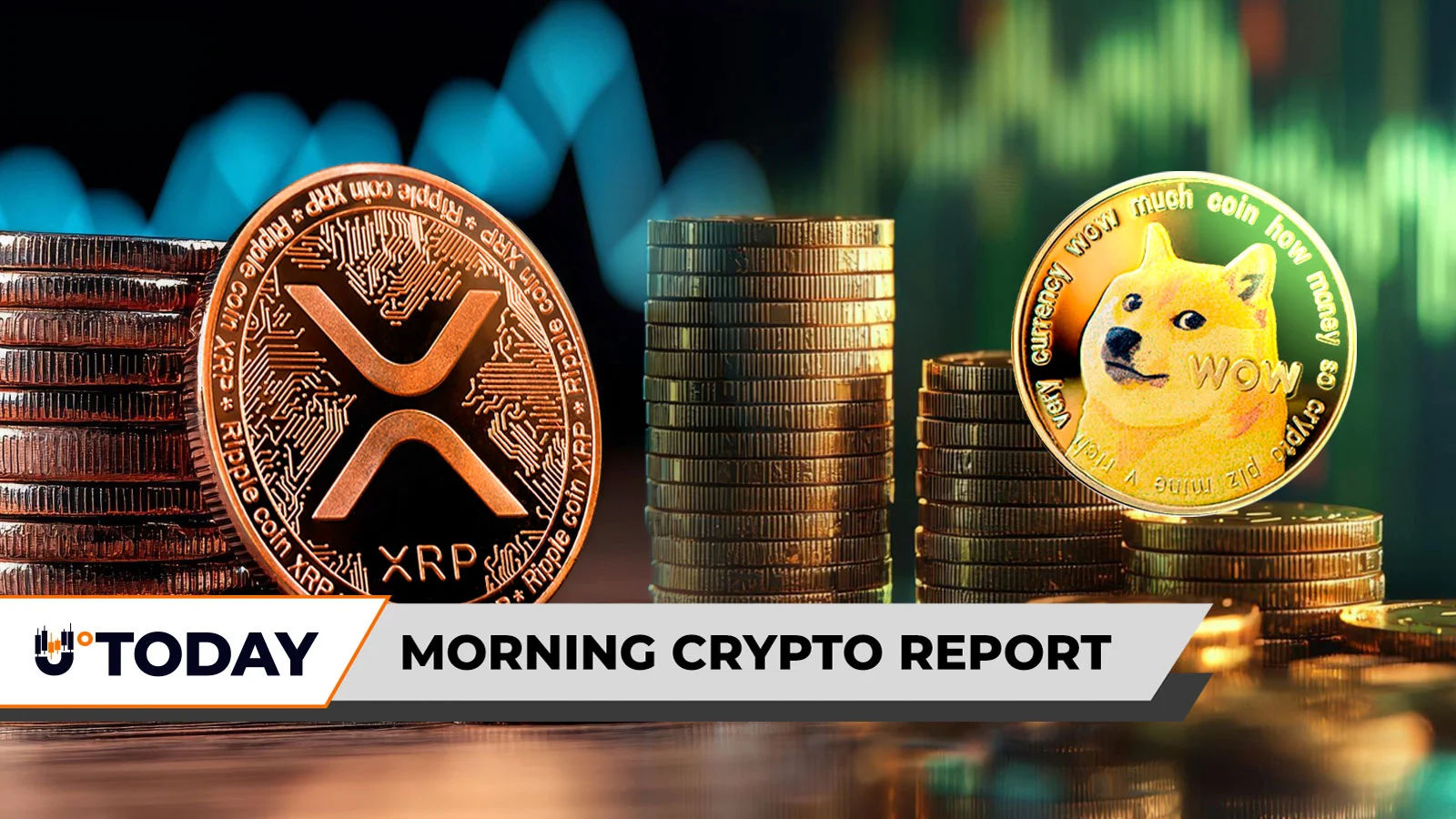
XRP's Bollinger Bands indicate a significant volatility squeeze, suggesting a potential 'big bang' price move is imminent, likely catalyzed by the upcoming March 19 Fed meeting. Dogecoin is experiencing a surge in active addresses, up 176% in a week, fueled by speculation around Elon Musk's 'X Money' integration, which could signal renewed retail interest. Significant SHIB outflows from Bitget's cold storage suggest strong buying pressure, indicating that demand may be outstripping readily available supply on the exchange. The upcoming week presents multiple macro catalysts including FOMC rate decisions and PPI data, which will likely influence broader crypto market sentiment and price action for assets like XRP, DOGE, and SHIB.
Signal context only. Validate with price action, liquidity, and risk limits before taking a position.
