
Navigating Crypto News

CoinFeather
Navigating Crypto News

Quick market read from this story
South Korean stablecoin balances have seen a significant 55% drop since July, indicating a substantial outflow of retail capital from crypto markets driven by the weakening won and a shift towards domestic equities.
The recent outflow appears to be a direct response to FX volatility (won below 1,500/USD) rather than a change in overall risk appetite, suggesting that a stabilization of the won could see capital return to crypto.
The decline in Korean stablecoin holdings represents a loss of a key retail liquidity pool for crypto, potentially impacting market cycles and price discovery, with future flows dependent on the sustainability of the Korean equity rally.
Deep Dive
Stablecoin balances in South Korea have experienced a significant decline of 55% since July, with recent outflows accelerated by the South Korean won breaking past 1,500 per dollar in mid-March. This marks a notable shift in capital flow, as money moves from crypto assets into domestic equities.
On-chain data from Allium Labs, tracking major South Korean crypto exchanges like Upbit, Bithumb, Coinone, Korbit, and GOPAX, reveals that combined stablecoin holdings in wallets tied to these exchanges fell from approximately $575 million in July 2025 to around $188 million by mid-March 2026. The decline intensified as the won reached 16-year lows against the dollar.
This trend suggests that traders sold stablecoins, such as tether, at elevated USD/KRW levels, particularly after the won weakened past the 1,500 per dollar threshold, a level not seen since the 2008 financial crisis. The weaker currency amplified the incentive for traders to exit dollar-denominated holdings and convert them into won, redeploying the capital into domestic assets, according to DNTV Research founder Bradley Park.
This outflow represents the latest phase of a larger migration of South Korean retail capital from cryptocurrencies into the stock market, a trend initially observed in November 2025. While earlier rotations were driven by narratives, such as chasing AI-linked chipmakers, the current drawdown is primarily linked to a specific foreign exchange trigger rather than a change in overall risk appetite.
The South Korean government has actively encouraged this shift through policies like “repatriation” accounts, offering significant capital gains tax exemptions for investors who move assets from overseas into local markets. This initiative appears to be influencing investor behavior, redirecting capital towards domestic investments.
Brokerage data supports this observation, showing a decrease in investor deposits from approximately ₩131 trillion ($86 billion) in early March to around ₩112 trillion ($74 billion) following the mid-month currency move. This indicates active deployment of capital into equities as stablecoin balances diminished. Deposits have since begun to stabilize, suggesting a replenishment of available funds for stock purchases.
The KOSPI index, which saw a substantial 75% gain in 2025, has continued its upward trajectory, rising an additional 37% this year, making it the world's best-performing major stock index. This rally is heavily concentrated, with tech giants Samsung Electronics and SK Hynix dominating market capitalization and projected profits, attracting significant retail and institutional flows.
Broader stablecoin transaction volumes across Asia have increased over the past year, according to Artemis data. This suggests that the drawdown observed in South Korean exchanges reflects a domestic capital rotation rather than a region-wide pullback from crypto assets. The departure of South Korean retail investors, historically a significant liquidity pool for crypto markets, could impact market cycles. The return of this capital may depend on the sustainability of the current equity rally.
Recent pressures on the KOSPI, stemming from concerns over oil supply disruptions, highlight the potential for rapid capital rotation. A sharp correction in the equity market, especially given its concentration in semiconductor stocks, could prompt capital to move again, potentially influencing crypto markets.
Source, catalyst, and sector overlap from the latest feed.
Bitcoin's earlier price decline to near $60,000 is now being mirrored by stock markets, suggesting BTC is acting as a leading indicator for traditional risk assets. Rising U.S. Treasury yields, driven by inflation fears and reduced Fed rate-cut expectations post-Iran war, are pressuring equity valuations and increasing risk aversion. Despite the broader market correlation, Bitcoin has remained relatively stable between $65,000 and $75,000, though options market data indicates extreme fear among traders.
XRP has broken below the critical $1.40 support level, indicating a loss of short-term structure and a shift in momentum favoring sellers. The failure to reclaim resistance at $1.40–$1.41 suggests continued downside pressure, with a break below $1.38 potentially accelerating losses towards the $1.30–$1.32 zone. The broader trend remains bearish for XRP, characterized by lower highs since mid-2025, implying that current price action is a continuation of a longer-term downtrend.
Bitcoin's resilience above $66,000 during a broad market sell-off, particularly in gold and equities, suggests a potential decoupling from traditional safe-haven assets under geopolitical stress. The article highlights a structural shift in gold demand, with geopolitical tensions and liquidity concerns overriding its traditional safe-haven status, impacting its price and potentially influencing capital flows into other assets. Despite a weekly dip, Bitcoin and Ether have shown relative strength compared to gold and Asian stocks, indicating a potential shift in investor sentiment towards digital assets as a hedge, albeit with short-term volatility. The commentary from Two Prime suggests a contrarian bullish outlook on Bitcoin and Ether, anticipating increased funding and futures rates and betting on an upside surprise despite the current macro-economic headwinds.
FTX creditors are disputing claims that all customer funds have been recovered, as payouts are based on 2022 asset prices, not current market values, leading to significant unrealized losses for creditors. The parents of Sam Bankman-Fried are advocating for his pardon by framing the FTX collapse as a lack of regulatory foresight rather than fraud, a narrative that contradicts the very regulations enacted to prevent such commingling of assets. The ongoing legal and political maneuvering surrounding Sam Bankman-Fried's case, including his parents' public statements and his own policy endorsements, highlights the complex intersection of crypto, law, and politics, with limited immediate impact on market pricing.
Prediction markets face a critical design flaw where contracts can incentivize users to manipulate outcomes rather than predict them, potentially undermining credibility and deterring institutional capital. The article argues that platforms must proactively exclude markets with easily influenceable outcomes to maintain long-term trust, as regulatory bodies are likely to impose external standards if platforms fail to self-regulate. The core issue is not market volatility but the inherent design that can turn prediction markets into tools for profiting from interference, especially in thinly traded political or event-based contracts.
CoinDCX's denial of fraud allegations, attributing them to an impersonation scam, suggests potential reputational risk rather than direct operational failure. The incident highlights ongoing challenges with regulatory clarity and investor protection in India's crypto market, potentially impacting user trust and adoption. While CoinDCX claims the FIR is false and due to impersonators, the involvement of law enforcement and the scale of reported fake websites warrant a cautious approach to the exchange's narrative. The exchange's prior $44.2 million treasury breach adds context to the current allegations, suggesting a pattern of security and operational vulnerabilities that could affect market sentiment.
Congressional hearing on tokenization signals a focus on integrating securities onto blockchains, potentially shaping future regulatory frameworks for on-chain assets. The limited scope of proposed legislation and witness list suggests an initial focus on operational aspects rather than fundamental classification of tokenized assets as securities. While the hearing addresses tokenization, key legal ambiguities regarding asset classification and investor protection remain unresolved, indicating a prolonged regulatory development process. Market infrastructure players like Nasdaq and NYSE are advancing tokenization efforts, creating urgency for regulatory clarity that this hearing aims to address, albeit incrementally.
The removal of contract position limits on Bitcoin and Ether ETF options by NYSE exchanges enhances institutional trading flexibility and potentially boosts liquidity. This regulatory adjustment aligns crypto ETF options with traditional commodity ETF options, signaling increased integration and acceptance within mainstream financial markets. The SEC's waiver of the standard waiting period for these rule changes indicates a swift move towards facilitating more robust derivatives trading for crypto-based investment products.
Repeated crypto scams targeting a Hong Kong retiree highlight the persistent threat of social engineering and recovery fraud within the digital asset space. The significant loss of HK$6.6 million underscores the vulnerability of less experienced investors and the need for enhanced user education and platform security measures. Authorities' warnings against unsolicited recovery services and transfers to unknown accounts serve as a crucial reminder for traders to exercise extreme caution and verify all communications.
Live Feed
Loading the broader stream in the same flow as the homepage feed.

Growing global unrest and communication blackouts are driving increased user interest in decentralized messaging and social media platforms, signaling a potential shift towards open protocols over centralized services. The inherent resilience of decentralized networks, characterized by a lack of single points of failure, positions them as a safer alternative during periods of censorship or internet shutdowns. While decentralized alternatives are gaining traction, established centralized platforms are expected to coexist, highlighting the need for continued innovation in the decentralized communication space to sustain user momentum. Increased search interest and app downloads for decentralized communication tools suggest a growing market segment driven by demand for enhanced privacy and security, though widespread replacement of incumbents is unlikely in the near term.
Bitcoin price faces increasing downside risk in March, with Polymarket odds of hitting $65K rising to 48% due to geopolitical tensions and leveraged liquidations. Escalating US-Iran tensions are causing Bitcoin to act as a risk asset, contributing to a broader crypto market downturn and significant leveraged position liquidations. The combination of geopolitical instability, potential Fed rate hikes, and rising inflation suggests continued downward pressure on Bitcoin, with some indicators pointing to a potential market bottom between $45K-$50K.

Boyaa Interactive's plan to allocate up to $70 million for crypto treasury expansion signals a strategic move to leverage market downturns for asset accumulation. The company's focus on tokens with "good market liquidity, large market value, wide recognition on the market and relatively long-term holding value" suggests a conservative approach to treasury management, prioritizing established assets like Bitcoin and Ethereum. This development highlights a continued trend of corporate treasuries seeking to diversify and potentially profit from crypto assets, even amidst broader market volatility and skepticism about treasury strategies.

Meta's CEO is developing a personal AI agent to streamline information retrieval, signaling a broader company-wide push towards AI-driven efficiency and potentially organizational restructuring. The initiative aligns with Meta's strategy to compete with AI-native startups by enhancing employee productivity through AI tooling, potentially impacting workforce dynamics and operational costs. The news coincides with reports of potential significant layoffs at Meta, suggesting a strategic pivot towards AI integration that may lead to workforce reductions to offset AI development expenditures.
XRP is testing critical support around $1.38, with a bullish divergence on the RSI suggesting potential weakening of selling pressure despite a recent downtrend. Strong retail demand for XRP is noted, contrasting with institutional outflows from XRP ETFs, indicating a divergence in investor sentiment and potential for retail-driven price action. While XRP ETFs have seen modest inflows, the overall net assets remain significant, suggesting continued, albeit not dominant, institutional interest alongside growing retail accumulation.

Geopolitical tensions between the US and Iran are driving risk-off sentiment, causing Bitcoin to trade in lockstep with equities rather than as a safe haven asset. The escalating conflict and potential impact on oil prices are increasing inflation expectations, raising the probability of a Fed rate hike and creating macro headwinds for crypto. Despite current 'extreme fear' sentiment and price drops, strong institutional inflows into Bitcoin ETFs suggest a potential setup for recovery if geopolitical tensions de-escalate. Bitcoin's immediate price levels to watch are $68,000 for support and $71,500 for a recovery narrative to gain credibility.

The shift towards agentic AI commerce, as proposed by a16z Crypto, could fundamentally alter the internet's economic model by reducing reliance on traditional online advertising. AI agents' inability to be "distracted" by ads presents a direct challenge to the current $291 billion online advertising market, potentially impacting platforms heavily reliant on this revenue stream. The development highlights a potential future where open protocols, such as Coinbase's x402 or Stripe's MPP, enable autonomous AI agents to facilitate commerce, moving away from "walled garden" solutions. This transition signals a potential paradigm shift in how digital transactions occur, favoring decentralized and open systems over centralized, ad-driven models.
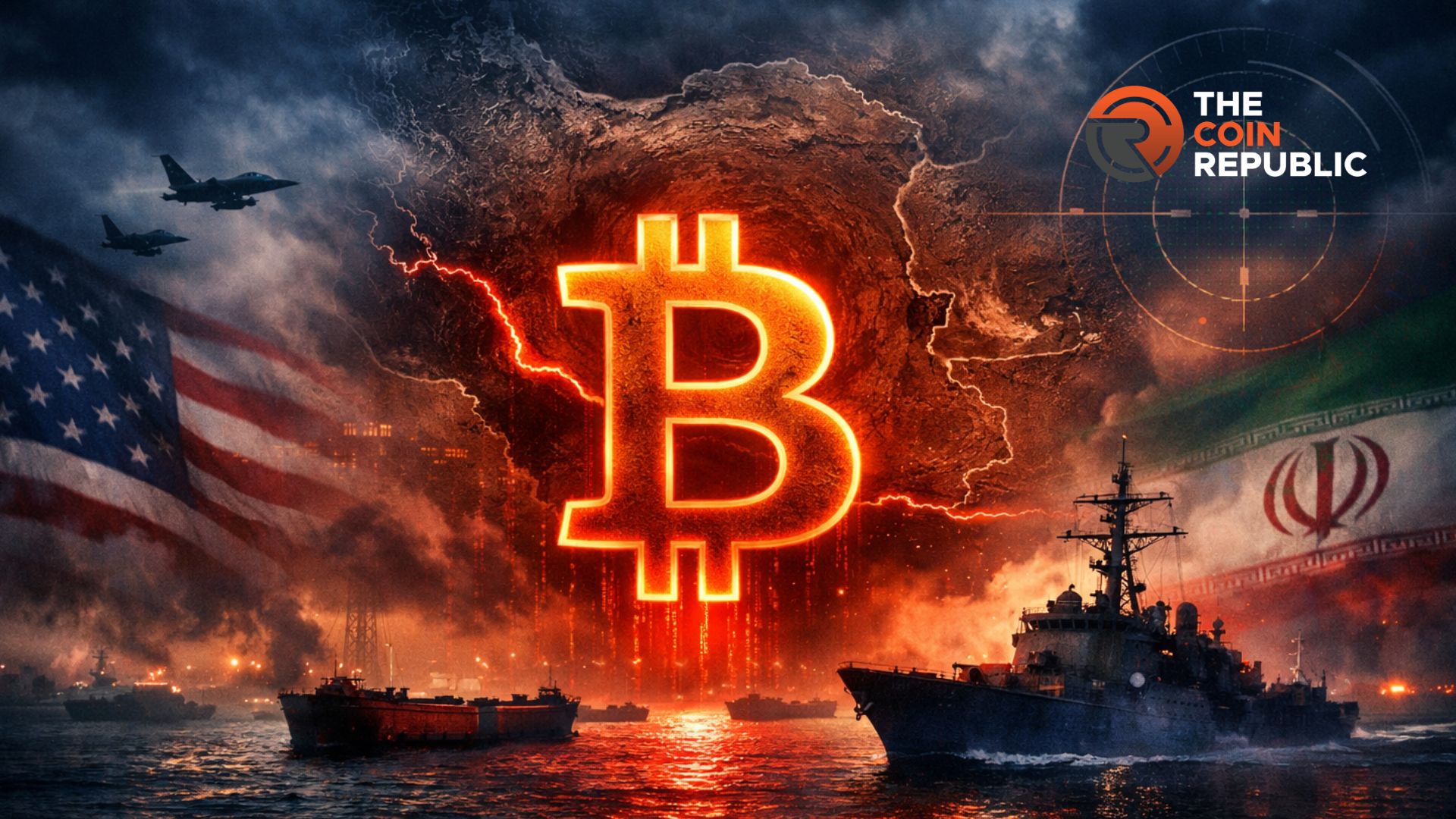
Geopolitical escalation between the US and Iran, centered on the Strait of Hormuz, is creating significant market uncertainty, leading to a broad sell-off in major cryptocurrencies like Bitcoin and Ethereum. The crypto market's sensitivity to macro events is highlighted as oil prices surge due to the tensions, indicating a correlation where traditional safe-haven assets and commodities may be favored over riskier crypto assets in the short term. Despite recent price declines, the ability of top tokens to hold near key levels could signal underlying resilience, but the immediate outlook remains cautious due to the unpredictable nature of the geopolitical situation. The ultimatum issued by President Trump and Iran's retaliatory warnings suggest a potential for further escalation, which could continue to pressure crypto markets as investors de-risk.
XRP Ledger's sustained high transaction volume, exceeding 4.28 billion, indicates robust underlying network utility despite current price stagnation. The significant number of both small and large XRP holders suggests broad network participation and confidence, a potential precursor to future price appreciation if market sentiment shifts. XRP's current price action below key support levels signals weak momentum, creating a divergence with network activity that traders should monitor for potential resolution.

Michael Saylor's cryptic "The Orange March Continues" post signals potential further Bitcoin accumulation by MicroStrategy, despite the company's current unrealized 10% loss on its holdings. The ongoing accumulation by a major corporate holder like MicroStrategy, even during market downturns, suggests a conviction in Bitcoin's long-term value proposition, potentially influencing investor sentiment. MicroStrategy's recent halt in Bitcoin purchases via preferred stock offerings (STRC) due to failure in raising capital indicates a shift in their funding strategy, which could impact future buying power.

Shiba Inu's extended 500-day consolidation phase, coupled with a strong historical pattern of significant rallies following such periods, suggests a potential for a substantial upward price movement. While the Shibarium L3 development is ongoing, the lack of concrete details and community impatience indicates it is not currently a significant price catalyst, with market focus remaining on price action. The repeated defense of a long-term demand zone for SHIB indicates persistent buyer interest, which, if sustained, could fuel a breakout from the current trading range. Traders are closely monitoring SHIB's price structure for signs of a breakout, as historical data suggests that prolonged periods of low volatility often precede sharp price expansions.

Bitmine's substantial ETH staking, representing over 25% of the circulating supply, signals a strong long-term conviction in Ethereum's value and network security. The significant amount of ETH locked in staking reduces circulating supply, potentially creating upward price pressure by limiting sell-side liquidity during volatile periods. While the staking itself is a positive development for ETH's supply dynamics, current price action shows neutral momentum with key support at $2,100, suggesting a holding pattern until further catalysts emerge. Institutional staking activity is accelerating, indicating growing confidence in the Ethereum network's stability and yield potential, despite broader market fluctuations.
Signal context only. Validate with price action, liquidity, and risk limits before taking a position.
