
Navigating Crypto News

CoinFeather
Navigating Crypto News
Quick market read from this story
CoinDCX's denial of fraud allegations, attributing them to an impersonation scam, suggests potential reputational risk rather than direct operational failure.
The incident highlights ongoing challenges with regulatory clarity and investor protection in India's crypto market, potentially impacting user trust and adoption.
While CoinDCX claims the FIR is false and due to impersonators, the involvement of law enforcement and the scale of reported fake websites warrant a cautious approach to the exchange's narrative.
The exchange's prior $44.2 million treasury breach adds context to the current allegations, suggesting a pattern of security and operational vulnerabilities that could affect market sentiment.
Deep Dive
Indian crypto exchange CoinDCX has vehemently denied fraud allegations stemming from a police investigation, stating that the First Information Report (FIR) against its co-founders is false and part of a conspiracy by impersonators misusing the company's brand to defraud investors. The exchange warned that it is being targeted by fraudsters and has reported over 1,212 fake websites mimicking its platform.
The allegations surfaced following a report that CoinDCX founders, Sumit Gupta and Neeraj Khandelwal, were questioned as part of an investigation into a crypto investment scam. A Mumbra-based insurance consultant reportedly lost $76,000 (approximately Rs 71.6 lakh) after being lured into a scheme promising 10–12% returns, which used CoinDCX's branding and documents. The victim invested $28,000, with two associates investing $26,000 and $21,000 respectively between August 2025 and March.
CoinDCX stated that the FIR was filed by impersonators and falsely claimed funds were transferred to unrelated third-party accounts. The exchange emphasized that the complainant has no association with its platform and rejected claims of funds being routed through its systems. Experts like CA Sonu Jain of 9Point Capital described the situation as a classic case of impersonation fraud, increasingly common in the Indian crypto space due to a lack of clear regulatory standards and investor protection frameworks.
Jain noted that founders being questioned is often a procedural step after an FIR is registered. He suggested regulators should focus on defining platform responsibilities, enabling faster takedown of fraudulent domains, and formalizing coordination between financial intelligence units and crypto exchanges to proactively curb such scams. CoinDCX confirmed it is cooperating with law enforcement and actively working to raise user awareness.
This development follows a previous security incident where CoinDCX disclosed a $44.2 million treasury breach in July of the previous year. A software engineer from the firm was arrested in connection with the hack, which involved attackers siphoning funds from an internal account using compromised credentials.
Source, catalyst, and sector overlap from the latest feed.
Congressional hearing on tokenization signals a focus on integrating securities onto blockchains, potentially shaping future regulatory frameworks for on-chain assets. The limited scope of proposed legislation and witness list suggests an initial focus on operational aspects rather than fundamental classification of tokenized assets as securities. While the hearing addresses tokenization, key legal ambiguities regarding asset classification and investor protection remain unresolved, indicating a prolonged regulatory development process. Market infrastructure players like Nasdaq and NYSE are advancing tokenization efforts, creating urgency for regulatory clarity that this hearing aims to address, albeit incrementally.
Bitcoin is demonstrating relative strength against traditional risk assets like equities during the ongoing oil shock and geopolitical tensions, suggesting a potential decoupling driven by prior deleveraging and sustained institutional inflows. Despite a recent price slide, Bitcoin's resilience, coupled with slowing long-term holder selling and signs of institutional accumulation, indicates a market in steady consolidation rather than heavy distribution. Future Bitcoin price action will likely hinge on upcoming macroeconomic data, particularly flash PMI readings and oil price movements, which are key indicators for inflation and interest rate expectations.
The pilot program in Los Angeles testing Learned Hand's AI for judicial case preparation signals a potential efficiency gain in legal processes, which could indirectly impact the demand for AI-driven solutions in professional services. While the AI aims to assist judges by summarizing filings and drafting rulings, the emphasis on human oversight and verification highlights ongoing challenges with AI reliability and the prevention of 'hallucinations' in critical applications. The increasing volume of AI-assisted legal filings, as noted by the CEO, suggests a growing trend that could necessitate further technological advancements and regulatory frameworks to manage court workloads effectively.
MicroStrategy's consistent, large-scale Bitcoin accumulation, despite an average entry price above $75,700, signals strong conviction in long-term value appreciation, potentially influencing other corporate treasuries to follow suit. The firm's largest single purchase of 55,500 BTC for $5.4 billion at an average of $97,862 demonstrates significant capital deployment, with immediate price reactions suggesting market sensitivity to such large buy orders. Analysis of MicroStrategy's seven largest Bitcoin purchases reveals a pattern where immediate post-purchase price action is mixed, with some instances showing a dip followed by recovery or new highs, indicating that market sentiment and broader economic factors also play a crucial role. The ongoing strategy of "buying the top forever" by Michael Saylor, funded partly by preferred stock offerings, highlights a unique corporate finance model for Bitcoin acquisition that could be replicated if successful.
Despite declining volatility and price stabilization around $70,000, traders are exhibiting significant fear by paying substantial premiums for downside protection, a sentiment historically associated with market bottoms. The put/call ratio reaching levels not seen since 2021 indicates an unusually strong demand for hedging relative to bullish positioning, suggesting a potential shift in market sentiment if this fear subsides. Slowing transfers from long-term holders suggest conviction among existing investors, which, combined with high demand for puts, could signal an impending price recovery as fear-driven hedging unwinds.
Bithumb's potential CEO reappointment despite regulatory penalties suggests internal confidence or a strategic move to maintain leadership continuity amidst ongoing legal scrutiny. The exchange faces significant regulatory headwinds, including a partial suspension and substantial fine for AML failures, which could impact its operational capacity and license renewal. Despite Bithumb's challenges, the broader South Korean crypto market shows signs of growth and regulatory support, potentially creating a complex operating environment for exchanges.
Traders on Hyperliquid are showing a significant shift in preference towards commodity perpetual futures, particularly oil and silver, driven by geopolitical volatility and price surges. The increased trading volume in oil and silver perps on Hyperliquid, surpassing that of XRP and SOL, highlights the platform's growing role in commodity price discovery, especially during traditional market closures. While BTC and ETH perps still dominate Hyperliquid's volume, the surge in commodity trading suggests a potential diversification of interest away from purely crypto-centric derivatives, influenced by macro-economic factors. Goldman Sachs' upward revision of oil price forecasts, coupled with ongoing geopolitical tensions, indicates sustained volatility in energy markets, which could continue to drive activity on decentralized derivatives platforms like Hyperliquid.
XRP price predictions range from $2.80 to $10, contingent on the CLARITY Act, but institutional inflows into XRP ETFs and Ripple's Brazil expansion provide a foundational bullish case. Despite positive XRP developments, significant capital is reportedly rotating into the Pepeto presale, seeking higher potential returns (150x target) compared to XRP's projected gains. The article contrasts the long-term, regulatory-dependent upside of XRP with the perceived short-term, high-multiple opportunity in the Pepeto presale, highlighting a divergence in whale wallet strategies. The narrative suggests that while XRP's fundamentals are strengthening, the market is prioritizing presale opportunities with rapid listing catalysts for immediate, substantial gains.
FTX creditors are disputing claims that all customer funds have been recovered, as payouts are based on 2022 asset prices, not current market values, leading to significant unrealized losses for creditors. The parents of Sam Bankman-Fried are advocating for his pardon by framing the FTX collapse as a lack of regulatory foresight rather than fraud, a narrative that contradicts the very regulations enacted to prevent such commingling of assets. The ongoing legal and political maneuvering surrounding Sam Bankman-Fried's case, including his parents' public statements and his own policy endorsements, highlights the complex intersection of crypto, law, and politics, with limited immediate impact on market pricing.
Live Feed
Loading the broader stream in the same flow as the homepage feed.
Geopolitical tensions and a hawkish macro environment are driving a broad market sell-off, leading to significant liquidations and a "Extreme Fear" sentiment in crypto. The crypto market is experiencing a systemic downturn, with Bitcoin and major altcoins like ETH, SOL, XRP, and BNB showing substantial weekly losses, indicating a risk-off sentiment across all asset classes. Over $300 million in long positions were liquidated in the past 24 hours, signaling that the market was heavily positioned for upside, which has now been invalidated by external factors. The lack of near-term interest rate cut expectations due to persistent inflation further exacerbates the downturn, as tighter liquidity conditions are historically detrimental to speculative assets like cryptocurrencies.

The SEC's formal classification of Bitcoin and Ethereum as digital commodities, outside the scope of securities laws, provides significant regulatory clarity for major crypto assets. This development is likely to reduce regulatory uncertainty and potentially encourage broader institutional adoption by defining clear boundaries for SEC oversight. While many assets are now explicitly non-securities, the SEC's clarification on investment contracts means that specific offerings or issuer promises could still trigger securities regulations, requiring continued vigilance.

Despite a significant increase in retail addresses holding XRP, exchange reserves have surged to levels not seen since November 2025, indicating potential selling pressure from larger holders that is capping price upside. XRP price has reverted to its February trading range after a brief rally, suggesting that the recent retail accumulation has not been enough to overcome the bearish signals from increased exchange inflows and subdued institutional demand. While recent regulatory wins may boost confidence, the current market dynamics for XRP, characterized by strong retail interest but weak whale and institutional demand, present a risk of capitulation if broader market conditions deteriorate.

Bitcoin miners are pivoting from mining to AI compute due to significantly higher profit margins, leading to a substantial drop in the network's hashrate. Publicly traded mining companies are retrofitting facilities for AI clients, securing large contracts with tech giants like Microsoft and Google, shifting their valuation narrative. The shift to AI compute highlights a structural change in the energy and infrastructure demands of emerging technologies, potentially impacting Bitcoin's security model if sustained.

Shiba Inu (SHIB) is positioned at a multi-year demand zone in early 2026, presenting a potential inflection point for a new expansion phase or a gradual recovery towards the $0.00001600-$0.00001800 range. The article presents long-term price predictions for SHIB, with estimates reaching up to $0.000130 by 2030, contingent on improved adoption, demand, and ecosystem growth. While the article highlights a Biconomy promotion offering up to 380% APR on SHIB Earn Products, this is a short-term incentive and does not fundamentally alter the long-term price outlook or structural positioning.

Changpeng Zhao's comparison of Bitcoin to gold and real estate highlights its perceived role as a hard asset, potentially attracting investors seeking inflation hedges during uncertain economic conditions. The commentary from a prominent figure like CZ, drawing parallels between Bitcoin's fixed supply and traditional inflation-resistant assets, reinforces a narrative that could support long-term holding sentiment for BTC. While CZ's remarks offer a bullish narrative for Bitcoin as a store of value, the immediate market impact is likely muted given the lack of new catalysts and the context of unchanged interest rates and geopolitical tensions.

Geopolitical tensions are driving a risk-off sentiment in global markets, leading to a sharp decline in Bitcoin and other major cryptocurrencies as they break key support levels. The breakdown below critical support levels for BTC, ETH, and XRP suggests a weakening short-term trend, with potential for further downside if broader market sentiment deteriorates. While a short-term bounce is possible as selling pressure eases, the overall trend remains bearish, and recovery hinges on stabilization in traditional markets and a de-escalation of geopolitical events.

The $80 million uncollateralized mint exploit on Resolv's USR stablecoin has rendered the protocol functionally insolvent with liabilities exceeding assets by over $78 million, leading to a severe de-pegging and likely significant losses for remaining holders. The exploit, stemming from a compromised private key rather than a smart contract bug, highlights critical infrastructure vulnerabilities that are difficult to audit and prevent, suggesting a higher risk profile for protocols reliant on such security measures. The cascading effect of the USR de-peg is already impacting lending markets like Morpho, indicating potential for broader contagion and bad debt creation across DeFi protocols that used USR as collateral. With USR trading at $0.27, down 72% from its peg, and the protocol's TVL collapsing from a peak of $684 million, this event represents a significant loss of confidence and capital within the stablecoin and broader DeFi ecosystem.

Bitcoin's recent drop to $68,000, coinciding with a significant decline in gold prices, suggests a broader market trend driven by rising U.S. Treasury yields and tightening liquidity, impacting risk assets. Despite geopolitical tensions, gold's failure to act as a safe haven highlights the dominance of macroeconomic factors like interest rate expectations and forced liquidations in current market sentiment. While Bitcoin is currently behaving more like a liquidity asset than a gold hedge, its strong ETF inflows over the past two years present a long-term bullish structural narrative that could lead to outperformance against gold if historical patterns repeat. The current market environment, characterized by rising yields and inflation concerns, implies continued pressure on both gold and cryptocurrencies in the short term, warranting a cautious approach.

Growing global unrest and communication blackouts are driving increased user interest in decentralized messaging and social media platforms, signaling a potential shift towards open protocols over centralized services. The inherent resilience of decentralized networks, characterized by a lack of single points of failure, positions them as a safer alternative during periods of censorship or internet shutdowns. While decentralized alternatives are gaining traction, established centralized platforms are expected to coexist, highlighting the need for continued innovation in the decentralized communication space to sustain user momentum. Increased search interest and app downloads for decentralized communication tools suggest a growing market segment driven by demand for enhanced privacy and security, though widespread replacement of incumbents is unlikely in the near term.

Gold prices experienced a significant decline, losing over $1 trillion in a few hours, driven by rising US bond yields and fading Federal Reserve rate cut expectations. Liquidity crunches and forced selling, exacerbated by rising oil prices, are identified as key drivers for gold's sharp sell-off, overriding typical safe-haven demand during geopolitical tensions. While long-term forecasts remain bullish for gold, short-term fragility persists due to high yields and tight liquidity, with key support levels at $4,304 and potential downside targets at $4,270-$4,200. The unusual divergence of gold's price action from typical crisis behavior suggests potential large player liquidations or "pockets of illiquidity" contributing to the volatility.
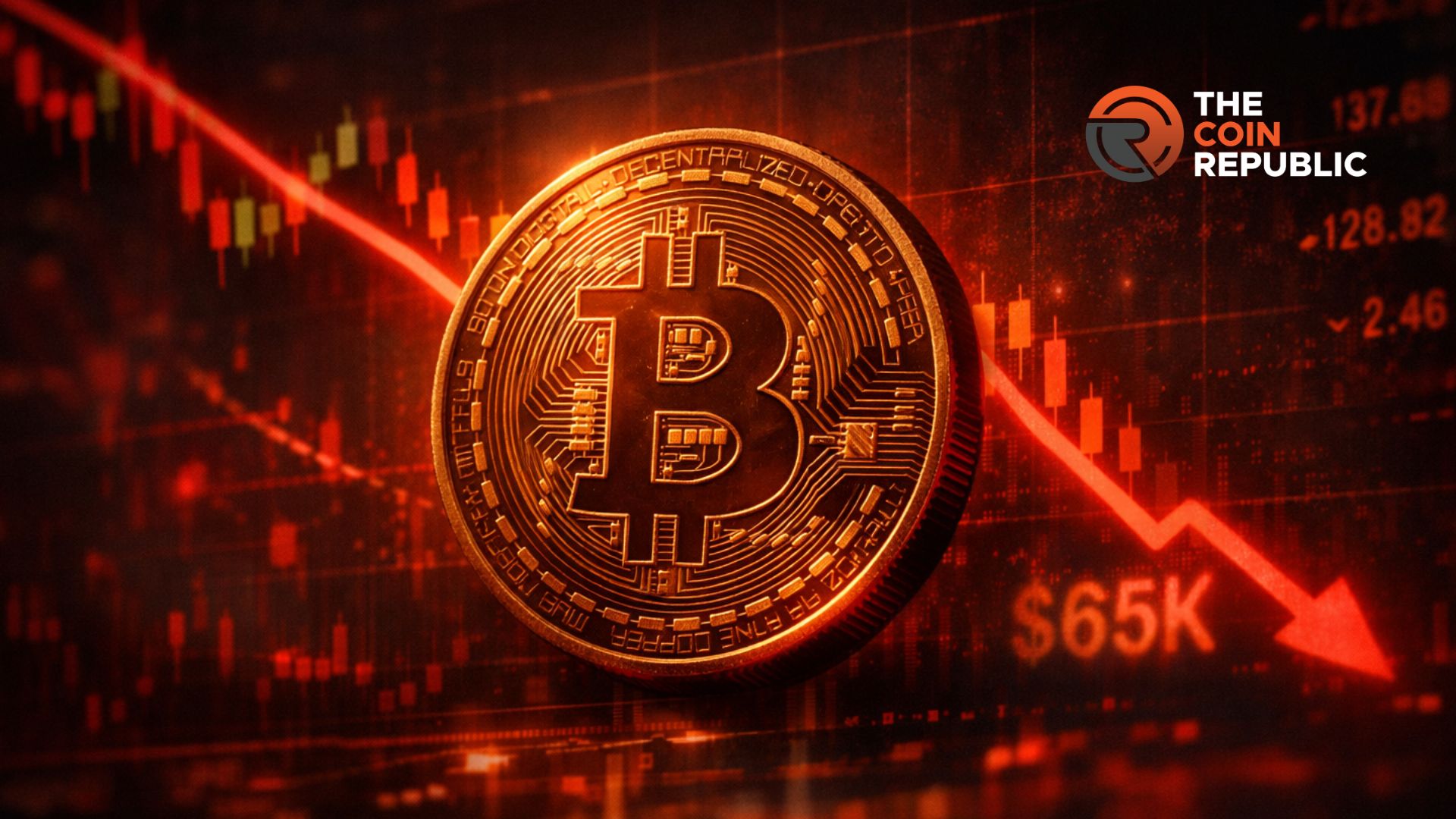
Bitcoin price faces increasing downside risk in March, with Polymarket odds of hitting $65K rising to 48% due to geopolitical tensions and leveraged liquidations. Escalating US-Iran tensions are causing Bitcoin to act as a risk asset, contributing to a broader crypto market downturn and significant leveraged position liquidations. The combination of geopolitical instability, potential Fed rate hikes, and rising inflation suggests continued downward pressure on Bitcoin, with some indicators pointing to a potential market bottom between $45K-$50K.

Bitcoin's earlier price decline to near $60,000 is now being mirrored by stock markets, suggesting BTC is acting as a leading indicator for traditional risk assets. Rising U.S. Treasury yields, driven by inflation fears and reduced Fed rate-cut expectations post-Iran war, are pressuring equity valuations and increasing risk aversion. Despite the broader market correlation, Bitcoin has remained relatively stable between $65,000 and $75,000, though options market data indicates extreme fear among traders.

Boyaa Interactive's plan to allocate up to $70 million for crypto treasury expansion signals a strategic move to leverage market downturns for asset accumulation. The company's focus on tokens with "good market liquidity, large market value, wide recognition on the market and relatively long-term holding value" suggests a conservative approach to treasury management, prioritizing established assets like Bitcoin and Ethereum. This development highlights a continued trend of corporate treasuries seeking to diversify and potentially profit from crypto assets, even amidst broader market volatility and skepticism about treasury strategies.

Meta's CEO is developing a personal AI agent to streamline information retrieval, signaling a broader company-wide push towards AI-driven efficiency and potentially organizational restructuring. The initiative aligns with Meta's strategy to compete with AI-native startups by enhancing employee productivity through AI tooling, potentially impacting workforce dynamics and operational costs. The news coincides with reports of potential significant layoffs at Meta, suggesting a strategic pivot towards AI integration that may lead to workforce reductions to offset AI development expenditures.
Signal context only. Validate with price action, liquidity, and risk limits before taking a position.
