
Navigating Crypto News

CoinFeather
Navigating Crypto News
Quick market read from this story
Shibarium is undergoing a significant infrastructure upgrade, with explorer re-indexing at 45% and Layer 3 testing commencing, indicating a focus on future scalability rather than immediate performance issues.
Despite explorer data showing lower transaction and wallet counts, the underlying Shibarium network has processed 1.56 billion transactions and has over 270 million wallets, highlighting a discrepancy due to ongoing re-indexing.
The commencement of Layer 3 testing, including projects like Shib Alpha and ShibClaw, signals a proactive development roadmap for the Shiba Inu ecosystem, aiming to expand its capabilities beyond the current Layer 2.
Deep Dive
Shibarium, the layer-2 blockchain supporting the Shiba Inu ecosystem, has successfully undergone a significant server migration and a comprehensive chain re-indexing operation over the past 30 days. This upgrade is designed to enhance network scalability for future demands, with the explorer synchronization currently at approximately 45% completion.
While the Shibarium explorer currently displays incomplete data, showing around 2.4 million blocks and 168 million transactions, the actual blockchain has processed over 14 million blocks and 1.56 billion transactions. Similarly, the explorer reports five million addresses, whereas the real figure surpasses 270 million. Shibizens, a Shiba Inu-focused account, clarified that any perceived missing tokens or NFTs are likely due to indexing delays on the explorer, not actual asset loss, emphasizing that the underlying blockchain remains fully operational and intact.
"Shibarium is not lagging. It is rebuilding at scale for what's coming next," stated Shibizens.
The focus within the Shibarium ecosystem is now shifting towards layer-3 development, encompassing projects like Shib Alpha and ShibClaw. Woofswap, a Shibarium participant, confirmed that the Shibarium L3 is actively undergoing testing, with a new L3 explorer launched on March 21 for early testing. Specific technical details regarding the L3 build are still limited.
Meanwhile, the Puppynet testnet continues to show increased AI-driven automated contract interactions, with stable block times of approximately five seconds, indicating the network's capacity to handle additional testing loads without disruption.
At the time of reporting, Shiba Inu was trading at approximately $0.00000607, marking a 5.51% increase in the last 24 hours.
Source, catalyst, and sector overlap from the latest feed.
Bernstein identifies Circle and Coinbase as primary beneficiaries of stablecoin growth, driven by increasing USDC adoption and the emerging potential of agentic payments. Agentic payments, enabled by stablecoins' programmability and borderless nature, represent a new growth vector for stablecoins beyond traditional use cases, particularly for machine-to-machine microtransactions. Despite agentic payments being an optional upside, the core stablecoin thesis remains strong, supported by broad adoption in consumer and enterprise applications, positioning Circle and Coinbase as direct proxies for this expanding financial services category.
A significant 637% surge in SHIB token burns, removing over 8 million tokens, indicates strong community commitment to reducing supply and potentially creating upward price pressure through scarcity. The substantial token burn event coincided with a 5.68% price increase for SHIB, suggesting a short-term positive correlation between deflationary activity and asset performance. While the burn rate spike is notable, its long-term impact on SHIB's price will depend on sustained deflationary efforts and broader market conditions, as the token's quadrillion-scale supply remains a significant factor.
MicroStrategy's expanded $42 billion ATM program signals an aggressive, long-term strategy to accumulate Bitcoin, leveraging equity issuance to continuously increase its BTC holdings. The company's multi-channel capital raising approach, including common and preferred stock, provides significant flexibility to adapt to market conditions and investor appetite for Bitcoin exposure. This strategic capital deployment by a major corporate holder like MicroStrategy can be interpreted as a strong bullish signal for Bitcoin demand, potentially influencing market sentiment and price action.
PEPE is exhibiting a falling wedge pattern, a technical formation that historically precedes significant upward price movements, with analysts projecting a potential 708% breakout. Buyers are actively defending key support levels around $0.0000031, indicating accumulation interest that could fuel a relief bounce of up to 30% if sustained. Despite bullish technical signals, significant resistance remains between $0.00000414 and $0.00000500, suggesting that traders should await confirmation of a decisive breakout before expecting the projected large-scale rally.
Institutional accumulation by Bitmine, adding 65,341 ETH, signals confidence in Ethereum's long-term prospects despite current market volatility. The CEO's 'mini-crypto winter' comment, coupled with ETH outperforming equities recently, suggests a potential shift in market sentiment towards recovery for Ethereum. Technical analysis indicates ETH is in a short-term downtrend with critical support at $2,070-$2,090; a break below could lead to $1,800, while sustained moves above $2,280 are needed for a trend reversal. With over 3.1 million ETH staked and generating significant annual rewards, Bitmine's strategy highlights the yield-generating potential of ETH as a core holding.
Shibarium is undergoing a significant infrastructure upgrade involving a full chain re-indexing and server migration, which is currently 45% complete. The ongoing re-indexing is causing discrepancies in displayed data on the Shibarium explorer, but the underlying blockchain remains intact, reassuring users about asset safety. Development focus is shifting towards Shibarium's Layer 3, with a new L3 explorer live for early testing, indicating future expansion and scalability efforts. The infrastructure upgrade and L3 development signal a strategic move to enhance Shibarium's capabilities for future growth and increased transaction volume.
Despite the launch of its Layer-1 blockchain, Aster (ASTER) price is consolidating, indicating that the fundamental development may have already been priced in by the market. ASTER faces persistent resistance around $0.80, with a lack of strong bullish conviction suggesting a neutral short-term trend, making a breakout above this level crucial for upward momentum. Technical indicators show indecision, with the RSI near neutral and CMF trending lower, signaling limited buying interest and a potential risk of a downside move if support at $0.65 fails. The project is at a critical turning point where its Layer-1 launch provides a long-term narrative, but short-term price action requires a decisive move above resistance or a breakdown from support.
The SEC dropping its lawsuit against Chris Larsen and Ripple marks a significant regulatory victory, potentially paving the way for increased institutional adoption and broader market acceptance of XRP. Ripple's recent ecosystem expansions, including a stablecoin (RLUSD), AMM, and EVM-compatible sidechain, position XRPL as a more versatile platform beyond payments, potentially attracting more developers and DeFi activity. Chris Larsen's substantial net worth and significant XRP holdings, coupled with his advocacy for blockchain technology, underscore his continued influence on the XRP ecosystem and the broader digital asset market.
XRP's surge towards $2, fueled by short liquidations and a shift towards diplomacy, suggests a renewed bullish sentiment driven by geopolitical de-escalation and technical breakouts. Bitcoin Cash's outperformance against BTC, attributed to its upcoming quantum-resistant upgrade, highlights a potential long-term rotation towards assets prioritizing future-proofing against emerging technological threats. A significant accumulation of SHIB by a Bitfinex-linked whale indicates potential institutional interest or a strategic accumulation at perceived local lows, signaling a possible short-term bullish bias for the memecoin. The broader market faces uncertainty as Bitcoin consolidates within a defined range, with upcoming ETF decisions and rising energy costs creating a complex macroeconomic backdrop for traders.
The upcoming week features several protocol upgrades and token events, including hard forks for Akash and Casper, and a token generation event for Backpack, which could influence short-term price action for these specific assets. The presence of Federal Reserve Governor Stephen Miran speaking at the Digital Asset Summit highlights the ongoing intersection of traditional finance and digital assets, potentially offering insights into future monetary policy impacts on crypto. The article outlines a busy week for crypto markets with multiple token unlocks, governance votes, and protocol updates, suggesting a period of increased on-chain activity and potential volatility for affected projects. With GameStop (GME) reporting earnings and holding a significant Bitcoin treasury, its financial results could indirectly signal institutional sentiment or flow into Bitcoin.
MoonPay's release of an open-source wallet standard for AI agents addresses a critical infrastructure gap, potentially enabling new forms of autonomous economic activity and increasing demand for secure digital asset management solutions. The development signals a growing trend of integrating AI agents as active participants in crypto ecosystems, which could drive adoption of related infrastructure and services. By abstracting key management and providing policy controls, the standard aims to simplify wallet interactions for AI, potentially lowering the barrier for AI-driven DeFi participation and transactions.
Bittensor's price surge, driven by increased social engagement and ecosystem milestones like the Covenant-72B LLM training and Grayscale's private trust, signals renewed investor interest in its AI narrative. The TAO price is approaching a critical resistance zone between $302-$312, where a confirmed breakout is necessary to validate a potential Wave 3 extension and target higher levels towards $400-$500. While momentum indicators show strengthening, the RSI nearing overbought territory suggests caution, with a failure to break resistance potentially leading to a pullback to the $240-$260 range. The development highlights the market's sensitivity to AI narratives and tangible project progress, with potential for further upside if subnet utility announcements continue to drive social volume.
Chainlink's role as a critical blockchain infrastructure provider for oracles, DeFi, and RWA tokenization is highlighted, suggesting sustained demand for LINK as the crypto market stabilizes and capital rotates into infrastructure projects. Price predictions for LINK indicate significant long-term upside potential, with forecasts suggesting highs of $65 by 2026 and up to $200 by 2030, driven by ecosystem growth and increasing adoption of its services. The article notes a stabilization phase for LINK around $9.26, with key support at $8.80-$9.00, indicating potential early accumulation and a range-building period ahead of a potential breakout. Increased Average Order Size in spot and futures markets points to institutional participation, which is a significant factor influencing LINK's market structure and future price movements.
Deloitte's collaboration with Stablecorp to build stablecoin infrastructure for Canadian institutions signals growing institutional interest in digital assets, particularly as regulatory frameworks develop. The initiative aims to leverage stablecoins for 24/7 payments and improved settlement efficiency, potentially paving the way for new financial products and increased adoption once regulatory clarity is achieved. This development aligns with global trends in stablecoin regulation and adoption, suggesting a move towards integrating digital assets into traditional financial systems in Canada.
G Coin has rapidly surpassed one million holders within its launch week, indicating strong initial community engagement and market reception following its MEXC listing and staking launch. The rapid holder growth, from 203k to over 1.15M in approximately one week, suggests significant momentum, though its sustainability will be tested as the utility narrative faces market validation beyond the initial listing phase. The project's positioning as a utility token for gameplay, rewards, and ecosystem functions, coupled with its Layer-3 PlayBlock infrastructure, presents a fundamental use case that will be crucial for long-term value accrual.
Live Feed
Loading the broader stream in the same flow as the homepage feed.

The launch of 5c(c) Capital, backed by prediction market leaders, signals significant VC interest and potential for growth in the event-based trading sector. With a $35 million target, the fund's focus on infrastructure and services beyond exchanges suggests a maturing prediction market ecosystem requiring specialized support. Increased institutional and retail interest, evidenced by early investors and platform integrations, indicates a growing acceptance and potential for broader adoption of prediction markets.

Bitcoin's recent price action demonstrates it is trading more as a high-beta risk asset than a safe-haven "digital gold," as evidenced by its correlation with yield movements and inflation expectations. Gold's failure to act as a geopolitical hedge, coupled with significant ETF outflows, suggests investors are prioritizing liquidity and yield over traditional safe havens during periods of rising inflation and rates. The market's sensitivity to oil prices, inflation expectations, and Fed rate policy indicates that these macro factors will likely dictate near-term price action for both Bitcoin and gold, overshadowing narrative-driven safe-haven claims. For Bitcoin and gold to regain safe-haven status, a sustained decrease in Treasury yields, easing energy prices, and renewed positive ETF flows for Bitcoin are critical checkpoints.

A rare two-block reorganization on the Bitcoin network, while sounding alarming, demonstrates the protocol's resilience and functioning consensus mechanism. The event highlights the competitive nature of Bitcoin mining, with Foundry USA successfully resolving a temporary chain split through superior hashing power. While a two-block reorg is uncommon, it does not represent a fundamental flaw or security breach, reinforcing the network's robustness for traders.

The SEC's proposed reinterpretation of federal securities laws for crypto assets, now pending White House review, could significantly alter the regulatory landscape for digital assets if finalized. This development, alongside potential progress on a market structure bill and a prior MOU with the CFTC, signals a move towards greater regulatory clarity, which could reduce uncertainty for market participants. The interpretation aims to classify digital commodities, tools, collectibles (including NFTs), and stablecoins as non-securities, potentially impacting how these asset classes are treated by the SEC and influencing investment strategies.

The launch of the 'AI Personality of the Year' challenge with a significant prize pool highlights the growing economic potential and mainstream interest in AI-generated content and virtual influencers. The competition's focus on brand appeal and social clout, judged by industry professionals, suggests a maturing market for AI personalities that prioritizes engagement and monetization over mere technical generation. With the virtual influencer market projected to reach $46 billion by 2030, this event signals increased investment and development in AI-driven creative industries, potentially creating new avenues for digital asset integration and creator economies.

Senator Warren's inquiry into MrBeast's acquisition of Step highlights regulatory scrutiny on crypto integration in youth-focused financial apps, signaling potential future compliance hurdles. Beast Industries' stated interest in DeFi and prior $200M investment from BitMine, coupled with Warren's concerns, suggests a cautious approach is warranted for any crypto-related product launches targeting younger demographics. The historical context of Step allowing teens to trade crypto, despite backing away in 2024, combined with Warren's focus on "risky investments" and parental pressure, indicates a heightened regulatory awareness around consumer protection in digital asset adoption.
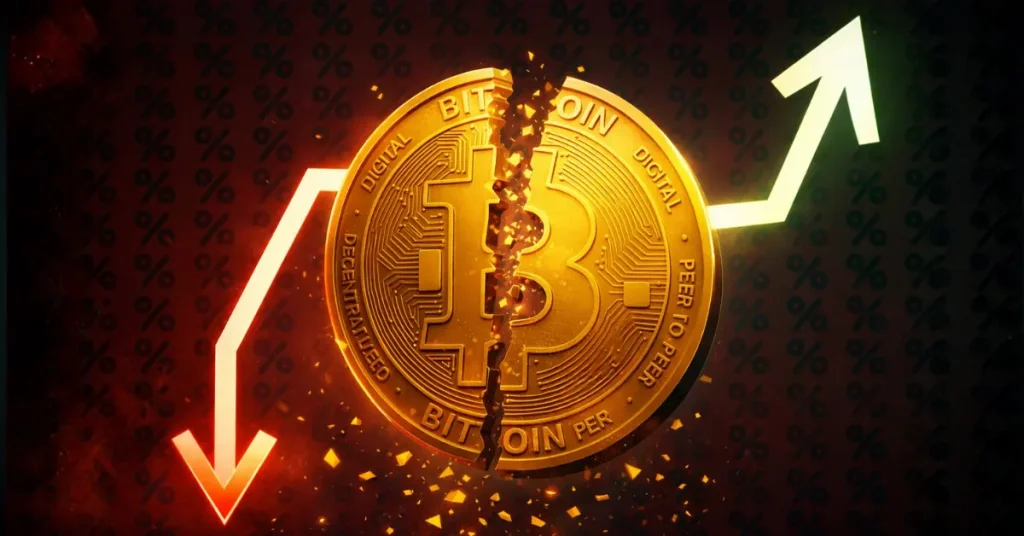
Geopolitical uncertainty surrounding US-Iran relations is creating a period of consolidation for Bitcoin, with price action likely to remain range-bound until clearer de-escalation signals emerge. Despite conflicting reports on US-Iran talks, the market reacted positively to initial signals of de-escalation, leading to a short-term price increase in Bitcoin and Ethereum. Historical post-halving cycle data suggests a potential bear trend initiation in approximately two months, indicating that current consolidation could precede a significant price movement. Upcoming inflation data and Fed commentary on interest rates, alongside continued whale accumulation, present key factors that could influence Bitcoin's trajectory in the near term.

Polymarket's implementation of stricter market integrity rules and enhanced surveillance signals a proactive approach to regulatory compliance, potentially mitigating future manipulation risks and fostering greater institutional trust. The platform's alignment with CFTC oversight and the introduction of new safeguards indicate a move towards greater legitimacy, which could attract more mainstream participation and capital into prediction markets. While Polymarket aims to curb insider trading and manipulation, the historical instances and ongoing ethical concerns highlight the inherent challenges in regulating decentralized prediction platforms, suggesting continued regulatory scrutiny.

Bitcoin spot volumes on Binance have fallen to their lowest point since September 2023, suggesting that the recent price rally above $71,000 is not supported by strong underlying demand. The current price surge appears to be driven by news headlines and short liquidations rather than organic spot market activity, indicating a lack of conviction among traders. Elevated whale inflow momentum signals aggressive capital rotation and hedging, increasing Bitcoin's sensitivity to short-term volatility in the coming weeks. The negative Coinbase premium and declining open interest during the price increase suggest that the rally was fueled by short-covering rather than new capital entering the market.

Prosecutors are questioning the authenticity of a court filing attributed to Sam Bankman-Fried, suggesting it may not have originated from prison and raising procedural concerns. The ongoing legal scrutiny of Bankman-Fried's communications and his family's public clemency campaign highlight the persistent reputational and legal risks associated with the FTX fallout. The FTX collapse continues to influence crypto policy debates, with recent events underscoring the long-term implications for regulatory approaches and investor confidence in the sector.
While XRP's transaction burn mechanism suggests a long-term deflationary trend, current escrow releases by Ripple mean significant supply constraints are not imminent, tempering immediate scarcity narratives. The analysis reframes Ripple's ongoing XRP sales not just as selling pressure but as a mechanism for wider distribution, potentially increasing market confidence and decentralization over time. The discussion highlights that XRP's potential to become 'hard to get' is a future evolutionary stage, dependent on the interplay between decreasing Ripple holdings and increasing transaction volume, rather than a present condition.
Dogecoin is currently in a consolidation phase, indicating potential for a larger move as sellers lose control and buyers absorb supply. Long-term price predictions suggest significant upside potential for DOGE, with forecasts reaching $1.25 by 2026 and $3.00 by 2030, contingent on broader market sentiment and adoption. The asset's price action is heavily influenced by sentiment and market mood, suggesting that a shift in overall crypto market conditions could disproportionately impact DOGE's performance.
Solana's technical outlook suggests a potential recovery towards $200 by 2026 and a significant long-term target of $1,400 by 2030, contingent on overcoming current resistance levels and sustained adoption. The article presents a long-term price forecast for SOL, indicating substantial growth potential over the next decade, driven by its high-performance blockchain architecture and increasing use cases in DeFi and payments. Despite recent downtrends and consolidation, Solana's price action shows signs of stabilization, with key resistance at $97 needing to be breached to confirm a bullish reversal and target higher price levels.
Signal context only. Validate with price action, liquidity, and risk limits before taking a position.
