
Navigating Crypto News

CoinFeather
Navigating Crypto News

Quick market read from this story
Rising exchange reserves for SHIB suggest potential selling pressure as investors move tokens to exchanges for liquidation rather than long-term holding.
Despite a slight increase in active addresses, SHIB's price action remains weak, failing to break key resistance levels, indicating a lack of strong bullish momentum.
The combination of increased exchange inflows and weak price performance could signal upcoming volatility, with a higher probability of downward pressure if inflows continue.
Deep Dive
Shiba Inu (SHIB) is approaching a significant on-chain threshold with exchange reserves nearing a +200 billion SHIB inflow range. Recent data shows a notable increase in exchange reserves, currently standing at approximately 80.74 trillion SHIB. While the percentage change may appear small, the sheer volume of SHIB means even minor inflows can signal a shift in investor behavior, potentially indicating an intention to sell or reposition rather than hold tokens.
Despite the growing exchange reserves, network activity presents a mixed picture. Active addresses have seen a slight increase of over 1% in the last 24 hours, suggesting sustained user engagement. However, this uptick in activity has not translated into significant bullish price momentum. SHIB continues to struggle below key resistance levels, including short-term moving averages, which are acting as dynamic barriers.
The price action reinforces the bearish sentiment suggested by exchange flows. SHIB remains trapped within a broader downtrend, with multiple failed attempts to break above declining resistance structures. The absence of the volume expansion typically required for a sustained breakout is evident even in recent consolidation patterns. This combination of increasing exchange reserves and weak price performance suggests potential for further volatility, with downward pressure possibly intensifying if inflows continue to rise.
From an investor's perspective, the current trend warrants caution. The prevalence of exchange inflows points towards distribution rather than accumulation, even with heightened network activity indicating renewed interest. This imbalance, in the absence of robust demand, often precedes periods of price weakness. Traders are advised to closely monitor both chart resistance levels and exchange reserve trends. The trajectory for SHIB remains precarious, and without a distinct shift in momentum, the increasing supply on exchanges could trigger further downward pressure.
Source, catalyst, and sector overlap from the latest feed.
XRP is consolidating at a confluence of key technical indicators, including the 26 and 50 EMAs and an ascending trendline, suggesting a potential turning point that could lead to a retest of $1.50-$1.60 resistance if support holds. Shiba Inu (SHIB) faces persistent resistance from its 50-day EMA, with a pattern of lower highs and declining volume indicating a bearish continuation bias, making a sustained recovery unlikely without a decisive break above this level. Ethereum (ETH) shows a weakening short-term outlook as its recent price increase occurs on declining volume and remains below the 50 EMA, increasing the risk of a retest of the critical $2,000 support level in the coming week.
Bitcoin's resilience amidst a significant gold sell-off challenges its traditional role as a safe-haven asset, suggesting a potential shift in investor perception towards digital gold. The divergence between Bitcoin's stable performance and gold's sharp decline, with gold experiencing its worst weekly drop since 1983, highlights Bitcoin's increasing decoupling from traditional safe-haven assets. Despite Bitcoin's relative strength, it remains significantly down from its all-time high, indicating that while it may be outperforming gold in the short term, it still has substantial ground to cover to fully reclaim its previous valuation peaks.
Despite a significant increase in XRP's daily transactions nearing 3 million, its price has not mirrored this on-chain activity, suggesting that retail usage alone is insufficient for substantial price appreciation. The divergence between XRP's network adoption and price is attributed to its current role not yet being a 'liquidity bridge at scale,' with sustained utility demand contingent on institutional adoption and working capital utilization. Evernorth's $1 billion plan to institutionalize XRP and its upcoming Nasdaq listing via SPAC merger could provide the necessary catalyst for institutional demand, potentially driving future price performance.
Bitcoin is demonstrating significant resilience, holding a structural floor around $60,000 despite traditional market headwinds like a rising U.S. dollar and bond yields, suggesting a potential divergence from risk assets. Fidelity's analysis indicates that Bitcoin and Ethereum's risk-adjusted returns are improving while traditional assets weaken, hinting at a market anticipating a paradigm shift beyond short-term technicals. The market may be preemptively pricing in future fiscal policy shifts, potentially driven by AI-induced labor displacement and the adoption of MMT and UBI, which could bolster Bitcoin's value proposition as a hedge against currency debasement.
Ledger's significant multi-million dollar expansion into New York City, including hiring a new CFO from Circle, signals a strategic focus on capturing institutional demand for secure digital asset infrastructure. The establishment of a New York hub positions Ledger to directly engage with traditional finance players, potentially accelerating the adoption of its enterprise solutions like Multisig and Tradelink for digital asset governance and trading. By emphasizing its evolution into an 'AI-accelerated security company' and highlighting its role in securing stablecoins and hardware devices, Ledger aims to solidify its foundational infrastructure position for broader institutional digital asset integration.
Coinbase's significant positive netflow of 26 billion SHIB suggests increased accumulation by U.S. users, potentially signaling growing demand and supporting spot trading activity. The influx of SHIB to Coinbase, coupled with a 3.9% price surge and an 11% trading volume increase, indicates positive short-term momentum for the memecoin. While Coinbase shows accumulation, other exchanges like Upbit and OKX exhibit outflows, highlighting mixed exchange dynamics that warrant monitoring.
A significant surge in the Shiba Inu burn rate, exceeding 370%, indicates a deliberate effort to reduce supply, which could support price appreciation if demand remains consistent. SHIB has broken a key resistance level, aligning with technical indicators of accumulation and potentially signaling a bullish continuation, though trading volume suggests cautious market participation. The interplay between increased token burns and price action breaking resistance presents a near-term bullish narrative for SHIB, but traders should monitor for potential pullbacks if the breakout fails to hold.
Dogecoin futures netflow experienced a significant 3,030% drop, indicating a sharp reduction in trading activity and a potential shift towards defensive positioning by traders. Despite Elon Musk's recent AI-generated video referencing Dogecoin, the asset has seen a decline, with futures open interest and derivatives volume also falling, suggesting a lack of immediate bullish momentum. The current market sentiment for Dogecoin appears cautious, with a notable decrease in futures netflow and open interest, implying that traders are reducing exposure or waiting for clearer signals before committing capital.
Dogecoin is exhibiting a bullish technical setup with expanding Bollinger Bands on the four-hour chart, suggesting potential for a sustained uptrend despite a significant drop in trading volume. The decline in trading volume to $898.7 million indicates low conviction from market participants, which could limit the upside potential of any price breakout. While the price is testing upper Bollinger Bands and showing higher highs and lows, the lack of strong volume suggests that sellers are merely stepping back rather than aggressive buying occurring, making confirmation crucial. Traders should monitor for a confirmed break above $0.092, potentially accelerating towards $0.10 if buy-side volume increases, but the current low volume environment warrants caution.
Despite a bearish hourly death cross, Shiba Inu experienced a 5% price jump, suggesting a potential bear trap that could force short sellers to cover, driving further upward momentum. The price action indicates that short-term rallies are being sold into, hindering sustained breakouts, even with positive regulatory news regarding token classification potentially sparing SHIB from security status. Shiba Inu's attempt to reclaim the daily MA 50 at $0.00000607 is a key indicator for momentum, with its success or failure in the coming sessions likely to dictate near-term price direction.
Live Feed
Loading the broader stream in the same flow as the homepage feed.

Gold experienced its largest weekly decline since 1983, falling 11% due to geopolitical tensions and a shift in Fed rate cut expectations, questioning its safe-haven status. The Federal Reserve's stance on holding interest rates steady this year, coupled with rising inflation concerns, makes yield-bearing assets more attractive than gold, impacting its traditional role. Bitcoin has shown resilience and outperformed gold in the context of the recent Middle East conflict, gaining over 11.6% while gold has fallen significantly.

G Coin's launch week demonstrated significant early traction with over 623,000 holders and substantial staking participation, indicating strong initial demand driven by its integration into an existing ecosystem of games and prediction markets. The project's emphasis on utility-first before liquidity, supported by a transparent public tracker, provides a data-driven approach for market participants to assess its growth trajectory post-launch. The staking mechanism, which ties rewards to ecosystem activity and locks a significant portion of tokens, suggests a strategy to manage circulating supply and align user incentives with platform usage.
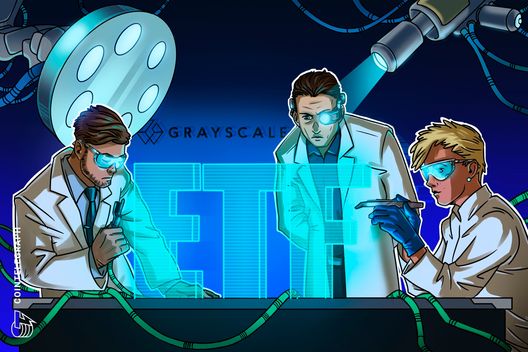
Grayscale's S-1 filing for a Hyperliquid ETF signifies increasing institutional interest in perpetual futures protocols, potentially driving demand for the underlying HYPE token. The filing positions Hyperliquid as a key infrastructure for tokenized RWAs, highlighting its growing utility beyond traditional crypto derivatives. While Grayscale is not initially incorporating staking, the potential future integration mirrors competitor strategies and could enhance yield opportunities for ETF investors.

Increased XRP exchange outflows from South Korea, particularly from Upbit, suggest a shift from distribution to accumulation, potentially easing near-term sell pressure. Historical patterns indicate that similar accumulation phases, characterized by rising outflows and positive whale flows, have preceded significant XRP price rallies. The reversal in 90-day whale flows from net selling to accumulation, combined with declining exchange balances, points to a structural shift in XRP's market dynamics. Traders should monitor the $1.60 resistance level, as a sustained break above it would confirm the accumulation trend and signal potential upside continuation.
Kalshi's $1 billion March Madness bracket contest signals a significant push into sports prediction markets, aiming to capture speculative retail flow and boost trading volume. The platform's success during the Super Bowl, processing over $1 billion in trades, highlights the growing demand for event-driven, short-duration speculative instruments. Kalshi's expansion into sports prediction markets, operating under CFTC oversight, positions it as a regulated alternative to offshore venues, potentially attracting institutional interest. The coinciding MLB partnership with Polymarket and regulatory coordination with the CFTC indicate a maturing landscape for prediction markets, integrating more formally with traditional sports and financial oversight.

Rumors of a White House and lawmaker deal on stablecoin yield could advance the CLARITY Act, potentially clarifying regulatory frameworks for stablecoins and their yield-bearing capabilities. The reported agreement focuses on prohibiting yield on 'passive balances' of stablecoins, a key point of contention for the banking industry concerned about deposit flight. While a deal is reportedly close, the crypto industry must still vet the agreement, indicating potential for further negotiation or industry pushback before finalization. Advocates like Senator Lummis suggest a comprehensive regulatory framework is imminent, which could reduce uncertainty and attract institutional capital if finalized favorably.

UK fiscal pressures and rising inflation are eroding the real returns on cash and government bonds, potentially shifting saver behavior towards alternative assets like Bitcoin. The convergence of high government borrowing, persistent inflation, and upcoming mortgage resets in the UK creates a narrative where Bitcoin could be perceived as a hedge against sovereign monetary policy failures. While Bitcoin remains sensitive to liquidity stress, the UK's visible household financial pressures may accelerate the discussion around Bitcoin as an 'opt-out' from traditional financial system risks. Increased crypto awareness and a desire for regulatory clarity in the UK suggest a receptive environment for alternative assets if traditional financial instruments continue to underperform inflation.

Bitcoin's failure to hold above $70,000, coupled with a potential bearish wedge pattern formation, suggests a near-term downside risk towards $52.5K if the lower boundary breaks. Rising inflation concerns, driven by higher crude oil prices and geopolitical tensions, are negatively impacting investor sentiment and mirroring weakness seen in traditional stock markets. Market expectations have shifted dramatically, with a 50% chance of a US Fed rate hike by year-end, a stark contrast to earlier predictions of rate cuts, indicating a tightening monetary policy environment. The unwinding of short gamma at the $75K level and the loss of momentum post-breakout suggest a return to range-bound conditions for Bitcoin, with immediate upside potential limited.
Despite declining volatility and price stabilization around $70,000, traders are exhibiting significant fear by paying substantial premiums for downside protection, a sentiment historically associated with market bottoms. The put/call ratio reaching levels not seen since 2021 indicates an unusually strong demand for hedging relative to bullish positioning, suggesting a potential shift in market sentiment if this fear subsides. Slowing transfers from long-term holders suggest conviction among existing investors, which, combined with high demand for puts, could signal an impending price recovery as fear-driven hedging unwinds.

A guilty plea in an $8 million AI music royalty fraud case highlights the potential for AI-generated content to be exploited for illicit financial gain. The case underscores the challenges streaming platforms face in detecting fraudulent activity and protecting legitimate artists from revenue diversion. This development serves as a cautionary tale for the broader creative industries regarding the misuse of AI tools and the need for robust verification mechanisms.
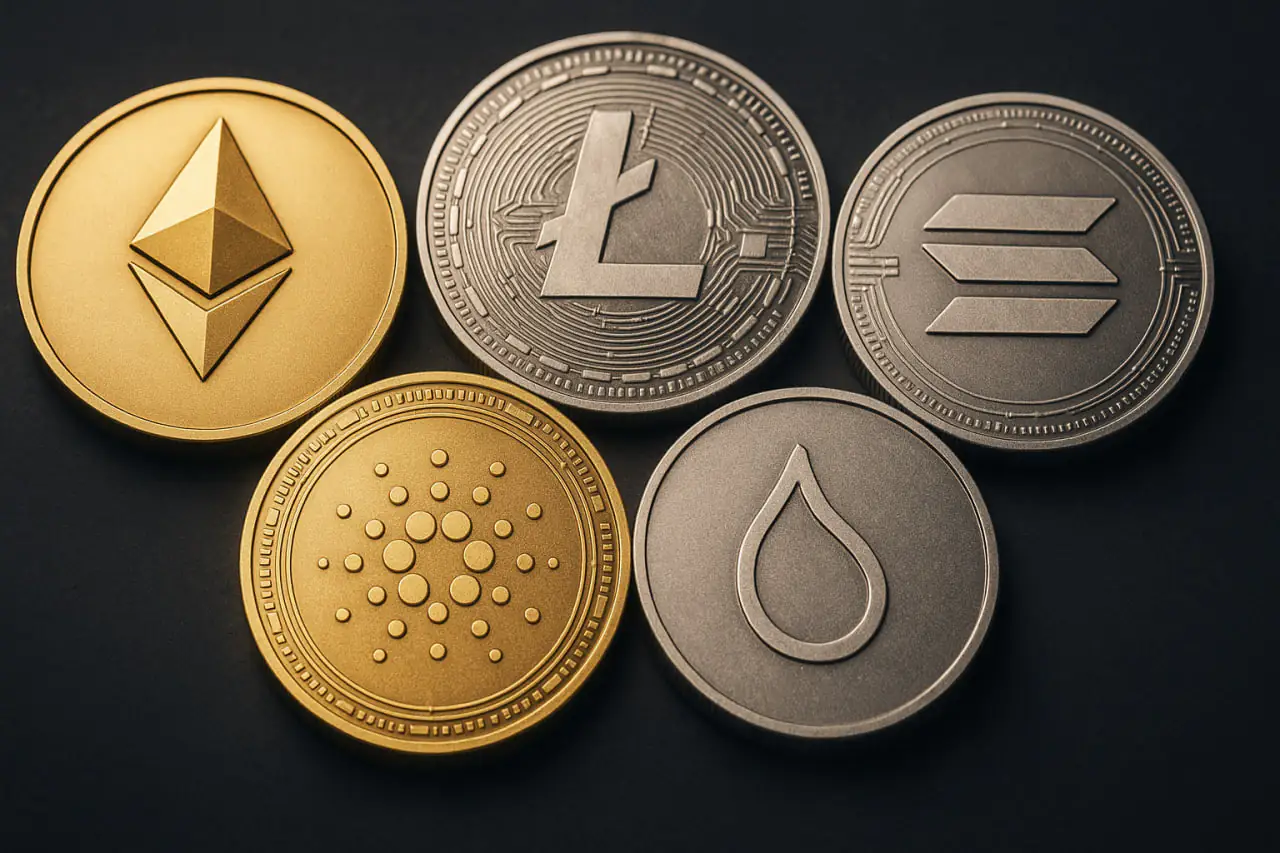
Despite modest weekly gains for some altcoins like XRP and ETH, collapsing trading volumes across major exchanges suggest a lack of conviction and potential for further downside. The sharp mid-week fades and subsequent price pullbacks for ETH, SOL, and HYPE indicate that recent rallies may be unsustainable without a significant increase in trading activity. Historical data shows that extreme volume contractions at price lows can precede recoveries, but the current macro environment and lack of retail participation temper immediate bullish expectations. While XRP showed relative resilience, the overall altcoin market faces headwinds from underperformance against Bitcoin and unfavorable macroeconomic conditions, warranting a cautious outlook.

Nevada's temporary ban on Kalshi highlights a significant regulatory battleground for prediction markets, potentially impacting their accessibility and operational legality across other states. The ruling suggests a judicial leaning towards state-level regulation of prediction markets as unlicensed gambling, despite CFTC's differing stance, creating uncertainty for platforms like Kalshi and Polymarket. While Kalshi is valued at $22 billion, this regulatory setback in Nevada, the first state to issue such a ban, could signal increased scrutiny and potential future restrictions impacting its business model.

The emergence of 'Ghostblade' malware targeting iOS devices highlights an evolving threat landscape where sophisticated tools are being developed to steal private keys and user data. While overall crypto hack losses decreased in February, the pivot towards phishing and human error exploitation, exemplified by malware like Ghostblade, indicates a persistent and adaptable threat to user security. The stealthy nature of Ghostblade, including its ability to delete crash reports and operate intermittently, poses a significant detection challenge for users and security platforms, underscoring the need for heightened vigilance.

Political action committee Think Big PAC is leveraging Sam Bankman-Fried's past donations to attack New York congressional candidate Alex Bores, highlighting the ongoing reputational risks associated with past crypto industry funding. The attack on Bores, who has focused on AI safety legislation, suggests a strategic use of past crypto entanglements to influence political discourse, potentially impacting how candidates engage with or distance themselves from the crypto sector. This development underscores the persistent negative association of FTX's collapse with political figures, indicating that past crypto-related campaign finance can remain a potent tool for political opposition.

Despite recent market turbulence, a significant majority of institutional investors plan to increase their digital asset allocations, signaling sustained demand for regulated crypto investment vehicles. The expansion of regulated stablecoin products, such as retail USDC lending in Japan and gold-linked yield vaults, indicates a growing trend towards integrating crypto with traditional financial instruments. Abra's planned Nasdaq listing via SPAC highlights continued efforts by crypto firms to access public capital markets, suggesting a path for institutional adoption despite regulatory uncertainties. The increasing interest in tokenized assets and regulated ETPs by institutions points to a maturing market focused on compliance and structured investment pathways.

Bitcoin miner revenue has halved since the bull market peak, indicating significant financial stress that could lead to capitulation and increased selling pressure on BTC. The weakening hash rate post-halving, coupled with declining miner revenue, suggests that less efficient mining operations are shutting down, a classic signal of sector consolidation. The concentration of hash rate from unknown pools raises concerns about network transparency and censorship resistance, a structural issue that could impact long-term confidence in Bitcoin. While miners are resilient, the current revenue compression and lack of easy solutions like immediate hardware upgrades point to a prolonged period of stress, potentially affecting BTC's price stability in the near to medium term.

Ledger's strategic expansion into the US with a new CFO and NYC office signals a strong push for institutional business and potential future public market readiness. The appointment of a former Circle executive as CFO, coupled with a multi-million dollar investment in US operations, indicates Ledger's commitment to scaling its enterprise solutions and custody services. Growing demand from traditional financial entities for secure digital asset infrastructure, as cited by Ledger, suggests a maturing market and increased institutional adoption of crypto services.
Signal context only. Validate with price action, liquidity, and risk limits before taking a position.
